
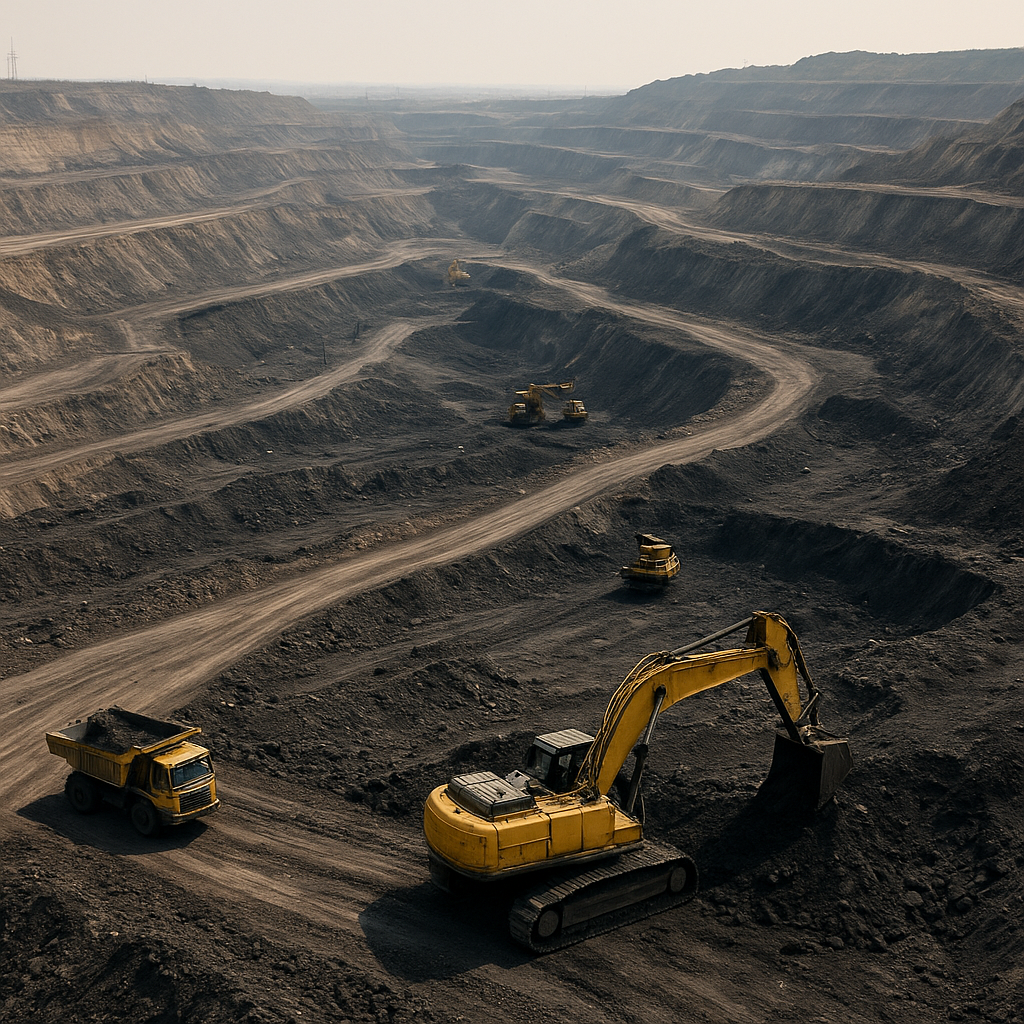
The Ramagundam mine complex is one of the most important coal-producing areas in southern India. Located in the state of Telangana, the mine has played a pivotal role in powering regional industry and supplying fuel to thermal power plants for decades. This article explores where Ramagundam is situated, what is extracted there, its economic significance, operational characteristics, environmental and social dimensions, and a number of interesting details that underline its strategic importance.
Location and geological setting
Ramagundam is situated in the Peddapalli and Mancherial districts of northern Telangana, near the Godavari River basin. The mine complex falls within the coalfields associated with the larger Pranhita-Godavari valley. Geologically, the coal seams in the region belong to the Permian to Gondwana formations, which are part of the extensive Gondwana coal-bearing strata that underlie large areas of central and eastern India. The coal here is primarily bituminous to sub-bituminous in rank, with varying calorific values that make it suitable for thermal power generation.
The area around Ramagundam is characterized by undulating plateaus, shallow valleys and lateritic soils, and the coal-bearing strata are often found at shallow to moderate depths, which has allowed both opencast and underground mining operations. The proximity to major waterways and growing infrastructure networks has historically facilitated the transport of coal to nearby thermal stations and to national rail links.
What is mined: coal types, quantity and quality
Coal is the predominant mineral extracted from the Ramagundam complex. The deposit includes a mix of coal types, with the majority being thermal coal used in power generation. Important attributes of the coal here are its calorific value, ash content, moisture and sulfur concentration. These parameters vary across seams and blocks within the complex, which affects where certain coal lots are directed (for example, to large power stations versus industrial consumers).
- Coal grade: typically bituminous to sub-bituminous, suitable for thermal power plants.
- Calorific value: moderate to high in several seams, making the resource economically viable for electricity generation.
- Ash and moisture: variable; some seams have higher ash content and require washing or blending.
- Production volumes: historically significant, with annual outputs measured in millions of tonnes when combined across the Ramagundam complex and adjacent blocks.
The coal is primarily consumed by large thermal plants, including the nearby Ramagundam Thermal Power Station, and by industrial operations across the region. Some portions of the coal require processing such as crushing, screening and washing to meet end-user specifications and environmental requirements.
History and development of the mine complex
The Ramagundam coalfield has been developed gradually since discovery and geological assessment in the mid-20th century. Development accelerated post-independence as India expanded its industrial base and sought secure domestic fuel sources for electricity generation. The state-run Singareni Collieries Company Limited (SCCL) has historically been a major operator in the area, managing production, land development and worker housing in some blocks.
Over the decades, investments in rail connectivity, power plant construction and ancillary infrastructure have shaped the evolution of the mining complex. Early mining was more labor-intensive and often underground, but as demand surged and technology advanced, larger-scale opencast operations and mechanized extraction became the norm. This transition improved output while shifting the workforce composition toward fewer laborers but more technical specialists.
Operational structure and logistics
Ramagundam’s operations are a mix of state-managed and centrally coordinated activities. The mine network includes several functional units: excavation and overburden removal, coal handling and storage, processing (washing and sizing), and transport logistics. The region is served by a developed rail network linking the coalfields to major power plants and industrial centers. Road access, though secondary to rail for bulk transport, supports local distribution, contractor operations and personnel movement.
- Mining methods: large-scale opencast mining supplemented by selected underground operations in deeper or more complex seams.
- Processing facilities: coal washeries and sizing plants to improve marketability and reduce ash content.
- Transport: railheads and dedicated freight corridors for efficient long-distance movement to thermal stations and ports for limited export.
- Power supply: captive power arrangements and grid connections to support heavy equipment and processing plants.
Maintenance, safety systems and environmental controls have become increasingly important in operations, driven by regulatory frameworks and corporate responsibility commitments. Modern fleet management, GPS tracking of heavy equipment, and real-time monitoring of working conditions are among the technological adoptions in recent decades.
Economic significance and regional impact
Ramagundam’s economic footprint extends beyond coal tonnage. The mine complex supports local and regional economies through direct employment, fiscal contributions, and the development of infrastructure. The coal fuels major thermal power stations that deliver electricity across Telangana and neighbouring states, underpinning industry, agriculture (through irrigation electricity), and urban demand.
Key economic impacts include:
- Employment: thousands of direct jobs in mining, maintenance and administration, and many more in supply chains, transport, services and construction.
- Public revenue: royalties, taxes and fees that bolster state and local budgets.
- Industrial growth: availability of reliable fuel has attracted energy-intensive industries, manufacturing units and associated businesses.
- Infrastructure development: better roads, rail links, power substations and community facilities like hospitals and schools.
For rural communities around and downstream of the mine, the presence of a major mining complex creates both opportunities and challenges. While improved incomes and access to services are tangible benefits, the local economy can become dependent on a single commodity, which introduces vulnerability to market and policy shifts.
Environmental and social dimensions
Mining at Ramagundam, like many large coal operations, carries environmental consequences that require careful management. Key issues include land disturbance, dust generation, water use and contamination, and impacts on biodiversity. Overburden removal for opencast mining alters landscapes, while coal handling produces fugitive dust that can affect air quality in nearby settlements.
Water management is a critical concern: mines use significant water for washing and dust suppression, and runoff can carry sediments and pollutants downstream. Regulatory frameworks mandate measures like sedimentation ponds, lined effluent systems, and progressive reclamation of spent areas.
- Land reclamation: progressive backfilling and re-vegetation of exhausted pits aim to restore ecosystems and provide land for agriculture or forestry.
- Air quality controls: water sprinkling on haul roads, dust suppression systems, covered conveyors and green belts help reduce particulate emissions.
- Water treatment: treatment plants for effluents and controlled discharge policies to protect river systems.
- Community engagement: social investment programs, resettlement frameworks and livelihood support for affected families.
Socially, the mine has been a major employer and has supported the development of towns, health facilities and educational institutions. However, mining can displace communities or alter traditional livelihoods. Responsible operators and authorities have increasingly focused on stakeholder consultations, compensation mechanisms, and skill development programs to mitigate negative impacts and improve social outcomes.
Technology, modernization and safety practices
The modernization of mining techniques at Ramagundam has been marked by the introduction of mechanized digging, large-capacity haul trucks, and sophisticated earth-moving equipment. Automation in materials handling, conveyor systems, and remotely monitored operations contributes to efficiency and safety. Implementation of predictive maintenance through sensors reduces downtime and prevents catastrophic equipment failures.
Safety has been elevated through better training, adoption of international standards, and investment in personal protective equipment (PPE). Emergency response systems, mine gas monitoring (where applicable) and stricter adherence to mine closure plans have become established elements of operational governance. Continuous training programs aim to keep workers skilled in both legacy practices and modern digital systems.
Interesting facts and lesser-known features
Ramagundam holds several notable and sometimes surprising attributes that underline its national importance and unique character.
- Strategic energy hub: The adjacent Ramagundam Thermal Power Station historically has been one of the largest in the region, closely integrated with local coal supply for steady power output.
- Integrated planning: The mine town and industrial infrastructure around the complex were planned to support a large workforce, resulting in relatively advanced civic amenities compared with many rural areas.
- Rail connectivity: Dedicated rail spurs and freight handling capabilities reduce trucking distances and lower overall transport costs for bulk coal movement.
- Coal blending: To meet varying specifications for different consumers, coal from different seams is blended, improving calorific consistency and reducing harmful emissions per unit energy.
- Legacy of skill development: Over generations, the mining workforce has developed specialized local skills in equipment operation, maintenance and mine management.
- Economic multiplier: Ancillary industries — from heavy machinery repair shops to catering and housing construction — flourish as a direct consequence of mining activity.
Regulation, policy and community relations
Mining in India is governed by multiple layers of regulation: national mining laws, state-level rules, environmental clearances and local land use statutes. Ramagundam operates under these frameworks, which aim to balance resource extraction with environmental protection and social responsibility. Periodic reviews and audits by governmental agencies ensure compliance with statutory limits on emissions, effluents and workplace safety.
Community relations are emphasized through corporate social responsibility (CSR) initiatives, which fund local schooling, healthcare, drinking water projects and vocational training. Consultation processes for land acquisition and resettlement have evolved to include more participatory approaches, though challenges remain in ensuring equitable outcomes and long-term livelihood restoration.
Future prospects and challenges
The future of Ramagundam will be shaped by energy policy, technological change and market dynamics. While coal remains an important part of India’s energy mix in the near term, national commitments to cleaner energy and improvements in renewable capacity mean that coal mining must adapt. This includes greater emphasis on reducing emissions, improving coal use efficiency, and investing in cleaner coal technologies such as supercritical boilers and flue gas treatment systems.
Challenges include:
- Market volatility: global and domestic price dynamics can affect the economic viability of specific seams and blocks.
- Environmental pressure: stricter norms on air pollution, water use and rehabilitation increase operational costs and necessitate innovative mitigation measures.
- Social transition: as automation reduces labor intensity, there will be a need for retraining programs and alternative livelihood pathways for affected workers.
- Resource depletion: gradual exhaustion of shallower high-quality seams may force a shift toward deeper or less favorable deposits, raising extraction costs.
To remain relevant, stakeholders around Ramagundam will need to pursue a combination of technological upgrades, diversification of local economies, and robust environmental rehabilitation programs. Investment in skills, healthcare and education will be critical to ensure that local populations benefit from long-term development trajectories beyond the lifespan of specific mining operations.
Final observations
Ramagundam exemplifies the complexity of modern coal mining in India: a site of substantial economic value and strategic importance, intertwined with environmental and social responsibilities. Its proximity to major power generation infrastructure, long history of production, and role in local development make it a focal point for debates about energy security, sustainable mining and regional growth. The path forward will require balancing energy needs with cleaner practices and diversified development to ensure the mine’s benefits endure for communities and the wider economy.

