
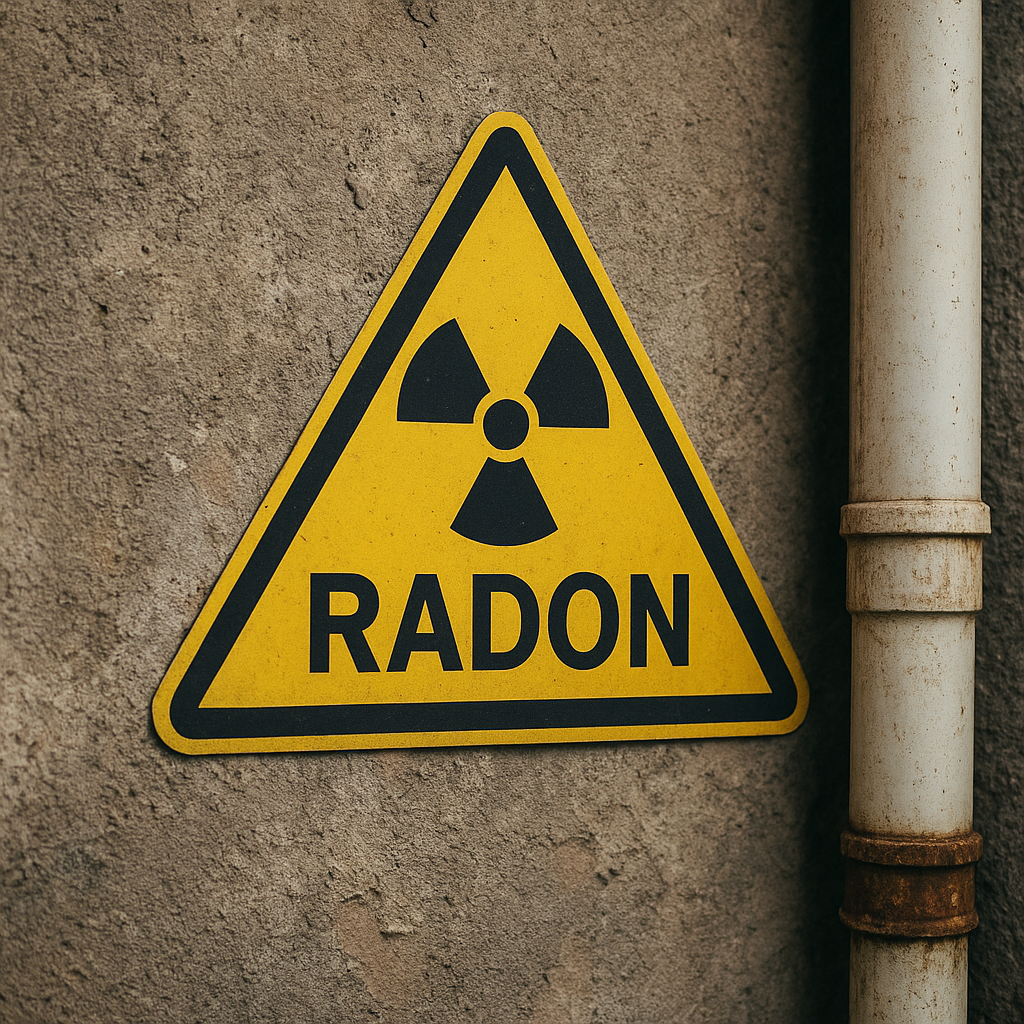
Radon is a subtle but significant presence in the natural world and in our built environment. As an invisible, odorless, and tasteless noble gas that arises from the decay of heavy elements in the Earth’s crust, it quietly affects geology, public health, and even cultural practices. This article explores where radon appears, how it behaves, its practical and historical uses, and interesting facets of the science and society that surround it.
Origins and Physical Properties
Radon is a noble gas that belongs to the same chemical family as helium, neon, and argon. Its most common isotope in the environment is radon-222, which is produced by the radioactive decay of radium-226, itself a decay product of uranium-238. With a half-life of about 3.8 days, radon-222 decays by emitting alpha particles, producing a sequence of short-lived solid progeny (also called decay products) that attach to airborne particles.
The gas is colorless, odorless, and heavier than air, which influences the ways it accumulates in enclosed spaces. Because it is chemically inert, radon does not readily react with other elements, but its radioactive decay products (such as polonium-218 and lead-214) are electrically charged and can adhere to dust and aerosols, making them relevant from a health perspective.
Where Radon Occurs
Radon originates in the subsurface, produced continuously by the decay of uranium and thorium in soils, rocks, and some building materials. Its presence is widespread but highly variable, depending on the geological composition and the pathways available for gas movement. Key locations and contexts where radon commonly occurs include:
- Soils and bedrock: Areas rich in uranium-bearing minerals—such as certain granites, phosphates, black shales, and some metamorphic rocks—tend to produce higher radon concentrations in soil gas.
- Groundwater: Radon dissolves in groundwater and may be released when well water is used or aerated; some hot springs and spas have elevated radon levels due to subsurface sources.
- Buildings: Houses, schools, and workplaces can accumulate radon indoors, particularly in basements, crawlspaces, and lower floors where contact with the ground is greatest.
- Building materials: Certain construction materials (e.g., some cements, bricks, or stones) can contribute small amounts of radon indoors if they contain trace uranium or radium.
Indoor radon concentrations depend not only on source strength but also on air exchange, pressure differentials, and building design. Seasonal patterns often show higher indoor levels in winter in temperate climates due to reduced ventilation and stack effects that draw soil gas into structures.
Health Effects and Public Health Response
Radon is recognized as a significant public health issue because inhaled radon decay products deposit in the lungs and deliver ionizing radiation to sensitive tissues. Epidemiological studies have established that prolonged exposure to elevated radon increases the risk of lung cancer. The risk is synergistic with smoking: smokers exposed to high radon levels face markedly higher combined risks than non-smokers.
Public health agencies set action levels and provide guidance for testing and remediation. Measurement is typically expressed in becquerels per cubic meter (Bq/m3) in most of the world, or picocuries per liter (pCi/L) in the United States (1 pCi/L ≈ 37 Bq/m3). For reference, the World Health Organization (WHO) suggests a reference level of 100 Bq/m3 for indoor air where possible, while many national agencies use values around 200–300 Bq/m3 or, in the U.S., an action level of 4 pCi/L (~148 Bq/m3).
How Radon Causes Harm
When radon gas is inhaled, most of it is exhaled, but its short-lived decay products can cling to airborne particles and be deposited in the bronchial epithelium. Their subsequent alpha emissions can damage DNA and cellular structures, initiating carcinogenic processes over many years. Because of this mechanism, radon is the second leading cause of lung cancer after tobacco smoking in many countries.
Detection, Measurement, and What Tests Reveal
Understanding the presence and concentration of radon in homes and workplaces depends on reliable measurement. Types of detectors and measurement approaches include:
- Passive detectors such as alpha-track detectors and charcoal canisters for short-term or long-term sampling; these devices do not require power and are widely used for screening.
- Continuous radon monitors that provide real-time or near-real-time concentration data and can help reveal temporal fluctuations.
- Professional testing services that follow standardized protocols for placement and duration to ensure representative results.
Short-term tests (days to weeks) can give an initial indication, but long-term tests (months to a year) better reflect average exposure because they smooth out daily and seasonal variability. When tests indicate elevated levels, further assessment and mitigation are often recommended by health authorities.
Mitigation and Building Design Considerations
Reducing radon exposure typically focuses on lowering indoor concentrations through improved ventilation, sealing of entry points, and engineering controls. For newly constructed buildings in radon-prone areas, designers can incorporate ventilation strategies and passive radon-resistant features into foundations to reduce the need for later interventions.
Existing buildings with elevated radon can often be modified to lower indoor levels. Because radon tends to accumulate in lower parts of buildings, attention to foundation and ground-contact details is important. Building codes and guidelines in many countries increasingly recognize radon risk and recommend preventive measures for at-risk regions.
Applications, Historical Uses, and Scientific Roles
Although radon is primarily discussed as a public health concern, it has had notable uses and plays several roles in science and culture.
- Medical history: In the early 20th century, radon and radium were used in various therapeutic contexts. Small radon sources were once employed in experimental radiotherapy and in certain balneotherapy practices. Today, the medical use of radon is highly restricted due to health risks, and modern radiation therapy relies on controlled sources with well-characterized dosimetry.
- Balneotherapy and spas: Some European spas historically celebrated low-level radon-rich waters for claimed therapeutic effects. Notable spa towns have long traditions of radon baths. The practice is controversial, and scientific evidence for benefits is limited and debated.
- Geoscience and environmental tracer: Radon is valuable as a natural tracer in hydrology, soil gas studies, and environmental monitoring. Because it is generated in soils and has a short half-life, variations in radon concentrations can help trace subsurface gas movement, identify groundwater discharge zones, and study gas exchange between soils and the atmosphere.
- Exploration geology: Elevated radon anomalies in soil gas or emanations from the ground can help identify uranium mineralization or other geologic features of interest to exploration geologists.
Notable Cultural and Historical Notes
The discovery and naming of radon have a historical path. In 1900, the German physicist Friedrich Ernst Dorn observed a radioactive “emanation” from radium salts; over subsequent decades scientists clarified the properties of the gas and named it radon. Its discovery was part of the broader early-20th-century explosion of knowledge about radioactivity.
In Central Europe, towns such as Jáchymov (in what is now the Czech Republic) became famous for their radon-bearing springs and ore deposits; Jáchymov was a historic source of uranium and a site where early radiotherapy and spa treatments were practiced. The interplay between perceived health benefits and later awareness of radiation risks illustrates how cultural practices and scientific understanding evolve together.
Radon in Research and Emerging Topics
Contemporary research on radon spans multiple fields:
- Improving detection technology and low-cost monitoring networks to map radon at finer spatial and temporal scales.
- Using radon as a tracer for studying gas exchange processes, groundwater flow, and coastal and riverine interactions where subsurface waters release dissolved radon to the atmosphere.
- Investigating potential links between radon fluctuations and short-term geophysical events; while some studies explore correlations between soil-gas anomalies and seismic activity, the field remains complex and contested.
- Evaluating public health interventions and calibrating risk models to account for smoking prevalence, building stock, and local geology, enabling better-targeted mitigation programs.
Practical Considerations for Homeowners and Communities
While this article avoids procedural instruction, several practical considerations help frame everyday choices. Awareness and measurement are the first steps: understanding local radon potential, testing indoor air using accepted methods, and consulting public health guidance if elevated readings are found. Community-level approaches—such as mapping radon risk areas, updating building codes, and supporting mitigation for vulnerable populations—play important roles in reducing population exposure.
The social dimension is also important. Public understanding of radon risks varies widely, and outreach that combines clear science with actionable advice (for example, how to obtain accredited testing and qualified mitigation services) helps people make informed choices. The greatest health benefits often come from combining radon reduction with strong tobacco control, since the combination of smoking and radon exposure multiplies lung cancer risk.
Final Observations
Radon occupies a unique niche at the intersection of geology, public health, and cultural history. Its invisible nature belies the sizeable impacts it can have on human health and on scientific investigations of the subsurface. Balancing awareness of risks with recognition of radon’s roles in research and history helps communities, scientists, and policymakers address the challenges it poses while learning from the many ways in which this quiet gas has shaped both landscapes and human activities.