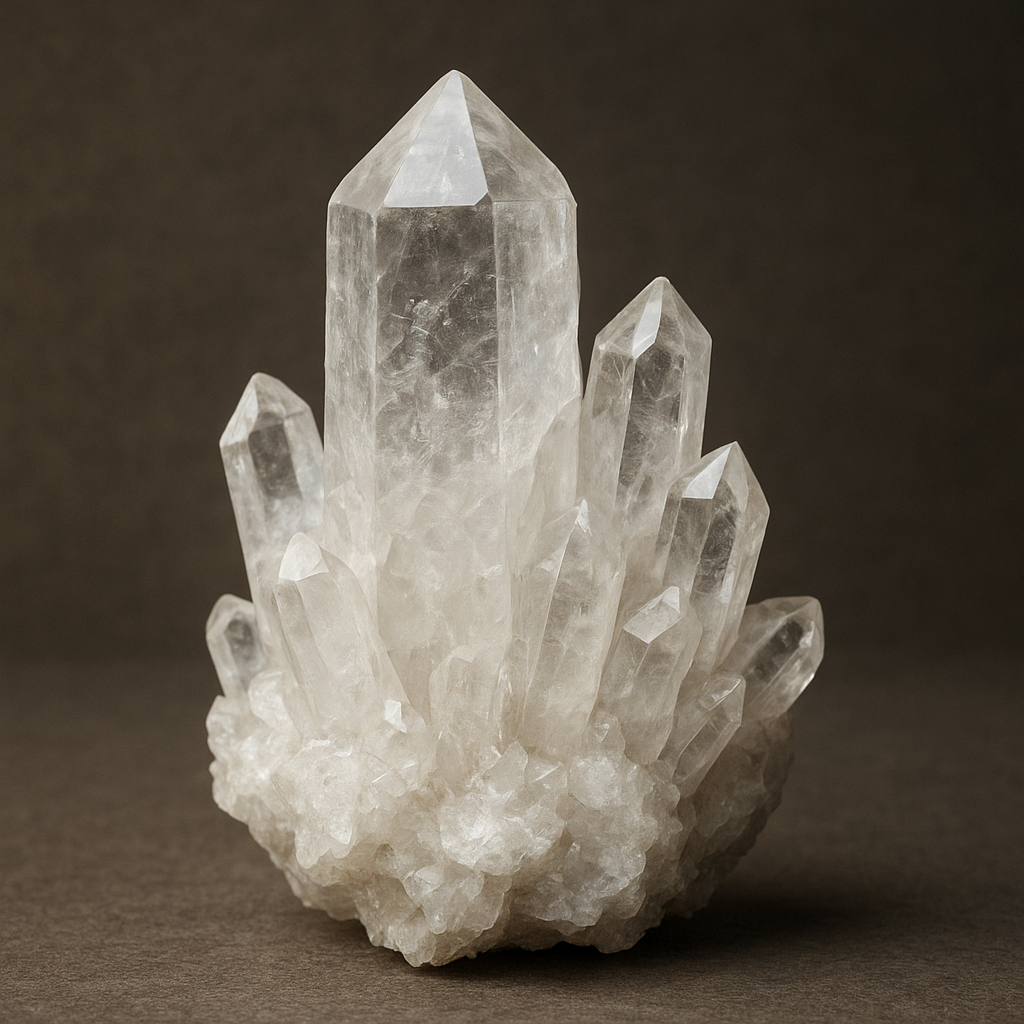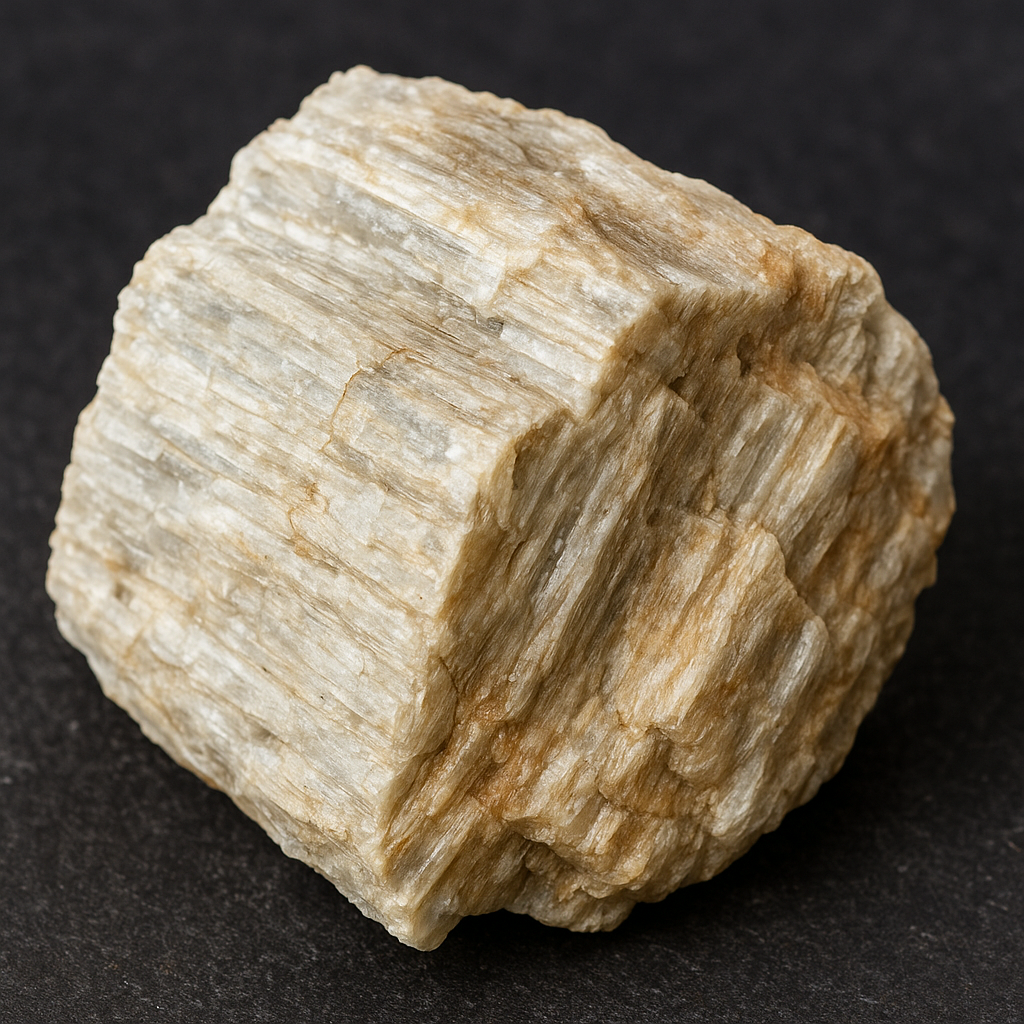
Pyrophyllite is a quiet but remarkably versatile mineral whose physical properties and chemical stability have made it useful across a range of industries for more than a century. Often overlooked in favor of more famous minerals, pyrophyllite combines a soft, talc-like feel with high thermal stability and a layered crystal structure that gives it unique processing and application advantages. The following sections explore its chemistry and physical characteristics, where it occurs in nature, how it is mined and processed, and the many practical and innovative applications that rely on its distinctive properties.
Pyrophyllite: mineralogy and fundamental properties
At its core, pyrophyllite is a hydrated aluminum silicate with the ideal chemical formula Al2Si4O10(OH)2. It belongs to the group of phyllosilicates, a family characterized by sheet-like crystal structures similar to those of mica and talc-like minerals. These sheets account for pyrophyllite’s very soft feel (low Mohs hardness), excellent cleavage, and platy particle morphology when ground. Typical colors range from white and pale gray to pale green or buff, depending on trace impurities such as iron or organic matter.
Key physical and chemical characteristics of pyrophyllite include:
- Layered 2:1 phyllosilicate structure with weak bonds between layers, producing easy cleavage and a greasy or soapy feel.
- Low hardness (typically about 1–2 on the Mohs scale), enabling easy machining, carving, and fine grinding.
- High thermal resistance: it can withstand elevated temperatures and, when used in formulated products, contributes to thermal stability and shock resistance.
- Chemical inertness: largely unreactive with many acids and alkalis at ambient conditions, which is valuable for industrial applications requiring stability.
- Good electrical insulating properties, which make it useful in certain electrical and thermal insulation contexts.
Geological occurrence and major deposits
Pyrophyllite generally forms in low- to medium-grade metamorphic environments, often as a product of hydrothermal alteration of aluminous volcanic or sedimentary rocks. It is commonly associated with minerals like mica, chlorite, kaolinite, and quartz, and appears in a variety of textural forms: massive, foliated, and sometimes as fine laminae within schists and altered tuffs. Because of this, pyrophyllite deposits are frequently found in regions with a history of volcanic activity or regional metamorphism.
Major producing countries include China, India, the United States, Brazil, Japan, Russia, and several African nations. Deposits can be economically significant in both large open-pit workings and smaller specialized quarries. Typical geological settings include:
- Hydrothermally altered volcanic flows and tuffs where high silica and aluminum content undergo alteration.
- Metamorphosed aluminous sediments that have experienced low-grade metamorphism to produce soft, platy pyrophyllite-rich schists.
- Pegmatitic and vein-hosted occurrences, though these are usually less common than massive deposits.
Exploration and assessment of pyrophyllite deposits focus on purity (low iron and carbon content), particle size when crushed, and absence of deleterious fibrous or asbestiform impurities. The latter point is important because certain deposits can host fibrous minerals that pose health risks, requiring careful mineralogical testing before the material is marketed for consumer or industrial use.
Mining and beneficiation
Extraction methods for pyrophyllite are generally straightforward when the deposit is near surface: open-pit quarrying with drilling and controlled blasting or mechanical excavation. For deeper or higher-value deposits, selective underground mining can be used. After extraction, beneficiation is carried out to increase purity, improve particle size distribution, and remove contaminants.
Common processing steps include:
- Primary crushing to reduce lumps to manageable sizes.
- Grinding and milling to produce fine platy particles; the plate-like morphology is retained to confer desired functional properties.
- Air classification and screening to sort particles by size and shape for specific applications.
- Flotation and other chemical treatments when removal of iron or organic impurities is necessary to increase brightness and whiteness.
- Optional calcination: controlled heating (dehydroxylation) to alter physical or chemical behavior for certain refractories or ceramic formulations.
Quality control emphasizes particle shape (platy vs. granular), brightness, and absence of harmful fibrous minerals. Many producers supply multiple grades tailored for ceramics, paint and plastics fillers, refractory mixes, and other industrial uses.
Industrial and traditional uses
Pyrophyllite’s combination of softness, layered structure, chemical inertness, and thermal stability makes it valuable in several established industries:
Ceramics and refractories
One of the largest markets for pyrophyllite is the ceramics and refractory sector. It is used in porcelain, sanitaryware, and high-temperature ceramics for several reasons:
- It acts as a flux and plasticizer in clay bodies, improving workability and reducing shrinkage.
- When fired at high temperatures, pyrophyllite can contribute to the formation of mullite and other high-temperature phases that increase mechanical strength and thermal shock resistance.
- Its low iron content and good whiteness make it desirable where brightness and color stability are important.
Foundry and casting applications
Because of its refractory and non-reactive nature, pyrophyllite is used in foundry mold washes, core sands, and as a binder or additive in precision casting molds—particularly for non-ferrous metal casting and investment casting where controlled thermal behavior and a smooth finish are needed.
Fillers and functional additives
Pyrophyllite serves as an inert filler in paints, coatings, rubber, and plastics. Its platy particles improve rheological properties, reduce shrinkage in thermosets, and can lower production costs by replacing more expensive functional fillers. In paints, it helps control gloss and improve scrub resistance; in polymers, it modifies stiffness and thermal conductivity without significantly raising weight.
Electrical insulation and thermal products
Its electrical insulating properties and thermal stability make pyrophyllite useful in applications requiring high-temperature insulation, including specialty ceramics, electrical insulators, and some heat-management components.
Art, carving, and sculpture
Because pyrophyllite is soft and carvable, it has a traditional role as a sculptors’ stone in some cultures. When compact and free of fractures, it can be polished to a pleasing satin finish and carved with fine detail, making it suitable for small ornamental objects and detailed stonework.
Emerging technologies and specialized applications
Beyond traditional uses, research and industrial development have explored novel roles for pyrophyllite and pyrophyllite-derived materials. Some promising directions include:
- Nanocomposites: Exfoliated, plate-like particles can reinforce polymers at low loadings, improving mechanical and barrier properties.
- Catalyst supports: The high surface area and thermal stability of calcined pyrophyllite make it a candidate support for certain catalytic systems.
- Advanced ceramics: Tailored pyrophyllite-based formulations can produce high-purity mullite phases for aerospace and refractory engineering applications.
- Environmental remediation: Modified surfaces of phyllosilicates, including pyrophyllite, are studied for adsorption of heavy metals and organics in wastewater treatment contexts.
Processing considerations and health aspects
As with any industrial mineral, responsible handling and market transparency are essential. While pyrophyllite itself is not an asbestos mineral, some deposits may be contaminated with fibrous minerals such as tremolite or actinolite. Such asbestiform contamination poses serious health risks if fibers become airborne and inhaled. Therefore:
- Mines and processors conduct rigorous mineralogical testing (polarized light microscopy, X-ray diffraction, electron microscopy) to detect fibrous contaminants.
- Product specifications and certifications should document the absence of regulated asbestos fibers for consumer and cosmetic-grade materials.
- Workplace controls—ventilation, dust suppression, and personal protective equipment—are standard where dust generation occurs.
Regulatory frameworks in different countries may require specific testing and labeling for mineral fillers intended for sensitive applications (cosmetics, food-contact materials, etc.). Producers typically offer grades certified safe for intended end uses after appropriate testing.
Economics, markets, and sustainability
Global demand for pyrophyllite is shaped by coatings, ceramics, and refractory markets, with regional variations depending on proximity to large ceramic industries and foundries. Pricing and competitiveness depend largely on deposit grade, processing requirements, and logistics. Areas with high-quality, near-surface deposits can supply material economically to local industries, while exporters must balance shipping costs against price.
Sustainability considerations include:
- Responsible mine rehabilitation: returning quarry sites to stable landscapes or repurposing them for community uses.
- Energy use and emissions associated with grinding and calcination; some processes can be optimized to reduce carbon footprint.
- Minimizing waste and maximizing utilization through multiple market-grade outputs (e.g., coarse grades for foundry, fine grades for coatings).
Interesting facts and historical notes
Pyrophyllite has a role in both industry and culture. A few engaging points:
- The word pyrophyllite comes from Greek roots meaning “fire” and “leaf”—reflecting the flaky nature of the mineral and its behavior at high temperatures in some early observations.
- Its tactile, soap-like feel has led to occasional use as an artist’s carving stone, akin to how soapstone and talc have been used in different regions.
- Because of its layered structure, pyrophyllite and related phyllosilicates have been models for scientific studies into clay behavior, interlayer chemistry, and nanoscale exfoliation.
Throughout its industrial life pyrophyllite has quietly supported technologies that require materials combining softness for processing with surprising high-temperature performance once formulated. Its broad palette of uses—from everyday coatings to advanced ceramics—demonstrates how an unassuming mineral can occupy a versatile niche at the intersection of geology and technology.
Further reading and research directions
For readers interested in exploring pyrophyllite in more depth, recommended topics include mineralogical characterization techniques (XRD, SEM, and thermal analysis), industrial mineral processing methods (air classification, flotation, and calcination), and contemporary research into polymer-ceramic composites and environmental applications. Scientific journals in materials science, applied mineralogy, and industrial ceramics regularly publish studies on pyrophyllite-based systems and novel processing approaches.