
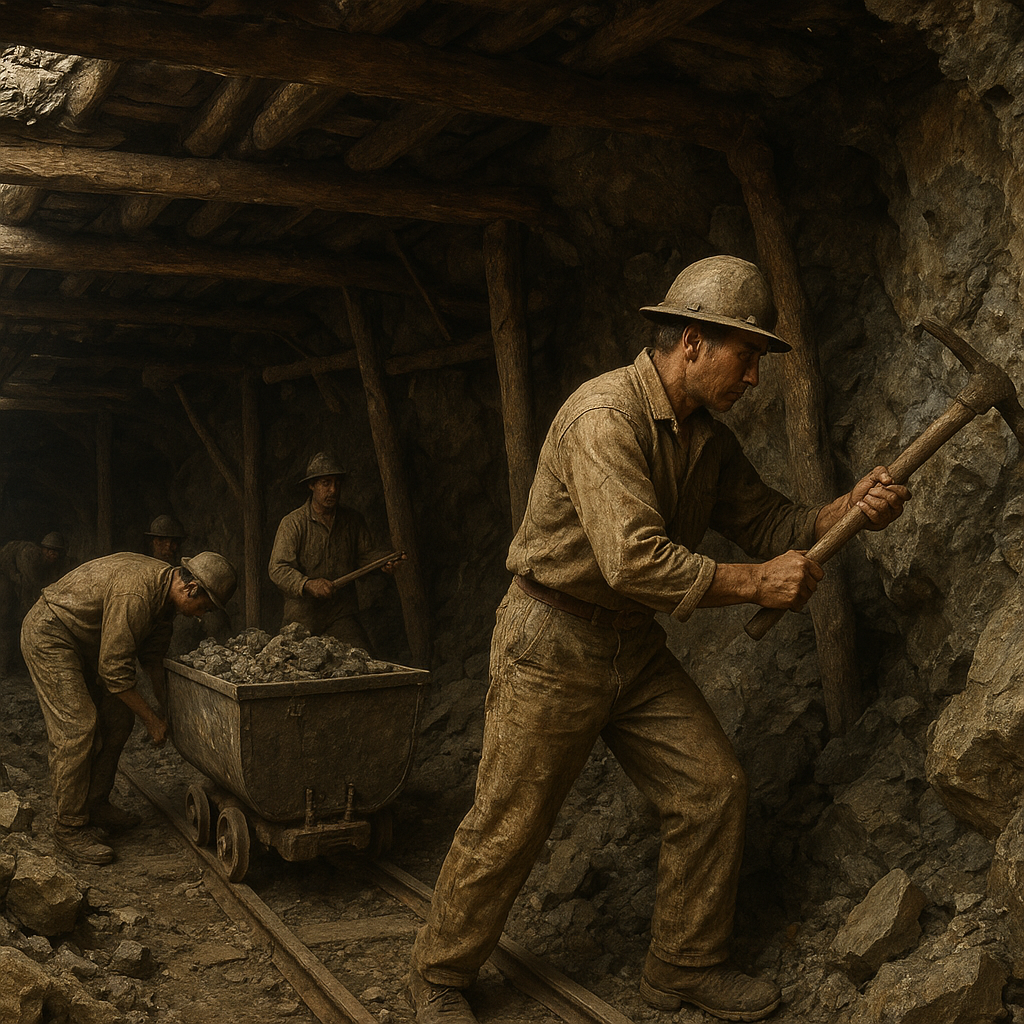
The silver mines around Potosí have left an indelible mark on global history. Located high in the Andes, the mines once fed an empire and reshaped world commerce, society, and the environment. This article explores where they are, what was and is extracted there, their economic importance over centuries, and a number of compelling and sometimes tragic details that make Potosí one of the most fascinating mining sites in human history.
Location and geological setting
Potosí sits in the southern highlands of modern-day Bolivia, in a high-altitude plateau called the Altiplano. The city grew at the foot of a distinctive mountain known as Cerro Rico, literally the “rich hill,” which was the main locus of the colonial-era silver discoveries. The summit of Cerro Rico towers more than 4,800 meters above sea level, and the city of Potosí developed just below it, taking advantage of proximity to the ore and to trade routes that linked the interior with the Pacific and the Atlantic worlds.
Geology and ore types
The mineralization at Cerro Rico is the result of hydrothermal processes that concentrated metals in veins and replacement bodies within volcanic and sedimentary host rocks. While the most famous output was silver, the ore was polymetallic: miners extracted argentiferous galena (lead bearing silver), historic silver nuggets and native silver when present, and later economically important metals such as tin, zinc, and copper as mining technology and markets evolved. The complex geology created pockets of extraordinarily high-grade ore adjacent to low-grade material, which influenced both mining techniques and the rhythm of boom-and-bust production over centuries.
Accessibility and climate
The altitude and climate shaped everything about extraction and life in the mines. Thin air, severe winters, and cold nights made manual labor harsh and dangerous. At the same time, the mountain’s steepness concentrated mine entrances, shafts, and galleries into compact areas, which allowed miners to exploit deep, vertical networks of tunnels that reached hundreds of meters below the summit. The difficult access contributed to the high human cost of extraction from the earliest colonial period onward.
Extraction history and economic significance
Silver at Potosí was discovered in the early 1540s, shortly after the Spanish conquest of South America, and the rush that followed turned the mountain into an unparalleled source of wealth for the emergent colonial economy. Over the next two and a half centuries, production at Potosí shaped monetary systems, international trade, and the finances of empires.
The colonial boom
Soon after discovery, Potosí became one of the largest and wealthiest cities in the world. The Spanish crown established a major mint, the Casa de la Moneda, in the city to coin silver into pieces used across an expanding global market. Silver from Potosí fueled the treasury of the Spanish Empire, financed wars and administrative apparatus, and underpinned a monetary transformation in Europe and beyond. Minted coins traveled via Atlantic routes and the Pacific Manila Galleons to Asia, where American silver bought Asian goods, linking the Americas, Europe, and Asia in a new pattern of global trade.
Technology and evolving practices
Extraction and processing methods evolved over time. Early extraction relied on manual tools and the labor of a mix of indigenous workers, enslaved Africans, and later wage laborers. Silver liberation often depended on amalgamation, a process that mixed crushed ore with liquid mercury to bind fine silver particles. Mercury, frequently imported from specific mines such as Huancavelica (in present-day Peru), was essential to colonial silver metallurgy but introduced persistent environmental and health hazards. Over the centuries, the mining industry at Potosí adapted with mechanized pumps, new smelting methods, and later, industrial-scale operations, which extended the life of the mountain as a productive mine.
Scale and global effect
Estimates of total historic output vary, but it is clear that the mines produced vast quantities of silver, enough to influence global prices and trade networks. Potosí’s silver contributed to price inflation in Europe during the 16th–17th centuries and became a cornerstone of a monetary flow that helped integrate distant markets. The economic significance was not only monetary: the mountain generated an urbanized economy with workshops, commerce, religious institutions, and an extensive labor supply chain that linked local communities to distant ports and markets.
Social structure, labor systems, and consequences
The story of Potosí is as much social as it is geological or economic. The mountain’s riches were extracted by people who faced harsh conditions, legal coercion, and environmental exposure. Their lives and labor shaped the rhythm of mining and left an enduring human legacy.
Labor systems: mita and beyond
To staff the mines, colonial authorities adapted and intensified an existing Incan labor draft called the mita. Indigenous communities were required to supply workers for rotating periods in the mines. While the mita was nominally a labor levy with set durations, in practice it became a system that exposed workers to lethal risk underground. High mortality, occupational disease, and short life expectancy among many mine workers were frequent outcomes. Over time, enslaved Africans and wage laborers also became part of the workforce, creating a demographic complexity in which indigenous, African, mestizo, and European populations interacted within the mining economy.
Living conditions and urban society
Potosí city itself mirrored the mountain’s glitter and decay. Wealth poured into grand churches, administrative buildings, and merchants’ houses, while the mines’ laborers lived in marginal neighborhoods or temporary camps. The visual contrast—opulent baroque architecture against the backdrop of exhausted miners—was stark. The city’s rapid growth fostered specialized trades: smelters, muleteers, merchants, and artisans providing tools, textiles, and provisions to the mining economy.
Health and environmental impacts
The environmental consequences were profound. Extensive deforestation occurred to provide charcoal for smelting, and mercury contamination from amalgamation entered soils and waterways, causing long-term ecological and human health effects. Underground spaces were dangerous: rockfalls, poor ventilation, and toxic gases were common hazards. Gendered impacts also emerged, as families coped with the loss of miners and the social disruptions caused by corrida labor patterns and forced drafts.
Cultural legacy, memory, and modern significance
Potosí’s legacy extends beyond immediate economic contribution into culture, memory, and contemporary struggles over heritage and resource use. The site is a living palimpsest: colonial monuments, indigenous memory, continuing mining, and modern debates about preservation and development are layered together.
Heritage and recognition
The historic center of the city of Potosí and the surrounding mining landscape have been recognized as a cultural site of outstanding value. UNESCO designation and scholarly attention have highlighted Potosí as a crucible of colonial extraction and global interactions. The mountain is both a symbol of wealth and a testimony to exploitation, and its story is central to understanding colonial economies and their global consequences. Many of the churches, civic buildings, and the mint survive as testimonies to the city’s once immense prosperity.
Continuity of mining
Mining activity did not end with the colonial era. In different phases, miners shifted aims from silver to tin and other metals as markets and technologies changed. Today, extractive activity continues, often under modern corporate or small-scale artisanal arrangements. Contemporary miners, engineers, and communities grapple with safety concerns, legal frameworks, and environmental remediation while balancing livelihoods tied to the mountain’s resources.
Interesting and lesser-known facts
- At its height, Potosí is said to have been among the largest cities in the world, a reputation that contributed to the Spanish phrase rich as a mountain.
- The Casa de la Moneda in Potosí was not only a mint but also a technological and administrative center that standardized coinage used in multiple continents.
- Mercury’s role in silver production created one of the earliest large-scale examples of industrial chemical pollution, with descendants of contamination still observable in the landscape and human bodies.
- Literature and art of the early modern period often referenced Potosí as the symbol of New World riches and imperial power; the mountain’s image circulated widely in maps and emblem books.
- Potosí’s miners developed a rich set of rituals, songs, and patronal devotions—mixing indigenous beliefs with Catholic practices—to manage risk and create community amid hazardous labor.
Contemporary challenges and opportunities
Working with Potosí’s legacy requires balancing conservation with social justice and economic development. Remediation of contaminated sites, improvement of mine safety, and fair labor practices remain urgent. At the same time, the site offers opportunities: cultural tourism based on informed interpretation, archaeological research into mining technologies and daily life, and efforts to memorialize those who labored in the mines.
Research and education
Scholars from multiple disciplines—history, geology, anthropology, and environmental science—continue to use Potosí as a case study for global processes: the flow of silver, the integration of markets, the role of forced and coerced labor, and the environmental costs of early industrialization. Educational programs in the region increasingly aim to train local researchers and technicians in heritage management and environmental monitoring.
Policy and the future
Policy challenges include regulating modern extraction to protect workers and ecosystems, ensuring that mining revenues benefit local communities, and preserving the city’s cultural patrimony while accommodating necessary economic activities. Innovative partnerships—between local communities, governments, companies, and international organizations—offer the best path toward solutions that respect both living people and historical memory.
The mines of Potosí remain a powerful mirror: they reflect the capacity of natural resources to transform societies and the recurring questions about who benefits and who pays the costs. Understanding that history helps to chart more equitable approaches to resource use in the present and future.

