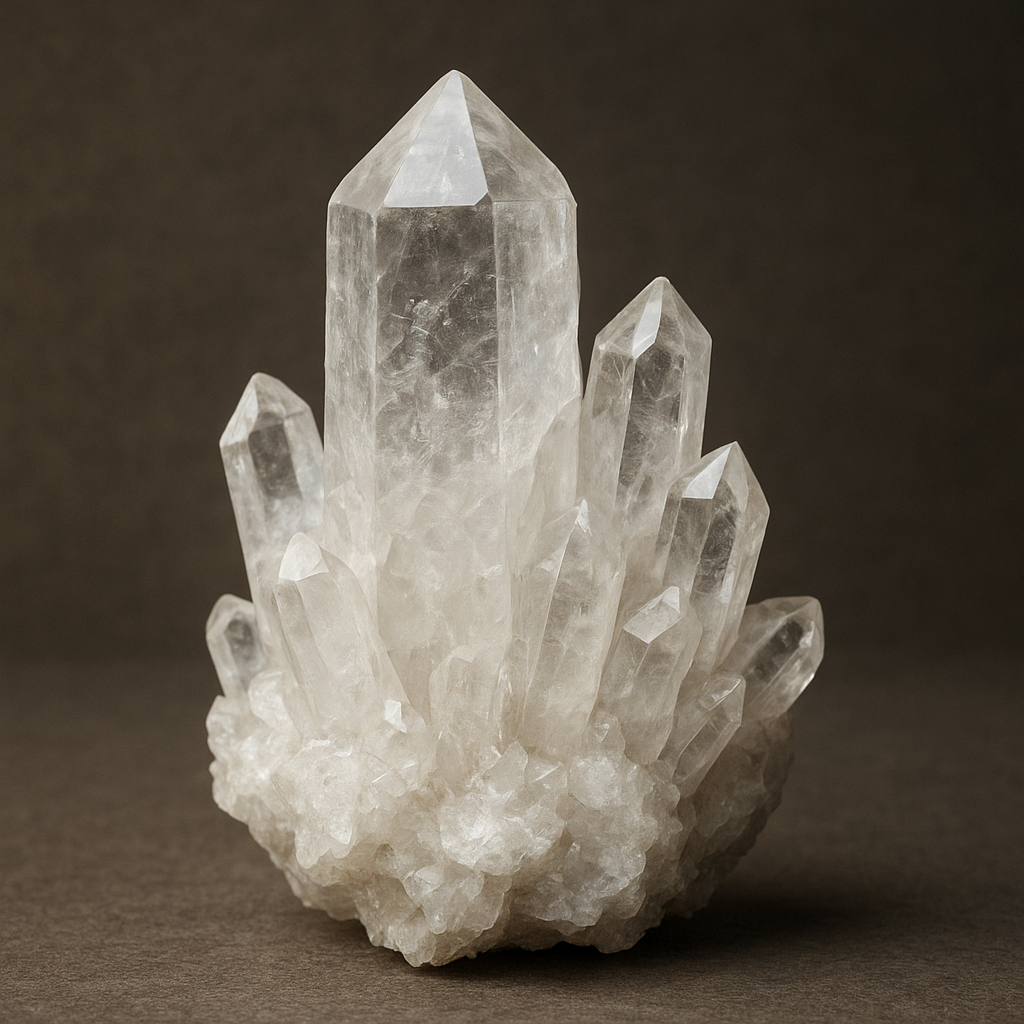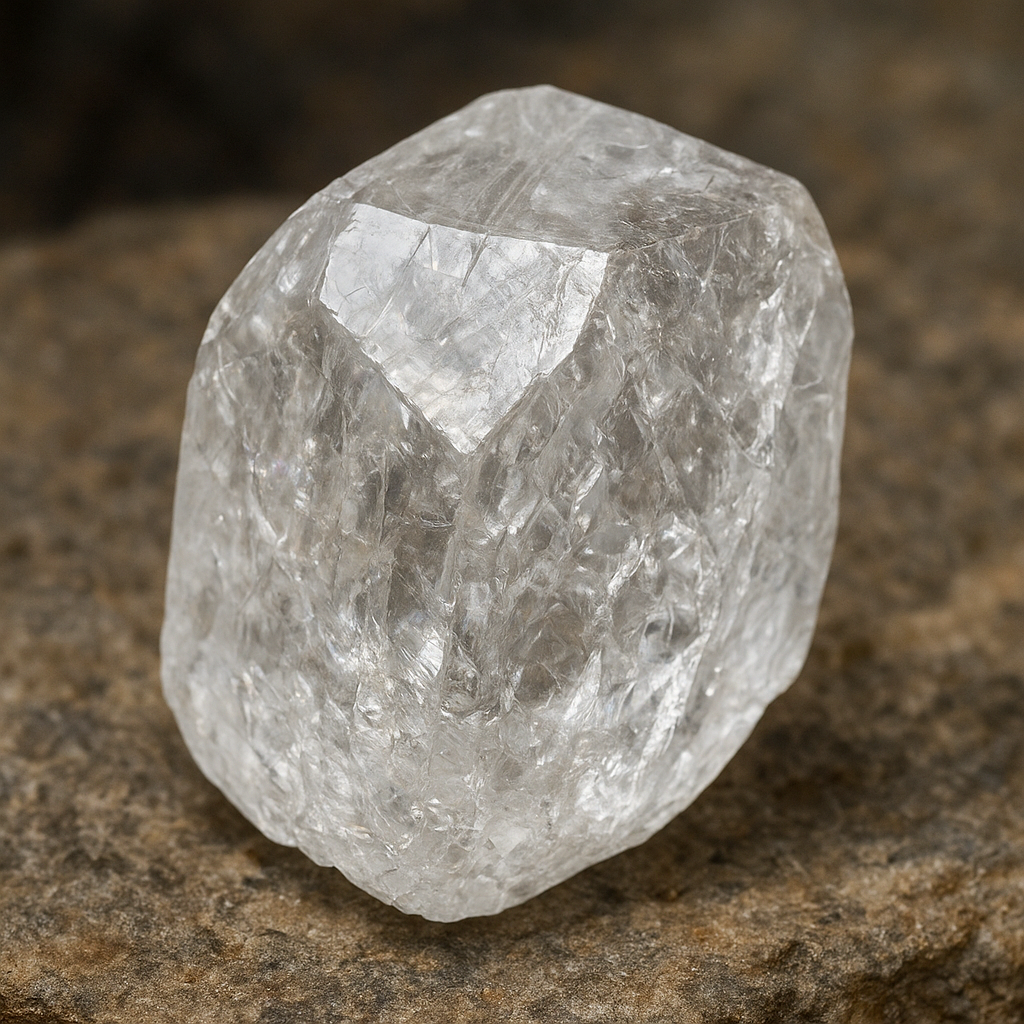
Pollucite is a fascinating and economically important mineral that serves as the principal natural source of the soft, reactive element cesium. Found most commonly in the coarse-grained veins of certain granitic bodies, pollucite’s geological settings, physical properties, and technological connections make it a subject of interest for mineralogists, industrial chemists, and environmental scientists alike. This article surveys where pollucite occurs, how it is processed and used, and several intriguing research directions—especially those that intersect with nuclear waste management and high-precision technologies.
Geology and occurrence: where pollucite forms
Pollucite is a member of the broader zeolite-like tectosilicate family: its framework binds aluminum and silicon tetrahedra to create cages that accommodate large cations such as cesium. It typically appears as colorless, white, gray, or pale pink granular masses or as crystalline nodules in cavities. The mineral most often forms in the late stages of crystallization in granitic pegmatites—coarse-grained igneous intrusions characterized by large crystals and enriched concentrations of incompatible elements.
Typical geological environments
- Granitic pegmatites: Pollucite commonly appears in miarolitic cavities and veins within pegmatites where hydrothermal fluids concentrate alkali metals.
- Alkali feldspar-rich zones: It is often associated with minerals such as lepidolite, spodumene, microcline, and other rare-element pegmatite minerals.
- Weathering and secondary deposits: In some settings, weathering of primary cesium-bearing minerals can produce material enriched in pollucite or disseminated cesium phases.
Notable localities
Worldwide, several deposits have supplied commercial cesium since the 20th century. Well-known sources include the Tanco pegmatite near Bernic Lake in Manitoba, Canada (often regarded as the world’s primary source of pollucite for decades), the Bikita deposit in Zimbabwe, and the Zhabuye (also spelled Chabuye or other variants) deposit in China. Numerous smaller occurrences are documented in parts of the United States (notably in the New England pegmatite districts), Brazil, and other pegmatite-bearing regions. These sites are prized both by collectors and by industry because large pollucite crystals are rare.
Mineralogical characteristics
Pollucite’s crystal structure is cubic (isometric), and it forms in coarse granular aggregates or as well-formed crystals when space allows. It has relatively high density compared with many silicates because of the heavy cesium content. Physical characteristics include a vitreous luster, conchoidal to uneven fracture, and moderate hardness that allows it to be polished for collector pieces. Compositionally, natural pollucite can incorporate other large alkali cations such as rubidium and sodium in place of cesium, leading to variable stoichiometry and hydration states.
Extraction, processing and industrial applications
As the dominant natural host of cesium, pollucite has direct links to a number of technological applications. Cesium extracted from pollucite is a strategic material with uses ranging from precision timekeeping to heavy brines for drilling. The economics and environmental impact of cesium production depend on deposit size, ore grade, and the processing technologies employed.
Mining and processing overview
- Mining: Pollucite is typically mined from pegmatite bodies via conventional open-pit or underground methods, depending on the deposit geometry and host rock.
- Crushing and beneficiation: After extraction, ore is crushed and milled. Physical separation techniques (sizing, gravity, magnetic separation) remove gangue minerals and concentrate the pollucite-bearing material.
- Chemical extraction: To isolate cesium, processing commonly involves acid leaching (often using hydrochloric or sulfuric acid) or alkaline extraction under elevated temperatures. The resulting cesium-rich solutions can then be further purified by precipitation, ion exchange, or solvent extraction depending on the desired end product.
Principal applications of cesium produced from pollucite
- Precision timekeeping: Cesium-133 atomic clocks, which exploit the hyperfine transition of ground-state cesium atoms, establish the SI definition of the second. This is one of the most globally consequential uses because it underpins telecommunications, navigation (GNSS), and scientific measurements.
- Oil and gas industry: Cesium formate brines are used as high-density drilling fluids and completion fluids, offering favorable rheological properties and environmental profiles relative to some alternatives.
- Specialty glasses and electronics: Cs-containing glasses and ceramics can have unique optical or electrical attributes; cesium compounds also feature in photoelectric cells, vacuum tubes, and in some semiconductor research.
- Medical and industrial isotopes: While natural pollucite provides elemental cesium, radioactive isotopes such as cesium-137 are produced in reactors for use in medical radiotherapy devices and industrial gauges; the link here lies in demand for cesium and the need for secure handling and disposal routes.
- Catalysis and research reagents: Cesium salts and organometallic compounds are valuable in organic synthesis and catalysis because of unique ionic radius and polarizability.
Supply considerations and sustainability
Because commercially viable pollucite deposits are relatively scarce, cesium supply can be concentrated geographically, which raises concerns about market security and price volatility. Recycling of cesium-bearing materials and development of synthetic alternatives for some applications (for example, replacing cesium salts in certain industrial formulations) are active areas of research. Responsible mining practices, careful waste management, and the diversification of supply sources are important for long-term sustainability.
Pollucite in nuclear waste management and environmental science
One of the most compelling contemporary research threads in pollucite-related science concerns its potential role in immobilizing radioactive cesium from nuclear waste streams. Radioactive isotopes such as cesium-137 pose long-term environmental and health risks due to their gamma emissions and mobility in the environment. Because natural pollucite is a stable cesium host, researchers have explored both natural and synthetic pollucite phases as matrices for cesium sequestration.
Why pollucite is attractive for immobilization
- Structural trapping: Pollucite’s framework forms cages that can incorporate large cations in fixed lattice positions, reducing their mobility.
- Chemical durability: Natural pollucite is relatively resistant to leaching under a variety of environmental conditions, an essential property for long-term containment.
- Radiation stability: Studies indicate that the pollucite structure tolerates significant radiation doses without catastrophic breakdown, making it a candidate for immobilizing radionuclides.
Synthetic pollucite and processing approaches
Laboratory and pilot-scale efforts aim to convert cesium-contaminated solutions into a stable pollucite-like ceramic via hydrothermal synthesis, high-temperature sintering, or geopolymerization routes. These processes attempt to lock cesium into crystalline sites that mimic natural pollucite, producing dense, leach-resistant waste forms. Challenges include scaling up production, ensuring uniform distribution of cesium within the matrix, and optimizing energy and material inputs for economic viability.
Applications to environmental remediation
Pollucite-inspired materials are a focus in remediation scenarios, such as immobilizing radiocesium in soils or fixing cesium from liquid waste streams. Because radiocesium can migrate through groundwater and be taken up by biota, immobilization in stable hosts reduces mobility and bioavailability. These strategies are complementary to other remediation techniques (addition of potassium or ammonium to displace cesium uptake by plants, zeolite amendments in contaminated soils, etc.).
Research directions, historical notes, and interesting facts
Beyond its immediate industrial uses, pollucite interfaces with a number of scientific domains—materials science, nuclear chemistry, mineralogy, and the history of analytical chemistry.
Historical context
The element cesium was identified in the 19th century by Gustav Kirchhoff and Robert Bunsen using flame spectroscopy; its name comes from the Latin caesius, meaning “sky-blue,” after bright blue spectral lines. Pollucite, along with other cesium-bearing minerals such as lepidolite and zinnwaldite, provided ores from which early chemists separated cesium salts. The mineral’s economic importance rose with applications that exploited cesium’s unique properties.
Modern scientific interest
- Materials design: Synthetic pollucite analogues are being studied as model zeolites for ion-exchange, gas adsorption, and radiation-resistant ceramics.
- Nanotechnology and catalysis: Researchers investigate cesium-doped frameworks for catalytic behavior and as supports for metal nanoparticles.
- Geochemistry and provenance studies: Because cesium is concentrated in specific pegmatitic environments, pollucite occurrences help geologists reconstruct fluid histories and element partitioning during late-stage magmatic processes.
Collector and gemological notes
Transparent, gem-quality pollucite is extremely rare. When present, it can be faceted or cabochon-cut, but its scarcity and modest hardness limit widespread use in jewelry. Mineral collectors prize well-formed crystals and unusual habits; museum specimens from famous pegmatites can command high interest.
Risk, regulation, and safe handling
Natural pollucite is not radioactive in itself (aside from any minor trace radioisotopes that might occur), but materials containing cesium can become problematic when they carry or are exposed to radioactive isotopes. Handling pollucite ore and processed cesium salts requires attention to chemical safety—cesium metal reacts violently with water and must be handled under inert conditions. Regulatory frameworks govern the mining, transport, and use of cesium compounds and any associated radioactive materials.
Concluding perspectives (without summary)
Pollucite occupies a unique intersection of geology, technology, and environmental science. Its role as the principal natural host for cesium gives it economic importance that reaches far beyond the pegmatite walls where it crystallizes. From the high-precision realms of atomic clocks to large-scale challenges of nuclear waste immobilization, the mineral’s structure and chemistry continue to inspire both applied processes and basic research. As global demand for specialized materials grows and as society seeks durable solutions for radioactive contaminants, pollucite and pollucite-like materials remain subjects of active scientific and industrial attention. Responsibilities around extraction, environmental stewardship, and supply-chain resilience will shape how pollucite contributes to future technologies.