
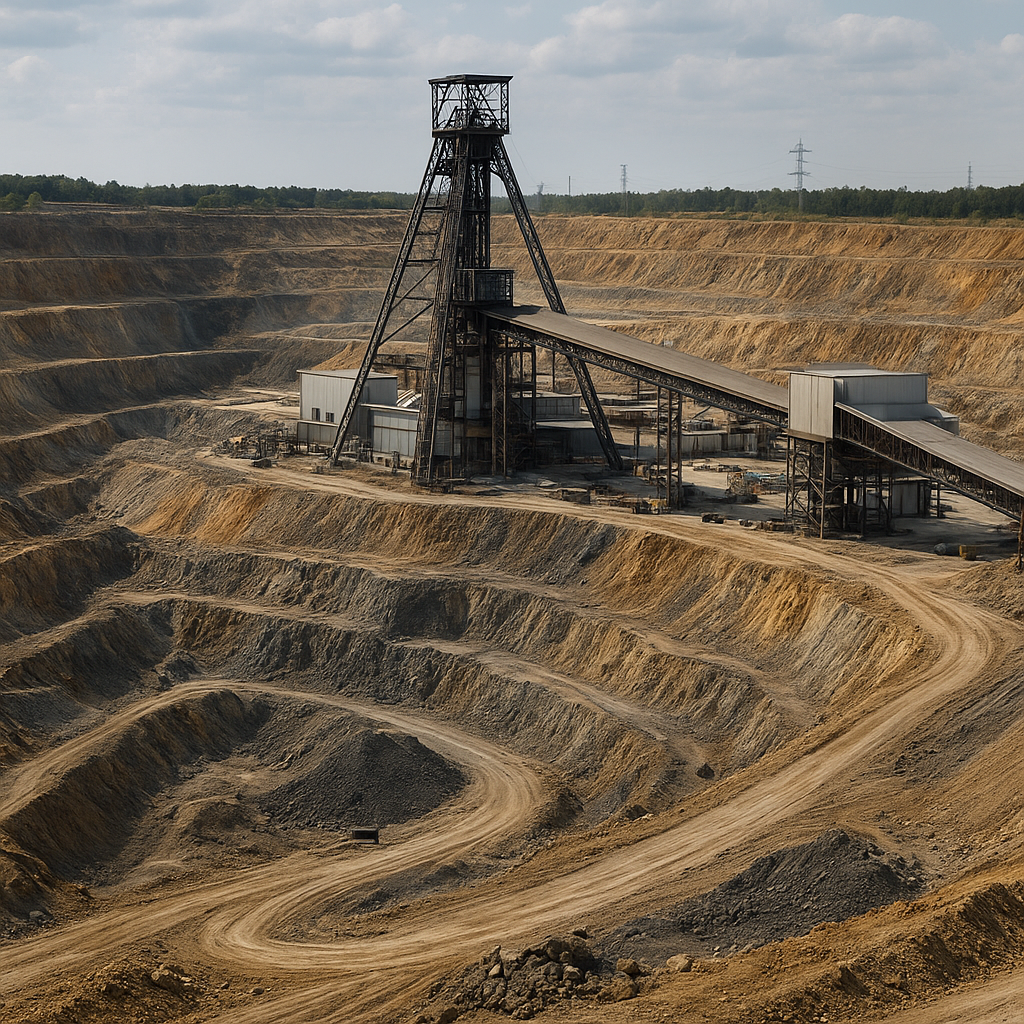
The Polkowice-Sieroszowice mine is a cornerstone of Poland’s mining industry, combining deep geological heritage with modern industrial practice. Located in the historic copper belt of southwestern Poland, this operation produces significant quantities of base and precious metals and plays a major role in regional development and the national economy. The following article describes where the mine is situated, what is extracted there, how the mine operates, its economic importance, and a selection of notable and sometimes surprising facts about the site.
Location and geological setting
The Polkowice-Sieroszowice complex sits in the heart of the Legnica-Głogów Copper District in the Lower Silesian region of Poland. The project is named after the two communes it spans: Polkowice-Sieroszowice, an area characterized by a long tradition of hard-rock mining. The district itself is part of a larger geological province where copper-bearing sedimentary and volcanic sequences accumulate into continuous, exploitable mineralization.
Geologically, ore bodies are hosted in sedimentary-rock sequences that have been affected by folding and faulting over geological time. This structural complexity has created tabular and lens-like bodies of copper-sulfide mineralization, commonly accompanied by elevated concentrations of silver and traces of other metals such as gold and lead. The physical distribution of the ores, together with the depth at which they occur, mandates the use of underground mining methods rather than surface mining.
From a practical point of view, the mine’s location is advantageous: it lies close to regional transport hubs, smelting and refining infrastructure, and a skilled industrial workforce. These factors have made the area a persistent center of mineral extraction and metallurgical activity since large-scale exploration began in the 20th century.
Mineralogy and what is extracted
The primary product of the Polkowice-Sieroszowice mine is copper, typically recovered from copper sulfide minerals such as chalcopyrite and bornite. The copper occurs in association with appreciable amounts of silver, which is recovered as a by-product and contributes importantly to the economic value of the ore. Minor amounts of gold and other trace metals are sometimes present and are recovered during metallurgical processing.
Ore characteristics and recovery
Ore extracted from the underground workings is sent to concentrators where traditional beneficiation processes—crushing, grinding and flotation—are used to produce copper concentrates. These concentrates, enriched in copper and containing residual silver, are then forwarded to smelters and refineries where metal is extracted and refined to commercial grades. The integrated nature of the local supply chain, from mine to smelter, reduces transport costs and helps maintain efficient material flows.
By-products and resource efficiency
Silver is a notable by-product: although it occurs at much lower mass than copper, its high value per unit weight means it makes a substantial contribution to revenue. The economic model of the mine thus depends not only on copper prices, but also on the silver market and the ability to maximize recovery of all valuable elements within the ore.
Mining methods and operational practices
Given the depth and geometry of the ore bodies, the mine uses mechanized underground methods adapted to the local geology. The operation relies on large-scale mechanized drilling and blasting, followed by efficient material transport systems that move ore from the production faces to shafts and rail or conveyor networks.
Infrastructure and safety
Polkowice-Sieroszowice features complex underground infrastructure: shafts, declines, haulage drifts, ventilation systems and dewatering networks. Modern safety standards govern the layout and use of this infrastructure, incorporating continuous monitoring, controlled blasting sequences, and strict protocols for worker entry to active areas. Investment in ventilation, ground support and emergency systems increases operational safety and reduces downtime.
Automation and technological upgrades
In recent decades, the mine has seen growing adoption of technology and automation. Automated loading equipment, remote-controlled drilling rigs, and computerized fleet management systems improve productivity and worker safety. Digital tools for geological modelling, mine planning and predictive maintenance are used to optimize extraction and reduce unexpected interruptions.
Economic importance and regional impact
The Polkowice-Sieroszowice mine is one of the most economically significant single assets in the Polish mining sector. It contributes to the national balance of trade by supplying raw material for domestic metallurgy and by enabling exports of refined metal. The operation is integrated into a broader corporate structure that supports both upstream mining and downstream processing.
Direct and indirect economic roles
- Employment: The mine provides direct jobs for miners, engineers, technicians and administrative staff, and it supports many indirect jobs in contracting, services, transport and supply chains.
- Regional development: Tax revenues, municipal contributions and company investments help fund local infrastructure, schools and social services.
- Export earnings: Copper and silver products derived from the mine enter global markets, bringing in foreign exchange that strengthens the national economy.
- Industrial multiplier: Local suppliers benefit from long-term contracts for equipment, maintenance and logistics, creating a stable industrial ecosystem.
Beyond the immediate economic figures, the mine plays a strategic role in Europe’s raw materials landscape. Copper is essential for electrical systems, renewable energy technologies and industrial machinery, while silver is important in electronics, solar panels and medical devices. As such, the mine contributes to supply chains that underpin modern electrification and decarbonization efforts.
Environmental management and sustainability efforts
Large-scale mining inevitably raises environmental concerns, and Polkowice-Sieroszowice has developed a range of measures to reduce its footprint. Water management and tailings control are central priorities: modern treatment plants ensure that process water meets regulatory standards before release or reuse, and engineered tailings storage facilities are monitored to prevent seepage and minimize risk.
Energy and emissions
The operation consumes significant energy, as do ore processing and smelting activities downstream. Efforts to increase energy efficiency, recover waste heat and transition towards cleaner energy sources feature in corporate sustainability plans. Reducing greenhouse gas emissions and improving the energy intensity of metal production are long-term objectives that shape investment and technological decisions.
Land use and reclamation
While the mine is underground, surface facilities occupy land. Rehabilitation plans and progressive reclamation aim to restore or repurpose sites after they are no longer needed. Community consultation and regulatory oversight help determine acceptable post-mining land uses, which can include recreation, industrial parks or ecological habitats.
Social and cultural dimensions
Mining in the Polkowice-Sieroszowice area has shaped local identity and community life. Generations of families have worked in mining or related industries, and the sector’s presence supports educational programs and vocational training tailored to mining, geology and metallurgy. Corporate social responsibility initiatives frequently fund cultural events, sports facilities and local heritage projects.
At the same time, the company and local authorities must manage the social adjustments that come with technological change, such as automation and shifts in labor demand. Programs for retraining and workforce development help ease transitions and keep local employment resilient.
Interesting facts and lesser-known details
Several aspects of the Polkowice-Sieroszowice mine stand out as particularly noteworthy:
- Long underground networks: The mine contains hundreds of kilometers of drifts and chambers that connect ore bodies and transport routes. This subterranean infrastructure forms a vast, engineered landscape beneath the surface.
- High-value by-products: Although copper is the main commodity, the recovery of silver and other precious metals significantly increases the value of each tonne of ore extracted.
- Innovation in harsh conditions: Continuous operation at significant depths has driven advances in ventilation, ground control and occupational health practices, some of which have been adopted in other mines globally.
- Regional interdependence: The mine is tightly integrated with regional smelters and refineries, creating an industrial chain that has persisted for decades and provides stability to local economies.
- Research collaborations: Geological institutions and universities collaborate with the mine to study ore genesis, improve extraction techniques and train new specialists.
- Adaptive engineering: As mining moves into deeper or more complex parts of the deposit, engineering approaches continuously adapt to manage ground pressures, water inflows and ventilation at depth.
Challenges and future prospects
Like most major mining operations, Polkowice-Sieroszowice faces strategic challenges. Resource depletion of near-surface and easily accessible ore requires deeper mining or the discovery of new ore bodies. Fluctuations in metal prices affect profitability, and evolving environmental standards require ongoing capital investment. At the same time, global demand for copper—driven by electrification, renewable energy and electrified transport—suggests a long-term structural need for reliable copper supplies.
Future prospects will depend on successful integration of new technologies, continued attention to sustainability, and the ability to maintain competitive production while managing environmental and social expectations. Ongoing geological research, smarter automation and stronger circular-economy measures (such as metal recycling and efficient processing) will all influence the mine’s trajectory.
Concluding remarks on significance
The Polkowice-Sieroszowice mine remains a pivotal asset in Poland’s industrial landscape. Operated within a mature metallurgical region and supported by a well-developed infrastructure, it produces crucial raw materials—most notably copper and silver—that feed national and international markets. The site’s combination of deep geological resources, technological evolution and socio-economic integration illustrates the complex role that modern mining plays: it is at once an engine of regional prosperity, a source of high-value commodities, and a field of ongoing technical and environmental innovation. Continued attention to sustainability, workforce development and community engagement will determine how the mine contributes to Poland’s future industrial and social fabric.

