
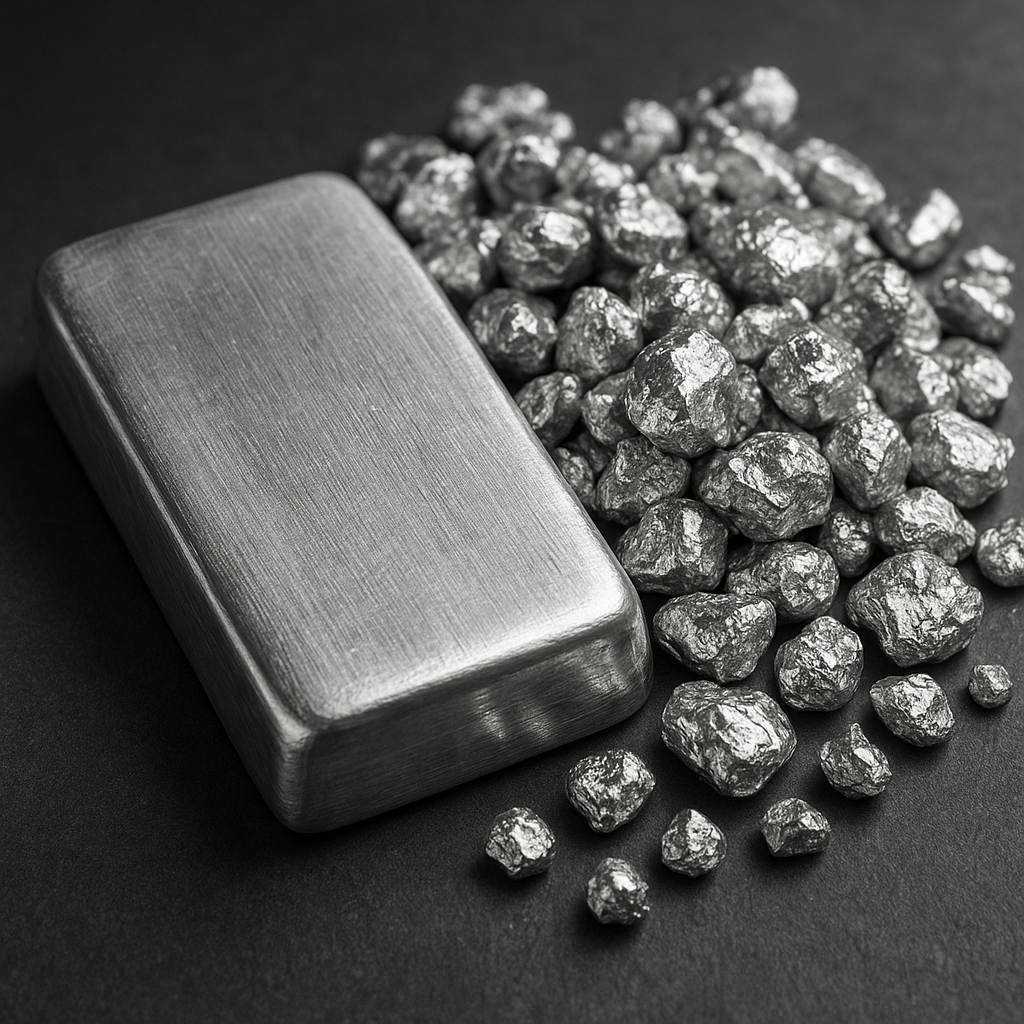
Platinum is a metal of rare beauty and exceptional utility. Distinguished by its pale silvery-white luster and remarkable stability, it occupies a unique place at the intersection of geology, industry, finance and culture. This article explores where platinum is found in nature, how it is extracted and refined, the broad range of its applications, and a number of intriguing facts about its chemistry and role in modern technology.
Geological occurrence and major producing regions
Platinum is one of the rarest elements in the Earth’s crust, typically occurring in concentrations measured in parts per billion. It is a member of the platinum group metals (PGMs), which also include palladium, rhodium, ruthenium, iridium and osmium. These metals share similar chemical behavior and are often found together in nature. Platinum occurs commercially in two main geological settings: layered mafic-ultramafic intrusions and placer deposits.
Layered intrusions and primary deposits
Large, economically important deposits are associated with ancient igneous bodies where magma cooled slowly, allowing heavy, dense metals to concentrate in layers. The most famous example is the Bushveld Complex in South Africa, which supplies a large proportion of the world’s primary platinum. Other notable layered intrusions include the Norilsk-Talnakh region in Russia and the Great Dyke in Zimbabwe. In these environments, platinum exists as alloys and native grains within sulfide minerals or as discrete PGM phases.
Placer deposits
Because platinum is dense and chemically inert, it can survive erosion and become concentrated in alluvial and placer deposits. Rivers and coastal sands may host grains and nuggets of native platinum and platinum-bearing alloys, historically mined in Colombia and in the Ural Mountains of Russia. Modern mining still exploits placer resources in certain regions where they are economically viable.
- Major producers: South Africa, Russia, Zimbabwe, Canada, and the United States (Montana).
- Secondary sources: recycled catalytic converters and industrial scrap.
- Associated elements: palladium, rhodium, gold and nickel.
Properties, extraction and refining
Platinum’s physical and chemical properties are central to both its applications and the challenges of obtaining it. It is dense, malleable and ductile, with a high melting point (around 1768°C), excellent corrosion resistance and significant catalytic activity. These traits mean that although platinum is difficult to extract and refine, its end-use value is high.
Mining and concentration
Primary ore is crushed and milled to liberate sulfide minerals and PGM-bearing phases. Physical separation methods—gravity, flotation and magnetic separation—concentrate the ore. Because PGM minerals occur in very low concentrations, large volumes of ore must be processed, making mining capital-intensive and sensitive to market prices.
Smelting and chemical refining
Concentrates are typically smelted to produce matte and converter products, which are then processed chemically to separate the PGMs. Hydrometallurgical steps include dissolution in strong acids or aqua regia, solvent extraction, ion exchange and precipitation. Precious metals are separated by their differing chemical behaviors: for example, platinum, palladium and rhodium can be fractionally precipitated or separated by selective complexation and reduction.
Recycling and secondary supply
Recycling plays a growing role in the platinum supply chain. End-of-life automotive catalytic converters, electronics, and industrial catalysts are important secondary sources. The recycling process recovers PGMs through thermal and chemical treatment and contributes to resource security and reduced environmental impact relative to primary mining.
Industrial and technological applications
The combination of chemical inertness, high-temperature stability and catalytic properties makes platinum indispensable in many technologies. Below are the principal application areas where platinum’s unique attributes are exploited.
Automotive catalysts
The single largest industrial use of platinum historically has been in vehicle emission-control systems. As an active catalyst, platinum transforms toxic gases—carbon monoxide, hydrocarbons and nitrogen oxides—into less harmful substances. Modern catalytic converters often combine platinum with palladium and rhodium to optimize activity across temperature ranges. The term autocatalyst commonly refers to these devices, which have greatly reduced urban pollution in countries with stringent emissions standards.
Chemical industry
Platinum catalysts are central to several large-scale chemical processes. They enable the production of nitric acid, silicone polymers, and fine chemicals through hydrogenation, oxidation and reforming reactions. The metal’s activity and selectivity are exploited in both homogeneous and heterogeneous catalytic systems. For example, platinum catalysts are used in hydrogenation reactions to produce high-purity chemicals in pharmaceuticals and specialty manufacturing.
Electronics and electrochemistry
Due to its conductivity and resistance to corrosion, platinum is used in electrical contacts, thermocouples and electrodes. In electrochemistry, platinum electrodes serve as inert reference or working electrodes for research and industrial electroplating. Platinum’s stability at high temperatures and in corrosive environments makes it ideal for sensors, medical devices and certain semiconductor production steps.
Jewelry and luxury uses
Platinum’s rarity, lustre and tarnish resistance make it a prized metal for jewelry. It is favored for engagement rings, watches and high-end decorative items. Platinum’s density and durability allow artisans to craft secure settings and fine details that retain their appearance over decades. Its hypoallergenic properties also contribute to its desirability in body-piercing and medical implants.
Medical and laboratory applications
In medicine, platinum is used in surgical instruments, pacemaker electrodes and implanted devices. Certain platinum complexes are pharmacologically active; most notably, cisplatin and related compounds are important anticancer drugs. Platinum compounds interact with DNA and disrupt replication in rapidly dividing cancer cells, making them vital tools in oncology despite side effects that require careful clinical management.
Energy and emerging technologies
Platinum plays a central role in fuel cells, where it acts as an electrocatalyst for both hydrogen oxidation and oxygen reduction reactions. Fuel cells for vehicles and stationary power generation rely on platinum-based catalysts for efficient energy conversion. Because of cost concerns, research is ongoing to reduce platinum loading or develop alternative catalysts, but platinum remains the benchmark for performance.
Economic, environmental and geopolitical aspects
The economics of platinum is driven by a combination of limited supply, diversified demand and geopolitical concentration. Price volatility reflects changes in automotive demand, industrial cycles, investment flows and disruptions to mining regions.
Market dynamics
Investment demand—through bars, coins and exchange-traded products—can influence prices alongside industrial usage. Unlike gold, platinum’s role as an industrial metal means demand is tied closely to manufacturing and automotive sectors. When vehicle production declines, as during economic downturns, platinum demand can fall sharply, pressuring prices. Conversely, environmental regulations that increase catalytic converter requirements can push demand up.
Environmental considerations
Mining and refining platinum involve environmental impacts including land disturbance, energy consumption, and the use of chemicals. Modern operations increasingly focus on minimizing footprints through better tailings management, water recycling and energy efficiency. Recycling PGMs from spent catalysts and electronics reduces the need for primary mining and mitigates some environmental pressures.
Supply concentration and geopolitical risk
Because significant platinum supplies originate from a handful of regions—most notably South Africa and Russia—political instability, labor disputes, or infrastructure problems in these areas can have outsized effects on global supply. Diversifying supply via recycling and exploring deposits in other countries helps reduce vulnerability, but the metal’s rarity makes full diversification difficult.
Interesting chemistry and cultural history
Platinum’s chemistry and cultural story are as compelling as its industrial uses. The metal was known to pre-Columbian peoples in South America, who used natural platinum alloys in artifacts. European scientists began studying the metal in the 18th century; its name derives from the Spanish term platina, meaning “little silver.”
Chemical uniqueness
Platinum’s d-electron configuration confers distinctive catalytic properties. Its ability to adsorb and activate small molecules—hydrogen, oxygen, carbon monoxide—underlies its effectiveness in catalysis. In homogeneous catalysis, platinum complexes can mediate carbon–carbon bond formation and other transformations with high selectivity, making them indispensable in synthetic chemistry.
Cultural and artistic roles
Beyond jewelry, platinum has found a place in art and design. Photographers in the late 19th and early 20th centuries prized platinum printing for its tonal range and permanence. Contemporary artists and designers exploit platinum’s color and texture for limited-edition objects, while collectors value vintage platinum jewelry for its historical craftsmanship.
Scientific milestones
Platinum surfaces and nanoparticles remain focal points in research. Advances in nanostructured platinum catalysts have enabled progress in fuel cell technology and selective catalytic processes. Isotopic studies and high-resolution geochemical mapping continue to refine our understanding of how platinum deposits form, guiding exploration strategies.
Future prospects and challenges
The future of platinum will be shaped by technological innovation, environmental regulation and market responses. Demand pressures from emerging clean-energy technologies—such as fuel cells—could increase, even as efforts to substitute or reduce platinum use continue. Breakthroughs in catalyst design, recycling efficiency and alternative materials could alter the metal’s role, but for now platinum remains a critical and irreplaceable material in many high-value applications.