
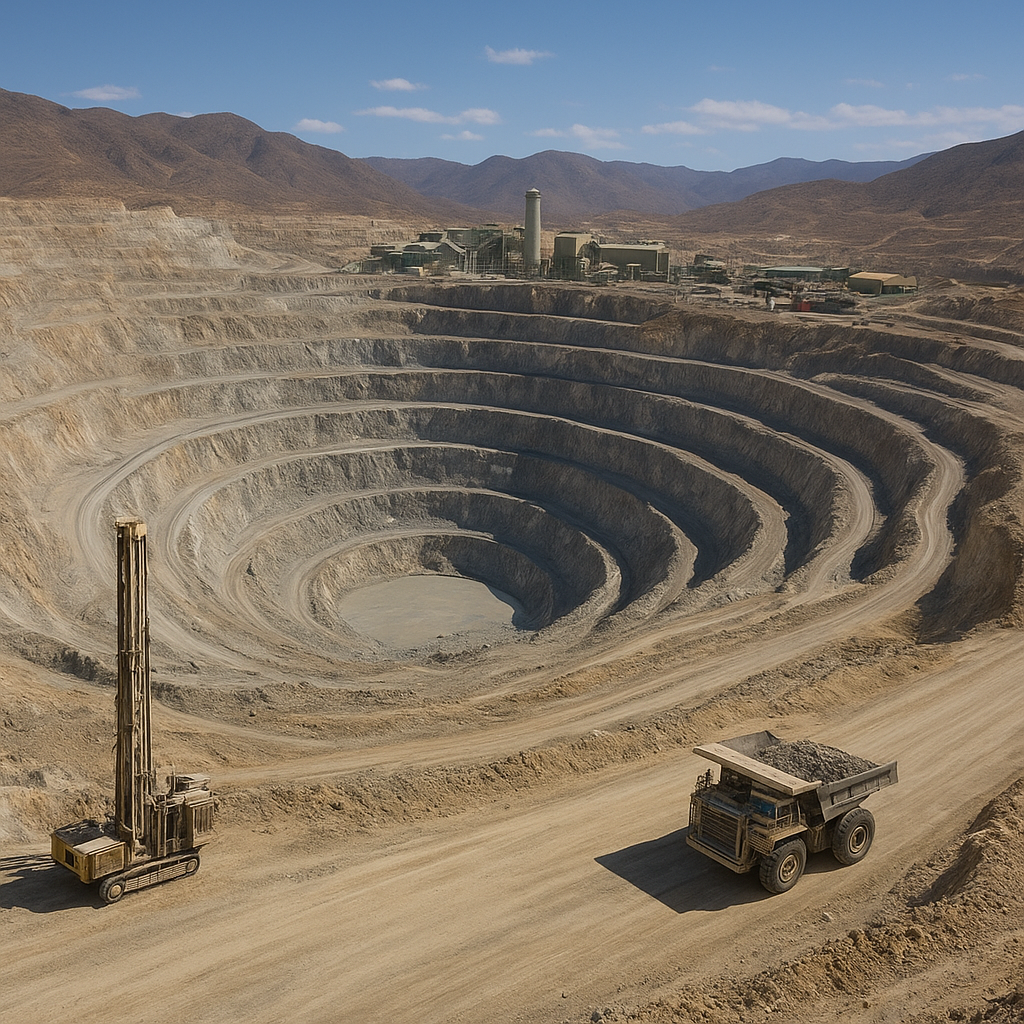
The Peñasquito Zinc Expansion is part of an evolving story at one of Mexico’s largest polymetallic operations. Located high on the central-northern plateau, this project focuses on boosting the recovery and production of base metals—especially zinc—alongside the mine’s significant gold and silver output. Beyond the technical and engineering questions, the expansion has implications for regional development, local employment, environmental management and Mexico’s position in global metals markets.
Location and geological context
The Peñasquito complex sits in the municipality of Mazapil in the state of Zacatecas, in north-central Mexico. The site occupies a remote, arid highland region characterized by rugged topography and elevations that commonly exceed 2,500 meters above sea level. Access is by paved and gravel roads that connect the mine to the regional rail and highway networks servicing central Mexico.
Geologically, Peñasquito is a large, polymetallic deposit formed within the mineral-rich belt that runs through Zacatecas. The deposit hosts a mixture of metals—gold, silver, lead and zinc—in various styles of sulphide mineralization. Mineralization is typically associated with intrusive and hydrothermal activity and appears as disseminated and vein-hosted sulphides, where minerals such as sphalerite (zinc ore) and galena (lead ore) occur alongside gold and silver-bearing phases. The polymetallic nature of the deposit allows metallurgical flowsheets that can produce separate concentrates for base metals and precious metals, enhancing economic resilience when prices for one metal fluctuate.
Operations and the zinc expansion project
Peñasquito operates primarily as an open-pit mine with conventional truck-and-shovel mining methods. Ore is hauled to a surface concentrator where grinding and flotation circuits recover sulphide minerals into concentrates. Historically, the operation has focused on gold and silver as primary revenue drivers, with zinc and lead produced as by-product concentrates. The purpose of the Peñasquito Zinc Expansion is to increase recovery and processing capacity specifically for zinc-bearing ore, converting a larger fraction of mined material into saleable zinc concentrate.
Objectives and technical components
The expansion targets several technical and operational outcomes. Principal goals include:
- Improve zinc recovery rates by optimizing flotation reagents, circuit configuration and the addition of a dedicated zinc flotation train.
- Increase overall processing throughput so a greater portion of polymetallic ore reports to zinc concentrates rather than being lost to waste or tailings.
- Upgrade tailings management and water recycling systems to handle higher process flows while minimizing freshwater consumption.
- Install or expand infrastructure—pumps, piping, power supply and concentrate handling—to accommodate higher volumes of base metal product.
Technically, a zinc expansion can involve selective grinding to liberate sphalerite, staged flotation to suppress lead and silver reporting to zinc concentrates, and improved dewatering systems to meet concentrate shipping specifications. The project typically integrates metallurgical testwork, pilot plant trials, detailed engineering, and phased construction to limit production disruption.
Why expand zinc at Peñasquito?
There are several strategic reasons for emphasizing zinc production at Peñasquito. First, zinc is a vital industrial metal used in galvanizing, alloys and chemical compounds; diversifying metal output helps hedge against volatility in noble metal prices. Second, adding value through additional concentrate volume increases cash flow and optimizes the economic life of the mine. Third, in some periods zinc prices have outperformed gold on a per-tonnage basis when markets favor base-metal demand tied to infrastructure and manufacturing growth. Finally, maximizing recovery of the deposit’s base metals is a sound resource-management approach: it ensures that the full value of the ore body is realized, rather than leaving economically recoverable zinc in the tailings.
Economic and social significance
Peñasquito is among the most important mining operations in Mexico and a major contributor to Zacatecas’ regional economy. The mine generates revenue through metal sales, pays royalties and taxes to municipal, state and federal authorities, and sustains a broad supply chain of contractors and service providers. The expansion of zinc production magnifies these effects by increasing direct and indirect employment, boosting local procurement and raising the value of exports.
Key economic impacts include:
- Job creation: Direct mine employment and contractors expand during construction and ongoing operations; a zinc expansion typically supports hundreds of construction jobs and sustained operational positions once ramped-up.
- Supply-chain growth: Local suppliers—transport, maintenance, catering, and construction firms—benefit from higher levels of activity and longer project timelines.
- Government revenue: Increased production leads to higher royalties, taxes and export-related income that can fund public services and infrastructure in the region.
- Regional development: Mining operations often promote road upgrades, utilities expansion and investments in health and education through corporate social responsibility programs and public-private partnerships.
The employment multiplier effect is significant in mining provinces; wages paid to workers circulate in local economies and support a range of small businesses. Many mines also implement skills training and local hiring policies that enhance long-term workforce capabilities in the region.
Environmental management, water and community relations
Large mining operations inevitably raise environmental and social questions. At Peñasquito, water use, tailings management and relations with nearby communities and landholders have been focal points of public attention. The arid setting makes responsible water stewardship critical: processing higher volumes for a zinc expansion intensifies scrutiny on freshwater abstraction, on-site recycling and treated effluent discharge.
To mitigate environmental impacts, the mine has developed measures such as enhanced water-recycling circuits, closed-loop processing in certain areas, and investments in tailings storage facilities designed to modern engineering standards. Upgrades typically include better liners, seepage control, monitoring networks and contingency plans. The expansion project often necessitates additional environmental impact assessments, permitting, and community consultation to ensure that operational changes meet regulatory and stakeholder expectations.
Community relations are as important as technical solutions. Peñasquito has historically engaged in social programs—healthcare, education, and infrastructure projects—to support local communities, though relationships have at times been tense. Disputes over land access, employment expectations and perceived impacts on water availability have led to protests in the past. Meaningful, ongoing engagement—transparent communications, benefit-sharing agreements and grievance mechanisms—helps reduce conflict and integrate local perspectives into operational planning.
Challenges and risk management
Expanding zinc production brings operational, market and social risks that require active management. Operational risks include achieving the anticipated metallurgical recoveries, avoiding delays and controlling capital costs. Metallurgical complexity in polymetallic ores can result in unpredictable interactions between minerals that make flotation optimization a technical challenge.
Market risk is the volatility of metal prices and the cost of inputs (energy, reagents, labor). A well-structured project assesses price sensitivity across different metals and maintains flexibility in concentrate marketing strategies. Contracts with smelters and traders, hedging practices and diversified customer bases can reduce exposure to single-market shocks.
Social and regulatory risks include permitting delays, legal disputes and community protests. The mine mitigates these by maintaining compliance programs, environmental monitoring, and robust stakeholder engagement. Projects increasingly incorporate benefit-sharing frameworks, local procurement targets and long-term community development plans to build resilient social license to operate.
Interesting facts and technical innovations
Several aspects of Peñasquito and its zinc expansion are noteworthy beyond the immediate economics:
- Peñasquito ranks among Mexico’s largest producers of precious and base metals, and any substantial change in its product mix affects national export profiles and regional employment dynamics.
- Because of the high-altitude and arid climate, the operation must manage dust, cold-season logistics and water scarcity—factors that influence design choices for conveyors, plant enclosures and water-saving technologies.
- Modern metallurgical approaches—such as staged flotation, advanced reagents, and locked-cycle testing—are central to increasing zinc recoveries without compromising gold and silver circuits.
- Peñasquito has been an arena for evolving corporate-community models in Mexico, combining infrastructure investments with programs aimed at agricultural productivity, local business development and environmental monitoring.
- The operation illustrates how polymetallic mines can adapt to changing commodity markets: by increasing base-metal output, a mine can create resilience when gold or silver prices fall.
Future outlook
The success of a zinc expansion at Peñasquito depends on achieving metallurgical targets, managing environmental footprint, and sustaining constructive community relationships. If these elements align, the project can extend the mine’s economic life, deliver higher export volumes of zinc concentrates and contribute to local and national economies. Advances in processing technology and increasingly stringent environmental standards mean that expansions are not merely mechanical increases in capacity but integrated upgrades that can raise operational efficiency and reduce per-unit environmental impacts.
Strategically, an expanded zinc stream diversifies revenue and aligns the mine with global demand for base metals used in infrastructure and manufacturing. The project also serves as a case study in balancing technical optimization with social responsibility: companies that invest in transparent engagement and robust environmental safeguards are better positioned to realize the long-term value of their mineral assets.
Conclusion
The Peñasquito Zinc Expansion represents a multi-faceted development: a technical effort to extract more of the deposit’s base-metal value, an economic lever for regional growth and a test of how modern mines can reconcile high production rates with environmental stewardship and social expectations. As the project progresses, stakeholders—from local communities to national policymakers—will be watching how increased zinc output is balanced against the need for sustainable water use, effective tailings management and shared benefits for the people of Zacatecas and beyond.

