
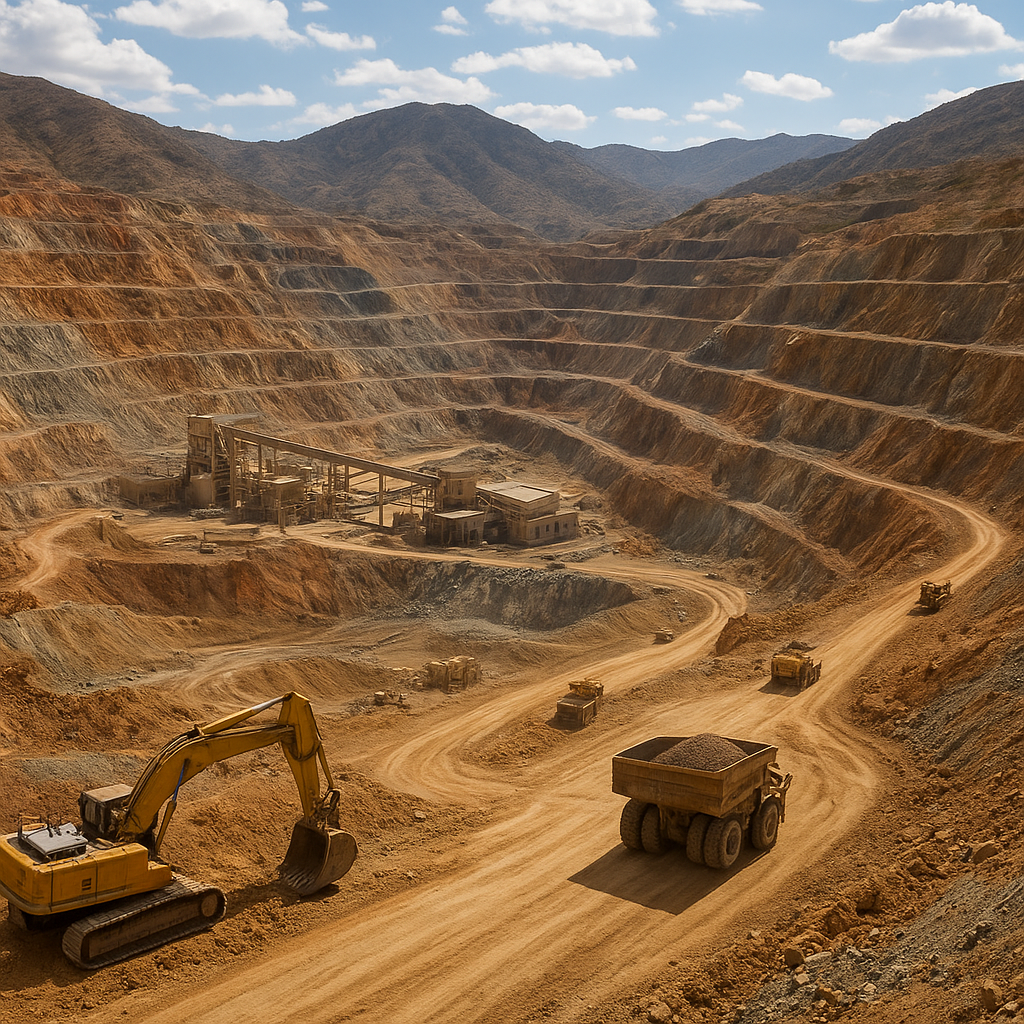
The Palmarejo mine in Mexico is one of the country’s noteworthy gold‑silver producers, situated in a region with a long mining tradition and complex geology. This article outlines where Palmarejo is located, what minerals are extracted there, its economic role for local and national stakeholders, and several technical and historical points that make the operation interesting. The text describes geology, production and processing, socio‑economic impacts, environmental practices, and some lesser known facts that highlight why Palmarejo is considered significant in the landscape of Mexican mining.
Location and geological setting
Palmarejo is located in the state of Chihuahua, in northern Mexico, within the broad mineralized belt of the Sierra Madre Occidental. The mine occupies a terrain characterized by folded volcanic and sedimentary rocks that host multiple vein systems. These vein systems are typical of high‑level, low‑sulfidation and intermediate‑sulfidation epithermal mineralization commonly associated with significant gold and silver values in Mexico.
Regional context
- Chihuahua is part of a long metallogenic province that includes numerous polymetallic deposits important since colonial times.
- Palmarejo benefits from good access to regional infrastructure — roads, power lines and towns — which reduces logistical costs compared with more remote operations.
- The deposit occurs within a cluster of vein systems and breccias, making it amenable to both surface and underground exploitation strategies.
Local geology and mineralization
The deposit is characterized by quartz‑carbonate veins, stockwork zones and localized breccia pipes. Mineralization typically includes electrum and native gold within quartz veins together with silver minerals (e.g., argentite, acanthite) and sulfide phases that commonly contain lead and zinc as by‑products. This combination of metals is a hallmark of productive epithermal systems in Mexico. Hydrothermal alteration halos and structural controls such as fault intersections often define higher‑grade shoots, guiding mine planning and stoping.
What is mined and how it is processed
Palmarejo produces both gold and silver as primary metals, with lesser amounts of base metals often recovered as credits. The operation typically includes a mix of open‑pit and underground extraction depending on orebody geometry, with crushed ore fed to conventional milling circuits for recovery.
Mining methods
- Shallow or near‑surface parts of the deposit are exploited by open pit methods when economic and geotechnically feasible.
- Higher‑grade, deeper portions are developed by underground declines, ramps and selective stoping to optimize recovery and minimize dilution.
- Mine planning places emphasis on identifying and extracting high‑grade veins and shoots to maintain economic throughput.
Processing and metallurgical flowsheet
Typical processing at Palmarejo‑style operations involves crushing and grinding, followed by gravity concentration where coarse free gold is present. The milled product then usually goes through flotation and/or cyanide leaching depending on mineralogy and the economic balance between silver and gold recovery. Metallurgical circuits are designed to maximize recovery while minimizing consumption of reagents and water. Tailings produced by milling are managed in engineered impoundments subject to local regulation and company standards.
By‑products and credits
In addition to the principal gold and silver production, Palmarejo‑type deposits commonly yield payable quantities of lead, zinc and sometimes copper in concentrates. These by‑products are valuable as revenue credits and help improve overall project economics.
Economic significance
Palmarejo contributes to multiple layers of the economy: corporate revenues for the operator, tax and royalty income for federal and state governments, and local economic activity through employment and procurement. Mines of this scale are often important employers in rural regions where alternative formal employment may be limited.
Direct and indirect economic impacts
- Employment: A mine like Palmarejo generates hundreds to thousands of direct jobs (operations, technical staff, maintenance) and many more indirectly through service providers and local businesses.
- Local procurement: Goods and services — from fuel and explosives to catering and transport — are procured locally whenever possible, providing cash flow to nearby towns.
- Government revenue: Taxes, royalties and permit fees contribute to municipal, state and federal budgets, funding local infrastructure and services.
- Export earnings: Produced metals that are exported contribute to Mexico’s trade balance and foreign currency inflows, especially important for metal‑exporting regions.
Macroeconomic and market role
On a national scale, large gold‑silver mines help sustain Mexico’s reputation as a global leader in silver production and a major gold producer. The metals extracted at Palmarejo are sold into global markets, affecting and being affected by bullion prices. In times of higher precious‑metal prices, such mines become especially profitable, encouraging reinvestment, exploration and potential expansion.
Social and environmental considerations
Modern mining operations in Mexico face growing expectations from regulators, communities and investors regarding environmental management and social responsibility. Palmarejo‑type mines must address water usage, tailings storage, biodiversity, air quality and community relations proactively to maintain their social license to operate.
Water, tailings and waste rock
- Processing and dust suppression require significant water; operators implement recycling programs and water‑balance plans to limit fresh water withdrawals.
- Tailings are stored in engineered facilities. Continuous monitoring, seepage control and progressive reclamation are common practices.
- Waste rock management is designed to limit acid rock drainage potential through segregation, encapsulation and, where necessary, reactivity treatment.
Community engagement and benefits
Successful projects invest in community development — local hiring and training, health and education programs, and infrastructure projects such as roads and water systems. Ongoing dialogue with landowners, municipal authorities and civil society is critical. Many operators also support small business development through capacity building and procurement policies that favor local suppliers.
Regulatory and ESG pressures
Operators face increasingly stringent environmental, social and governance (ESG) standards from investors and lenders. Transparency in reporting, third‑party audits, and adherence to international best practices (tailings management, human rights due diligence, emissions control) are fundamental to securing capital and ensuring long‑term viability.
History and development
Mining in the region around Palmarejo reflects the classic Mexican mining lifecycle: early small‑scale and artisanal work, followed by exploration booms and modern industrial development. Over the last several decades, systematic exploration and investment converted formerly overlooked vein sets into a commercial mine. Advances in geology, geophysics and metallurgical testing often unlocked value that traditional miners could not exploit.
Exploration and discovery phases
- Initial discovery typically involved surface mapping and sampling, followed by trenching and drilling to define continuity and grade.
- As reserve definitions matured, feasibility studies informed decisions to develop the mine, select processing routes and design environmental controls.
- Subsequent infill drilling and underground development often expanded mines beyond initial resource estimates, demonstrating the episodic nature of deposit evaluation.
Modern milestones
Key phases in a mine’s life include the construction of the processing plant and supporting infrastructure, ramping up to commercial production, and later expansions or optimization campaigns. Technical innovations such as improved recovery methods, paste backfill in stopes, or more efficient power use have extended mine life and lowered unit costs in many comparable operations.
Operational challenges and technical highlights
Running a gold‑silver mine in northern Mexico involves a number of technical and logistical challenges. At the same time the site often showcases innovations in mine design, geometallurgy and environmental mitigation that are of broader interest to the mining industry.
Grade variability and selective mining
Epithermal vein systems can be highly variable in grade and thickness, requiring selective mining methods and detailed geological control to maintain consistent mill feed. Advanced grade control drilling and geostatistical modeling are used to target high‑value shoots, reducing dilution and improving overall recoveries.
Power and energy efficiency
Energy is one of the largest operating costs. Projects like Palmarejo pursue energy efficiency measures and sometimes integrate renewable energy sources (solar or wind) to reduce costs and emissions. Energy optimization in grinding circuits and the use of variable‑speed drives are common measures.
Safety and workforce development
Safety is a priority in underground and surface operations. Continuous training programs, emergency response planning and adoption of modern ventilation, rock support and monitoring technologies reduce risk and improve productivity. Workforce development programs also provide technical skill training that benefits the local labor pool beyond the mine’s life.
Interesting facts and lesser known aspects
Several features make Palmarejo‑style operations intriguing beyond their headline metal output. These aspects reveal the interaction of geology, technology and society in a modern mining context.
- Historic continuity: The region’s mining legacy often stretches back to colonial times, with historic workings sometimes exposed during modern open‑pit phases and informing geological interpretations.
- Complex mineralogy: The presence of both free gold and silver sulphides can complicate metallurgical recovery but also offer opportunities for multiple revenue streams.
- Adaptive mine planning: Mines in this setting typically evolve from open pit to underground over their life, demonstrating flexible engineering and staged investment strategies.
- Local economic multiplier: The ripple effect of wages and procurement supports numerous small businesses and services in nearby towns, sometimes transforming local economies.
- Exploration upside: New vein discoveries and deeper mineralization often extend mine life significantly, rewarding continued exploration investment.
Future prospects and considerations
The future of an operation like Palmarejo depends on several variables: global metal prices, ongoing exploration success, regulatory environment, and the operator’s ability to manage environmental and social expectations. The mine’s value proposition is strengthened by continuing exploration that can add resources, by operational improvements that reduce unit costs, and by maintaining positive community relations.
Opportunities
- Resource expansion through systematic drilling campaigns targeting deeper or satellite veins.
- Metallurgical optimization to increase recovery of refractory fractions or to better recover by‑product metals.
- Operational efficiencies and potential integration of renewable energy sources to lower costs and carbon footprint.
Risks
- Commodity price volatility can dramatically affect cash flow and investment plans.
- Environmental or social conflicts can disrupt operations if not proactively managed.
- Technical challenges such as water management, tailings integrity and unforeseen geotechnical issues may require capital and time to resolve.
In summary, the Palmarejo mine exemplifies a modern Mexican precious‑metals operation: it is underpinned by a rich geological setting, produces significant volumes of gold and silver, and plays an important role in the regional economy. The interplay of technical innovation, environmental stewardship and community engagement will shape its trajectory in the years to come.

