
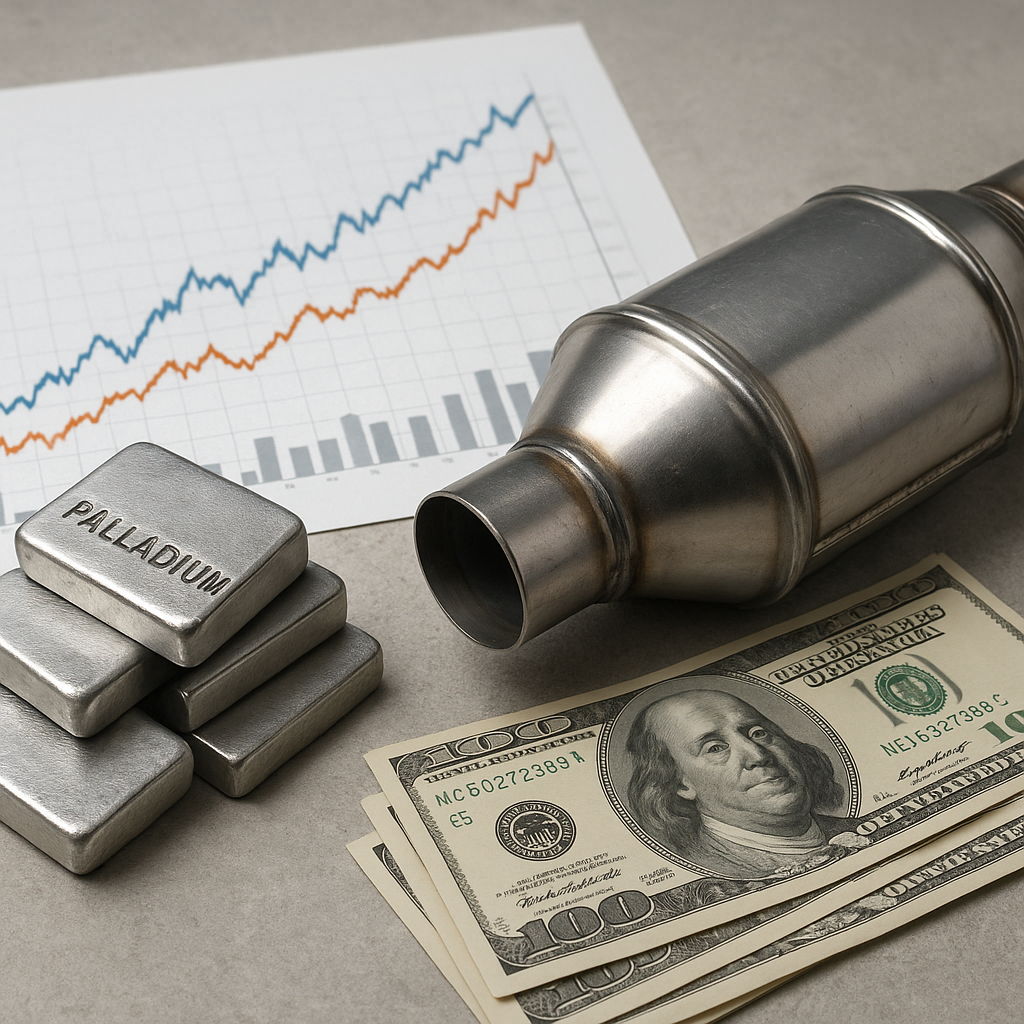
The global market for palladium has undergone dramatic shifts over the past decade, driven primarily by the evolving landscape of automotive emissions control and changing geopolitical supply patterns. This article explores the complex interplay between industrial demand for palladium, the role of catalytic converters in regulating vehicle emissions, supply-side constraints, and how recycling and technological substitution are reshaping long-term prospects. Readers will find analysis of market dynamics, policy influences, and practical implications for producers, consumers, and investors.
Market overview and historical context
Palladium is a member of the platinum-group metals (PGMs) and is critically important for converting harmful exhaust gases into less harmful substances in gasoline engines. Over the past decade, the market experienced sharp price rises as automotive demand expanded and supply sources became strained. Historically, palladium traded at a premium to its sibling metals at times and at a discount at others, reflecting swings in industrial use and investor sentiment.
Key characteristics of the palladium market
- Concentration of production: A substantial share of palladium mining is concentrated in a few countries, most notably Russia and South Africa, making supply vulnerable to geopolitical and operational risks.
- Industrial dependency: The automotive sector accounts for the majority of palladium demand, primarily through catalytic converters in gasoline vehicles.
- Price behavior: The market has exhibited pronounced price volatility due to sudden shifts in emissions regulations, currency movements, and supply disruptions.
These structural attributes mean that even relatively small changes in vehicle production or regulatory policy can ripple through palladium prices and availability.
Drivers of demand: automotive, regulations, and beyond
The dominant driver of palladium demand remains the automotive industry. Catalytic converters containing palladium are essential for oxidizing carbon monoxide (CO) and hydrocarbons (HC) in gasoline-powered vehicles, helping manufacturers meet increasingly stringent emissions standards.
Emissions regulations and their impact
- Stricter vehicle tailpipe standards in regions such as the European Union, North America, and China have historically increased the loadings of PGMs in converters, boosting demand for palladium.
- Real-world driving emissions tests and regulatory changes can prompt sudden shifts in converter design, altering palladium usage per vehicle.
- Policy divergence—where some jurisdictions accelerate electric vehicle adoption while others retain internal combustion engine (ICE) fleets longer—creates uneven regional demand.
While electric vehicles (EVs) do not require conventional catalytic converters, the global transition to EVs is gradual. Many markets, particularly in emerging economies, will continue to rely on ICE and hybrid vehicles for years, sustaining palladium demand in the medium term.
Other industrial uses
Beyond automotive applications, palladium is used in electronics, dentistry, hydrogen purification, and chemical catalysis. Growth in sectors such as electronics manufacturing and hydrogen technologies can incrementally add to overall demand, though the automotive sector remains the dominant force.
Supply-side constraints and geopolitical risks
Palladium supply faces both geological and geopolitical challenges. Natural reserves are limited and concentrated geographically, which raises the risk of supply interruptions and price shocks.
Major producing regions and their risks
- Russia: Home to large-scale producers; geopolitical tensions, sanctions, and export restrictions can quickly reduce exports and tighten the market.
- South Africa: Another major source of PGMs, but production is susceptible to labor disputes, power supply issues, and operational disruptions.
- Recycling: Secondary supply from recycled catalytic converters is significant but uneven and dependent on scrap flows and metal recovery efficiency.
Any disruption in these channels can create immediate imbalances because primary mining projects cannot be scaled up rapidly. Moreover, long lead times for new mines and complex permitting processes limit the speed at which supply can respond to price signals.
Technological and operational constraints
Mining PGMs is capital-intensive and technologically demanding. Environmental regulations, mine depletion, and the need for continuous investments in processing facilities all constrain the ability of supply to expand quickly. These structural limits underpin periods of sustained high prices when demand surges.
Recycling, substitution, and technological developments
Given supply risks and price spikes, recycling and substitution play crucial roles in balancing the palladium market. Advances in recovery technologies and changes in converter design can materially affect the net demand for primary palladium.
Recycling of catalytic converters
- End-of-life vehicle recycling is a growing source of secondary palladium. Efficient collection systems and improved hydrometallurgical and pyrometallurgical recovery techniques boost recycled supply.
- Regulatory incentives and higher metal prices encourage better recovery rates and investment in recycling infrastructure.
- However, recycled volumes lag behind immediate demand surges because vehicles reach end-of-life only after many years, creating a lagged supply response.
Material substitution and engineering responses
Automakers and catalyst manufacturers can respond to palladium scarcity by:
- Substituting platinum for palladium in certain catalyst formulations, though this depends on cost and performance trade-offs.
- Optimizing converter designs to reduce metal loadings while maintaining regulatory compliance.
- Researching alternative catalyst chemistries and the use of base metals where viable.
These strategies help mitigate acute price pressure but are limited by performance requirements and the pace of adoption across global vehicle fleets.
Regional demand patterns: the role of China and emerging markets
Regional economic growth and vehicle fleet composition significantly shape palladium demand. China, in particular, is a critical market due to its sheer scale of vehicle production and its evolving emissions policies.
China’s influence
- China’s regulatory tightening and adoption of real-world emissions testing increased the uptake of better-performing catalytic systems, lifting palladium consumption.
- At the same time, strong growth in EV adoption in urban centers affects future palladium demand trajectories.
- China’s manufacturing base also influences demand for PGMs in electronics and industrial catalysts.
Emerging markets where ICE vehicles continue to be dominant will sustain demand for palladium for longer, even as developed markets transition faster to electrified transport.
Price outlook and investment considerations
Forecasting palladium prices requires integrating short-term supply disruptions, long-term technological trends, and policy-driven demand shifts. Investors and industrial users must weigh several considerations when positioning for future price moves.
Short- to medium-term drivers
- Supply shocks arising from mine outages or geopolitical events can trigger acute price spikes.
- Unexpected changes in vehicle production, such as cyclical slowdowns or shifts to EVs, can depress near-term demand.
- Recycling volumes and converter return flows create a partial buffer but are inherently lumpy and lagged.
Long-term considerations
Over a longer horizon, structural shifts in the automotive mix—rising penetration of EVs and continued growth of hybrid technologies—will determine whether palladium demand declines, stabilizes, or rebalances via substitution to platinum. Investors should also monitor technological advances in hydrogen economies and fuel cells, which could create new industrial demand streams for PGMs, including palladium in some applications.
Risk management strategies
- Industrial consumers can hedge by entering into long-term supply contracts, diversifying sources, and investing in recycling programs.
- Investors should diversify across PGMs and related sectors and consider exposure to upstream producers, recycling firms, and exchange-traded products where available.
- Keeping an eye on regulatory developments—especially emissions standards and EV incentives—remains critical for both short- and long-term positioning.
Implications for stakeholders: manufacturers, recyclers, and policymakers
The interplay of market forces creates distinct challenges and opportunities for different stakeholders. Automotive manufacturers must balance compliance costs with competitive pressures, while recyclers see potential for expansion as metal prices incentivize recovery. Policymakers face trade-offs between promoting cleaner transport and managing the resource implications of transition strategies.
Manufacturer strategies
- Invest in catalyst efficiency to reduce PGM loadings without compromising emissions performance.
- Expand partnerships with recyclers to secure secondary supply streams and reduce exposure to volatile spot markets.
- Accelerate electrification plans where economically feasible to lower exposure to PGM supply risks over time.
Recyclers and service providers
Those operating in the recycling value chain can capitalize on higher metal prices by investing in technologies that improve recovery rates and processing throughput. Policymakers that support circular economy initiatives—such as incentivizing vehicle scrappage with recycling mandates—can enhance secondary supplies of palladium and other critical metals.
Closing note on market dynamics
Ultimately, the future of the palladium market hinges on a delicate balance between persistent automotive demand for emission control technologies and the accelerating transition to electrified transport. Supply constraints and geopolitical concentration will likely keep the market sensitive to shocks, while recycling and substitution can gradually ease pressure if supported by technological advances and policy frameworks. Stakeholders who understand these dynamics and act to diversify risk, optimize material use, and invest in sustainable recovery stand to navigate the coming years with greater resilience.
