
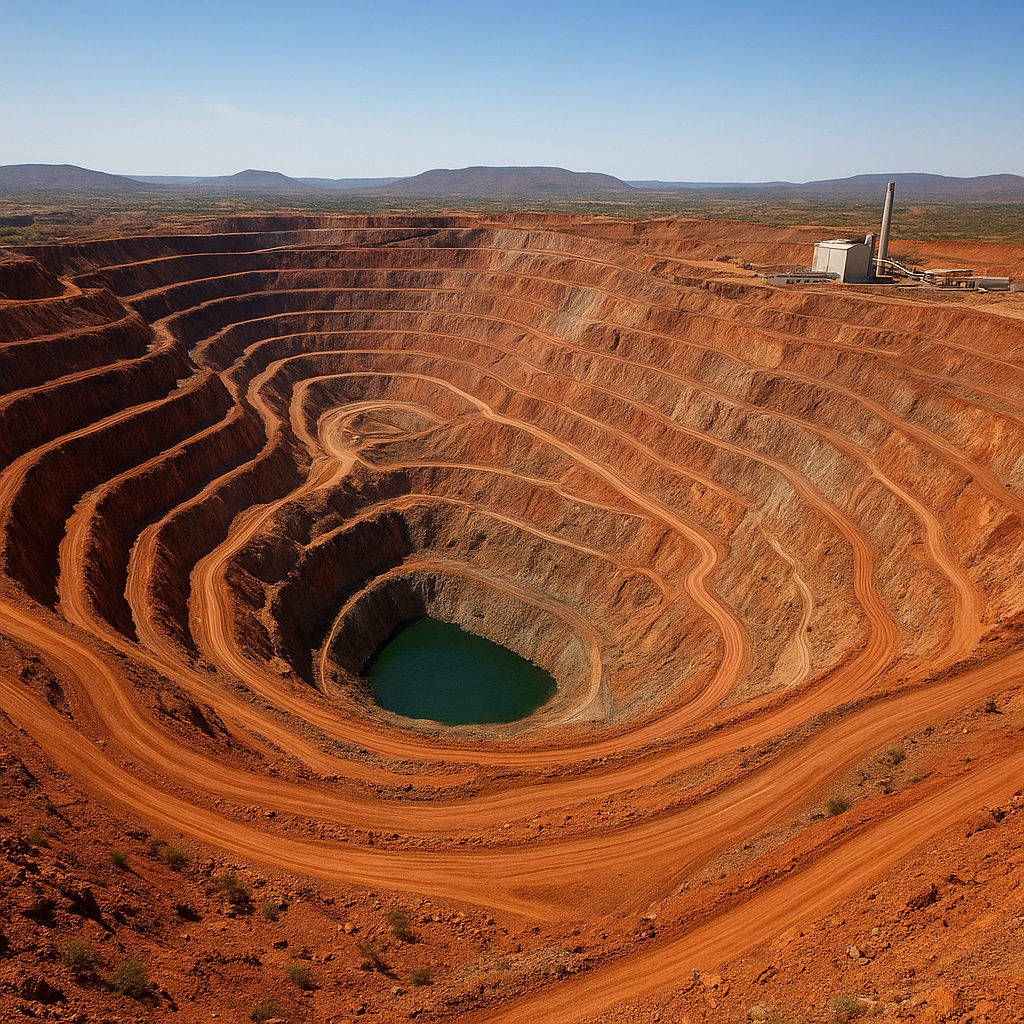
The Palabora mining complex in northeastern South Africa stands as one of the country’s most recognizable mineral operations. Famous for its large open pit and the transition to extensive underground workings, Palabora is primarily known for producing copper but also yields several important by-products. This article explores where the mine is located, the geology and commodities it exploits, the methods and scale of its operations, its economic and social significance, and a selection of particularly interesting facts about the site and its broader legacy.
Where Palabora Mine Is Located
Palabora Mine is situated near the town of Phalaborwa in the Limpopo province, in the northeastern part of South Africa. The area lies close to the western boundary of the Kruger National Park and sits within a landscape of savanna and scattered agricultural settlements. Because of its location, the mine plays a central role in the economy of the immediate region and serves as the primary employer for many local communities.
Geographic and logistical context
The mine’s proximity to national roads and rail networks provides important logistical advantages for moving concentrates and processed products to domestic smelters and export facilities. Its location within a semi-arid zone also shapes water management and environmental strategies. The site itself is centered on a striking circular geologic feature visible on maps and satellite imagery: the Palabora Igneous Complex, which hosts the valuable ore.
Geology and What Is Mined
The mineralization at Palabora is hosted within a unique intrusive complex. The deposit is distinguished by a large, layered igneous body with associated zones of sulphide mineralization. The mine exploits a copper-rich orebody in which copper occurs principally as chalcopyrite and other sulphide minerals. Beyond the primary copper commodity, the operation produces several by-products and concentrates relevant to steelmaking and other industries.
Primary and secondary commodities
- Copper: The core product, recovered through conventional concentration and smelting/refining pathways. Copper is produced as concentrates and, where applicable, cathode material depending on processing arrangements.
- Magnetite: Iron-bearing magnetite is produced as a secondary concentrate. This product can be used in the steel industry or blended for specific metallurgical applications.
- Other minor metals and by-products: The complex can yield economically interesting traces of other elements often associated with mafic-ultramafic systems; in some operational phases, commodities such as precious metals and small quantities of other industrial minerals have been recovered or processed.
Orebody characteristics and mining phase transition
Originally exploited as a large open pit, the geometry of the Palabora intrusion produced a substantial surface excavation that became one of the region’s most notable landscape features. As the near-surface ore was depleted, the operation transitioned to extensive underground workings to access deeper parts of the resource. The shift from open-pit to underground methods is a hallmark of mature, large-scale mines that extend life-of-mine and preserve economic value in deeper ore zones. The underground mining has relied on bulk underground methods such as block caving and similar techniques suitable for massive orebodies.
Operations, Processing and Technology
The Palabora complex combines surface and underground mining with metallurgical processing. Mining operations include ore extraction, haulage, and orehandling, while processing typically involves crushing, milling, flotation to produce copper concentrate, and downstream smelting or refining. The existence of a magnetite processing stream adds metallurgical diversity to the site’s facilities.
Concentration and smelting
Ore delivered from the mine is processed in concentrators where flotation separates copper sulphide minerals from the waste rock. Concentrates are either smelted on-site (where smelting capacity exists) or transported to external smelters and refineries. The presence of magnetite and other minerals often requires tailored processing circuits to maximize recovery and manage tailings chemistry.
Infrastructure and workforce
Palabora supports an array of heavy industrial infrastructure: crushers, mills, concentrators, tailings facilities, workshops, and administrative buildings. The operation employs a mix of technical specialists, tradespeople, and general laborers drawn from surrounding communities and further afield. Training and skills development programs are typically part of the mine’s social and human resources commitments, given the technical complexity of the operation.
Economic Importance
As a long-lived mining complex, Palabora has had considerable economic significance at local, provincial, and national levels. The operation contributes through several channels:
- Employment: The mine is a major employer in the region, providing direct jobs in mining, processing, and administration, and indirect employment through contractors, suppliers, transport services, and local businesses.
- Exports and foreign exchange: Copper-bearing concentrates and other saleable products generate export revenues and help to bring foreign currency into the national economy when sold on world markets.
- Supplier networks: The mine supports a value chain of suppliers for equipment, services, and consumables, stimulating local business development and opportunities for entrepreneurship in the surrounding region.
- Fiscal contributions: Taxes, royalties, and infrastructure investments made by the company contribute to public revenues and regional government budgets, enabling investments in roads, services, and community projects.
Regional development and multiplier effects
Beyond direct financial metrics, Palabora has historically been a catalyst for regional development. Housing and town planning in Phalaborwa evolved around the mine’s needs, and local schools, clinics, and retail services have been influenced by the presence of a large industrial employer. Mining operations often partner with municipalities and civil society to deliver projects in health, education, and community infrastructure, amplifying the mine’s social footprint.
Environmental and Social Considerations
Large-scale mining inevitably interacts with ecosystems and communities. Palabora’s location near protected conservation areas and its reliance on water and land resources have required active environmental management. Key concerns typically include water management, tailings disposal, dust control, biodiversity impacts, and the social consequences of workforce fluctuations.
Mitigation and rehabilitation
Mining companies operating at Palabora have to implement mitigation measures such as water recycling, dust suppression, progressive rehabilitation of disturbed land, and careful design and monitoring of tailings facilities. Reclamation of disturbed areas, stabilization of pit slopes, and plans for long-term land use after closure are important components of responsible mine management. Engagement with local communities and traditional authorities is also central to managing social license to operate.
Community relations and transformation
The mine’s social programs often focus on skills training, small business development, and community health initiatives. Given South Africa’s regulatory and social environment, empowerment and transformation programs aimed at increasing participation of historically disadvantaged groups form part of the broader corporate responsibility framework. Negotiating equitable benefit-sharing and ensuring local content in procurement are recurring themes in community-mine dialogue.
Interesting Facts and Unique Features
Palabora is more than a productive industrial complex; it holds several notable characteristics that make it interesting to geologists, mining engineers, and the general public alike.
- Visible landform: The open pit that was once the focus of surface operations is a large, conspicuous feature on satellite imagery and from viewpoints around Phalaborwa. It is often cited as one of the larger man-made holes in southern Africa.
- Geologic uniqueness: The mine is hosted in a distinctive igneous complex whose layered structures and mineral assemblages attract geologic interest. The complexity of the intrusion has provided academic and applied geologists with valuable insights into magmatic differentiation and ore-forming processes.
- Industrial diversity: While copper is the star commodity, the operation’s ability to extract and market magnetite and other by-products showcases the industrial adaptability of the complex. This diversity helps buffer the operation against commodity-specific market swings.
- Ecological interface: The mine’s location near significant conservation areas creates interesting—sometimes tense—interactions between resource extraction and wildlife preservation efforts. Mitigating impacts on fauna and flora, and coordinating with conservation authorities, is a daily operational reality.
- Technological evolution: Palabora’s transition from a large open pit to sophisticated underground bulk-mining methods is an instructive case study in extending the productive life of a major deposit while adapting technologies and workforce capabilities.
Challenges and Future Outlook
Like many mature mines, Palabora faces a set of evolving challenges: maintaining economic viability in the face of fluctuating metal prices, ensuring sustainable environmental practices, and securing the social license to operate from communities and regulators. Mechanically, the long-term future often rests on efficient underground production, innovative processing to extract more value from lower-grade materials, and market access for saleable products.
Opportunities
- Value-add processing: Expanding in-house smelting, refining, or magnetite beneficiation can increase margins and create new market opportunities.
- Rehabilitation and repurposing: Thoughtful closure planning can identify post-mining land uses that support tourism, conservation corridors, or industrial estates, creating ongoing socio-economic value.
- Local beneficiation and supply chains: Strengthening local supplier networks and skills development can enhance the mine’s contribution to regional economic resilience.
Conclusion
Palabora Mine remains a prominent example of a large, long-lived mineral operation embedded in the geological and social landscape of South Africa. Its primary role as a major copper producer, combined with secondary products like magnetite, and the transition from a dramatic open pit to advanced underground mining techniques, illustrate both the technical achievements and responsibilities of modern mining. The mine’s economic contributions, environmental challenges, and the variety of interesting geological and operational features make Palabora an enduring point of interest for industry observers, local communities, and anyone curious about the intersection of natural resource development and regional development.

