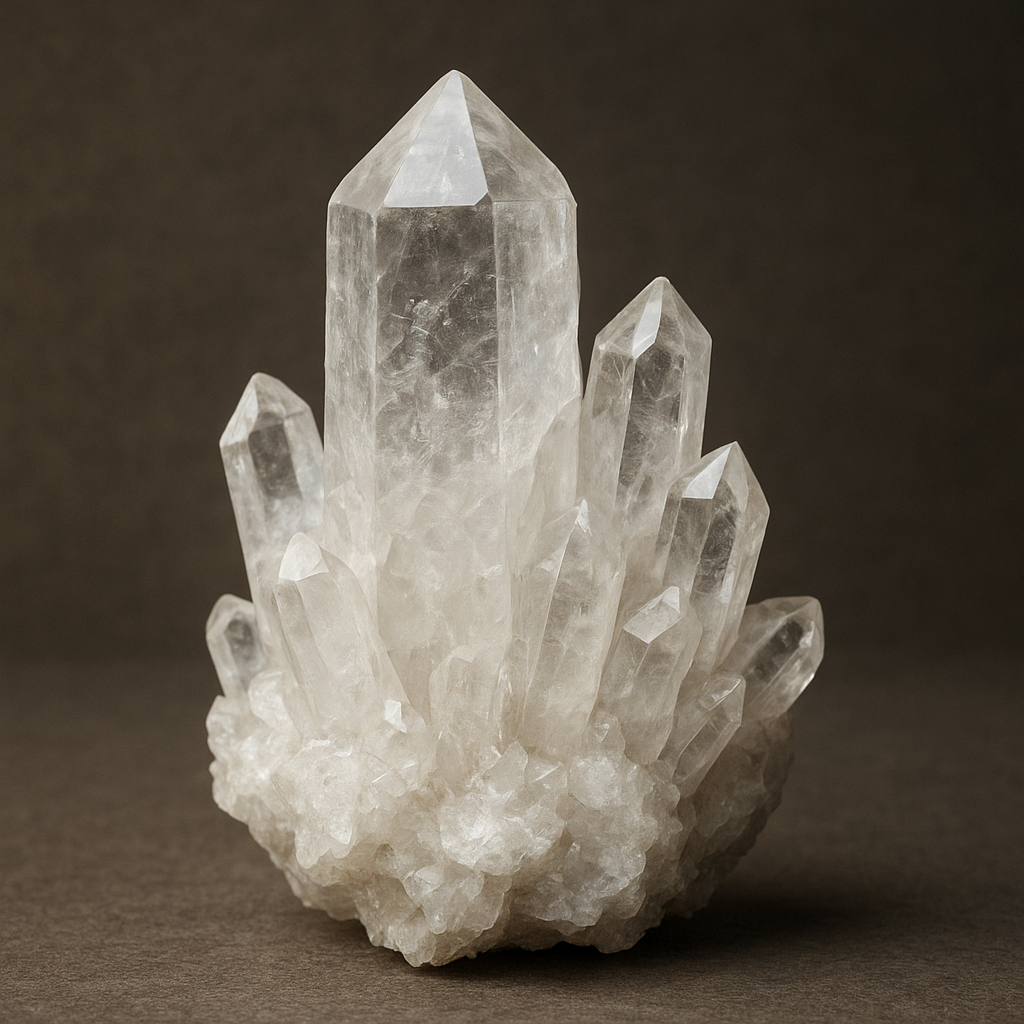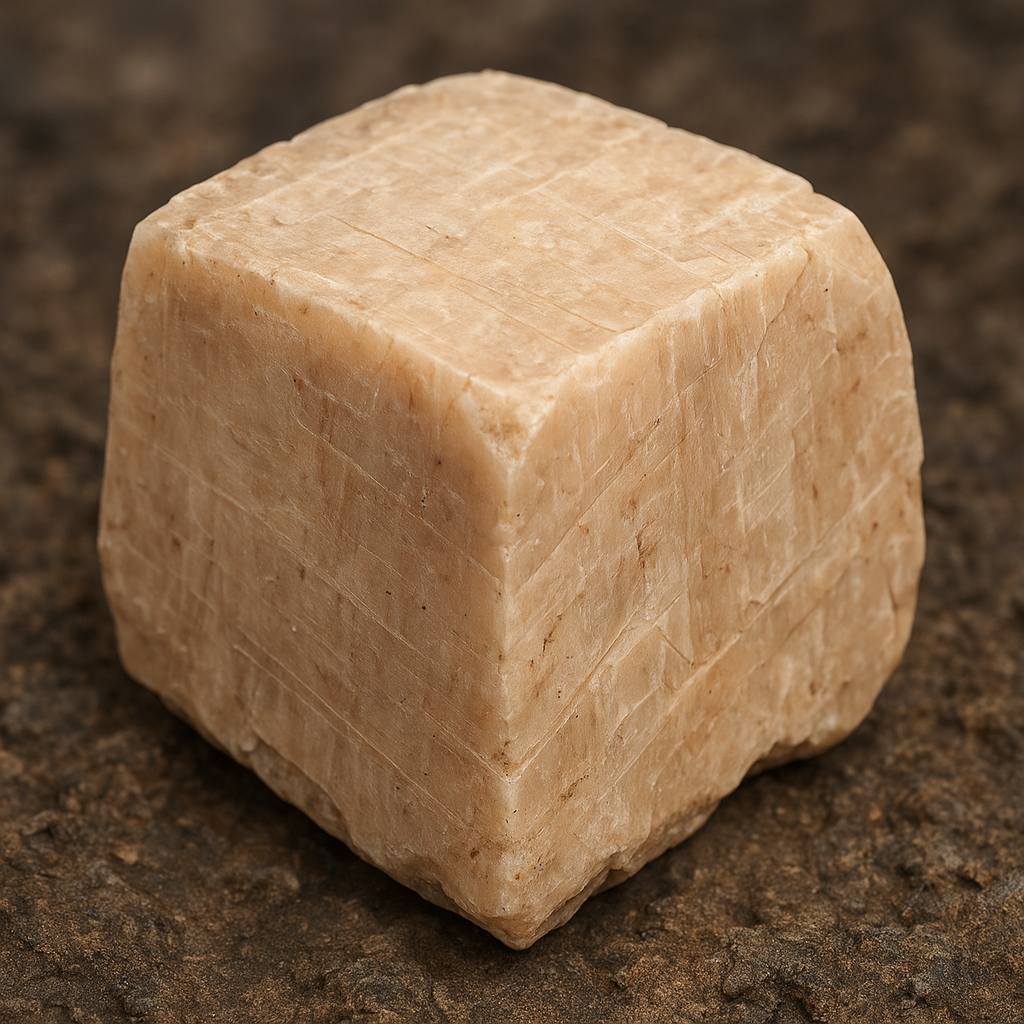
Orthoclase is one of the most familiar members of the alkali feldspar family, a mineral that quietly shapes the chemistry and appearance of many rocks and has found practical uses from industry to jewelry. In this article I will explore its physical and chemical nature, typical environments where it forms, its roles in industry and science, and several intriguing phenomena and applications connected to it. Along the way you will encounter the mineral’s relationship to other feldspars, its behavior during rock formation and weathering, and some surprising cultural and technological connections.
Basic properties and mineralogy
At its core, orthoclase is a potassium aluminum silicate with the chemical formula KAlSi3O8. It belongs to the broader group known as feldspar, the most abundant mineral group in the Earth’s crust. Orthoclase is the monoclinic potassium feldspar polymorph that typically forms at intermediate-temperature conditions. Other polymorphs of the same composition include sanidine (high-temperature) and microcline (low-temperature), each with distinct crystal symmetries and microstructures.
Physical characteristics
- Crystal system: monoclinic.
- Hardness: about 6 to 6.5 on the Mohs scale.
- Cleavage: two directions near 90°, producing blocky fragments.
- Luster: vitreous to pearly on cleavage faces.
- Color: ranges from white, cream, pink, and flesh tones to greenish or yellowish varieties.
- Specific gravity: typically around 2.55–2.64.
Orthoclase often forms well-developed tabular crystals in igneous rocks and massive grains in granites and pegmatites. It commonly exhibits twinning, most notably the Carlsbad type, and may show perthitic textures where sodium-rich and potassium-rich feldspar phases have exsolved into one another.
Where orthoclase occurs
Orthoclase is a ubiquitous constituent of many common igneous and metamorphic rocks. It is a dominant mineral in many granitic compositions and felsic volcanic rocks. Typical occurrences include:
- Plutonic rocks: coarse-grained granites and syenites often contain abundant orthoclase crystals.
- Pegmatites: large, well-formed crystals of orthoclase appear in pegmatitic veins where fluids concentrated silica and alkalis.
- Hydrothermal veins: low-temperature varieties such as adularia form in hydrothermal and epithermal veins, and they are important hosts for certain gemstone effects.
- Volcanic rocks: in felsic lavas orthoclase may occur as phenocrysts, although higher-temperature sanidine is more typical in glassy felsic volcanics.
- Metamorphic rocks: orthoclase can survive low- to medium-grade metamorphism and appear in gneisses and schists derived from granitic protoliths.
Geographically, orthoclase is found worldwide. Notable localities for large and gem-quality crystals include parts of Brazil, Madagascar, the United States (notably Maine, Colorado, and New Hampshire), Norway, and Alpine veins in Europe. The variety known as adularia was historically named for occurrences near the Adula (Pizzo d’Adula) region of the Swiss Alps.
Textures, twinning and perthite: structure that tells a story
One of the most fascinating aspects of potassium feldspars like orthoclase is how their internal structure records their thermal history. Three linked phenomena are particularly important:
- Twinning: Crystal twins are common and help identify K-feldspars. The Carlsbad twin is a frequent twin law in orthoclase and sanidine. Twinning patterns can be diagnostic under the microscope and are used by petrologists to infer cooling histories.
- Perthite: During cooling, alkali feldspars that originally contained a mixed sodium-potassium composition may unmix. This exsolution produces intergrowths of potassium-rich and sodium-rich lamellae visible in thin section or even to the naked eye. These intergrowths are called perthite and can appear as streaks or patches within a crystal.
- Polymorphism: Sanidine (high-temperature), orthoclase (intermediate), and microcline (low-temperature) are all KAlSi3O8 but differ in symmetry and ordering of aluminum and silicon in the crystal lattice. Slow cooling allows the transition toward microcline, often accompanied by characteristic cross-hatched twinning visible under a polarizing microscope.
These structural features are not just academic: they allow geologists to reconstruct cooling rates, deformation histories, and the thermal evolution of igneous bodies. Perthitic textures, for instance, are a direct consequence of the miscibility gap in alkali feldspars and provide a window into changing temperatures during rock formation.
Industrial and practical uses
Feldspars as a group are economically important, and orthoclase contributes to several industries. The most significant applications relate to the role of feldspar as a source of alkali oxides (K2O and Na2O) and alumina in ceramic and glass formulations.
Ceramics and glassmaking
In the ceramics industry, feldspar functions as a flux: it lowers the melting temperature of the batch, promoting vitrification and improving the strength and durability of fired wares. Orthoclase supplies potassium oxide, which affects glaze behavior and thermal properties. In glassmaking, feldspar contributes silica and alkali components that influence melting behavior, refractive index, and durability of the glass.
Other industrial uses
- Fillers in paints, plastics, and rubber, where finely ground feldspar improves mechanical and optical properties.
- Abrasives and scouring powders in lower-grade applications.
- Production of enamel and glazes for tiles and sanitary ware.
Although orthoclase itself is sometimes separated for higher-K requirements, most commercial feldspar products are blended assortments of sodium and potassium feldspars tailored to the industry’s needs. Processing includes crushing, washing, and milling to produce suitable particle sizes.
Orthoclase in geochronology and provenance studies
An especially valuable scientific use of potassium-bearing minerals like orthoclase is in radiometric dating. Because orthoclase contains potassium, including the radioactive isotope 40K, it can be used for K–Ar and 40Ar/39Ar dating. The accumulation of radiogenic argon in a feldspar crystal since its last cooling below the closure temperature provides an age for cooling or crystallization.
- K–Ar and Ar–Ar dating of orthoclase give constraints on the timing of igneous events such as granite emplacement, or the cooling and uplift history of metamorphic terrains.
- Care must be taken: feldspars may lose argon during reheating or alteration, and slow diffusion in intergrown perthitic textures can complicate age interpretation.
- Separating fresh, unaltered orthoclase crystals and understanding the mineral’s thermal and chemical history are essential for reliable ages.
Beyond dating, compositional analysis of orthoclase and associated feldspars contributes to provenance studies of sediments and ceramics, helping archaeologists and geologists track raw material sources and trade routes.
Gemology and attractive varieties
Although feldspars are not as famous as diamonds or sapphires, they host several attractive gem varieties and optical phenomena. Some key gem-related aspects include:
- Moonstone: this gemstone displays a shimmering, billowy light known as adularescence. It is typically produced by thin alternating layers or exsolution lamellae within orthoclase or adularia. Classic moonstones have been mined in Sri Lanka and India.
- Adularia: a low-temperature form of potassium feldspar sometimes marketed as a moonstone when cut cabochon due to its adularescence.
- Amazonite: a green variety more commonly associated with microcline, but closely related to orthoclase in composition and crystal chemistry. Its color is attributed to trace elements and microstructural factors.
When used as gemstones, orthoclase and related K-feldspars are commonly cut en cabochon to display optical effects rather than faceted to maximize brilliance. These gems are relatively soft compared with typical jewelry stones and require care with wearing and cleaning.
Weathering, soils and environmental roles
Orthoclase plays a major role in chemical weathering and soil formation. When exposed to water and atmospheric agents, K-feldspars undergo hydrolysis, producing clay minerals (such as kaolinite and illite), soluble ions (including potassium), and silicic acid. This process has several consequences:
- Release of plant-available potassium into soils, an important nutrient though the fraction of K released by weathering is often slow compared with agricultural demands.
- Formation of clay minerals that influence soil texture, water retention, and cation-exchange properties.
- Contribution to landscape evolution: feldspar-rich rocks weather differently from mafic rocks, shaping topography and sediment supply.
In landscape-scale geochemistry, the rate of feldspar weathering is a key control on global cycles of potassium and silicon. Human activities, including agriculture and mining, can mobilize the products of feldspar weathering and reshape local geochemical budgets.
Analytical techniques and identification
Petrologists and mineralogists use several techniques to identify orthoclase and distinguish it from other feldspars and minerals. Simple field and hand-sample tests are often sufficient for a preliminary ID:
- Hardness testing (scratching): orthoclase scratches glass but is softer than quartz.
- Cleavage: two near-right-angle cleavages produce characteristic blocky fragments.
- Appearance under a polarizing microscope: distinctive extinction angles, twinning patterns, and perthitic textures help classify K-feldspars and their polymorphs.
- X-ray diffraction and electron microprobe analyses provide definitive crystallographic and chemical data.
Modern techniques such as scanning electron microscopy, cathodoluminescence, and laser ablation ICP-MS reveal microtextures, trace-element distributions, and isotopic information that are critical for research in petrology, geochronology, and material science.
Interesting historical and cultural notes
Feldspars have played quiet but important roles in human history. Their utility in ceramics and glazes goes back thousands of years — the fluxing behavior that modern industry exploits was discovered long ago by potters who found that adding feldspar-rich materials produced harder, shinier wares. The aesthetic charm of moonstone captured the imagination of many cultures and it has been used in jewelry and amulets.
In scientific history, studies of feldspar microstructures helped develop fundamental theories of solid-state diffusion, exsolution, and polymorphism. Observations of perthite and twinning were central to early 20th-century efforts to understand how minerals record temperature and pressure histories in rocks.
Current research and novel directions
Contemporary research touches many fronts where orthoclase and related feldspars are informative or useful:
- Geochronology refinements: improving Ar–Ar methods and understanding argon diffusion behavior in complex feldspar textures.
- Materials science: investigating feldspar-derived phases as potential precursors for advanced ceramics or as model systems for studying ordering and exsolution at the nanoscale.
- Environmental geochemistry: quantifying feldspar weathering rates under different climates to improve models of soil development and elemental cycling.
- Archeometry: using feldspar chemistry and petrography to source archaeological ceramics and reconstruct ancient exchange networks.
These avenues show how a common mineral like orthoclase continues to provide new scientific insight while supporting traditional industries and artistic crafts.
Practical tips for collectors and users
If you are a rockhound or gem enthusiast interested in orthoclase, here are some practical pointers:
- Look for orthoclase in granite and pegmatite outcrops; large, blocky crystals are common in pegmatites.
- To display moonstone adularescence, choose cabochon cuts and orient the stone so the sheen moves across the dome as it is tilted.
- Handle orthoclase gems gently: their moderate hardness and cleavage planes make them more prone to chips than tougher gemstones.
- For industrial users, choose the feldspar grade (sodium vs. potassium content, particle size) appropriate to the ceramic or glass formulation; suppliers will provide compositional specifications.
Collectors will appreciate the subtle beauty of orthoclase crystals and the sometimes spectacular macroscopic exsolution patterns that make perthitic feldspars visually striking even to the naked eye.
Connections to other minerals and closing observations
Orthoclase’s identity is intertwined with a family of minerals—microcline, sanidine, adularia, and various sodium feldspars. Together they form a dynamic system whose textures and compositions are keys to interpreting geological processes. Its role as a flux in ceramics and glassmaking, its participation in soil chemistry and weathering, and its use in dating earth processes make orthoclase a mineral of both practical importance and scientific fascination. From the gleam of a moonstone to the microstructures that chronicle cooling histories, orthoclase offers a rich arena where mineralogy, geology, industry, and culture intersect.