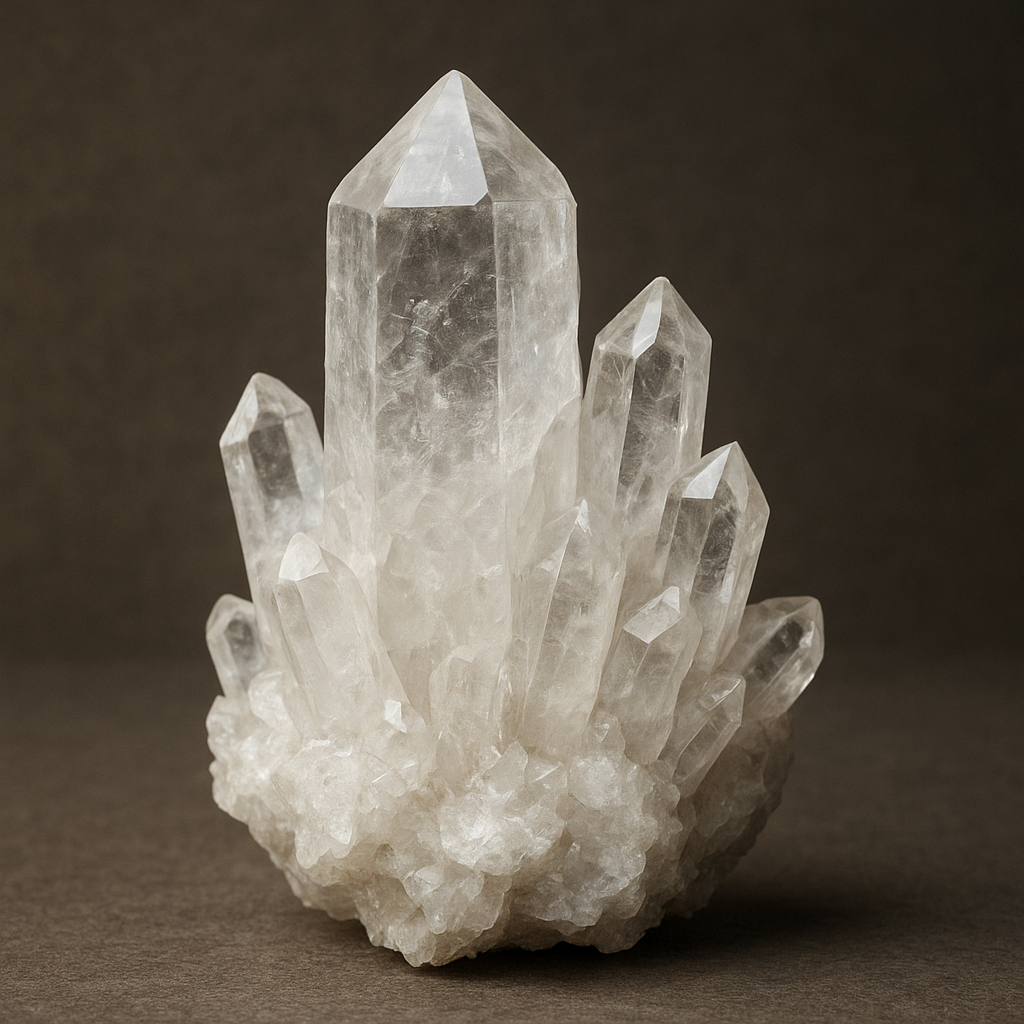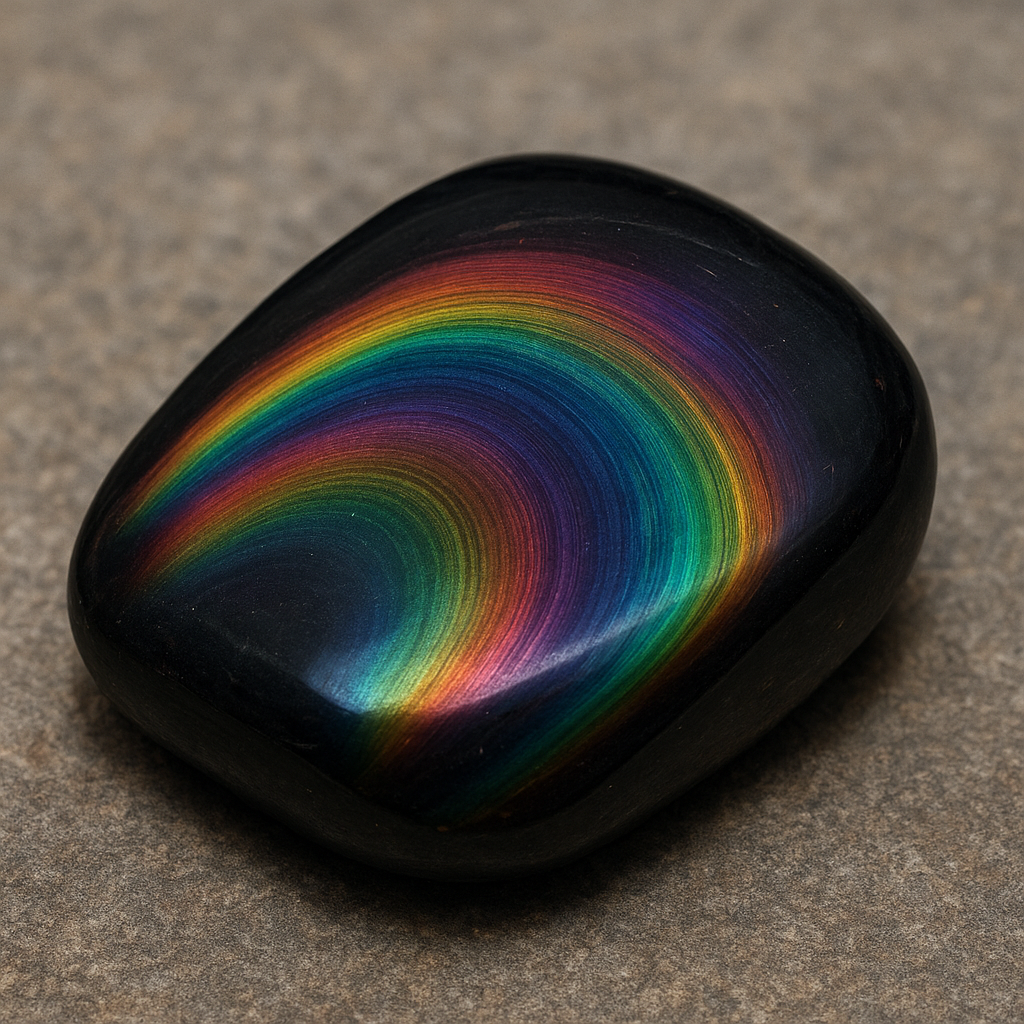
Rainbow Obsidian is a striking variety of natural volcanic glass prized for its shimmering, layered colors and smooth, glassy luster. Although less common than plain black obsidian, its unique optical effects — a result of microscopic layers and inclusions within the glass — have made it a favorite among collectors, jewelers, and those interested in earth sciences or metaphysical traditions. This article explores the stone’s geological origins, where it is found, its practical and cultural uses, and several fascinating facts that highlight why Rainbow Obsidian continues to captivate people around the world.
Geological formation and global occurrences
At its core, Rainbow Obsidian is a type of obsidian, a natural glass that forms when felsic lava cools so quickly that atoms cannot organize into a crystalline structure. Typical parent magmas are high in silica, often rhyolitic in composition, and the rapid quenching preserves a smooth, amorphous matrix. The characteristic rainbow or sheen effect arises from microscopic inclusions, thin layering, or light interference caused by minute crystallites and gas bubbles aligned during cooling.
Not all volcanic regions produce Rainbow Obsidian. It requires the right combination of chemistry, cooling rate, and post-formation alteration. Significant localities include:
- Mexico — notably near the central highlands and the Trans-Mexican Volcanic Belt; Mexican sources have long supplied high-quality rainbow varieties.
- United States — deposits occur in the western states, particularly in Oregon, California, and Arizona, where volcanic activity produced obsidian with attractive sheen.
- Iceland — known for varied obsidian occurrences tied to recent volcanic activity, sometimes producing banded or iridescent pieces.
- Japan and New Zealand — smaller occurrences where rhyolitic volcanic systems have produced glassy obsidians with attractive visual effects.
- Turkey and Armenia — regions with ancient volcanism that occasionally yield colorful obsidian specimens.
Within a single volcanic field, the distribution of Rainbow Obsidian can be very localized — sometimes limited to a single flow or tuff layer. Weathering and secondary processes can also enhance or diminish the visible iridescence at the surface.
Physical properties and varieties
Rainbow Obsidian shares the fundamental properties of natural glass: conchoidal fractures, a hardness around 5–5.5 on the Mohs scale, and a vitreous luster. What sets it apart are the optical phenomena that produce layered colors, including metallic sheens, chatoyancy (cat’s-eye effects), and iridescence. These effects depend on:
- Thin film interference — microscopic layers of different chemistry or oxidation create constructive and destructive interference when light penetrates and reflects.
- Inclusions — tiny crystals of magnetite, hematite, or other iron oxides can align to give a layered or banded look.
- Flow banding — during emplacement, shear within the lava can orient inclusions or vesicles into patterns that refract light.
Collectors commonly describe varieties such as golden, silver, and multi-hued rainbow obsidian. Each specimen can show different color dominance depending on the angle of light and the viewer’s perspective. When cut and polished for cabochons or ornamental pieces, the stone’s internal layering becomes more apparent, revealing dazzling concentric rings or streaks of color.
Uses: jewelry, tools, and lapidary arts
Historically and today, Rainbow Obsidian finds a range of uses:
- Jewelry: Polished cabochons, beads, pendants, and inlays take advantage of the stone’s visual appeal. Because it is softer than many gemstones, designers often set it in protective settings or combine it with harder materials.
- Lapidary art: Skilled cutters orient the stone to maximize the optical effects. Thin slices and domed cabochons are favored for showing iridescent banding.
- Tools and blades: In prehistoric times, all obsidians, including colored varieties, were fashioned into sharp blades and points because of the predictable conchoidal fracture. Today, obsidian blades are sometimes used in specialized surgical scalpels due to their ultra-fine edge.
- Decorative objects: Spheres, worry stones, and polished slabs are popular for display and collection.
In contemporary design, Rainbow Obsidian is used both for its aesthetic qualities and as a contrasting element with metals like silver and oxidized copper. Its dramatic appearance makes it attractive for statement pieces, while its fragility influences the engineering of settings and mounts.
Cultural significance and folklore
Obsidian in general has a long cultural history. Indigenous peoples across the Americas prized obsidian for tools, mirrors, and ritual objects. Rainbow varieties attracted attention for their unusual appearance, leading to symbolic associations:
- In Mesoamerican cultures, obsidian was linked to the underworld and to gods associated with sacrifice and protection.
- Some traditions consider Rainbow Obsidian a stone of transformation, with the layered colors symbolizing layers of experience or the journey from darkness to light.
- Modern crystal enthusiasts often ascribe properties like protection, grounding, and the facilitation of emotional release to Rainbow Obsidian.
Whether viewed as a cultural artifact or a metaphysical tool, Rainbow Obsidian often appears in ritual contexts, jewelry with symbolic motifs, and as a collectible specimen prized for both beauty and cultural resonance.
Identification, treatment, and imitations
Good identification practices are important for buyers and collectors. Rainbow Obsidian can be mistaken for treated glasses or man-made iridescent materials. Key identification tips include:
- Examine the luster and fracture: natural obsidian shows a characteristic vitreous sheen and sharp, curved fracture patterns.
- Look for flow banding and natural surface weathering that are difficult to replicate perfectly in glass.
- Check for uniformity: synthetic treatments often produce overly uniform color layers, while natural specimens display subtle irregularities.
- Make use of a loupe: microscopic inclusions and natural bubble distributions are diagnostic.
Treatments that mimic rainbow effects exist — chemical coatings, vacuum deposition, or lamination can create iridescence on ordinary glass or other stones. Responsible sellers disclose treatments; ask vendors for provenance and treatment history, and when in doubt, seek a gemological lab report.
Care, durability, and ethical considerations
Because Rainbow Obsidian is a form of glass, it requires gentle care. It is more fragile than quartz or other common gemstones and can chip or fracture if dropped. Practical care tips:
- Store pieces separately or wrapped to avoid scratching.
- Clean with mild soap and water; avoid ultrasonic cleaners and harsh chemicals that can damage polish or coatings.
- Be cautious when setting in rings or bracelets; consider protective bezels and avoid thin prongs that can chip the stone.
Ethical considerations are increasingly important. Mining obsidian is generally low-impact compared with large-scale gemstone mining, but collectors should still be mindful of:
- Local environmental effects of quarrying and collecting.
- Respect for indigenous cultural sites and archaeological contexts where obsidian artifacts may be present.
- Choosing suppliers who disclose source localities and practice responsible collecting.
Interesting scientific and artistic aspects
Rainbow Obsidian bridges science and art. On the scientific side, the stone offers insight into volcanic processes and glass formation. Scientists study obsidian flows to understand cooling histories, volatile exsolution, and the formation of microscopic crystals that create iridescence. High-resolution imaging (SEM, TEM) reveals the layered nanostructures responsible for light interference.
Artistically, the stone provides a palette of subtle colors that change with light and angle. Lapidaries often orient stones to create visual narratives: circular patterns can suggest eyes or portals, while lines can be used to evoke landscapes or flowing water. This interplay of geology and human creativity gives Rainbow Obsidian a unique appeal in contemporary craft.
Collecting and market trends
Collecting Rainbow Obsidian combines appreciation of geological rarity and aesthetic value. Market factors influencing price and desirability include:
- Color vibrancy and pattern complexity — more dynamic iridescence typically commands higher prices.
- Size and condition — large, intact polished slabs or well-cut cabochons are more valuable.
- Provenance — specimens from famous localities or with documented histories are prized by collectors.
Online marketplaces and mineral shows have expanded access, but buyers should exercise caution. Photographs can exaggerate color; in-person inspection or reputable certification helps ensure a fair purchase. For artists and designers, sourcing responsibly and understanding the material’s limitations yields better long-term relationships with suppliers and happier customers.
Metaphysical uses and modern rituals
Within contemporary spiritual and metaphysical communities, Rainbow Obsidian is used in a variety of practices. Anecdotal uses include:
- Meditation aids for introspection and emotional clarity.
- Protective talismans to absorb negative energy or to anchor the wearer during change.
- Tools for energy work — polished slabs and spheres are placed on altars or used in gridwork.
While scientific evidence does not support metaphysical claims, many practitioners appreciate the stone for its evocative appearance and symbolic associations. The combination of deep dark base and shifting color layers lends itself to rituals focused on transformation, shadow work, and grounding.
Where to see and learn more
Museums with geological collections, university earth science departments, and mineral shows are excellent places to view high-quality Rainbow Obsidian specimens. Visiting volcanic regions and educational centers offers context about how such stones form in the field. For hands-on learning, lapidary workshops teach cutting and polishing techniques that reveal an individual specimen’s potential.
Whether admired for its geological story, used in jewelry, or kept as a contemplative object, Rainbow Obsidian occupies a niche where science, craft, and culture meet. Its shimmering layers remind observers of the dynamic processes beneath the earth’s surface and the creative ways humans have found to celebrate and use natural beauty.