
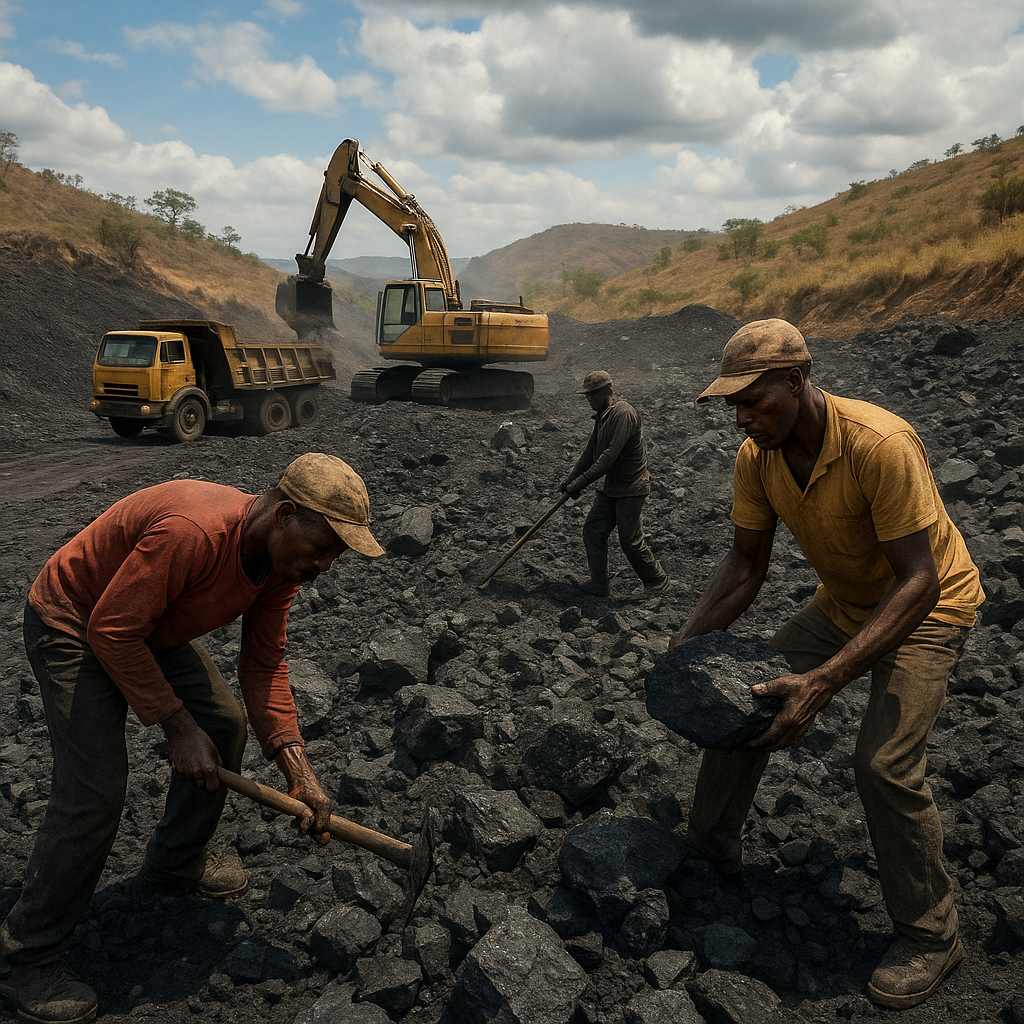
The Ntcheu Coal Mine, situated in the central highlands of Malawi, represents one of the country’s modest but strategically important mineral assets. This article explores where the mine is located, what type of material is extracted there, its role in the regional and national economy, and several notable or unexpected aspects that make Ntcheu interesting beyond simple resource extraction. The discussion combines geological context, operational and social impacts, and broader perspectives on Malawi’s energy and development pathways.
Location and geological setting
The Ntcheu deposits lie within Ntcheu District in Malawi’s Central Region, a predominantly rural area traversed by the main north–south artery that links the larger cities of Blantyre and Lilongwe. The mine is accessible from the town of Ntcheu and often serves local industries and communities in the surrounding districts. Geologically, the area forms part of sedimentary basins where organic-rich layers were deposited during ancient periods of peat formation and later converted into coal by burial and heat over geological time.
Coal in Malawi tends to be found in discontinuous seams rather than the vast continuous strata seen in major coal-producing countries. In Ntcheu, seams are typically shallow enough to be amenable to surface (open-pit) mining in some places, though localized deeper deposits may require small-scale underground workings. The coal quality ranges from sub-bituminous to lower-rank bituminous in many Malawian contexts, making it most suitable for thermal energy generation and certain industrial applications rather than high-grade metallurgical uses.
What is mined at Ntcheu and how
The primary commodity extracted at Ntcheu is coal, used predominantly for heat and power. Mines in the area typically yield coal that is combusted for energy generation in local industries, as fuel for brick and ceramic kilns, and—on occasion—in small thermal power installations. Coal can also be used in household contexts where modern fuels are scarce, though that raises health and environmental concerns.
Mining methods and scale
- Surface mining: Where seams lie near the surface, companies and local operators use open-pit techniques involving topsoil removal, benching, and mechanical excavation.
- Small-scale underground mining: In zones where seams are deeper or discontinuous, artisanal or semi-mechanized underground methods are common. These operations are often labor-intensive.
- Processing: Coal from Ntcheu usually receives minimal beneficiation. Crushing and screening to remove large impurities are typical before use in kilns or direct combustion.
Most operations at Ntcheu are modest in scale compared with major international mining projects. That means the footprint is smaller but also that economies of scale are limited: costs per tonne can be higher, and the ability to invest in advanced environmental controls or health and safety systems may be constrained.
Economic significance
The Ntcheu mine’s contribution to the local and national economy is multi-faceted. While not a massive export hub, the mine supports livelihoods, provides thermal fuel for local industries, and offers potential leverage for regional development strategies seeking to improve energy access and industrialization.
Local employment and livelihoods
Direct employment at the mine creates jobs for miners, equipment operators, drivers, and administrative staff. Indirect employment is also significant: transport providers, maintenance crews, local suppliers, and small businesses that service workers benefit. For many households in the Ntcheu district, income related to coal activity constitutes a meaningful portion of annual earnings, especially where agricultural opportunities are limited by climatic variability.
Regional industrial uses
- Ceramic and brick production: Coal is a preferred heat source for brick and tile kilns in the region because of its ready availability and relatively consistent calorific value.
- Small-scale power generation: Some industrial operations and communal generators use coal to produce steam or electricity when grid supply is unreliable.
- Agricultural processing: Drying of crops and timber treatment are among ancillary uses of coal-fired heat in the area.
Trade and potential exports
Although the Ntcheu mine’s production is mainly oriented toward domestic consumption, there is potential—subject to investment and logistics improvements—for export to neighboring markets. Malawi is landlocked and relies on regional transport corridors and port access (generally through Mozambique) for cross-border shipments. Transport costs and the quality of delivered coal determine export competitiveness.
Infrastructure, investment and economic development
For the Ntcheu mine to have a lasting, positive economic influence, complementary infrastructure investments are necessary. These include improvements to road networks, reliable electricity, water supply for processing and dust control, and access to finance for scaling operations. Strategic investment could unlock benefits such as higher-quality processing, safer mining practices, and local value addition.
- Infrastructure: Better roads reduce transport costs and open markets; grid upgrades can enable higher-value processing and small-scale power plants.
- Investment: External capital—whether from domestic entrepreneurs or international partners—can help mechanize operations, introduce environmental controls, and expand market reach.
- Development: When well-managed, mining revenues can fund local schools, clinics, and community projects, improving regional human capital.
Environmental and social considerations
Mining always carries an environmental footprint, and Ntcheu is no exception. Land disturbance, dust, water use and contamination risk, and greenhouse gas emissions are key concerns. Because much local coal is burned close to communities, air quality and respiratory health may be negatively affected. Social issues include land rights, community consultation, and the distribution of benefits.
Mitigation and stewardship
- Progressive rehabilitation: Restoring mined land to productive agricultural or ecological use reduces long-term impacts.
- Water management: Treating runoff and protecting local waterways protects downstream users and ecosystems.
- Community engagement: Transparent benefit-sharing, local hiring policies, and grievance mechanisms help align mining activity with community needs.
International best practice encourages baseline environmental assessments, ongoing monitoring, and investment in cleaner-burning technologies when coal is used for energy. For Ntcheu, where resources for regulation are limited, partnerships with NGOs, academic institutions, and responsible investors can raise operational standards.
Strategic context: energy security and the transition
Malawi’s energy sector is characterized by a heavy reliance on hydropower and biomass (woodfuel and charcoal). Seasonal variations in water flow expose the country to power shortages, making reliable thermal options attractive for backup or base-load support. Coal from Ntcheu can contribute to a diversified energy mix, helping stabilize supply in dry years or when hydropower generation falls.
However, global trends toward decarbonization place coal at a strategic crossroads. Policymakers face a choice between using domestic coal to secure short-term energy access and investing in low-carbon alternatives (solar, wind, natural gas where feasible, or grid interconnections). A rational approach for Malawi could be a phased strategy: use accessible coal reserves judiciously while investing in renewables and energy efficiency to reduce long-term dependence on fossil fuels.
Interesting and lesser-known aspects
Beyond the straightforward economics, Ntcheu’s coal story touches on several engaging and sometimes surprising elements.
Artisanal mining culture
In many parts of Malawi, small-scale and artisanal miners play a pivotal role in resource extraction. These miners often operate informally, using hand tools and small machinery. Their knowledge of local geology and seam locations is extensive, and mining is deeply interwoven with local community life. Formalizing and supporting artisanal miners can unlock social and economic benefits while reducing environmental and safety risks.
Local innovation and adaptations
Where technological and capital constraints exist, communities and small firms innovate. Examples include low-cost briquetting of coal fines to produce standardized fuel blocks, simple dust control measures at kilns, and communal investment schemes to repair access roads. Such grassroots adaptations show how local resilience complements larger infrastructure projects.
Historical ties and future narratives
Malawi’s coal use has historical roots in colonial-era industrialization, but post-independence development has shaped a different trajectory. Ntcheu’s future could be a microcosm of Malawi’s broader development narrative—balancing resource use for immediate human development needs with commitments to environmental sustainability and climate resilience.
Policy implications and opportunities
To maximize benefits from Ntcheu while minimizing harms, several policy directions are critical:
- Regulatory clarity: Clear licensing, environmental standards, and enforcement build confidence for investors and communities alike.
- Community benefit frameworks: Ensuring local populations share directly in revenues and employment reduces conflict and supports long-term development.
- Energy planning: Integrating coal-based options into a broader, low-carbon energy roadmap avoids lock-in to high-emissions pathways.
- Capacity building: Training for miners, regulators, and community leaders improves safety, environmental management, and local enterprise development.
With the right policies, modest domestic coal resources like those at Ntcheu can be harnessed to support economic growth, employment, and regional industry while a broader transition to cleaner technologies proceeds.
Concluding observations
The Ntcheu Coal Mine exemplifies the complex role of small mineral deposits in a developing, landlocked country. It provides tangible local benefits—jobs, fuel for industry, and potential fiscal revenues—while raising questions about environmental protection, long-term energy strategy, and equitable development. The mine’s significance lies not only in tonnes extracted but in how effectively its resources are managed to support sustainable, inclusive growth for communities across Malawi. Thoughtful investments in infrastructure, responsible oversight, and community partnerships can turn Ntcheu from a local extraction site into a catalyst for wider regional development that balances immediate needs with future resilience.

