
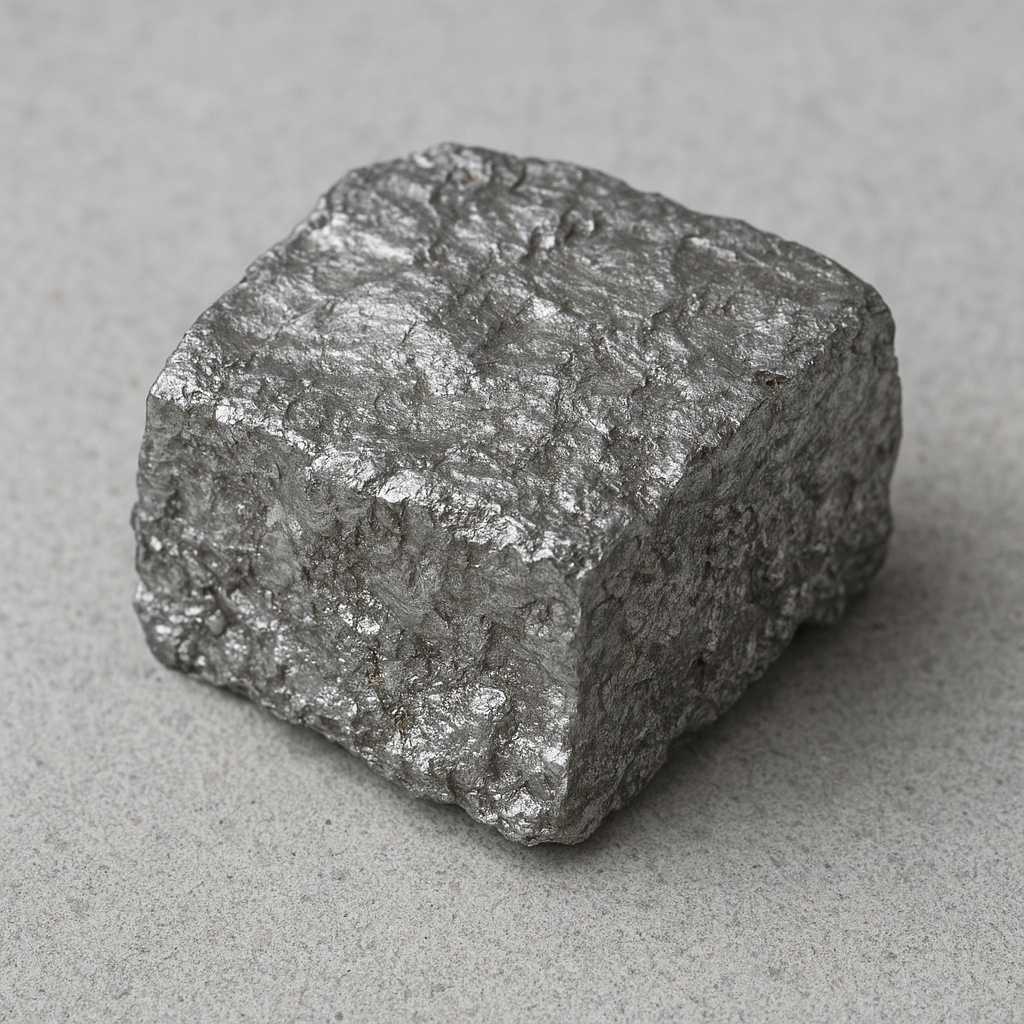
This article explores the exotic world of the superheavy element known as nihonium, its scientific discovery, how it is produced, its predicted and partially observed properties, and the broader context of research into the heaviest members of the periodic table. The element numbered element 113 occupies a place at the frontier of modern nuclear and atomic physics. Although it has no natural occurrence and no everyday applications, studying this fleeting species gives researchers insight into nuclear structure, relativistic chemistry and the limits of matter itself.
Discovery and historical context
The identification of nihonium traces back to efforts by several international laboratories to produce new, superheavy nuclei by colliding lighter nuclei at high energies. The laboratory credited with the first reliable production and identification of the new element is the RIKEN Nishina Center in Japan, where a research program using heavy-ion beams produced alpha-decay chains attributable to nuclei with atomic number 113. The discovery claim was reviewed and ultimately accepted by international bodies responsible for naming and recognition of new elements, and in 2016 the name nihonium (symbol Nh), derived from Nihon, a native name for Japan, was officially adopted.
Historically, the push to add new entries to the periodic table began in earnest in the mid-20th century as accelerator facilities grew more powerful. By the late 20th and early 21st centuries, laboratories such as RIKEN (Japan), JINR Dubna (Russia), and GSI Helmholtzzentrum (Germany) were in competition and cooperation to extend the periodic table. The identification of element 113 was important not only as a national scientific achievement but also as a milestone in the global effort to map superheavy elements.
Where nihonium occurs and how it is made
Unlike lighter elements that are found naturally on Earth or in cosmic environments, nihonium is entirely synthetic. There is no stable or naturally occurring reservoir of the element; it has been produced only in tiny amounts, atom by atom, in particle accelerator facilities. Production requires heavy-ion fusion reactions in which a beam of one nucleus impacts a heavy target nucleus to form a compound nucleus with atomic number 113 that then cools by evaporating neutrons and undergoes radioactive decays.
Common synthesis routes
The most prominent and reproducible synthesis route for creating nihonium uses a bismuth target and a zinc beam. In this approach a target of heavy, stable 209Bi is bombarded by accelerated 70Zn ions. Under carefully tuned beam energies, these nuclei can fuse to form a transient compound nucleus that, after emitting neutrons, yields isotopes of nihonium. The yield in such reactions is extremely low — typically a few atoms over weeks or months of beam time — which is why production is expensive and technically challenging.
Facilities and techniques
A few specialized research centers have the combination of accelerators, detection systems and expertise necessary to synthesize and identify superheavy elements. These include RIKEN in Japan, the Joint Institute for Nuclear Research (JINR) in Dubna, Russia, and GSI in Germany. Key experimental components include:
- High-intensity ion accelerators to provide the required projectile beams.
- Rotating or cooled targets made of heavy elements such as 209Bi to withstand prolonged bombardment.
- Gas-filled or vacuum recoil separators that separate reaction products from the intense background of unreacted beam and other reaction byproducts.
- Arrays of silicon detectors for measuring alpha particles and implantation events, allowing correlation of decay chains back to single synthesized atoms.
The separation and identification techniques rely on detecting the characteristic alpha particles and decay sequences that trace back to the parent nihonium nucleus — a technique that has become the standard in superheavy element research.
Isotopes, decay and measured physical behavior
Isotopes of nihonium produced in experiments are extremely short-lived. Their half-lives range from milliseconds to a few seconds, depending on the isotope, decay mode and experimental conditions. Typical decay modes observed are alpha decay (emission of a helium nucleus) and spontaneous fission (splitting into two or more smaller nuclei).
Because only a handful of atoms have ever been produced, measured properties such as decay energies and half-lives are derived from alpha spectroscopy of correlated decay chains. These measurements are crucial for placing the new nuclei in the chart of nuclides and for testing nuclear models that aim to predict stability trends among superheavy elements.
Why decay chains matter
When a newly formed nucleus decays by alpha emission, the daughter nucleus may itself be radioactive and continue decaying. By recording a sequence of such correlated events — implantation of a recoil followed by successive alpha decays at the same detector location — experimentalists can reconstruct a decay chain and match it against predicted sequences. This method provides strong evidence that an atom of a previously unknown element was successfully synthesized.
Predicted and observed chemical properties
The chemistry of nihonium is only beginning to be explored. Producing only a few atoms at a time and their short lifetimes make direct chemical investigations extremely challenging. Nevertheless, theoretical chemistry — heavily influenced by relativistic quantum mechanical effects — has produced detailed predictions that paint a picture of unusual behavior when compared to lighter congeners.
Because the electrons in the heaviest atoms move at speeds appreciable relative to the speed of light, their behavior is governed by relativistic corrections that strongly affect orbital energies and shapes. These relativistic effects cause contraction and stabilization of s and p1/2 orbitals and expansion and destabilization of d and f orbitals. As a result, nihonium, which lies below thallium in group 13 of the periodic table, is expected to deviate from simple extrapolations of thallium chemistry.
Oxidation states and bonding
Predictions suggest that nihonium may favor the +1 oxidation state more than the +3 state that is common for lighter group 13 elements, due to relativistic stabilization of the outermost electrons. This tendency could make nihonium chemically more similar in some respects to heavier post-transition metals or even to noble-metal-like behavior in certain contexts. Computational studies also indicate that nihonium atoms might exhibit decreased metallic character and altered ionic radii, which in turn would affect compound formation, volatility and adsorption behavior on surfaces used in gas-phase chemical studies.
Experimental chemical studies
Very limited experimental chemistry of nihonium has been attempted using methods adapted from the study of other superheavy elements: fast gas-phase chromatography and on-line chemical separations that can catch a single atom before it decays. These experiments aim to observe interaction strengths with various surfaces or to detect the formation of simple compounds. Results to date are scarce and sometimes ambiguous, but they are gradually refining theoretical models and guiding future experiments.
Applications and practical uses
There are currently no practical, industrial, medical, or commercial applications for nihonium. The element exists only in atom-sized samples for fractions of a second, making any direct use impossible with current technology. Instead, the primary value of nihonium is scientific: it serves as a probe into the physics of the atomic nucleus, tests the limits of theoretical models, and improves techniques for producing and identifying rare nuclei.
Potential long-term benefits of research on nihonium and other superheavy elements are indirect. Advances in accelerator technology, detection electronics, and materials science driven by such research can find applications elsewhere. Moreover, deeper understanding of nuclear forces and shell structure contributes to the fundamental science base that underpins fields as diverse as astrophysics, nuclear energy research and quantum chemistry.
Why nihonium is interesting to scientists
Several conceptual and technical reasons make nihonium and its neighbors fascinating objects of study:
- Probing the limits of the periodic table: by synthesizing and characterizing new elements, scientists test how far the periodic trends extend and where new behavior emerges.
- Understanding nuclear shell effects: superheavy nuclei challenge nuclear models and provide data on shell closures, pairing, and deformation that are essential to nuclear theory.
- Exploring relativistic chemistry: heavy elements provide a natural laboratory for observing how relativity changes chemical behavior in ways not seen in lighter elements.
- Testing synthesis and detection techniques: improving yield, selectivity and speed in these experiments advances experimental nuclear physics broadly.
One particularly compelling theoretical concept associated with superheavy elements is the so-called island of stability, a region in the chart of nuclides where certain combinations of protons and neutrons might yield nuclei with half-lives far longer than those typically seen among superheavy elements. While nihonium itself lies outside the most optimistic predictions of the island’s center, its production and decay properties help constrain models that forecast where islands of enhanced stability may occur.
Experimental challenges and safety
Working with superheavy elements like nihonium presents a range of technical challenges:
- Extremely low production rates — often only a few atoms over long experiments — require long beam times and highly sensitive detection equipment.
- Short half-lives necessitate ultra-fast chemical separation and detection methods or experiments designed to measure decays in situ at production sites.
- Background suppression is essential to identify genuine events among many possible spurious signals.
From a safety perspective, the amounts of material produced are so minuscule that chemical toxicity is irrelevant. The primary hazard is ionizing radiation emitted during radioactive decay, but this is managed by the containment, shielding and remote handling standard in nuclear physics laboratories. There is no risk of environmental contamination from the tiny numbers of atoms produced in accelerator targets.
Techniques for detecting and studying nihonium
Detecting a state of matter that exists for fractions of a second and amounts to single atoms demands specialized methodologies. Key techniques include:
- Recoil separators: devices that use magnetic and electric fields to separate fused nuclei from the unreacted beam and other reaction products, guiding the nuclei to detection stations.
- Silicon detector arrays: used for implanting recoiling nuclei and measuring the alpha particles emitted in subsequent decay steps with high energy and time resolution.
- Correlation analysis: software and statistical methods link events in time and position to reconstruct decay chains and reject random coincidences.
- On-line gas-phase chemistry: for chemical studies, volatile species are transported rapidly to detection setups where adsorption or reaction properties can be inferred before decay.
The combination of physical separation and precise decay spectroscopy is what enabled the firm identification of nihonium atoms and continues to be refined for future explorations of the periodic table.
Connections to broader scientific themes
Research on nihonium intersects with multiple branches of science:
- Nuclear physics: data on synthesis cross-sections and decay properties test models of nuclear structure and reactions.
- Quantum chemistry: relativistic computational methods are required to predict chemical properties and guide experiments.
- Astrophysics: understanding nuclear processes and heavy-element formation informs models of nucleosynthesis in extreme astrophysical events.
- Instrumentation science: demands of superheavy research drive innovation in accelerators, detectors and data analysis tools.
Such interdisciplinary connections emphasize why physicists and chemists continue to pursue the synthesis of superheavy elements despite the absence of practical applications: each new nucleus is a unique experiment at the edge of our physical theories.
Future directions and open questions
Many questions about nihonium remain open and motivate ongoing and future research:
- Can longer-lived isotopes of nihonium be produced using alternative reaction combinations or beams? Longer half-lives would enable more detailed chemical studies.
- What is the exact nature of nihonium’s chemistry — does it truly favor +1 oxidation state, and can any stable compounds be formed even briefly?
- How do relativistic effects quantitatively alter nihonium’s electronic structure, bonding tendencies and physical properties?
- How do production cross-sections vary with beam energy and target composition, and can experimental yield be significantly improved?
Addressing these questions requires new experiments, sometimes with novel target-projectile pairs, improved separators, higher beam intensities and faster chemical transport and detection schemes. The drive to answer them pushes technological development and deepens theoretical understanding.
Interesting facts and cultural notes
A few items of broader interest connected to nihonium:
- The element’s name celebrates its place of discovery: Nihon is one of the Japanese names for the country, and the symbol Nh reflects that heritage.
- Because only a handful of atoms have ever been made, any description of nihonium’s appearance as a metal or its macroscopic properties is purely speculative.
- Work on nihonium has inspired public interest and outreach in the countries and laboratories involved, serving as a showcase of modern experimental nuclear science.
- Research on nihonium contributes to a decades-long human endeavor to map and understand the limits of matter, continuing the spirit that led to the construction of the periodic table in the 19th century.
While nihonium itself will not appear in consumer products or industrial processes, its discovery is a human achievement that expands the boundary of known chemical elements and stimulates scientific innovation across multiple domains.