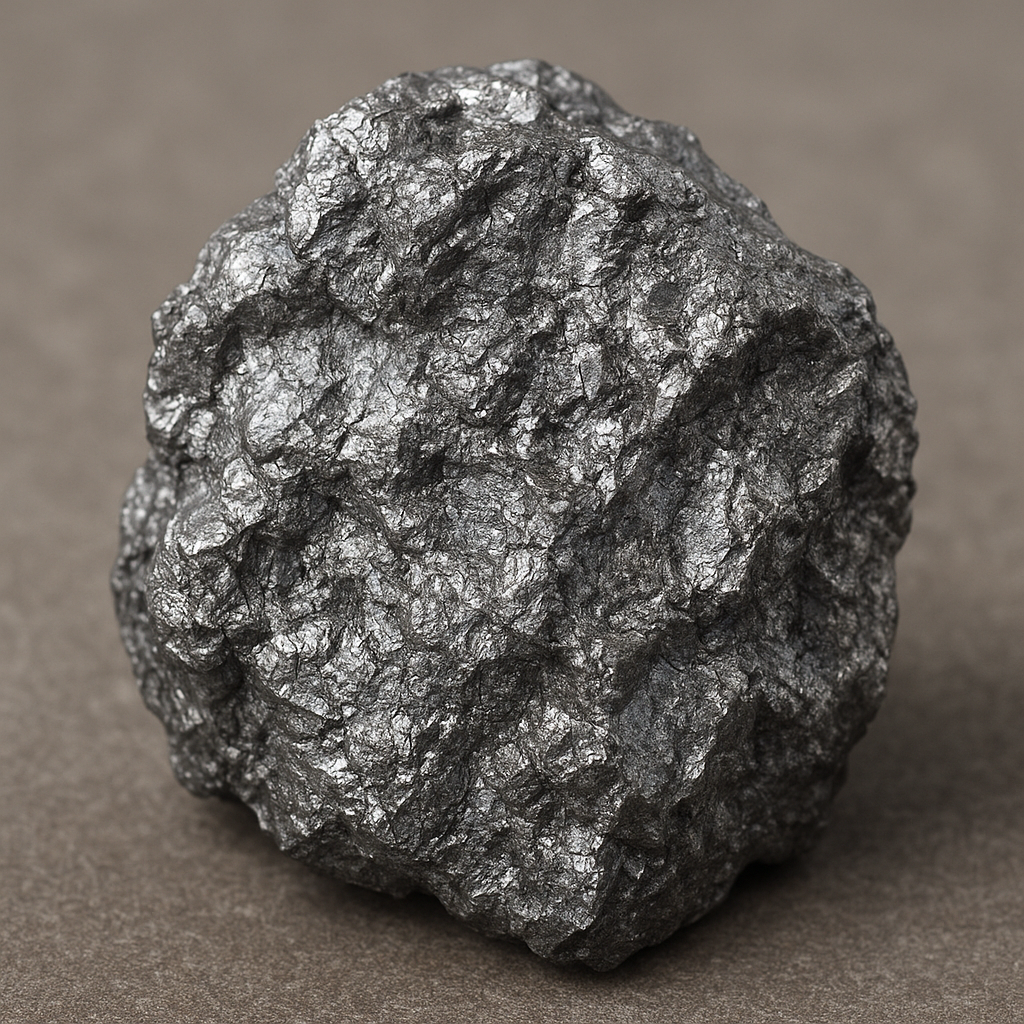
Nickeline is a striking and technically important mineral whose copper-red metallic appearance conceals a complex chemistry and a series of economic and environmental challenges. Its role in the story of nickel metallurgy, the behavior of arsenic-bearing ores, and the evolution of the Ni–As structural family makes it interesting to geologists, mineralogists, metallurgists and environmental scientists alike. This article explores where nickeline occurs, how it is processed and used, and several intriguing scientific and historical aspects related to this mineral.
Occurrence and Geological Settings
Nickeline (chemical formula NiAs) typically forms in hydrothermal and magmatic environments where nickel and arsenic are available. It is commonly found in veins, contact metamorphic zones and as part of sulphide mineral assemblages in nickel-rich deposits. The mineral is often associated with other nickel and cobalt minerals as well as arsenides and sulfides.
Typical host environments
- Hydrothermal veins formed at moderate temperatures, where arsenic-rich fluids interact with nickel-bearing rocks.
- Magmatic and magmatic-hydrothermal deposits where nickel was concentrated during igneous differentiation, sometimes near mafic-ultramafic intrusions.
- Contact metamorphic aureoles in carbonate rocks or skarns, where nickel and arsenic sources meet and allow arsenide minerals to crystallize.
Mineral associations
Nickeline commonly occurs together with a range of sulphides and arsenides such as:
- pentlandite and chalcopyrite in magmatic Ni–Cu deposits
- cobaltite and other cobalt arsenides in hydrothermal veins
- millerite, heazlewoodite and other nickel sulfides depending on sulfur fugacity
- native arsenic, arsenopyrite and realgar in strongly arsenic-rich environments
Notable localities
Well-known occurrences of nickeline include historic European localities (the Harz and Erzgebirge in Germany, parts of Norway), classic Canadian sites (Cobalt and other Ontario veins), and occurrences in Russia (Ural Mountains), Mexico (San Luis Potosí region), the United States (some Nevada and Pennsylvania districts), and parts of Australia. Many of these localities are historically important because arsenide-bearing ores were early sources of nickel before modern processing made recovery more systematic.
Crystal Chemistry and Physical Properties
The defining feature of nickeline is its simple stoichiometry (NiAs) and its adoption of a prominent structural type in solid-state chemistry. The mineral crystallizes in a hexagonal lattice and is the prototype of the so-called NiAs structure, a motif shared by many transition metal pnictides.
Structure and bonding
- The NiAs structural prototype is hexagonal (space group P63/mmc). Nickel atoms occupy octahedral sites while arsenic atoms form a hexagonal close-packed sublattice.
- This structure yields strong metal–pnictogen bonding and often metallic conductivity; many NiAs-type compounds are of interest for their electronic and magnetic properties.
Physical appearance
Nickeline typically displays a bright metallic luster with a coppery to bronze-red color that may tarnish to brown or black. It has a brittle to slightly sectile fracture, a Mohs hardness around 5–6, and a relatively high specific gravity compared with many rock-forming minerals.
Optical and magnetic characteristics
Under reflected light microscopy, nickeline shows characteristic anisotropy and reflectance that help distinguish it from iron sulfides and other metallic minerals. Some specimens show magnetic behavior or interactions with magnetic minerals in their assemblages, though pure NiAs is not strongly ferromagnetic at room temperature in most cases.
Extraction, Processing and Metallurgical Challenges
Because nickeline contains both nickel and arsenic, ores rich in this mineral require careful, often complex processing. Historically, the presence of arsenic complicated smelting and refining: arsenic vaporizes as toxic arsenic trioxide during high-temperature treatment and can poison furnaces, slag chemistry and downstream metallurgical operations.
Key processing approaches
- Roasting — Oxidative roasting converts arsenides into oxides and volatile arsenic trioxide. Roasting is effective in making nickel more accessible to subsequent hydrometallurgical steps but creates airborne arsenic emissions that must be captured and treated.
- Pyrometallurgy — Smelting to produce nickel-rich matte or alloys is possible but requires off-gas capture, special furnace linings and flux adjustments to deal with arsenic and resultant slag behavior.
- Hydrometallurgy — Pressure leaching or oxidative leach processes can dissolve nickel after appropriate pretreatment. Arsenic mobility and speciation during leaching must be managed to avoid contamination of solutions and effluents.
- Bioleaching and emerging technologies — Research into microbial and low-temperature leaching methods aims to minimize airborne arsenic emissions and energy intensity, but these remain site- and mineral-specific solutions.
Environmental control and by-products
When arsenic is volatilized as arsenic trioxide (As2O3), modern facilities capture it with baghouses, scrubbers and wet electrostatic precipitators, then stabilize the captured arsenic by converting it into less soluble compounds for secure disposal or storage. Tailings and slags require immobilization to prevent arsenic leaching; options include cementitious stabilization, vitrification or encapsulation.
Economic Uses and Industrial Relevance
Although nickeline itself is not commonly used as a finished product, it is an important source of nickel in some deposits and plays a role in the broader nickel supply chain. Nickel extracted from nickeline-bearing ores feeds industries that rely on nickel’s alloying and electrochemical properties.
Primary uses of nickel derived from nickeline-containing ores
- Stainless steels and corrosion-resistant alloys, where nickel improves ductility and resistance to oxidation
- High-temperature superalloys used in aerospace and power generation
- Rechargeable battery chemistries (notably nickel–metal hydride and lithium-ion cathode materials where nickel content increases energy density)
- Plating and surface treatments that exploit nickel’s protective and decorative properties
- Catalytic applications in chemical industries
Specialized and niche uses
Beyond metallurgy, arsenide minerals and NiAs-structured compounds are explored in condensed-matter physics for their magnetic, electronic and structural properties. Analogues of NiAs (for instance manganese arsenide, MnAs) have interesting magnetocaloric and magnetostructural behaviors that are the focus of research into solid-state refrigeration and spintronic materials.
Environmental and Health Considerations
Two intertwined issues make nickeline especially important from an environmental and occupational health perspective: the toxicity of arsenic and the mobility of arsenic under changing redox conditions. Both mining and processing stages must be managed to limit exposure and environmental release.
Human health risks
- Arsenic exposure is associated with skin lesions, cardiovascular disease, and increased cancer risk. Inhalation of arsenic-laden dusts or fumes during roasting and smelting is of particular concern.
- Workers in historical arsenide ore districts often faced chronic exposure before modern controls were implemented; modern facilities use personal protective equipment, engineering controls and continuous monitoring to mitigate risk.
Environmental mobility and remediation
Arsenic can be immobilized or mobilized in mine wastes depending on pH, redox state and the presence of competing ions. Remediation strategies include:
- Removal and secure storage of arsenic-rich dusts and precipitates
- Stabilization/solidification of tailings using cementitious binders to reduce leachability
- Constructed wetland or bioreactor systems designed to convert soluble arsenic to less mobile forms, though careful design is needed to avoid secondary contamination
Analytical Identification and Research Techniques
Accurate identification of nickeline and understanding its textural relations in ore are important both for resource evaluation and for designing processing flowsheets. A suite of modern analytical tools is used:
- Optical reflected-light microscopy for initial identification in polished sections
- Scanning electron microscopy (SEM) with energy-dispersive X-ray spectroscopy (EDS) for morphology and semi-quantitative composition
- Electron microprobe analysis for precise chemical composition and detection of minor elements, including possible substitutions (e.g., Fe, Co replacing Ni)
- X-ray diffraction (XRD) to confirm the hexagonal NiAs-type structure and to detect associated phases
- Synchrotron and Mössbauer techniques in advanced studies of electronic and magnetic properties
Scientific and Historical Curiosities
The story of nickel and its minerals blends chemistry, folklore and industrial development. The very name “nickel” comes from the German Kupfernickel — “false copper” or a mischievous sprite — reflecting early miners’ frustration with ores that looked like copper but yielded neither. Nickeline and other arsenides were part of that confusion: they often appeared coppery in hand sample but required different processing.
NiAs as a structural prototype
The NiAs structure is a key concept in solid-state chemistry and materials science. A wide array of transition metal pnictides and chalcogenides adopt this topology, and small changes in composition can lead to dramatic changes in magnetism, conductivity and structural transitions. This makes the NiAs family a fertile ground for fundamental research into correlated electron behavior and magnetostructural coupling.
Collecting and aesthetic value
Some well-crystallized specimens of nickeline are sought by mineral collectors for their metallic luster and striking color. Because the mineral often occurs intergrown with other attractive metallic minerals (e.g., cobaltite, chalcopyrite), specimens with sharp crystal faces and minimal alteration are prized. Collectors should handle such specimens with care because of possible arsenic content; gloves and good ventilation are prudent.
Practical Advice for Geologists and Engineers
Working with nickeline-bearing ore requires integrated geological, metallurgical and environmental planning. A few practical considerations:
- Detailed mineralogical studies are essential early in resource evaluation to quantify arsenic and to determine whether arsenic is locked in arsenide phases (like nickeline) or present in other minerals that respond differently to processing.
- Bench- and pilot-scale tests of roasting, leaching and smelting should be undertaken to determine optimal strategies for nickel recovery and arsenic capture.
- Community and regulatory engagement is important because arsenic management is often a public concern; transparent monitoring and modern pollution controls reduce social license risks.
Closing Thoughts
Although nickeline is not typically a household name, it sits at the crossroads of geoscience, metallurgy and environmental stewardship. From the lab-scale fascination with NiAs-type crystal chemistry to the large-scale engineering challenges of safely recovering nickel from arsenic-bearing ores, nickeline invites multidisciplinary attention. Its presence in an orebody changes the technical and environmental approach to mining and refining, and its broader role in the NiAs structural family connects it to modern research directions in materials science and condensed-matter physics.