
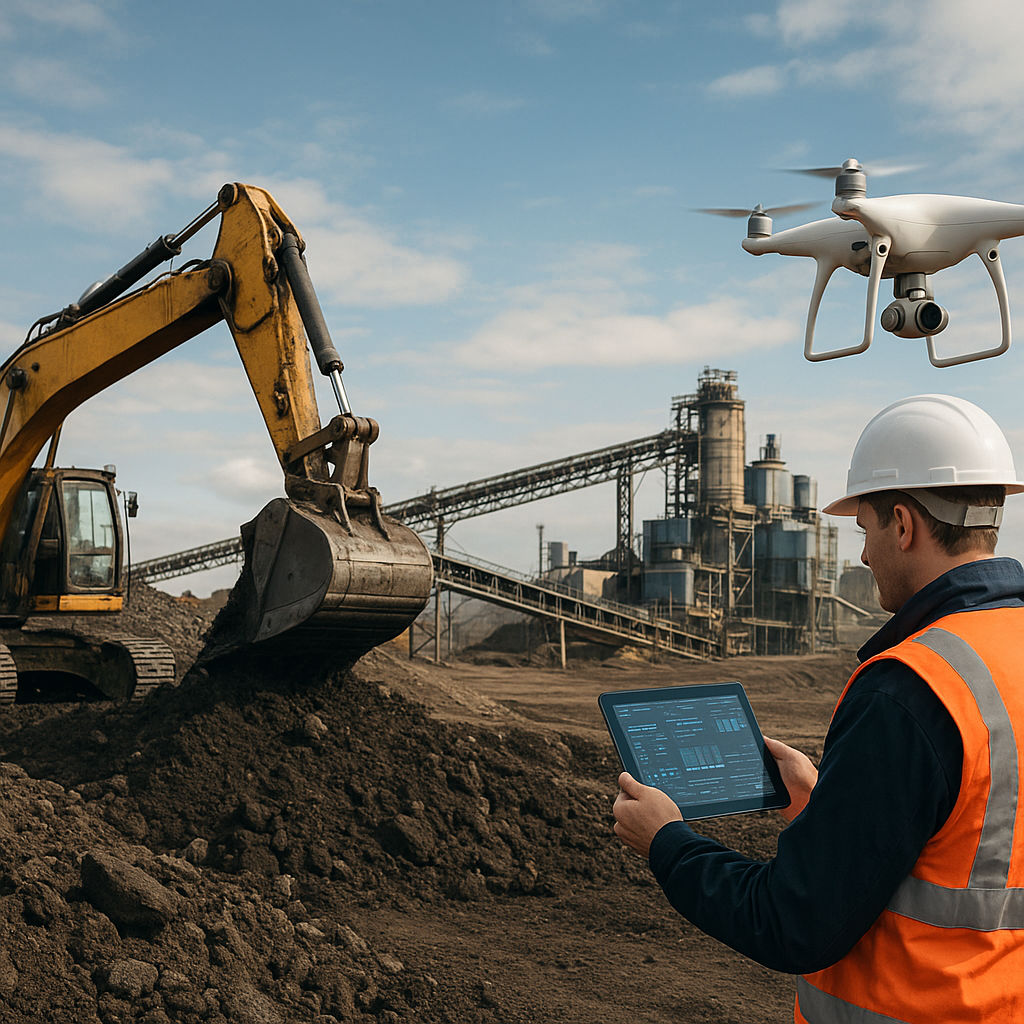
The global demand for advanced materials is rising rapidly, driven by technologies such as renewable energy systems, consumer electronics and next-generation transportation. This pressure has turned attention to rare metal extraction as a strategic and environmental priority. Innovations across chemistry, biotechnology, automation and data science are reshaping how industry locates, recovers and refines metals like lithium, cobalt, nickel, rare earth elements and platinum-group metals. The following article explores the major technological shifts that are transforming extraction processes, enhancing resource efficiency, and addressing environmental and social challenges.
Advances in extraction and processing chemistry
Traditional pyrometallurgical and energy-intensive smelting operations are being complemented or replaced by more selective, low-temperature techniques that improve recovery rates and reduce greenhouse gas emissions. Among these, hydrometallurgy and solvent extraction innovations stand out for their potential to change the economics and environmental footprint of rare metal production.
Hydrometallurgy and selective separation
Hydrometallurgical processes use aqueous chemistry to leach metals from ore or secondary feedstocks. Recent improvements include tailored leaching agents, optimized redox control and advanced solvent systems that selectively separate target elements from complex matrices. New reagents and ligand designs enable higher purity separations with fewer processing stages, reducing reagent consumption and wastewater volume. These techniques are particularly valuable for extracting elements present in low concentrations or embedded in refractory minerals.
Bioleaching and biotechnology
Bioleaching deploys microorganisms to solubilize metals from ores and waste streams, offering a low-energy alternative to high-temperature roasting. Genetic and metabolic engineering have improved microbial performance under harsher industrial conditions, accelerating metal recovery rates. Enzymatic catalysts and immobilized biological systems can target specific metals, making biological approaches attractive for complex polymetallic ores and tailings remediation. Integration of biotechnology with conventional hydrometallurgy can enable hybrid flowsheets that maximize yield and minimize waste.
Ion-exchange and membrane technologies
Ion-selective resins, advanced membranes and electrochemical separation systems provide precise control over purification steps. Electrodialysis, capacitive deionization and membrane distillation are being adapted for metal recovery, offering modular and scalable alternatives with lower chemical footprints. These systems are especially promising in recovering metals from dilute solutions such as process effluents, geothermal brines and seawater, expanding potential feedstocks for rare metals.
Digitalization, sensors and automation in modern mines
Digital technologies are transforming mine operations into smarter, more efficient systems. Real-time data acquisition, predictive analytics and automation reduce downtime, optimize resource use and mitigate environmental risks. The combination of physical sensors and software platforms creates an integrated view of the extraction value chain.
Smart sensing and real-time analytics
Advanced sensor suites measure parameters like particle size, mineralogy, slurry chemistry and emissions at high frequency. Inline analyzers and spectroscopic tools allow operators to adjust process conditions dynamically, improving recovery and lowering reagent consumption. The proliferation of low-cost, robust sensors has made continuous monitoring feasible across remote or harsh sites, enhancing transparency and process control.
Automation, robotics and remote operations
Automation reduces human exposure to hazardous tasks and increases repeatability. Autonomous drilling, robotic sorting and remotely operated processing plants enable continuous operations in difficult terrains. Integration with predictive maintenance systems keeps equipment available and safe. For environmental monitoring and compliance, drone surveillance and automated sampling provide high-resolution spatial data with reduced labor costs.
Artificial intelligence and digital twins
Digitalization through AI-driven optimization and digital twin models creates a virtual representation of a mine and its processing circuits. These models simulate scenarios to optimize throughput, energy use, and reagent dosing while forecasting bottlenecks. Machine learning helps interpret complex mineralogical datasets and predict ore variability, allowing more precise planning and reduced waste.
Circular economy, urban mining and secondary sources
Given the finite nature and concentrated geopolitics of primary resources, recovering metals from end-of-life products and industrial residues is critical. Industry is adopting circular approaches that prioritize reuse, refurbishment and recycling to close material loops.
Battery and electronics recycling
The rapid expansion of electric vehicles and portable electronics has created both demand and opportunity. Efficient recovery of lithium, cobalt, nickel and rare earths from spent batteries and electronic waste relies on advances in mechanical separation, hydrometallurgical refining and novel pyrometallurgical processes that minimize losses and emissions. Urban mining facilities use automated disassembly lines and targeted chemical treatments to extract high-value components.
Industrial by-product valorization
Mining and metallurgical operations themselves produce by-products — slags, tailings, brines — that can contain recoverable metals. Emerging techniques extract valuable materials from these streams, turning liabilities into assets. For example, geothermal and oilfield brines are being investigated as sources of lithium via direct lithium extraction technologies, offering a potential low-land-footprint supply.
- Direct lithium extraction methods use selective sorbents or ion-exchange to concentrate lithium from dilute brines.
- Advanced hydrometallurgical flowsheets can recover rare earths from red mud and phosphogypsum, addressing industrial waste challenges.
Environmental performance, social responsibility and governance
Technological innovation must be matched with rigorous environmental management and inclusive governance. New extraction methods can reduce emissions and water use, but community acceptance, biodiversity protection and fair labor practices remain essential to sustainable development.
Reducing environmental footprints
Designing operations around sustainability targets leads to lower carbon intensity, reduced water consumption and minimal land disturbance. Hydrometallurgy and bio-based techniques often require less energy than smelting, while closed-loop water systems and treatment technologies mitigate effluent risks. The use of renewable energy at remote sites for powering extraction and processing further reduces lifecycle emissions.
Traceability and responsible sourcing
Manufacturers and consumers increasingly demand transparent supply chains. Traceability systems leverage blockchain, isotope fingerprinting and digital tagging to verify origin and processing histories of metals. These tools support ethical procurement policies and reduce exposure to conflict minerals or human-rights risks. Mapping supply chain vulnerabilities also helps companies plan for geopolitical and market disruptions.
Community engagement and shared value
Successful projects integrate local communities into planning and operation through benefit-sharing, skills training and environmental stewardship programs. Demonstrating tangible social and economic benefits improves project resilience and long-term viability. Technologies that enable lower-impact extraction and reclamation can ease tensions between industry and stakeholders.
Economic dynamics, supply chains and strategic implications
Technological shifts affect not only production methods but the broader geopolitical and economic landscape. New extraction routes and recycled supply chains can diversify sources, influence pricing and alter trade patterns for critical metals.
Supply diversification and resilience
By enabling recovery from non-traditional sources — such as seawater, geothermal brines, and urban waste streams — new technologies can reduce dependence on a few dominant producers. This diversification enhances resilience against supply shocks and stimulates regional economic development through localized recycling and processing.
Cost curves and investment signals
Automation and process intensification can lower unit costs, though upfront capital for new technologies remains a barrier. Policymakers and investors play a role in bridging the gap through incentives, demonstration programs and risk-sharing mechanisms. Public-private partnerships can accelerate deployment of low-impact extraction infrastructure.
Challenges and future research directions
Despite progress, several technical and non-technical challenges remain. Complex ore mineralogy, the need for scalable pilot demonstrations, regulatory uncertainty and social license hurdles can slow adoption. Key research priorities include:
- Developing reagents and membranes with higher selectivity and lower environmental toxicity.
- Scaling bio-based processes while ensuring robustness in industrial conditions.
- Improving economic viability of direct extraction from dilute resources through energy-efficient processing.
- Enhancing sensor fidelity and AI interpretability for critical decision-making.
- Designing end-of-life products for easier disassembly and material recovery to support recycling.
Meeting these priorities will require multidisciplinary collaboration across chemistry, microbiology, engineering and data science sectors. Continued investment in pilot plants, standards for responsible sourcing and workforce training will shape which technologies move from laboratory to mainstream deployment.
Conclusion: emerging pathways for metal supply and use
New extraction technologies are redefining the lifecycle of strategic materials. From improved hydrometallurgical techniques and bioleaching strategies to integrated digital systems that drive efficiency and safety, these innovations support more resilient and lower-impact supply chains. The shift toward circular models — recovering metals from batteries and electronics, valorizing industrial by-products, and applying digitalization to traceability — complements primary production and can ease pressure on natural deposits. For sectors such as electric vehicles and renewable energy, secure access to critical metals remains essential; therefore, combining technological progress with ethical governance, robust supply chains and ongoing research will determine whether the transition to a sustainable, technologically-enabled metals economy succeeds.
