
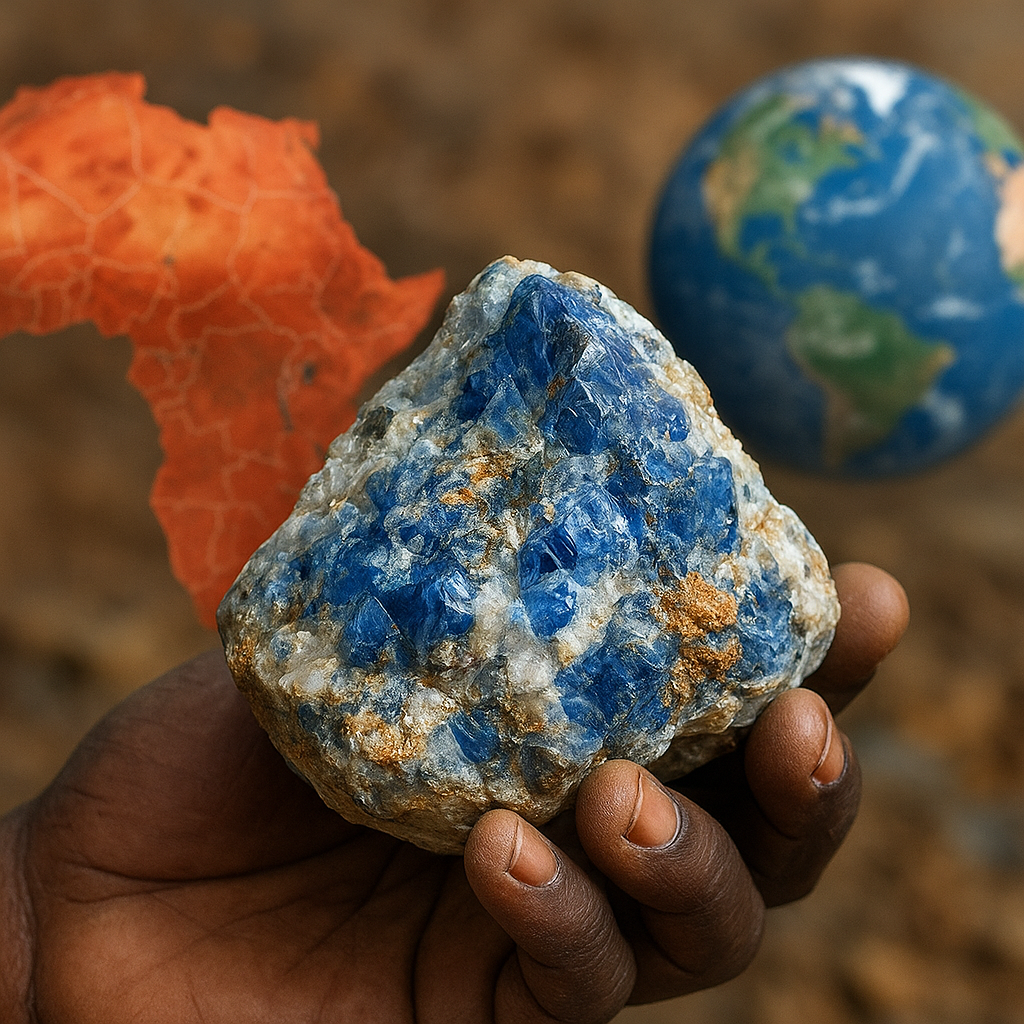
The recent wave of mineral discoveries across the African continent is reshaping markets, investment flows and international relations. New deposits of critical metals and gemstones are attracting attention not only for their immediate economic potential but also for the strategic role they could play in the global energy transition and advanced technologies. As state and non-state actors race to secure access to these resources, a complex mix of scientific, commercial, regulatory and social questions emerges that will determine whether these discoveries become engines of sustainable development or sources of intensified geopolitics and local conflict.
Geology, discovery hotspots and the nature of recent finds
Exploration has accelerated in multiple regions of Africa thanks to improved geological mapping, modern remote sensing, and targeted investment by junior and major mining firms. Rwanda, Democratic Republic of Congo (DRC), Namibia, Botswana, Tanzania and parts of West Africa have each seen notable announcements. These finds range from large, polymetallic deposits that contain combinations of copper, cobalt and nickel to concentrated veins of precious stones and newly identified sources of rare earths.
Why now? Technological and scientific drivers
Advances in geophysical surveying, airborne magnetics, and geochemical analysis allow explorers to detect subtle signals of buried mineralization. Digital data platforms and satellite imagery reduce the time and cost to identify targets. Additionally, mineral-processing innovations make lower-grade ores economically viable, broadening the range of exploitable deposits. These trends are catalyzing fresh rounds of exploration across previously under-examined terrains.
Types of minerals with strategic importance
- Rare earths and associated elements used in magnets, batteries, and electronics.
- Copper, nickel and cobalt for electrification and battery manufacturing.
- Gold, platinum-group metals and diamonds with long-standing economic value.
- Industrial minerals (phosphates, silica) important to agriculture and manufacturing.
Some discoveries are in remote, environmentally sensitive areas; others lie close to existing mines and infrastructure, making rapid development more feasible. The environmental footprint, community impacts and logistical challenges vary widely and will influence which deposits are developed first.
Economic consequences and investment dynamics
The immediate consequence of new discoveries is heightened investor interest. Junior exploration companies often drive early-stage work, while larger mining conglomerates and sovereign funds move to secure stakes when deposits show commercial promise. Governments in Africa are revisiting fiscal regimes, renegotiating contracts and designing policies intended to capture greater value locally. This moment raises questions about balancing attractive terms for investment with fair revenue sharing and long-term national benefits.
Forms of investment and partnerships
- Direct foreign investment by mining multinationals and integrated industrial players.
- Strategic bilateral investments, often accompanied by state-backed financing.
- Private equity, commodity-backed loans and offtake agreements linking finance to projected production.
- Public-private partnerships for infrastructure, local processing plants and workforce development.
Domestic value addition—such as smelting, refining and component manufacturing—remains an aspiration for many African states. Building such capacity requires complementary investments in power, transport, skills and regulatory institutions. Where these are lacking, raw commodity exports will continue to dominate despite efforts to industrialize.
Global competition and supply chain implications
The strategic nature of several newly discovered materials has intensified competition among external powers and companies. Nations with advanced manufacturing and clean-energy targets view African mineral resources as vital to securing supply chains for electric vehicles, wind turbines, electronics and defense applications. This competition manifests in diplomatic engagement, financial incentives and sometimes contentious commercial tactics.
Major actors and their approaches
- Private Western mining firms: technical expertise, adherence to international standards, focus on shareholder returns.
- Chinese state-owned and private enterprises: large-scale investment capacity, integrated logistics and processing models, sometimes coupled with infrastructure financing.
- Regional and pan-African investors: seeking to promote intra-African value chains and greater local ownership.
- Sovereign wealth and strategic funds from multiple continents: targeting long-term resource security.
Competition can be beneficial if it raises the bargaining power of African governments and leads to higher standards for labor, environmental protection and local procurement. However, it can also produce a race to the bottom in which investors exploit regulatory gaps, or where geopolitical rivalry results in projects prioritized for strategic rather than local development reasons.
Supply chain vulnerabilities and resilience
As global demand for critical minerals grows, supply chains face bottlenecks such as limited refining capacity, logistical constraints and concentrated processing facilities located outside Africa. Investments that integrate mining with local processing and transport infrastructure can strengthen resilience. At the same time, diversification of supply sources and investment in circular economy practices (recycling and substitution) will be needed to reduce systemic risks.
Governance, legal frameworks and social license
Effective governance is a decisive factor in whether mineral discoveries translate into broad-based prosperity. Governments must balance revenue generation with the protection of communities and the environment. Legal frameworks governing concessions, environmental impact assessments, benefit-sharing, and land rights are central to achieving equitable outcomes.
Key governance challenges
- Regulatory uncertainty and frequent renegotiation of contracts, which can deter long-term investment.
- Weak oversight and capacity gaps in environmental monitoring and mine closure planning.
- Inadequate benefit-sharing with local communities, leading to grievances and instability.
- Informal and artisanal mining operations that are difficult to regulate but support livelihoods.
Strong institutions, transparency mechanisms such as extractive-industry reporting standards, and inclusive consultation processes help build the necessary social license to operate. Where governments engage civil society and local stakeholders in project design and revenue management, the potential for positive developmental outcomes increases.
Environmental and social considerations
Development of mineral resources carries environmental risks including land degradation, water pollution, biodiversity loss and greenhouse gas emissions. Social impacts include displacement, changes in local economies and potential human-rights abuses. Mitigating these risks requires stringent environmental assessments, enforceable mitigation measures, and investments in community health, education and livelihoods.
Best-practice approaches
- Integrated environmental and social impact assessments completed early in the project cycle.
- Community development agreements that specify local employment, procurement and revenue-sharing commitments.
- Plans for mine closure and ecosystem restoration financed from project revenues.
- Support for artisanal miners to formalize operations, improve safety and access to markets.
International standards and voluntary certification schemes can incentivize better practices, but they must be adapted to local contexts. Donor agencies, development banks and industry can play complementary roles by providing financing for sustainable infrastructure and capacity building.
Technology, downstream opportunities and future pathways
New mineral finds can catalyze industrial diversification if accompanied by deliberate policy choices. Value addition through refining, component manufacturing and recycling creates jobs and increases domestic retention of mineral rents. Investments in infrastructure, technical education and supportive industrial policy are prerequisites.
Policy levers and strategic choices
- Local content requirements and incentives for processing and manufacturing investments.
- Targeted vocational training and partnerships with industry to build a skilled workforce.
- Stable, transparent fiscal regimes that balance revenue capture with investor certainty.
- Regional cooperation to build shared infrastructure and harmonize regulatory standards.
Digital technologies, automation and remote operations are also changing the nature of mining employment and enabling more efficient operations. However, the benefits of automation must be weighed against local employment objectives.
Conclusion: navigating opportunity and risk
The unfolding story of new mineral discoveries in Africa sits at the intersection of geology, markets, politics and society. If managed with foresight, transparency and a commitment to sustainable development, these discoveries could finance infrastructure, foster industrialization and support resilient supply chains. Conversely, unmanaged competition and weak governance could entrench extractive patterns that deliver few long-term benefits to host countries and communities. The choices made now by African governments, investors and international partners will determine whether these mineral riches translate into broad-based prosperity or deepen global and local tensions around access, control and environmental stewardship.
