
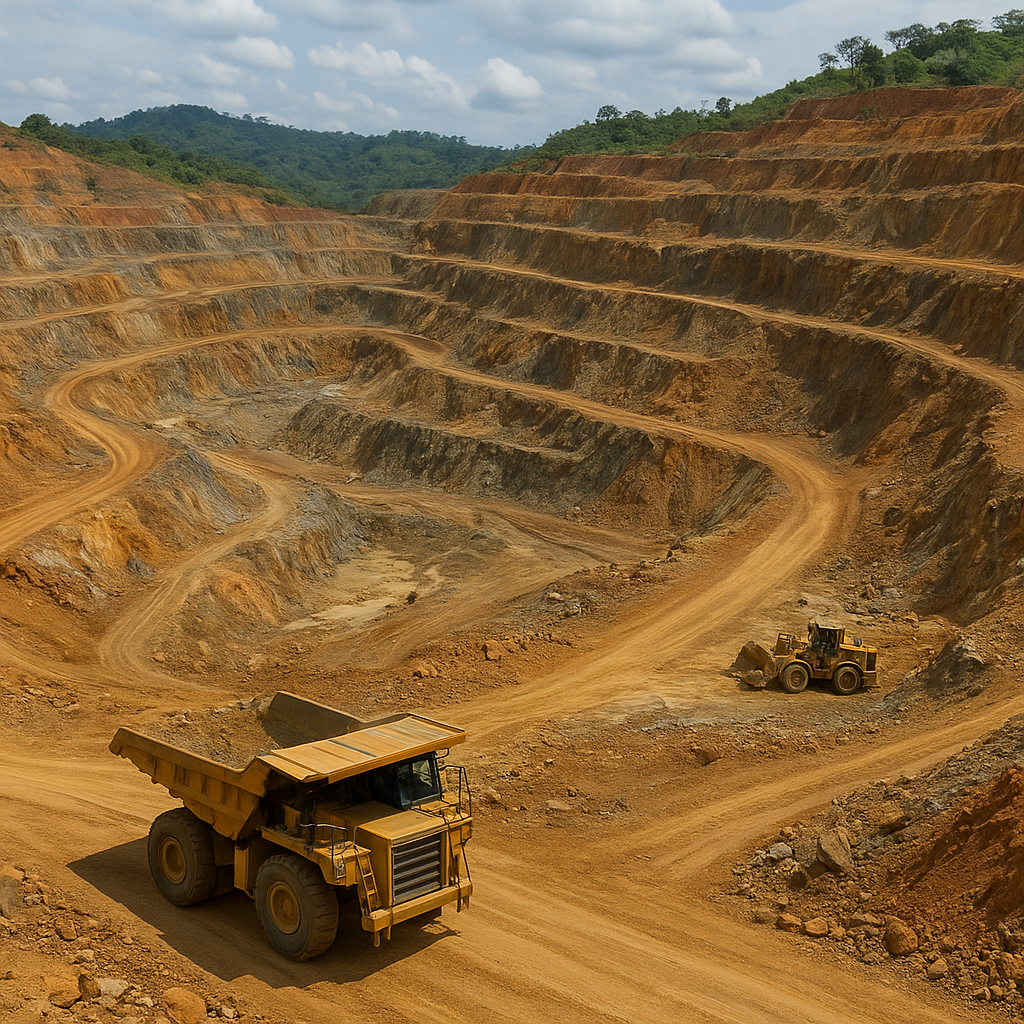
The Mpama North Mine, situated in the tin-bearing regions of the eastern Democratic Republic of the Congo, is a significant example of how mineral wealth shapes local economies, supply chains and environmental challenges in central Africa. This article explores the mine’s location and geology, the minerals extracted and mining methods used, its broader economic importance, and several noteworthy aspects that illuminate the complexities of tin production in the region. Throughout, key terms are highlighted to draw attention to the most salient concepts.
Location and geological setting
Mpama North is located in the eastern part of the DR Congo, a region that belongs to the broader African tin belt stretching across parts of the Great Lakes and central African highlands. The mine sits within a landscape marked by rugged hills, streams and alluvial valleys where tin-bearing minerals accumulate. The geology of the area is characterized by pegmatitic intrusions and hydrothermal systems that have concentrated tin in veins and in downstream alluvial deposits.
Regional context
- The eastern DRC is historically and geologically known for multiple cassiterite-hosting deposits.
- Mpama North is part of a cluster of artisanal and small-scale operations and, in places, larger mechanized projects that exploit both primary vein-type mineralization and alluvial placers.
- Transport links are typically limited: access to the mine is often via rough tracks and unpaved roads, which affects logistics and costs for concentrate movement to processing centers or export hubs.
Geology and mineralization
The primary economic mineral at Mpama North is cassiterite, the oxide of tin (SnO2). Cassiterite commonly forms in hydrothermal veins associated with granite-related systems and can be liberated into rivers and gullies where it accumulates as dense alluvial deposits. In pegmatitic or greisenized granitic terrains, cassiterite often occurs alongside accessory minerals; however, tin is the principal commodity of interest at Mpama North. The concentration and distribution of ore are controlled by both primary vein structures and depositional processes in the weathering profile.
What is mined and how
At Mpama North the dominant product is tin, recovered primarily in the form of cassiterite concentrates. The methods used across the site reflect a mix of artisanal and small-scale mining (ASM) practices combined in some areas with more organized extraction and preliminary processing.
Mining methods
- Artisanal mining: Hand-dug pits, shallow shafts and open trenches are common. Miners use simple tools such as picks, shovels and sieves, and operate in small crews. Water is often used to separate heavier cassiterite grains from lighter gangue through panning and sluicing.
- Small-scale mechanized operations: In parts of Mpama North where capital has been invested, small excavators, trommels and rudimentary jigging or shaking table systems improve recovery and throughput compared with purely manual methods.
- Primary-to-secondary processing: Ore recovered from veins or alluvial traps is crushed, washed and concentrated on-site before being bagged for transport. The concentrates are typically traded to regional buyers or aggregated for export.
Commodity and downstream uses
The recovered tin is an essential industrial metal. In its refined form, tin is a critical component in solder used for electronics, plating to prevent corrosion, alloys such as bronze, and in some chemicals and glass applications. Because of the metal’s importance to electronics manufacturing, tin from Mpama North and other Congolese sources feeds global supply chains. The quality of concentrates—measured by tin content and impurity profile—shapes their market value.
Economic significance
Mpama North’s contribution to the local and national economy operates on several levels: direct employment and livelihoods, regional trade and services, and integration into international commodity markets. The mine’s activities support thousands of people indirectly, from miners and processors to traders, transporters and local merchants.
Local livelihoods and employment
- The mine provides livelihoods for artisanal miners and their families, offering one of the few cash-income opportunities in remote rural areas.
- Women and young people commonly participate in processing, sorting and trading, while men often undertake the more physically demanding extraction tasks.
- Local economies benefit from secondary businesses—food vendors, tool suppliers, transportation services and informal finance—created around mining activity.
National and international economic linkages
On a national scale, tin from Mpama North contributes to export earnings, foreign exchange inflows and the diversification of mineral revenue beyond the widely publicized copper and cobalt sectors in the DRC. Internationally, tin concentrates enter supply chains for solder and electronics manufacturing, linking a small rural mining site to global industries. Because tin prices can be volatile, the income stream for local miners and traders is often uncertain, but when prices are strong, communities near Mpama North can experience noticeable boosts in cash circulation.
Value chain considerations
Key stages that determine the economic value captured locally include:
- Ore recovery and on-site beneficiation (which improve concentrate grade).
- Aggregation and negotiation with regional buyers or exporters.
- Compliance with traceability and due diligence frameworks that may open access to premium markets.
Social and environmental challenges
The economic benefits of Mpama North are counterbalanced by social and environmental challenges typical of ASM-dominated tin districts. Addressing these issues is essential for sustainable development.
Labor, safety and social issues
- Mining can be hazardous. Risks include pit collapses, falling rocks, and injuries from tools and machinery. Safety standards are often limited in informal sectors.
- Child labor and labor rights are persistent concerns in parts of the region; NGOs and government agencies have been working to mitigate these issues through education and alternative livelihood programs.
- Social tensions may arise over land access, the division of mining revenues, and the presence of armed groups in some parts of eastern DRC.
Environmental impacts
Alluvial and shallow-vein mining disturb land surfaces, alter drainage patterns, and can lead to erosion and sedimentation of streams. Processing methods that lack proper tailings management can contaminate waterways with fine sediments. Unlike base-metal operations that may produce acid-generating wastes, tin mining’s primary environmental hazard is sediment and habitat disruption; however, where processing involves chemicals (rare in tin production compared to gold), there can be further contamination risks.
Governance and traceability
Because of the international focus on conflict minerals and responsible sourcing, mines like Mpama North are increasingly subject to traceability initiatives and due diligence checks. Programs such as certification schemes, chain-of-custody tracking and third-party audits aim to reduce the risk that mineral revenues fund armed conflict and to improve working conditions. Enhanced traceability can help miners secure better prices, access international markets, and meet buyer demands for ethically sourced minerals.
Interesting aspects and innovations
Mpama North illustrates several interesting themes at the intersection of geology, human enterprise and global markets.
1. The link between a small mine and global technology
It is striking that a cassiterite grain recovered from an artisanal pit can end up as part of the solder that joins components on a smartphone or in renewable energy systems. This direct connection underscores the globalized nature of mineral supply chains and highlights why responsible sourcing is a priority for electronics manufacturers and regulators.
2. Practical geology and local knowledge
Local miners often possess detailed empirical knowledge of where cassiterite accumulates—knowledge passed down through generations or learned through experience. Their ability to read subtle landforms, seasonal stream deposits and weathering patterns contributes to surprisingly effective prospecting without formal geological equipment.
3. Incremental improvements in processing
Small-scale innovations—such as improved sluice designs, trommel screens, and low-cost shaking tables—can significantly increase recovery rates and concentrate grades. When combined with training, these technologies boost incomes and reduce the volume of waste material needing management.
4. Traceability technology adoption
Blockchain pilots, tamper-evident tags, and electronic documentation systems have been trialed in tin supply chains to provide provenance records from mine to smelter. While implementation is uneven, initiatives that increase transparency can create incentives for better practices at the mine level.
5. Potential for formalization and partnerships
There is growing interest from NGOs, governments and private firms to support formalization of artisanal sites. Formalization can take the form of cooperatives, technical assistance, micro-finance for equipment, and links to off-takers that value traceable supply. Where successful, such programs help translate natural resource endowments into longer-term community benefits.
Operational and market pressures
Mpama North, like other tin-producing sites, faces pressures from fluctuating commodity prices, changing regulatory landscapes, and competition from alternative sources. At the same time, global demand for tin—driven by electronics, the automotive industry and infrastructure projects—creates both opportunities and vulnerabilities for miners.
- Price volatility: Local incomes are sensitive to international tin prices, which can vary with global demand cycles.
- Regulatory change: Reforms in mining law, export taxation or licensing regimes impact how easily miners can operate and sell concentrates.
- Market access: Certification and traceability requirements can be barriers but also create avenues to higher-value markets for compliant producers.
Practical recommendations for stakeholders
For the mine operators, local communities and external partners involved with Mpama North, several practical steps can improve both productivity and sustainability:
- Invest in low-cost, high-impact safety measures and training to reduce accidents.
- Support improved onsite beneficiation to increase concentrate grades and local revenue capture.
- Facilitate cooperative formation and transparent local governance to manage revenues and reduce conflict.
- Engage with traceability programs to open up premium markets and comply with international due-diligence expectations.
- Implement environmental management practices focused on erosion control, water protection and progressive rehabilitation of worked areas.
Concluding observations
The Mpama North Mine embodies the dual character of many mineral operations in the eastern Democratic Republic of the Congo: it offers tangible economic opportunities for employment and local commerce but also presents social and environmental challenges that require coordinated responses. Its output—primarily tin in the form of cassiterite concentrates—feeds global industries and highlights the importance of improving traceability and governance across the supply chain. Innovations in processing, better safety standards, and stronger market linkages offer pathways for communities to derive more sustained benefit while reducing negative impacts. Observing how Mpama North evolves in the coming years will provide valuable lessons about the role of small-scale mineral sites in a globally interconnected economy.

