
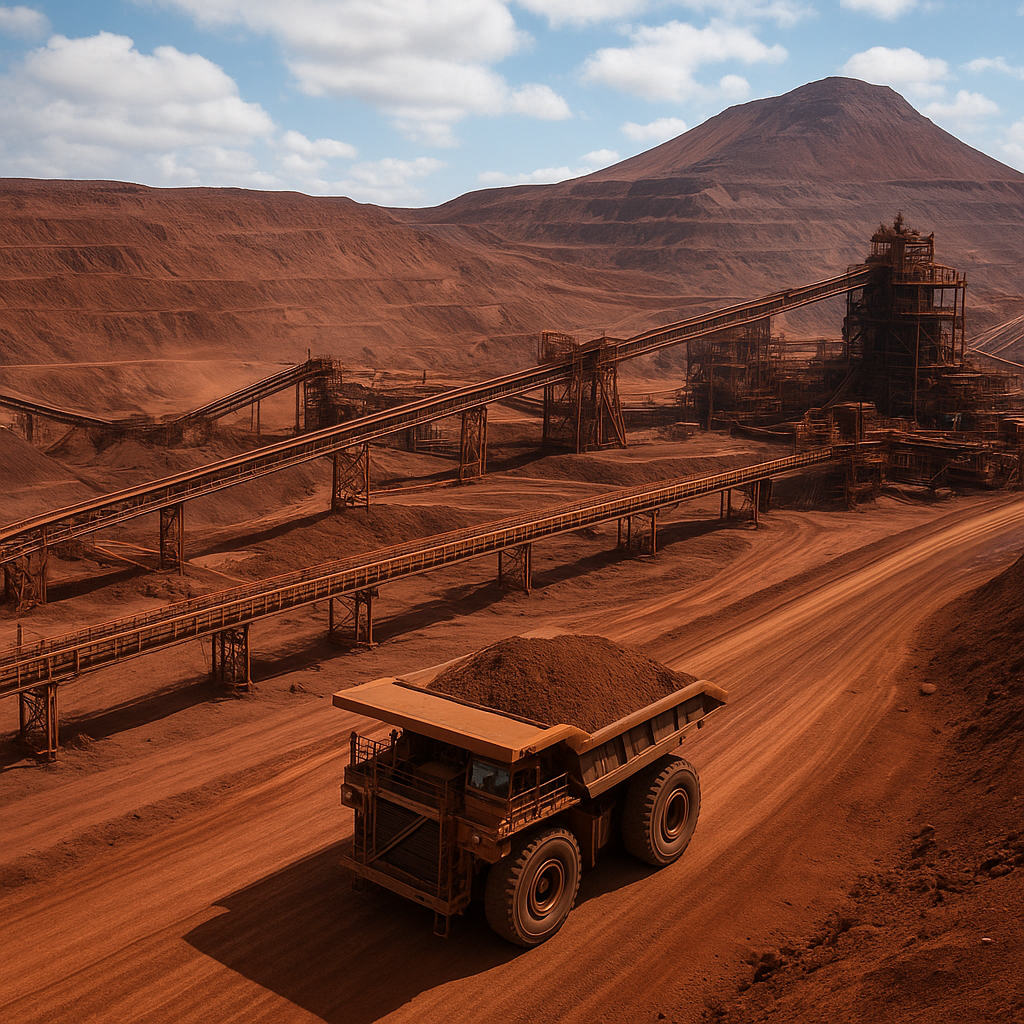
Mount Whaleback stands as one of the most emblematic iron ore workings in Australia’s vast mineral landscape. Located in the heart of the Pilbara region, this enormous open-pit mine has played a defining role in the development of large-scale iron ore extraction, regional infrastructure and global metal markets. The site is not only a physical landmark but also a symbol of how resource projects can reshape towns, transport networks and national export profiles. Below, the article explores where Mount Whaleback is found, what is extracted there, its wider economic significance and a number of notable and sometimes surprising details that capture why the mine continues to attract attention.
Location and geology
Mount Whaleback is located in the central Pilbara region of Western Australia, near the service town of Newman. The Pilbara is one of the world’s most important iron ore provinces, a region of ancient, iron-rich rocks that host vast deposits of hematite and magnetite. The mine sits within a landscape of rugged ranges and red earth that conceal layers of sediments and banded iron formations laid down more than two billion years ago. Those formations are the geologic foundation for much of Australia’s iron ore wealth.
The ore body exploited at Mount Whaleback is dominated by high-quality hematite, typically amenable to direct shipping with relatively minimal beneficiation. This natural advantage—iron ore that could be mined, crushed or screened and then loaded for export with less processing—helped accelerate the commercial development of the Pilbara region in the late twentieth century. Geologists and mining engineers describe the deposit as a large, contiguous zone of iron-rich rock that lent itself well to a vast, single-pit extraction approach rather than many small pits or underground workings.
Mining operations and infrastructure
Mount Whaleback is best known for its scale and the industrial systems built around it. The mine is operated as part of a broader network of iron ore operations owned and managed by one of Australia’s major miners. Mining at Mount Whaleback uses typical large-scale open-pit methods: blast, load and haul with massive shovels and haul trucks; on-site crushers and screening plants; and stockpiles of lump and fines separated by size for different market requirements.
Transport and export chain
- The ore mined at Mount Whaleback is transported by a heavy-duty rail system from the Pilbara plateau to the coast. This long-distance rail connection is a backbone of the operation and a defining feature of Pilbara iron ore logistics.
- At the coast, bulk handling facilities and deepwater export terminals enable the loading of very large bulk carriers destined primarily for Asian steelmakers.
- A purpose-built regional town and service infrastructure support the workforce and operations—housing, roads, power supplies and community facilities were all developed to serve the mine and its employees.
Inside the mine precinct, automation and continuous improvement have driven productivity gains over decades. Technologies such as fleet management systems, drill-and-blast optimisation, and increasingly autonomous haulage and rail systems have been introduced to keep unit costs competitive and reduce safety risks. The operation is an example of how mining projects integrate geotechnical, mechanical and logistical systems at scale to deliver raw commodities to international markets.
Economic significance
The significance of Mount Whaleback extends from local to global scales. Locally, the mine supports employment and services in remote communities; the nearby town of Newman exists primarily because of the iron ore industry. Regionally and nationally, iron ore exports are a major pillar of Australia’s economy. The Pilbara, with mines like Mount Whaleback at its core, accounts for a substantial share of Australian mineral export revenue and is a major supplier to global steel production.
Key economic impacts include:
- Export earnings: Iron ore is one of Australia’s top export commodities by value, with Pilbara operations supplying a large percentage of that output. Revenues flow to the operating companies, but also benefit the national economy through taxes, royalties and employment.
- Infrastructure investment: The railway lines, ports and townsites established for the mine have long-term value. They lower the cost of transporting ore and create enduring logistical corridors for other resource activities.
- Regional employment and services: Direct jobs in mining, maintenance and logistics are complemented by contractors and service industries—catering, health, transport—raising living standards in otherwise remote regions.
Beyond direct financial returns, the mine catalysed the development of skills, technology and institutional capacity in Australian mining. Techniques pioneered or refined in the Pilbara—large-scale open-cut operations, bulk rail logistics, and mass export handling—have been exported conceptually and operationally to mining regions around the world.
Environmental and social considerations
Large open-pit mines inevitably raise environmental and social issues that require active management. Mount Whaleback and neighbouring operations have faced a range of responsibilities and challenges, including land use, water management, dust and rehabilitation. The mine’s footprint altered landscapes and required careful planning to manage runoff, groundwater interactions and the long-term restoration of disturbed areas.
Community and Indigenous engagement
The Pilbara is home to several Indigenous communities whose cultural connections to Country predate industrial development by millennia. Modern mining projects operate under regulatory frameworks and agreements that require consultation, compensation and, increasingly, collaborative approaches to land management. Community development initiatives, employment programs and cultural heritage protection are part of the social licence that miners seek to maintain for long-term operations.
Rehabilitation and sustainability efforts
Contemporary practice emphasises progressive rehabilitation—returning disturbed areas to stable landforms and, where possible, to ecosystems or productive uses after mining ends. Companies operating in the Pilbara have invested in research to improve revegetation on arid landscapes, control invasive species and monitor post-mining land stability. Water conservation and dust suppression are also priorities: dust can affect local communities and port operations, while water is a limited resource in arid regions.
Technological innovation has also reduced environmental footprints in some respects. More fuel-efficient equipment, electrification of rail corridors, and initiatives to lower greenhouse gas emissions from processing and transport are areas of ongoing development. The industry faces pressure from investors, customers and regulators to demonstrate credible pathways toward lower emissions and circular economy principles.
Interesting facts and historical notes
Mount Whaleback carries several noteworthy aspects that make it interesting beyond its economic output:
- Scale and firsts: When it was developed, the mine was widely regarded as one of the largest single-pit open-cut iron ore operations in the world. Its name is often invoked when discussing the scale-up of modern bulk mining.
- Town-building: The requirement to house and service a large workforce in a remote location led to purpose-built towns and a distinctive fly-in fly-out (FIFO) culture that characterises much of Australia’s remote resource industry.
- Integration with rail and port: The efficiency of moving millions of tonnes of ore each year from inland plateau to ocean-going vessels is a logistical feat, relying on heavy-haul rail, robust port infrastructure and precise scheduling.
- Global linkages: The ore extracted at Mount Whaleback plays a direct role in global steelmaking, particularly in Asia. Steel produced using that ore is used in everything from construction and shipping to machinery and consumer goods.
- Technological evolution: The mine’s operation provides examples of technological change across decades: from early heavy earthmoving fleets to modern autonomous haulage trucks and remote operations centres.
Another interesting human story is the way resource discoveries reshape demographic and economic maps. Newman and nearby communities owe their current scale and composition to the iron ore boom—schools, hospitals, cultural centres and sporting clubs emerged around the steady employment and economic activity generated by the mines. For many families, a multi-generational connection to the Pilbara mining industry is now an established part of local identity.
Challenges and the future outlook
Like all major resource projects, Mount Whaleback faces a mix of immediate operating challenges and longer-term strategic questions. Market volatility in iron ore prices drives revenue uncertainty; shifts in global steel production methods, such as increased recycling and modest changes in primary demand, may alter long-term demand trajectories. At the same time, the industry’s response to climate change—through decarbonisation of energy and transport, improved efficiency and emissions reduction commitments—will affect capital allocation and operational plans.
From a regional perspective, the longevity of Pilbara mining depends on how well companies manage environmental legacies, continue to invest in skills and community development, and adapt to technological shifts. Mines that can lower their cost base while meeting stricter environmental and social expectations will be better positioned to compete on global markets.
Closing observations
Mount Whaleback exemplifies how a single, well-situated mineral deposit can have outsized effects on local communities, regional development and global commodity flows. Its large-scale open-pit layout, connection to a purpose-built rail and port network, and role in producing high-grade iron ore for export have left a clear imprint on the Pilbara and on Australia’s mineral story. The mine also highlights the balancing act between economic opportunity and environmental stewardship that defines modern resource development.
Whether viewed from the perspective of geology, engineering, economics or social impact, Mount Whaleback remains a compelling case study of industrial scale and legacy. As the world’s steel priorities evolve and the mining industry tackles sustainability challenges, operations like Mount Whaleback will continue to adapt—shaping, and being shaped by, broader changes in technology, markets and community expectations.

