
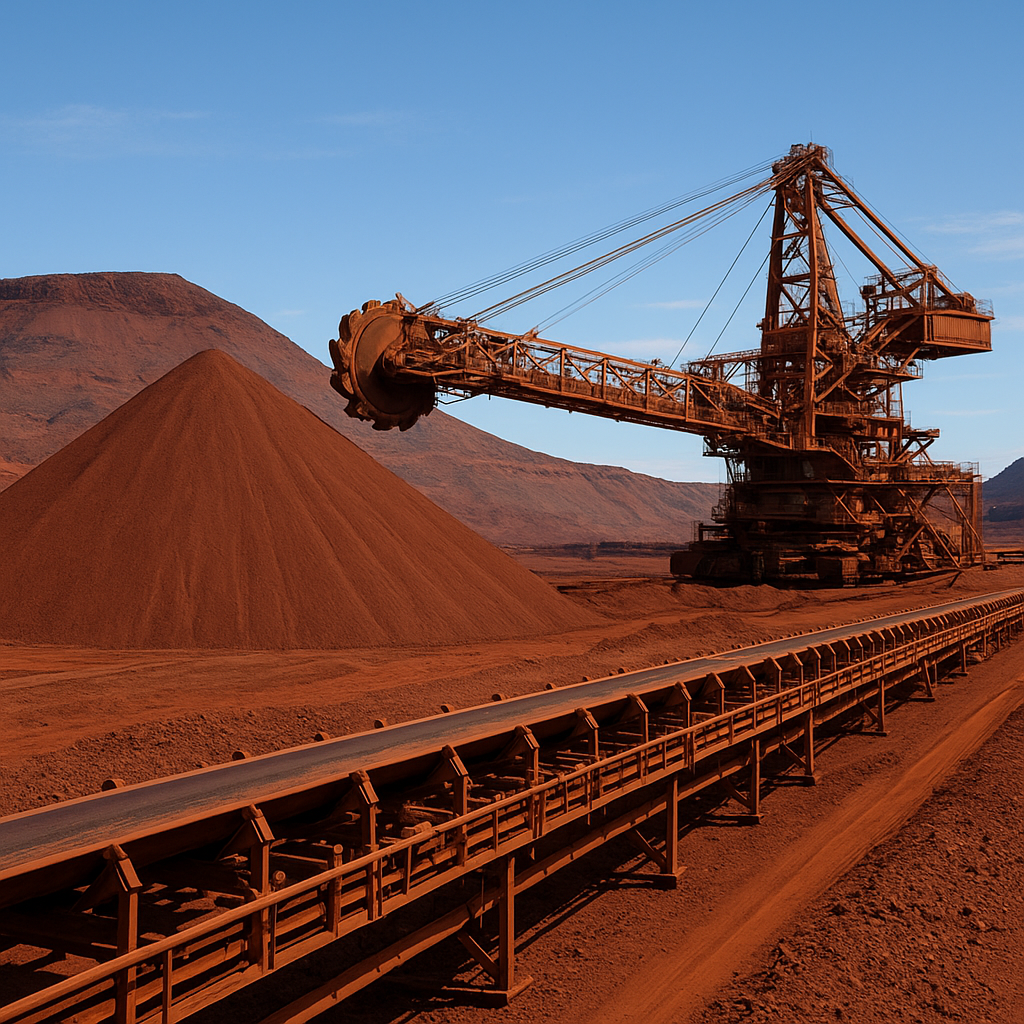
Mount Whaleback stands as one of the most remarkable and influential iron ore deposits in Australia. Located in the mineral-rich Pilbara region of Western Australia, the site has played a central role in the development of large-scale iron ore mining, export infrastructure and regional communities. This article explores where Mount Whaleback is found, what is extracted from it, the economic significance of the operation, and a selection of facts and features that make this mine especially interesting.
Location and geological setting
Mount Whaleback is situated in the heart of the Pilbara, a broad, ancient landscape in northwestern Western Australia renowned for its high-quality iron formations. The mine lies near the township of Newman, on land that is part of a larger iron-rich province formed hundreds of millions to billions of years ago. The geological history of the region produced extensive banded iron formations that host the region’s exceptionally rich iron deposits.
The Pilbara iron deposits are typically dominated by dense, high-grade hematite and goethite mineralization. These rocks are often easily recoverable as direct shipping ore (DSO), which means they require less processing before they can be loaded onto ships and exported. Mount Whaleback, as part of the broader ore province around Newman, exploits one of these large, continuous orebodies that trend for many kilometers and provide a stable long-life resource.
Because of the geological continuity and relative near-surface position of much of the iron, mining at Mount Whaleback uses large-scale surface techniques and benefits from predictable ore quality and tonnage estimates. The predictable nature of the formation has allowed long-term planning and the construction of associated infrastructure over several decades.
Mining methods and what is produced
Mount Whaleback is developed as a large open-pit mine. The pit design, access roads, heavy haulage areas and processing facilities are configured to move very large volumes of rock and ore efficiently. The mine targets high-grade iron material, primarily composed of hematite and other iron oxides that can be beneficiated into marketable product. The ore is typically separated into lumps and fines according to size, and both categories are important to steelmakers around the world.
The production chain at the mine includes drilling and blasting, load-and-haul operations using very large trucks and excavators, primary crushing, and sometimes screening to separate lump from fines. Transport from the mine to export facilities is handled via heavy-haul railway systems that connect the Pilbara mines to port terminals on the coast. The degree of on-site processing is often limited because the ore grade and quality lend themselves to direct shipping with minimal beneficiation.
Key products from Mount Whaleback include:
- lump ore suitable for blast furnace feed;
- fines used in sinter plants or in direct reduced iron processes;
- bulk shipments that are blended with other Pilbara tonnages to meet customer specifications.
The site has historically been part of large integrated operations run by major mining companies, with systems designed to sustain very high throughput and predictable cargo volumes to support long-term supply contracts.
Economic and infrastructural significance
Mining at Mount Whaleback has profound economic implications at multiple scales: local, state and national. At the local and regional level the operation supports jobs in extraction, rail operations, port logistics, maintenance services and town services. The presence of a major mine has driven the development of Newman and surrounding communities, influencing housing, schools, health services and secondary industries.
On a broader scale, Pilbara iron ore, including shipments sourced from Mount Whaleback, constitutes a substantial share of Australia’s export revenue. Iron ore is one of Australia’s top export commodities, and the consistent, high-quality supply from Pilbara mines underpins long-term trade relationships with major steel-producing countries across Asia. Large-volume, low-cost iron ore exports contribute to national GDP, government royalties and corporate revenues that in turn support investment, taxation and community programs.
A critical element in the value chain is the transport and port infrastructure required to move millions of tonnes of ore annually. Mount Whaleback and neighboring operations are linked to coastal export terminals by dedicated heavy-haul railways. One of the most notable rail links in the region is the heavy-haul network that connects inland mines to the ports at Port Hedland. These railways, often among the longest and heaviest in the world, are engineered to transport massive volumes of product reliably and to interface with large ship-loading facilities at port.
Beyond direct revenue, the presence of Mount Whaleback has encouraged investments in technology, safety systems and operational practices that are used across global mining. The scale of the operation has justified investments in automation, predictive maintenance and remote operation centers, which improve productivity and safety while reducing costs.
Social and environmental considerations
Large-scale mining operations such as Mount Whaleback operate within a complex web of social and environmental responsibilities. Operators collaborate with Traditional Owner groups and local communities through Indigenous agreements, community development programs and employment initiatives aimed at increasing local participation in the mine’s workforce and supply chain.
Environmental management is another central focus. In the Pilbara, the dry climate and remote setting create distinct challenges and responsibilities: protecting scarce water resources, managing dust, rehabilitating disturbed land and maintaining biodiversity in sensitive habitats. Modern mine planning includes progressive rehabilitation measures—reshaping and re-vegetating areas as mining advances—and careful water and dust control to reduce impacts on the wider environment.
Decommissioning and closure planning are integrated into long-term mine strategies so that when operations eventually cease, there are clear measures and funding to restore the landscape, manage residual risks and leave a positive legacy for the region.
Logistics and global markets
The logistical system that links Mount Whaleback to world markets is an engineering achievement in itself. Ore is loaded onto trains that run on robust iron ore rail corridors, feeding port facilities equipped with conveyor systems, stockyards and ship loaders capable of handling very large bulk carriers. Turnaround efficiency at port is essential to meet shipping schedules and to keep costs competitive in the global market.
Australia’s iron ore exports are primarily destined for East Asian steel mills, which rely on a continuous supply of high-grade ore. Long-term contracts and spot market sales coexist, and the purity and consistency of Pilbara ore often command premiums. Freight rates, shipping logistics and global steel demand cycles influence the revenue realized from each shipment; as such, Mount Whaleback’s output is linked to macroeconomic trends as well as to operational reliability.
Technological innovations
Over the decades, the Pilbara iron ore operations have adopted automation technologies—remote-controlled haul trucks, automated drilling rigs, centralized dispatch and predictive analytics for equipment maintenance. These innovations increase safety by reducing workers’ exposure to hazardous tasks, and they raise productivity by enabling near-continuous operation and optimized fleet utilization. Implementation of these systems at scale requires robust communications networks, skilled technical teams and well-crafted change management strategies, all of which have become part of modern mining at sites like Mount Whaleback.
Interesting facts and historical notes
Several features make Mount Whaleback noteworthy beyond its industrial output:
- Mount Whaleback gets its name from the distinctive shape of the ridge that resembles the curved back of a whale—an evocative and memorable landmark in the otherwise open Pilbara landscape.
- The mine has been part of the narrative that transformed the Pilbara from a sparsely populated outback into a globally significant mining province, with associated towns, railways and ports growing around mineral discoveries.
- Mining at this scale has driven innovative community engagement models, where companies and Traditional Owners work to secure economic and cultural outcomes for local people.
- High-grade Pilbara ore including material from the Newman area is prized by steelmakers for its low impurities and high iron content, which supports more efficient metallurgical processing.
- Another notable aspect is the integration of rail, port and mine operations into a single supply chain that can move tens of millions of tonnes a year—an operational challenge that few industries face at such scale.
Regional development and employment
The presence of Mount Whaleback has been a catalyst for jobs and businesses in the Pilbara. Mining companies create direct employment in the mine and supply chain roles such as maintenance, logistics, engineering, environmental science and administrative services. Indirect employment arises in service sectors—retail, construction, health and education—that support the workforce and their families.
Workforce models in the Pilbara have evolved, moving from permanent on-site communities to fly-in fly-out (FIFO) arrangements for many roles. However, local employment initiatives and training programs aim to increase permanent local participation and create career pathways for regional populations, including Indigenous communities.
Future prospects and longevity
Mount Whaleback’s life is tied to both the physical extent of its resource and the economics of iron ore demand. Exploration around the Pilbara continues to identify extensions to known orebodies and new deposits, which can prolong mine life and support sustained operations. Advancements in beneficiation, blending and shipping logistics also influence what resources are economical to extract.
As global demand for steel evolves—driven by construction, manufacturing and infrastructure investment—the Pilbara remains central to supply, and Mount Whaleback’s role in that supply chain is likely to persist while the ore remains accessible and economically viable to mine.
Conclusion
Mount Whaleback is more than a single mine; it is a component of a large, integrated mining landscape that has shaped regional development, supported global steel industries and driven technological and logistical innovation. From its geological roots in ancient banded iron formations to the massive freight trains and port loaders that carry its product to market, the site exemplifies modern large-scale mineral extraction and the complex network of social, environmental and economic factors that accompany it. Whether considered for its geological significance, its role in local economies or its technical achievements, Mount Whaleback remains a landmark in Australia’s mining story and a vital source of iron for the world.

