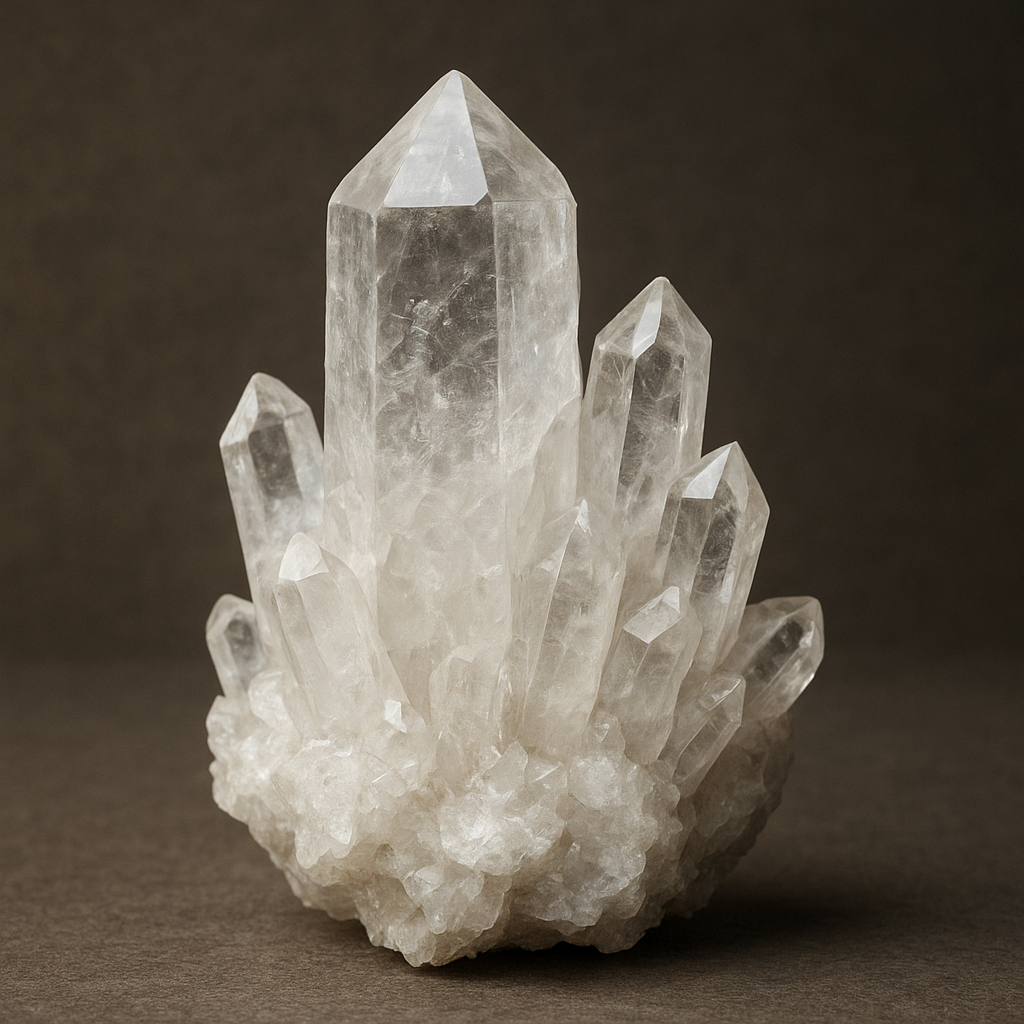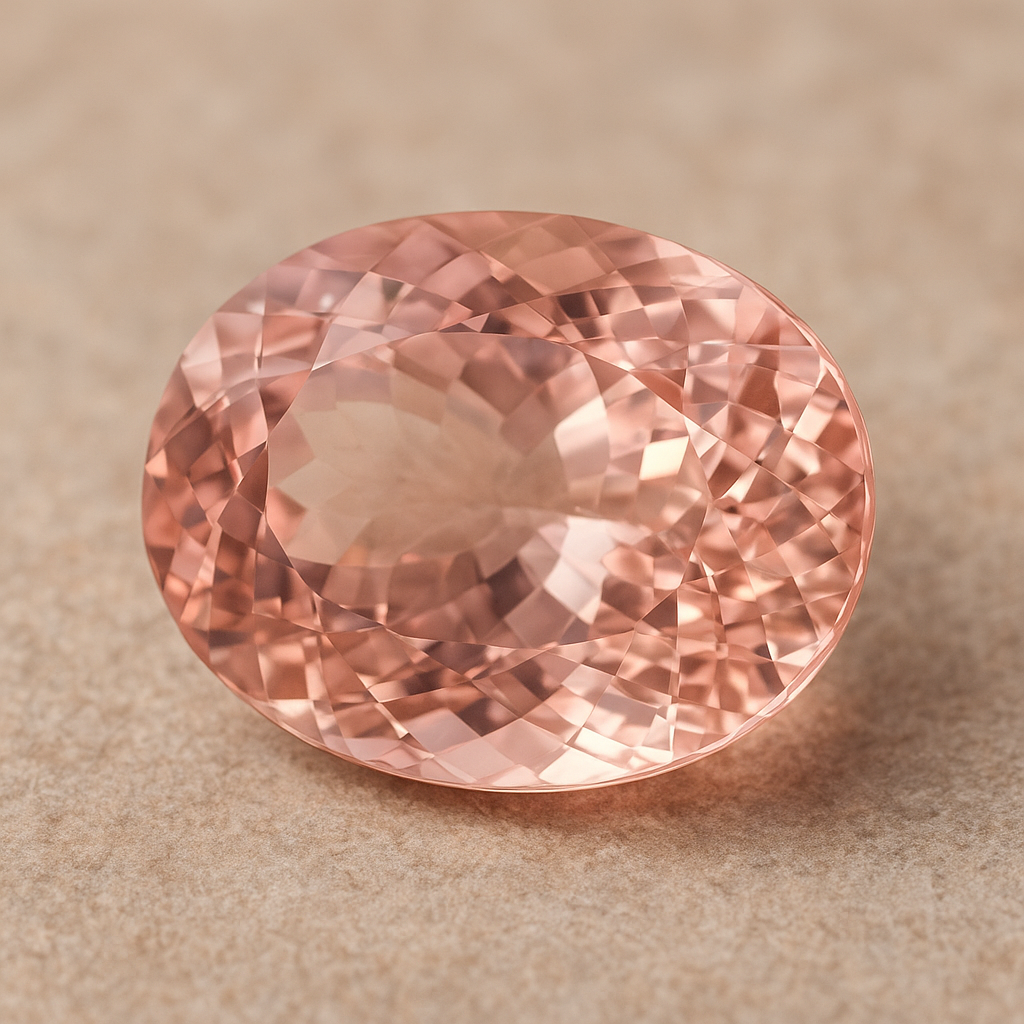
Morganite is an alluring member of the beryl mineral family, prized for its delicate pink to peach hues and its elegant, transparent appearance. Though sometimes overshadowed by its cousins emerald and aquamarine, morganite has been gaining attention among collectors, designers, and gem enthusiasts. This article explores its physical and chemical characteristics, where it is found, how it is used in modern and historical contexts, and a range of fascinating facts that illustrate why this gemstone is both scientifically interesting and culturally significant.
Physical and Chemical Characteristics
Morganite belongs to the beryl group, sharing the same basic chemical formula Be3Al2(Si6O18) as emerald and aquamarine, but its color derives primarily from traces of manganese. The typical range of hues includes soft pink, salmon, peach, and sometimes a light orange-pink. In rare cases, steely violet or lilac shades may appear due to subtle variations in trace elements or irradiation.
The crystal habit of morganite is hexagonal, often forming prismatic crystals with well-developed striations. Like other beryls, it exhibits good transparency and a vitreous luster. Key gemological properties include a hardness of about 7.5–8 on the Mohs scale, refractive indices around 1.572–1.602, and a specific gravity of roughly 2.71–2.90, depending on composition. These properties make morganite relatively durable for everyday wear, although it is not as hard as corundum-based gems like sapphire and ruby.
Color Origins and Variability
The desirable pink and peach tones in morganite come from manganese (Mn2+ and Mn3+), and in some specimens, slight contributions from cesium or other trace elements can modulate the hue. Natural color zoning may occur within crystals, with pockets of deeper saturation and paler zones. Some stones exhibit pleochroism—different colors when viewed from different crystal directions—though this is usually weak in morganite.
Optical and Inclusions
High-quality morganite is often eye-clean, meaning it lacks visible inclusions to the naked eye. Under magnification, however, one might find characteristic inclusions such as tiny healed fractures, liquid inclusions, or mineral crystals. The combination of clarity and soft color gives morganite its gentle, romantic appeal when faceted for jewelry.
Where Morganite Occurs and How It Is Mined
Morganite is found in pegmatites and sometimes in hydrothermal veins associated with granite. It forms in environments where beryllium-rich fluids interact with other elements and cool slowly, allowing large well-formed crystals to develop. Major and noteworthy localities include:
- Brazil — Particularly in the states of Minas Gerais and Paraíba, Brazilian morganite often provides excellent clarity and attractive colors.
- Madagascar — One of the most important modern sources, producing large crystals with rich peach and pink hues; Madagascar’s output has fueled much of the recent market interest.
- Afghanistan and Pakistan — Himalayan pegmatite deposits yield gem-quality stones, sometimes with unique color nuances.
- United States — Historically, California and Maine produced morganite, and small occurrences continue to appear in pegmatites across the country.
- Other sources — Mozambique, Namibia, and certain parts of Russia have yielded morganite as well.
Mining for morganite can range from small-scale artisanal digging to industrial pegmatite operations. Pegmatites can contain pockets or “vugs” where enormous crystals form; discovering such pockets often requires careful geological evaluation and patient extraction. Environmental and social factors can influence how mining is conducted—responsible sourcing practices are increasingly important to consumers.
Uses: Jewelry, Collecting, and Industrial Applications
Most morganite finds its way into the world of jewelry. Its gentle, feminine colors make it especially popular for engagement rings, pendants, and earrings. Designers value morganite for its romantic aesthetic and relative affordability compared to diamonds and colored sapphires of similar size.
- Engagement rings: Morganite’s rose-pink tones symbolize love and tenderness, making it an increasingly requested center stone in non-traditional engagement rings.
- Accent stones: Smaller morganites are often paired with diamonds or other gemstones, enhancing color contrast and adding warmth to designs.
- Statement pieces: Larger, well-cut morganite gems can become striking statement rings, necklaces, and brooches.
Beyond jewelry, morganite is appreciated by mineral collectors for its well-formed crystals and relatively large sizes found in some pegmatites. It also has educational value in museums and universities for demonstrating beryl group mineralogy and crystal growth.
There are no major industrial applications for morganite due to its gem-quality focus and the presence of the more industrially useful forms of beryl (e.g., beryl ores for beryllium extraction are typically not gem-grade). The primary commercial value remains in the lapidary and collector markets.
Cutting, Treatments, and Valuation
Cutting morganite requires a lapidary approach that emphasizes color and clarity. Because the color tends to be soft, cutters often aim for larger table facets to showcase the gem’s hue and for cuts that maximize brilliance without sacrificing color depth. Popular cuts include brilliant rounds, ovals, emerald cuts, and cushion cuts—each chosen to complement the stone’s transparency and natural saturation.
Treatments
Heat treatment is the most common enhancement for morganite. Heating can reduce yellow tones and enhance pink or peach hues, producing a more desirable, uniform color. This treatment is widely accepted in the gem trade when disclosed. Less commonly, irradiation followed by heat may be used, but such treatments are rare and generally less stable.
Factors That Determine Value
Key determinants of morganite value include color, clarity, carat weight, cut quality, and origin. Stronger, purer pink shades command higher prices than pale peach specimens. Transparent stones with minimal inclusions are more valuable, especially at larger sizes. Unique or saturated colors from particular localities may carry a premium among collectors.
While morganite is more affordable than many gemstones, high-quality, large stones—especially those with intense pink tones and excellent clarity—can reach significant prices. Market demand for morganite has grown in recent years due to celebrity trends, social media exposure, and the growing appetite for non-traditional engagement stones.
Cultural, Historical, and Symbolic Aspects
Named in honor of financier and gem patron J.P. Morgan, morganite carries an air of sophistication and patronage. Its formal name is pink beryl, but the name morganite helps distinguish it as a distinct gem species with its own identity within the beryl family.
Symbolically, morganite is associated with love, emotional healing, and compassion in metaphysical and crystal-healing communities. Advocates claim it helps open the heart chakra and promote harmonious relationships. These symbolic associations have contributed to its popularity for romantic jewelry and gifts, though such claims are outside the scope of mainstream science.
Historical Usage
Historically, morganite was less common in jewelry collections until the late 19th and 20th centuries when improved mining and cutting methods increased its availability. The gem was initially identified in the early 20th century and gradually gained recognition as a distinct and desirable variety of beryl.
Care, Maintenance, and Ethical Considerations
Because morganite is relatively hard and tough compared with many gemstones, it is suitable for everyday wear with some precautions. To maintain its appearance:
- Clean with warm soapy water and a soft brush. Ultrasonic cleaners are generally safe for clean, untreated stones but should be used cautiously if the gem has fractures or certain treatments.
- Avoid harsh chemicals and prolonged exposure to high heat, which can affect surface settings and potentially alter color in extreme cases.
- Set protective settings for rings that will see heavy wear, especially for larger stones that could be subject to knocks.
Ethical sourcing is an increasingly important consideration. Seek vendors who can provide information about origin, mining practices, and fair labor standards. Responsible mining reduces environmental damage and helps ensure that local communities benefit from natural resource development.
Interesting Facts and Market Trends
Morganite has experienced a surge in popularity over the past decade, partly due to trends favoring colored gemstones and bespoke engagement jewelry. Social media and bridal influencers have highlighted morganite rings as a chic alternative to traditional diamonds, increasing demand and visibility.
- Celebrity influence: High-profile rings and red-carpet appearances have elevated morganite’s profile.
- Design versatility: Its gentle hue pairs well with rose gold and yellow gold, making it a favored stone for warm-toned settings.
- Collector appeal: Exceptional crystal specimens from Madagascar and Brazil are highly sought after by mineral collectors.
- Synthetic and imitation stones: While synthetic beryl exists, synthetic morganite is uncommon; however, imitations or similar-colored stones (such as kunzite or certain sapphires) are sometimes used in the marketplace, so verification by a qualified gemologist is recommended for high-value purchases.
From a market perspective, morganite occupies a niche between common semi-precious stones and high-end colored gems. Its affordability, combined with a trend-driven desirability, makes it appealing for designers and consumers seeking distinctive yet accessible luxury.
Final Notes on Appreciation and Knowledge
As familiarity grows and demand increases, more research is being done on morganite’s geological formation, treatment stability, and regional characteristics. For anyone considering morganite for a meaningful purchase—whether a collector’s piece or an engagement ring—knowledge about its origin, cut, and treatments will help ensure a satisfying acquisition. The stone’s gentle colors, crystalline beauty, and human stories—from pegmatite pockets deep in the Earth to the hands of skilled cutters—make morganite an enduring and intriguing gem.