
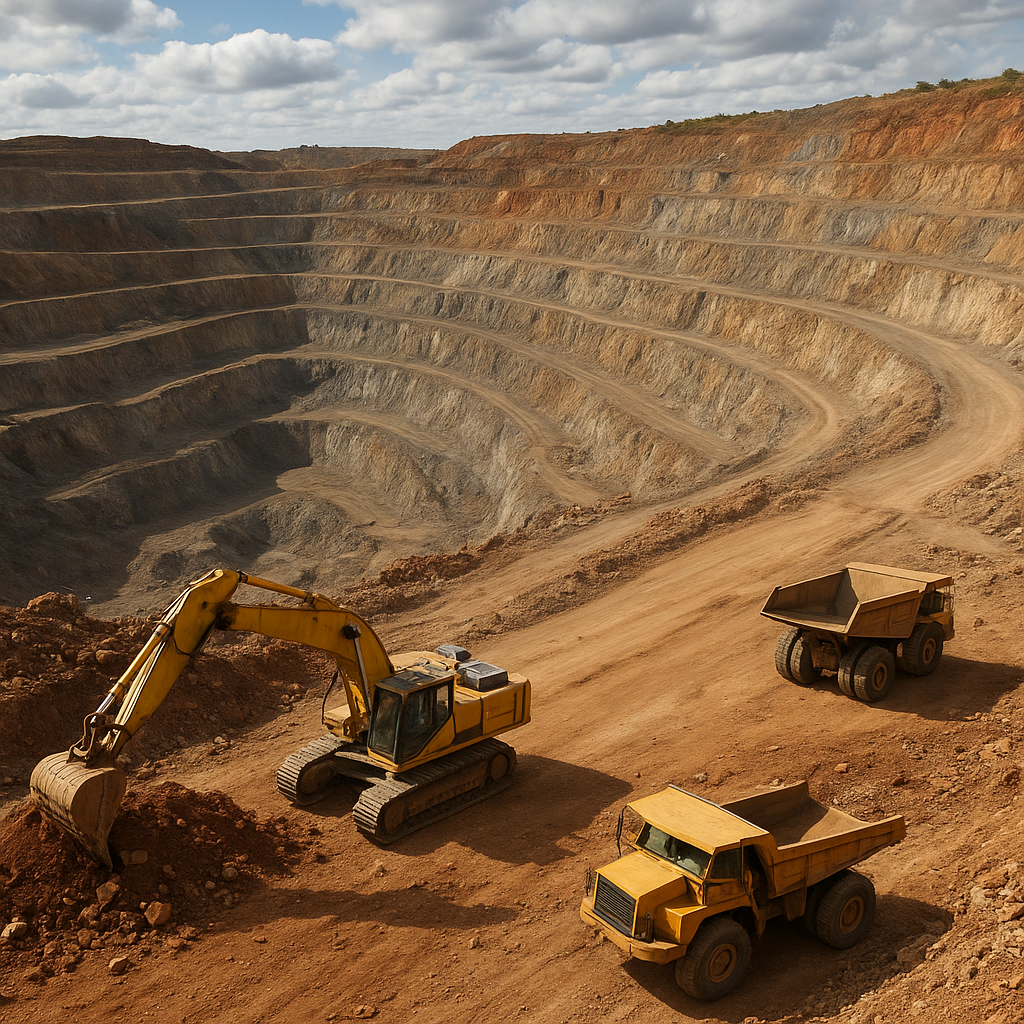
The Mopani Mines complex sits at the heart of Zambia’s famous Copperbelt, a region that has shaped the country’s economy and identity for more than a century. As one of the major mining operations in the area, Mopani has played a pivotal role in extracting and processing base metals—most notably copper and its associated by-product, cobalt. This article explores the location and geology of Mopani, the minerals and methods involved, its economic significance for Zambia and the Copperbelt region, and a selection of lesser-known or particularly interesting aspects of the operation.
Location and geological setting
Mopani Mines is located in the north-central part of Zambia within the Copperbelt Province, primarily spanning operations around the towns of Mufulira and Kitwe. The Copperbelt itself is a narrow, mineral-rich band that extends across the border into the Democratic Republic of Congo. Geologically, this region is famous for its stratiform sediment-hosted copper-cobalt deposits, formed in shallow marine basins more than 500 million years ago. These deposits typically occur in layers of shale and sandstone, hosting disseminated copper minerals that can be exploited through both underground and, in some nearby cases, open-pit mining.
The Mopani complex benefits from being situated on some of the richest and most continuous ore bodies of the Copperbelt. Mining infrastructure, towns, railways and ports that developed here during colonial times have continued to support operations, linking the sites to domestic smelters, regional processing facilities and international export routes. The proximity to towns like Kitwe and Mufulira also means a direct relationship between the mines and local communities in terms of employment, housing and services.
What is mined and how it is processed
At its core Mopani extracts two related metals: copper as the primary commodity and cobalt as a valuable by-product. Copper occurs in sulfide minerals such as chalcopyrite and bornite, and in oxidized minerals nearer the surface. Cobalt is often present in minor concentrations within the same ore bodies and is recovered during metallurgical processing.
Mining methods
- Underground mining: Much of Mopani’s production has come from underground workings, where long-established shafts and declines access extensive sulfide ore bodies. These operations require careful ground control, ventilation and water management due to the depth and age of some workings.
- Concentrator processing: Ore is typically crushed and milled, then passed through flotation circuits to produce a copper concentrate. This concentrate contains the bulk of the copper and significant amounts of cobalt, which is then further processed.
- Smelting and refining: Concentrates may be sent to smelters—either on-site or to regional facilities—where they are transformed into higher-grade copper metal and chemically refined to separate out by-products, including cobalt compounds.
Associated minerals and by-products
Aside from copper and cobalt, the processing streams occasionally yield other trace metals and compounds that have commercial value or environmental significance. Recovering cobalt has become increasingly important because of its role in rechargeable batteries and advanced alloys. As global demand for electric vehicles and energy storage has expanded, the strategic importance of copper-cobalt producers like Mopani has risen correspondingly.
Economic significance to Zambia and the region
Mopani Mines has been more than a mining operation; it is an economic anchor for the immediate localities and a significant contributor to the Zambian national economy. The following points outline how Mopani’s activities resonate economically.
- Employment: The mines have been major employers, directly hiring thousands of miners, metallurgists and support staff and indirectly supporting many more through services, logistics and supply chains. Jobs in mining towns are often higher paid than many alternatives in rural Zambia, shaping local livelihoods and demographics.
- Export revenue: Copper is Zambia’s principal export, and large producers such as Mopani supply a substantial share of the metal that is sold on global markets. Export receipts from copper underwrite government budgets, foreign exchange reserves and public investment programs.
- Industrial linkages: Infrastructure such as railways, power transmission and water supplies invested to support Mopani’s operations also benefit neighboring communities and industries, enabling broader economic activity.
- Fiscal contributions: Taxes, royalties and state participation in mining ventures have been important sources of government revenue. How those revenues are managed and distributed is a central political and developmental issue in Zambia.
Because the Copperbelt has historically dominated Zambia’s export profile, fluctuations in metal prices and production at large operations like Mopani ripple through the national economy. When copper prices rise, governments benefit from higher revenues and local economies see increased activity; when prices fall, the adverse impacts can be swift and severe.
Social and environmental aspects
Mining on the scale of Mopani brings both opportunities and challenges. The company’s footprint extends to towns, tailings dams, smelters and waste rock dumps—each of which requires careful management to mitigate social and environmental risks.
Community and social programs
- Local employment and training programs have created pathways into skilled trades for many residents, promoting human capital development in the Copperbelt region.
- Mopani’s presence has historically supported schools, clinics and community projects, either through corporate social responsibility initiatives or through legacy infrastructure established in earlier decades.
Environmental concerns
- Emissions from smelters, acid mine drainage and dust can pose health and ecological risks if not properly controlled. Managing legacy pollution from old tailings and contaminated soils remains a long-term challenge.
- Water usage is a critical issue. Mines consume significant volumes of water for processing and dust suppression, requiring coordination with municipal supplies and environmental safeguards.
Regulatory oversight, community engagement and technological upgrades are central to reducing environmental impacts. Investments in cleaner metallurgical technology, tailings management and dust control can sharply improve local outcomes, but they require capital and sustained management commitments.
Interesting facts and historical notes
The Mopani complex carries a rich history and a number of features that distinguish it within African mining. Below are several points that may be of particular interest.
- Long operating history: Mines in the Copperbelt have been active for nearly a century in many places, with some shafts and infrastructure dating back to the early 20th century. That longevity has created a layered industrial landscape of old and new workings.
- Strategic metals: While copper is the headline commodity, the presence of cobalt and other minor metals means Mopani is part of the global supply chain for technologies such as batteries and electronics.
- Urban-mining link: Towns like Mufulira and Kitwe grew up around mining, and their urban culture, architecture and civic institutions still reflect mining’s central role in daily life.
- Infrastructure networks: The Copperbelt’s rail and road arteries that carry ore and concentrates to ports are among the vestiges of a regional industrial economy that transcends national borders, especially into the DR Congo.
- Ownership and governance shifts: Over the decades, Mopani has been subject to changing ownership structures and policy debates about the best way for the state to secure mineral wealth for national development—an issue that mirrors broader conversations across resource-rich countries.
- Technological evolution: Mining methods and metallurgical processes at Mopani have evolved from manual, labour-intensive techniques to modernized milling, flotation and smelting methods that seek better recovery rates and lower environmental footprints.
Operational challenges and opportunities
The future of a major operation like Mopani depends on navigating a mix of technical, economic and political challenges while seizing opportunities that emerge from global market shifts.
- Commodity price volatility: Copper price cycles can make planning and capital investment difficult. Long-term commitments to modernization are easier when companies and governments can anticipate stable returns.
- Investment in processing: Upgrading concentrators and smelters to improve recovery and reduce emissions is both an environmental need and a commercial opportunity. Better metallurgy can also increase cobalt recovery, enhancing revenue diversification.
- Skills and workforce development: As mining becomes more mechanized, there is a growing need for training in technical trades, engineering and environmental management. Investment in education is therefore an investment in the mine’s future viability.
- Community relations: Ongoing dialogue with local communities and transparent benefit-sharing mechanisms help reduce conflict, encourage local procurement and sustain social license to operate.
Regional and global context
Mopani’s output feeds into global supply chains for electrical infrastructure, construction and high-technology industries. Copper is indispensable for wiring, motors and renewable energy systems, while cobalt is critical for certain battery chemistries. As the world transitions toward electrification and decarbonization, mines in the Copperbelt are increasingly seen as strategic assets.
At the same time, the international dimension means Mopani’s prospects are tied to foreign investment trends, trade policies, and multinational commodity markets. Partnerships with global firms can bring capital and technical expertise, but they also raise questions about national benefit, transparency and long-term sustainability.
Concluding remarks
Mopani Mines exemplifies the complexities of modern mining in a resource-rich African context. It is simultaneously an engine of local employment, a contributor to national export revenue, a source of environmental and social responsibility challenges, and a player in global metal markets. Understanding Mopani requires attention to geology, metallurgy, economics and community dynamics—each element shaping how the mine operates and what it means for Zambia’s future.

