
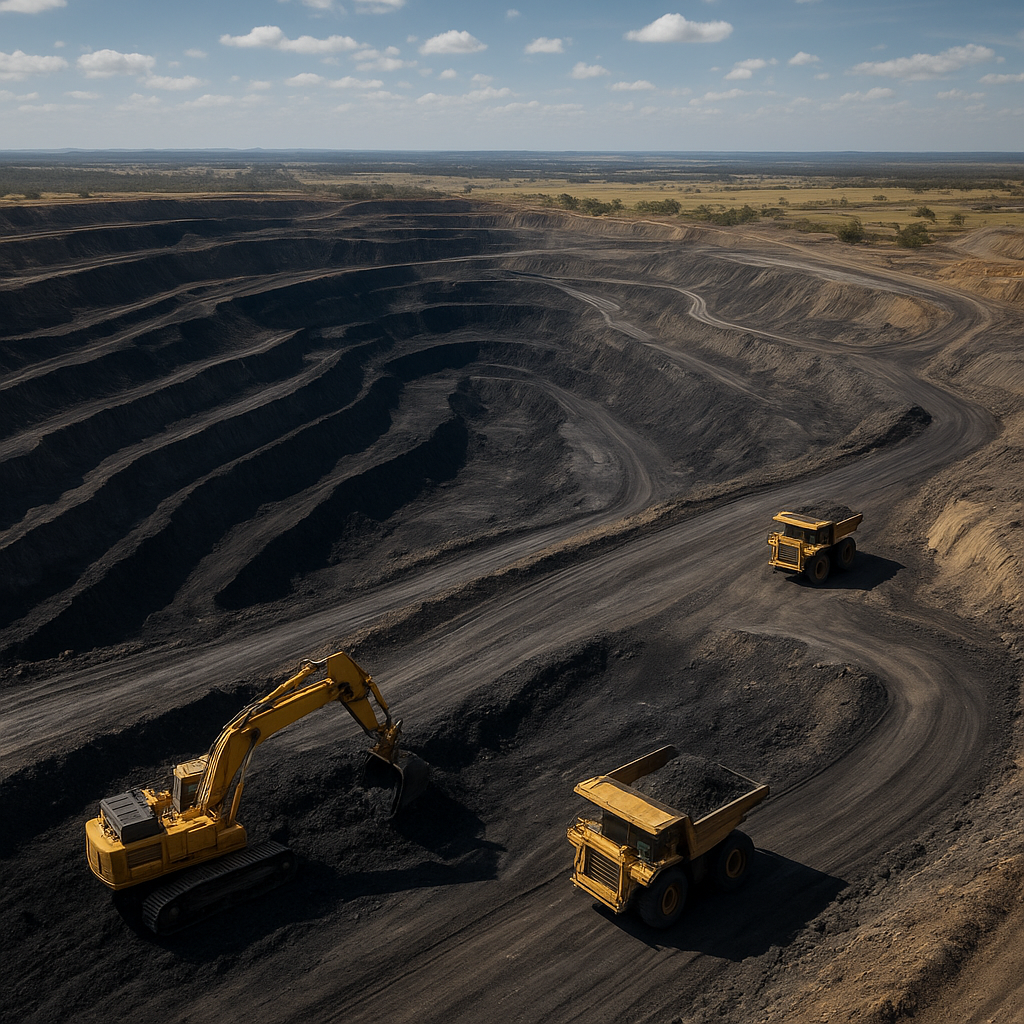
The Moolarben Mine is an important coal operation in the central west of New South Wales, Australia. Over the last two decades it has become a significant contributor to regional employment, export revenue and the national coal sector. This article describes where the mine is located, what is extracted there, how it operates and why it matters economically and socially. It also highlights several interesting aspects of the project, including technical, logistical and environmental considerations that frame its present and future role in the broader energy and resources landscape.
Location, geology and resource characteristics
The Moolarben site sits in the western part of the Sydney Basin geological province, an area well known for extensive coal deposits. Located in central west New South Wales, the mine is positioned within a landscape of rolling hills and agricultural properties. The region hosts numerous coal operations, and Moolarben is part of this cluster that has shaped local economies and infrastructure over many decades.
Geologically, the mine exploits Permian-age coal seams that are typical of the broader basin. These seams vary in thickness, rank and quality across the deposit, producing seams that are suitable for a range of end uses. The coal is primarily bituminous in character and can be blended and processed to supply both domestic and international markets. The site’s stratigraphy and seam continuity determine the optimal mining method, access strategy and long-term resource planning.
Because of its geological setting, Moolarben benefits from relatively accessible seams close to the surface in places, enabling large-scale surface mining, and deeper seams in other parts of the tenure where different extraction approaches are required. The deposit’s scale and continuity underpin long-life mine planning and have supported multiple stages of development since initial approvals were granted.
Mining operations and product
The mine primarily operates as a large-scale open-cut operation, employing heavy earthmoving equipment to remove overburden and expose coal seams for extraction. The operation typically combines conventional truck-and-shovel fleets with high-capacity excavators and haul trucks to move tens of millions of cubic metres of material during the life of major cutbacks. In some parts of the site, planning allows for selective extraction where deeper seams are targeted using alternative methods.
The extracted material undergoes on-site processing to produce saleable coal products. Processing stages include crushing, screening and, where required, coal washing and beneficiation. These processes improve product quality by reducing ash and impurities and separating different size fractions for specific markets. The outcome is a set of products tailored to meet the needs of both domestic power generators and overseas customers.
Although coal varieties can be classified in multiple ways, the mine’s output is often used for thermal power generation and may be blended to meet specifications for industry customers. Global demand dynamics influence the product mix that the mine prioritises: when metallurgical coal prices and demand are robust, mines in the region may allocate higher-quality seams to coking coal markets; when thermal coal demand is stronger, allocation adjusts accordingly.
Processing and quality control
On-site laboratories and quality control systems monitor moisture, calorific value, ash content, volatile matter and other key parameters. These measurements ensure consistency for customers and help the mine manage blending opportunities to maximize value. Logistics and loadout procedures are integrated with quality control to ensure the correct coal product is despatched to market.
Logistics, markets and economic role
Moolarben connects to Australia’s east coast transport and port infrastructure, enabling access to both domestic and international markets. Coal is typically moved by road and rail to export terminals on the coast, where it is loaded onto bulk carriers. The mine’s operational economics depend heavily on the efficiency of these links, the costs of transport, and global commodity prices.
At a regional level, the mine is a major employer and economic anchor. It supports direct employment in mining, processing, engineering and site services, and indirectly sustains jobs in transport, maintenance, hospitality and other service sectors. Royalties and taxes paid by mining operations contribute to state and federal budgets, while company spending on contractors, local procurement and community programs circulates money into the local economy.
- Employment: The workforce includes operators, tradespeople, maintenance staff, engineers and administrative personnel, offering a mix of skilled and semi-skilled positions.
- Export: Coal sales to overseas buyers generate foreign exchange and support Australia’s broader trade balance.
- Contractor networks: Local and regional businesses provide services ranging from engineering to catering and environmental monitoring.
The mine’s output contributes to energy security domestically and forms part of global coal supply chains used for electricity generation, industrial heat and other applications. Changes in international demand, freight rates, and regulatory settings influence the mine’s revenue streams and investment decisions.
Environmental management and community engagement
Mining in the Sydney Basin, including at Moolarben, operates under a framework of environmental approvals and regulatory oversight. Operators implement plans to manage water, air quality, noise, biodiversity and rehabilitation. Key environmental considerations include groundwater interaction with mining activity, dust suppression, management of overburden and progressive land rehabilitation.
Water management is often a central focus: mines design diversion systems, water storage, treatment plants and monitoring programs to protect catchments and ensure compliance with licence conditions. Sediment control, controlled discharge and careful monitoring of groundwater levels and quality are standard elements of operational management.
Dust and noise controls rely on operational practices such as dust suppression on haul roads, staged rehabilitation to reduce exposed areas, and use of modern equipment designed to lower emissions and noise signatures. Air quality monitoring stations and community notification systems are commonly employed to maintain transparency and responsiveness to local concerns.
Progressive rehabilitation aims to restore landform and function while creating opportunities for future land uses such as agriculture, conservation or recreation. Biodiversity offset programs may be developed to compensate for habitat loss, with revegetation plans targeting native species and landscape-scale corridors where feasible.
Community engagement programs are critical. The mine typically supports regional infrastructure, education programs, indigenous cultural heritage initiatives and community development projects. Public consultation during approvals and ongoing dialogue helps address concerns and adapt management plans to local expectations.
Regulatory context and social licence
Operations such as Moolarben require environmental impact assessments, development consents and ongoing compliance with conditions set by state regulators. These instruments define limits on surface disturbance, water extraction, air emissions and noise, along with monitoring, reporting and adaptive management requirements. Maintaining a social licence to operate depends on transparent performance, timely mitigation of impacts and meaningful community investment.
Indigenous heritage is a critical part of approvals and site management. Surveys, consultations and cultural heritage management plans seek to identify and protect places of significance. Where unavoidable impacts are proposed, negotiated agreements and mitigation strategies are established in consultation with Traditional Owners and their representatives.
Economic significance in broader perspective
Coal mining remains a significant component of Australia’s export economy. A mine like Moolarben contributes in several ways beyond direct production:
- Regional employment and local business activity that sustain towns and services.
- Government revenue via royalties and taxes that fund public services and infrastructure.
- Supply chain effects where equipment manufacturers, engineering firms and transport operators benefit from sustained demand.
- Technological development where investments in mine efficiency and emissions reduction can have spill-over benefits across the industry.
These economic linkages mean that any decisions about mine life extension, expansion or closure have ripple effects. Planning for workforce transition, economic diversification and rehabilitation funding is therefore an important element of long-term regional resilience.
Interesting aspects and technological trends
Large modern mines incorporate a range of technologies and practices aimed at improving safety, productivity and environmental performance. Some of the interesting aspects you might observe in a mine like Moolarben include:
- Use of high-capacity mining fleets and optimisation software to maximise material movement per operating hour.
- On-site processing and quality-control laboratories that ensure consistent product specifications for international customers.
- Progressive rehabilitation techniques that integrate landform design with native vegetation to accelerate ecological recovery.
- Water recycling systems that reduce freshwater demand and minimise discharge risks.
- Community benefit agreements and local procurement strategies designed to share economic gains with host communities.
Automation and digitalisation are growing trends. Autonomous haulage systems, fleet telematics and remote operation centres can boost safety by reducing the need for personnel in hazardous locations and improve efficiency through tighter control of mining sequences. Remote monitoring and predictive maintenance lower downtime and extend equipment life.
Challenges and future outlook
The future for coal operations in Australia is shaped by global energy transitions, market demand, and national policy settings. Mines must navigate price volatility, changes in buyer preferences and increasing scrutiny of environmental performance. At the same time, they face technical challenges such as managing water in drought-prone regions, rehabilitating large disturbed areas and ensuring workforce skills remain current.
Transition planning is increasingly important. Mines with long remaining reserves consider diversification of local economies and reskilling initiatives to prepare workforces for changing labour markets. Financial assurance frameworks ensure funds are available for rehabilitation and post-closure management, an area of heightened regulatory and community interest.
Nevertheless, coal will likely remain part of the global energy mix for several years, particularly in regions where demand for thermal coal persists and where metallurgical coal supports steel production. Operators that invest in operational efficiency, emissions reduction and strong community relationships position themselves to manage uncertainty and contribute positively to regional outcomes.
Additional observations and notable facts
Small details and less obvious dimensions of operations like Moolarben are often the most interesting:
- Supply chain complexity: Every tonne of coal involves coordinated activities across extraction, processing, transport and port handling. Small disruptions at any link can affect delivery schedules and revenue.
- Seasonal variability: Weather and seasonal rainfall can affect access roads, dust control, and water balances, influencing production rates at different times of the year.
- Local partnerships: Mines often partner with universities and research institutions on biodiversity, water management and technological innovation projects, creating avenues for local scientific development.
- Workforce diversity: Modern mines employ a wide range of professionals from geologists and engineers to environmental scientists and community relations specialists, reflecting the complexity of contemporary resource projects.
- Climate considerations: While coal production is emission-intensive, operators increasingly report on emissions, engage in energy-efficiency projects and explore opportunities for offsetting and lowering operational greenhouse-gas footprints.
In summary, the Moolarben operation is emblematic of many contemporary coal mines: it combines large-scale extraction, integrated processing, connections to global markets and a complex regulatory and community context. Its economic footprint is significant at the local and regional level, and its continued operation will depend on adapting to technical, environmental and market challenges while contributing to the wellbeing of the communities in which it operates.

