Mookaite is a colorful and striking variety of chalcedony prized by gem cutters, collectors and designers. This article explores the mineralogy, geography, uses and cultural context of this distinctive stone, describing where it forms, how it is worked, what to watch for when buying and selling, and several interesting connections to related fields such as lapidary art, geology and sustainable sourcing.
What is Mookaite and how it forms
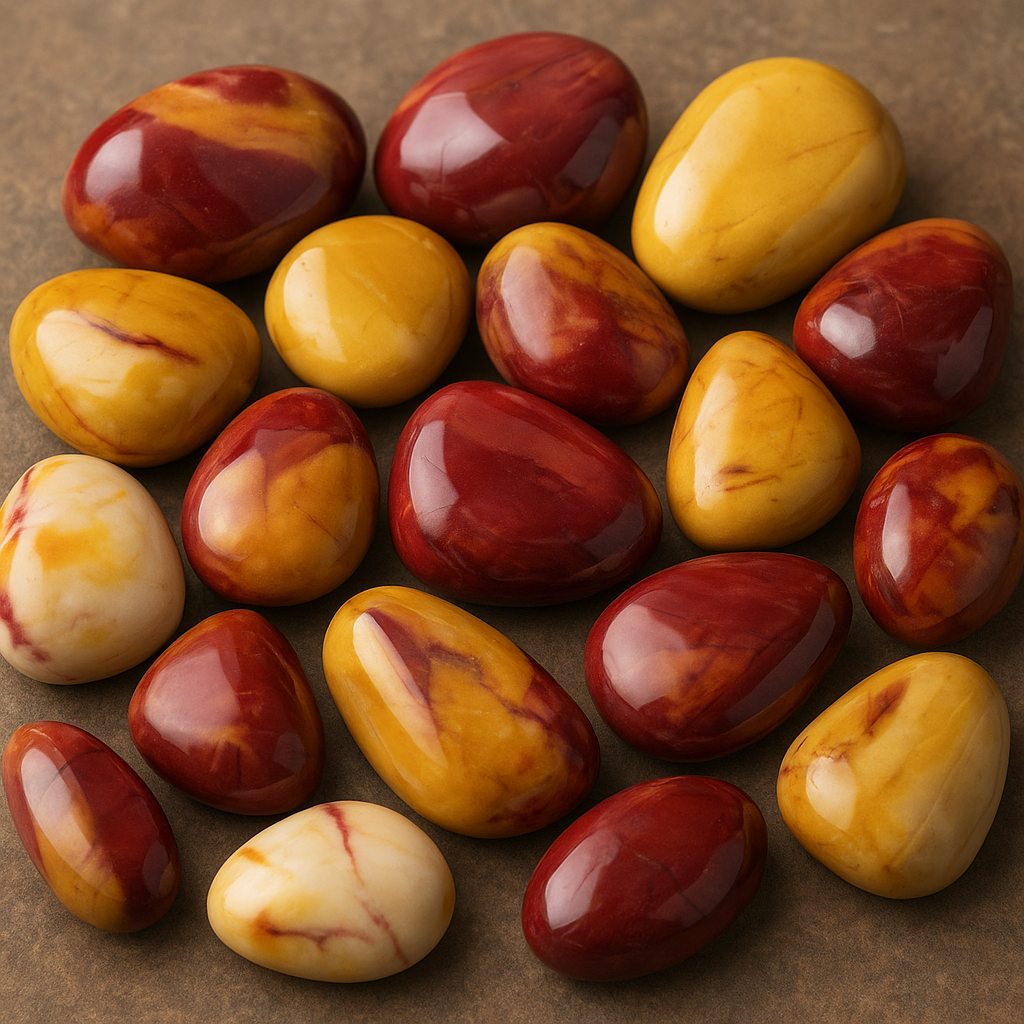
Mookaite is a variety of jasper, which itself is a microcrystalline or cryptocrystalline variety of quartz composed primarily of silica. In hand specimens it typically displays vibrant patches, swirls and bands of red, yellow, cream and sometimes purple or brown, often with bold, painterly patterns that make each piece visually unique. The color palette results from iron oxides and other trace elements introduced into the silica-rich material during or after deposition.
Geologically, Mookaite is commonly described as a silicified sedimentary rock. The silica that forms jasper-type materials can arrive as replacement silica from pore waters, from volcanic ash alteration, or from diagenetic reworking of siliceous microfossil sediments. In the case of Mookaite, the material available on the market originates from sedimentary silica deposits that were later colored and silicified under local conditions. The exact details of the depositional and diagenetic history can vary across deposits, which is why specimens show such diverse textures and internal structure.
From a gemological perspective Mookaite behaves like other dense microcrystalline quartz: it takes an excellent polish, is relatively tough for jewelry use, and resists chemical weathering better than many sedimentary minerals. Because it is microcrystalline, it lacks the visible crystal faces of macrocrystalline quartz but yields a bright, durable surface when ground and polished, making it a favorite among lapidary artists.
Where Mookaite occurs: locations, geology and mining
The classic and most well-known occurrences of Mookaite are in Western Australia. The material takes its commercial name from the region where it was first collected and popularized: the Mooka Creek area near the Kennedy Ranges. The Kennedy Ranges and surrounding terrain in the Gascoyne region are remote, rugged and geologically diverse, with sedimentary sequences that host siliceous nodules and beds where Mookaite has been found.
Australia remains the principal source for high-quality Mookaite material. In particular, deposits near the original locality—sometimes referred to in trade as coming from Kennedy Ranges or from Mooka Station—supply the majority of gem-quality nodules and slabs. Mining is usually small-scale and often involves surface collecting, open-cut quarrying or low-impact removal of nodules from weathered outcrops rather than deep underground operations. Because the deposits are localized and the best material is not abundant, high-quality pieces can be relatively rare compared with more common jaspers.
Mining and collecting operations in the region have varied over time. In many cases individuals or small groups prospect and collect specimen material to sell to lapidaries and wholesalers. The remoteness of the region makes logistics a significant part of the cost: transport, access permits, and respect for land tenures (including pastoral leases and native title considerations) all affect how material reaches the market. Environmental regulations in Australia require miners to follow rehabilitation and reporting rules, and reputable dealers will document provenance and permits when asked.
Uses and applications
Mookaite’s combination of bright color, patterning and polishability lends itself to multiple uses:
- lapidary work: Mookaite is widely cut into cabochons, beads, and inlays. It takes a high polish and displays patterns strongly in domed cuts, making it ideal for necklaces, pendants and statement rings.
- jewelry: finished pieces range from affordable artisan items to higher-end designer pieces where unique patterns or unusually large, flawless slabs are set into custom mounts.
- cabochon and carving: the material is popular for cabochons, cameos and small carvings. Its relative hardness and even texture allow skilled carvers to produce fine detail and a glossy finish.
- Decorative objects: bookends, desk ornaments and small tabletops can be fashioned from larger slabs or polished cross sections to show striking interiors.
- Collectors and museums: exceptional specimens that show rare coloration or highly aesthetic patterns are collected for mineralogical cabinets and decorative stone collections.
Beyond physical uses, Mookaite has a presence in metaphysical and holistic markets. Many sellers and enthusiasts attribute various healing or grounding properties to the stone. While these uses are cultural and spiritual rather than scientific, they contribute significantly to market demand and the stone’s popularity in certain communities.
Identification, physical properties and treatments
Practical identification of Mookaite relies on a combination of visual cues and standard gemological tests. It is a microcrystalline quartz (chalcedony family), so its basic properties mirror other jaspers:
- Hardness: typically around Mohs 6.5–7, comparable to most forms of quartz.
- Structure: microcrystalline—no visible larger crystals under normal magnification, but often showing brecciated or banded patterns.
- Density: specific gravity usually in the range typical for chalcedony and jasper, around 2.6–2.7.
Color and pattern are the most distinctive field marks: Mookaite commonly shows warm hues—reds, golds, creams and sometimes purplish browns—in irregular, painterly zones. Where patterns are unusually bold and contrasting, material tends to command higher prices in the lapidary market.
Treatment and enhancement are considerations for buyers. Basic Mookaite is usually untreated, but like many jaspers it can be dyed or stabilized. Stabilization with resin may be applied to porous or fractured pieces to improve polish and durability; dyed material may present colors that are unnaturally uniform or overly vivid. When uncertain, buyers should ask sellers whether the stone has been treated and request magnified photographs or a small unstabilized sample.
Detecting treatment: a careful visual inspection under magnification, observation of dye concentrations in fractures or pores, and asking for documentation from reputable dealers will reduce risk. Non-destructive gemological tests—refractive index, specific gravity and observation of internal texture—can also help differentiate genuine untreated Mookaite from imitations such as dyed jasper, reconstituted materials, or resin-impregnated composites.
Lapidary techniques and practical tips
Working Mookaite follows many of the same principles used for other jaspers and chalcedonies, but there are useful specifics to maximize aesthetic effect:
- Orientation: because patterning is often directional, take time when sawing a rough nodule to orient cuts that best showcase dramatic banding or color contrasts.
- Cutting: use a diamond saw for initial shaping. Good irrigation and steady feed rates produce fewer microfractures.
- Grinding and preforming: silicon carbide or diamond wheels at progressive grits will shape the stone; watch for thin areas that could fracture under stress.
- Polishing: cerium oxide, tin oxide or diamond paste commonly yield excellent polish on microcrystalline quartz surfaces. Final polishing brings out both color saturation and translucency in the thinner bands.
- Stabilization: for porous or heavily fractured roughs, some lapidaries choose to stabilize with low-viscosity resins prior to cutting to preserve pattern and prevent blowouts. Disclose stabilization when selling the finished piece.
Because of its hardness and homogenous texture, Mookaite is friendly to both beginning lapidaries and experienced artisans. Cabochons often display the stone’s best attributes because the dome emphasizes pattern and color depth.
Marketplace, value factors and ethical considerations
Value in Mookaite is driven by several interconnected factors:
- Color vibrancy and contrast: stronger, cleaner contrasts between reds, yellows and creams are highly desirable.
- Pattern uniqueness: specimens with painterly swirls or rare, scenic-patterned surfaces attract collectors.
- Size and integrity: large, solid slabs without cracks or inclusions command higher prices—especially when polished and cut skillfully.
- Provenance and documentation: material with clear, ethical provenance, particularly from known deposits in the Kennedy Ranges area, is preferred by conscientious buyers.
Because Mookaite is region-specific, market supply can fluctuate. Small-scale mining and the fact that best-quality nodules are not ubiquitous means that exceptional pieces sometimes sell at premium prices. Conversely, abundant lower-grade material is readily available as inexpensive beads and cabochons for mass-market jewelry.
Ethical concerns include environmental impact of collecting and mining, respect for pastoral leases and Indigenous land rights, and the transparency of supply chains. Buyers who seek sustainably sourced stones should ask vendors for information on collection methods, any required permits, and whether the material was gathered from private, leased or public lands. Reputable dealers will be ready to discuss sourcing and to provide documentation where applicable.
Related topics and interesting connections
Comparisons with other jaspers and chalcedonies
Mookaite sits in a large family of patterned jaspers—such as ocean jasper, brecciated jasper, and picture jasper—each with distinct formation histories and visual language. Comparing them provides insight into geological processes that produce siliceous decorative stones: replacement, hydrothermal activity, sedimentary reworking and mineral staining. Collectors and gemologists often study these differences to better classify and appreciate the stones.
Collecting, display and conservation
For collectors, specimen preservation means careful handling, stable environmental conditions (avoid prolonged exposure to strong sunlight that might alter dye-enhanced pieces), and proper mounting for display. Museums and serious private collections label specimens with locality, date of acquisition and any treatment. Since provenance affects both scientific value and price, documenting the chain of custody can be as important as the specimen’s visual appeal.
Tourism, community and cultural links
The regions that host Mookaite deposits are remote and often of cultural significance to local communities. Responsible mineral tourism and rockhounding can support local economies if activities are well-regulated and respectful of land tenure and Indigenous heritage. Some small businesses in Australia provide guided excursions, educational outreach, and opportunities to buy directly from local collectors—approaches that can foster sustainable economic benefits while minimizing environmental impact.
Purchasing tips and authentication
If you plan to buy Mookaite, keep these practical suggestions in mind:
- Buy from reputable dealers who disclose treatment and provenance. Clear documentation helps protect both buyer and seller.
- Examine high-resolution images or, if possible, the actual piece. Look for natural patterns that flow organically; uniform, saturated tones can indicate dyeing.
- Request or perform non-destructive gemological tests if the piece is high-value: refractive index, specific gravity and microscopic inspection can confirm identity.
- Learn to recognize common imitations: reconstituted jasper (glued fragments), dyed stones, and resin-impregnated composites have telltale signs under magnification—abrupt color boundaries, resin-filled fractures, and unnatural surface sheen.
- Consider the finished product: craftsmanship (cut, polish, setting) affects long-term satisfaction as much as the raw material itself.
For artisans and dealers, transparent labeling—identifying the origin, whether the stone was stabilized or dyed, and any treatments—builds trust and supports a healthier marketplace.