
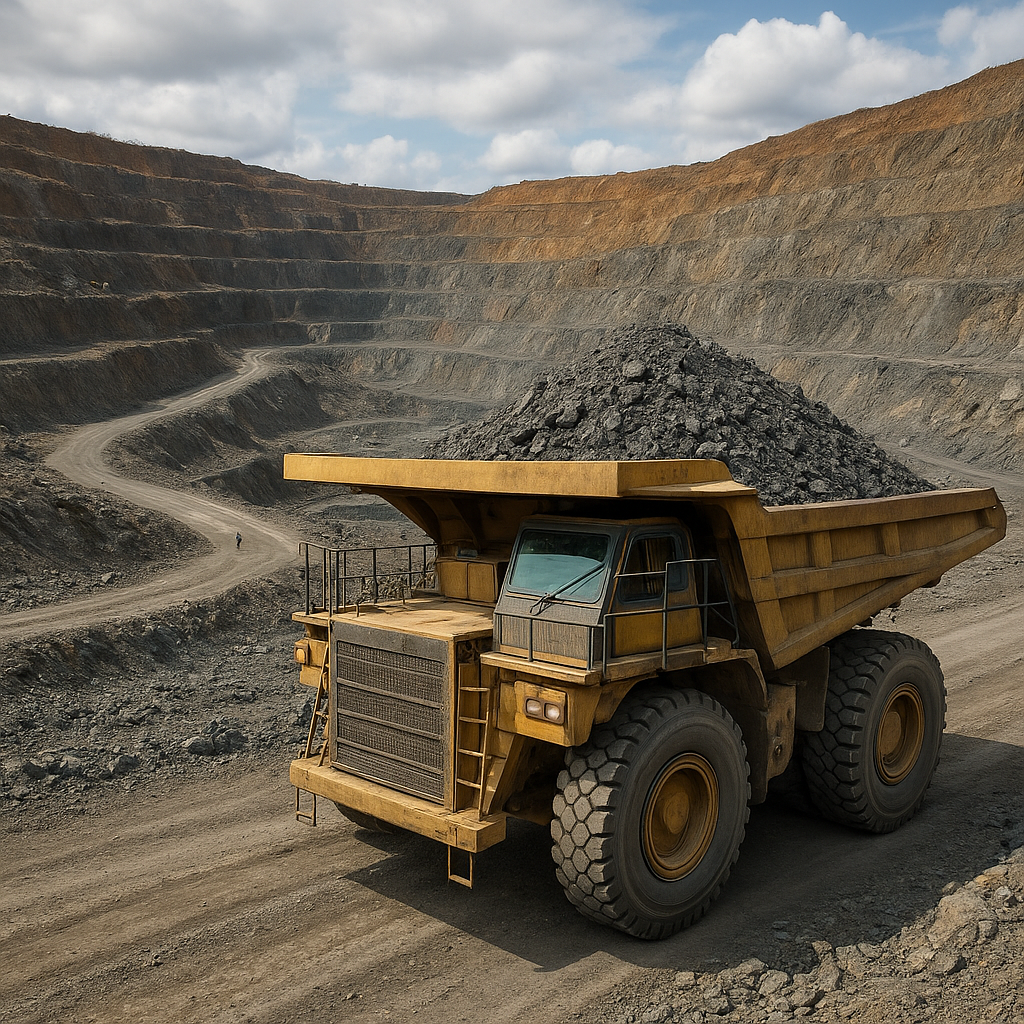
The Moma mining complex in northern Mozambique is a prominent example of how coastal heavy-mineral deposits can be transformed into globally significant industrial feedstocks. Located in a landscape of coastal dunes and savannah, the operations extract and process mineral sands that are rich in titanium-bearing minerals and other valuable heavy minerals. This article explores the mine’s location and geology, the minerals that are produced, the economic and social role the project plays in Mozambique, as well as environmental management practices and some compelling facts about the deposit and its technology.
Location and geological setting
The Moma mine lies in the northern part of Mozambique, within Nampula Province, along the Indian Ocean coast. The deposits occupy a coastal plain of dune systems and ancient beach ridges, where wind and wave action over geological time concentrated heavy minerals in narrow, elongated bodies known as heavy mineral sands. These sands are typically rich in dense minerals that include the titanium ores and accessory minerals targeted by mining.
Geologically, heavy mineral sand deposits like those at Moma form when waves and currents selectively winnow lighter sand and silt, leaving behind a concentration of dense minerals. The Moma deposit is part of a broader set of African coastal heavy-mineral provinces and is notable for both its scale and the high proportion of titanium-bearing minerals. The mineral assemblage reflects a provenance of igneous and metamorphic source rocks from the hinterland that supplied titanium, zirconium and other elements to the coastal system via fluvial transport and reworking by the sea.
What is mined and how it is processed
The primary economic minerals extracted at the Moma site are the titanium-bearing minerals and associated heavy minerals. Key commodities include:
- Ilmenite — the dominant product, an iron-titanium oxide used as the main feedstock for producing titanium dioxide pigment and, after further processing, titanium metal feedstock.
- Zircon — a zirconium silicate valued in ceramics, foundry sands and certain chemical uses where refractory properties and high melting points are required.
- Rutile and leucoxene — other titanium minerals that are higher-value but typically occur in smaller proportions compared with ilmenite.
Mining at Moma typically employs dredge-based and dry-mining techniques adapted to the coastal, unconsolidated sands. The extracted sands are delivered to a wet concentrator plant where gravity and spirals are used to produce a heavy mineral concentrate. This concentrate then undergoes further physical separation in a mineral separation plant to produce saleable ilmenite, zircon and rutile products. The operations integrate washing, gravity separation, magnetic and electrostatic separation processes to achieve the desired product grades.
Processing at the site focuses on minimizing impurities and producing stable, transportable mineral products that meet the requirements of pigment manufacturers, ceramic producers and other industrial users. Finished products are typically shipped to markets in Europe and Asia where they are converted to titanium dioxide pigment, used in paints, plastics and paper, or to zircon products for ceramics and foundry applications.
Economic importance to Mozambique and beyond
The Moma operation contributes to Mozambique’s economy through direct and indirect channels. Direct contributions include employment of local and expatriate staff, payments to suppliers, and fiscal revenues. Indirectly, the mine stimulates local businesses, supports infrastructure improvements and builds human capital through training and procurement from local contractors.
- Employment and skills: The mine provides jobs in an area where alternative formal employment opportunities can be limited. Many roles require technical training, which raises the local skill base and enhances future employability.
- Exports: As a provider of raw materials for the global titanium and zircon markets, the mine helps generate foreign exchange earnings for Mozambique. Mineral sands are highly tradable commodities, and stable sales contracts help underpin both operational planning and national export statistics.
- Government revenue: Taxes, royalties and other payments from the mine contribute to national and local government budgets. These funds can be allocated to public services, infrastructure and development programs, although the effectiveness depends on broader governance and management practices.
The significance of Moma should be seen not only in terms of current production but also in its role as a demonstration that Mozambique can host large-scale industrial mining projects. The technical complexity of mineral sands production, from dredging and wet concentration to export logistics, has required partnerships with international companies and service providers, transferring knowledge and best practices to the local market.
Environmental management and community engagement
Mining heavy mineral sands poses distinctive environmental challenges because operations are often located in coastal dune systems that host unique habitats and local livelihoods. The Moma project has had to balance resource extraction with environmental protection and community needs.
Typical environmental measures include:
- Progressive rehabilitation of mined areas, reshaping tailings and replanting native vegetation to reduce erosion and restore habitat functions.
- Water management systems to prevent sediment-laden process water from entering sensitive coastal waters and to recycle water within processing plants.
- Monitoring programs for air quality, groundwater and coastal ecology to detect and mitigate impacts early.
Community engagement is another critical component. Mining companies operating in the area usually implement social programs focused on education, health, small-business development and infrastructure improvements such as roads and clean water supply. Resettlement processes have been necessary where operations intersected with local settlements; good practice requires transparent compensation, livelihood restoration and long-term monitoring of resettled households.
There is also attention to biodiversity and sensitive coastal environments. The logistical approach commonly favors locating processing and storage facilities to minimize footprint near the shoreline and to avoid disrupting critical habitats where possible. Rehabilitation efforts often target endemic coastal dune flora and fauna to re-establish ecological functions after mining.
Logistics, infrastructure and export routes
The success of a mineral sands operation depends heavily on reliable logistics. At Moma, infrastructure investments have included roads, processing plants and stockpiles, as well as systems to prepare concentrate and product for export. Minerals are typically moved from the plant to export facilities where they are loaded onto ships bound for global markets. The availability of regional ports and shipping services is a strategic element for the mine’s competitiveness.
Local procurement of goods and services — from fuel and spare parts to catering and security — creates business opportunities and strengthens the regional supply chain. The challenge for operators remains to maintain steady exports while managing seasonal weather variations, such as cyclones, that can disrupt coastal logistics and port access.
Interesting aspects and technical highlights
Several points make the Moma operation noteworthy beyond its economic output.
1. Coastal geology turned into industry
Where many see simple sand dunes, geologists and mining engineers recognize valuable concentrations of dense, high-value minerals. The transformation of coastal geomorphology into a large-scale mining operation involves a blend of geological surveying, environmental assessment and engineering.
2. The role in the titanium value chain
Titanium minerals extracted at Moma enter a complex global value chain. Ilmenite is the base feedstock for manufacturing titanium dioxide pigment, which is essential to paints, plastics and paper. Some ilmenite can also be upgraded into synthetic rutile for higher-value applications or further processed to produce titanium metal used in aerospace and medical devices. Thus, a deposit in a coastal Mozambican district can ultimately contribute to products used worldwide.
3. Technological adaptation
Mining heavy mineral sands requires specialized equipment and processing techniques. From floating dredges and dry mining rigs to spiral concentrators and electrostatic separators, the mine’s technical setup reflects decades of innovation in mineral processing adapted to the local environment.
4. Socio-economic multiplier effects
Beyond direct employment, the mine’s presence encourages improvements in local services and infrastructure. Health clinics, schools and road upgrades that arise in part due to mining activity can benefit wider communities, provided these gains are integrated into long-term development planning.
Challenges and future perspectives
No large-scale mining project is without challenges. For Moma, key issues include the need for continuous environmental management, maintaining social license to operate through meaningful community engagement, and ensuring that a fair share of resource revenues supports sustainable local development.
Market volatility for titanium and zircon prices can affect project economics. Conversely, global demand for pigments and advanced materials can drive investment in upgrades or expansions. Technological improvements in processing can help extract more value from the same ore, while diversification into higher-value processing (for example, ilmenite upgrading) can change the economic footprint of the operation.
Looking ahead, the ability of companies operating at Moma to innovate in rehabilitation, minimize environmental impacts and share benefits equitably will determine how the mine shapes local livelihoods and Mozambique’s standing in the global minerals market. The deposit is a striking example of how a region’s natural endowment — the product of millions of years of coastal processes — can become an important node in the contemporary global economy.

