
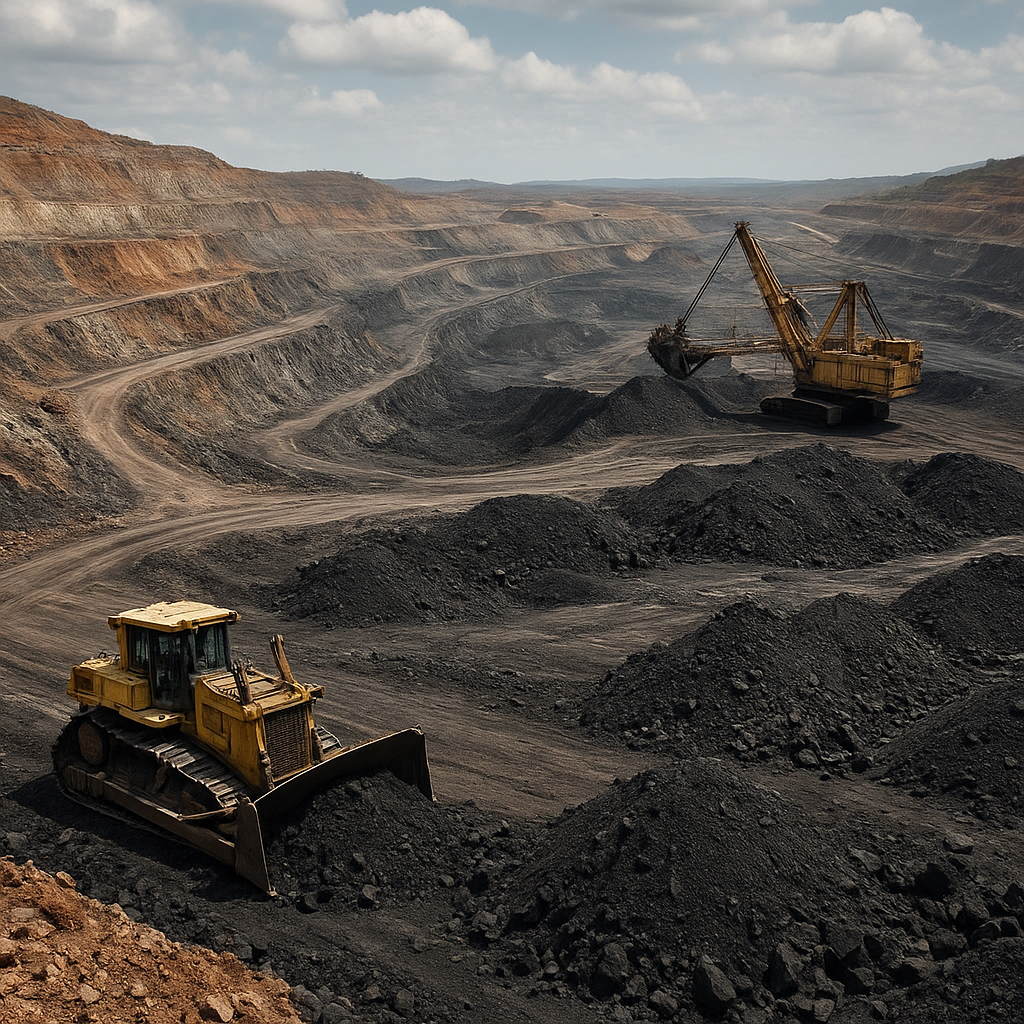
The Moatize Mine, set in the heart of central Mozambique, is one of the country’s most prominent mineral assets. Located near the town of Moatize in Tete Province, the deposit has attracted major international investors and has become a focal point for debates about economic development, regional infrastructure, environmental protection and social change. The mine produces high-quality coal that fuels industry and power plants around the world, while catalyzing large-scale transport projects and reshaping the livelihoods of local communities.
Location and Geological Setting
The Moatize basin lies in northwestern Tete Province, a landlocked part of central Mozambique characterized by plateaus and river valleys. The deposit is situated close to the town of Moatize and is part of a broader system of coal-bearing basins that extend across southern Africa. The geological formation that hosts the coal is the result of ancient peat swamps and long-term burial and compression processes that, over tens of millions of years, transformed organic material into dense carbon-rich seams.
Geology in practical terms
- The coal seams vary in thickness and depth; some are accessible by open-pit mining while others require deeper extraction approaches.
- Coal from Moatize ranges in quality, including both higher-grade material suitable for metallurgical uses and lower-rank thermal coal typically burned for electricity generation.
- The deposit’s scale makes it one of the more important coal resources in southern Africa, enabling multi-decade production potential if market conditions and permitting allow.
What Is Extracted and How It Is Used
At the Moatize site miners extract primarily thermal and some higher-grade coals. Thermal coal is the dominant product, sold to power utilities and industries that require reliable, high-carbon fuels. There is also coal suitable for industrial and metallurgical uses, which can enter steelmaking supply chains where higher calorific value and specific ash profile are required.
Processing and logistics
- After extraction, coal is sorted, washed and graded to meet export specifications and reduce impurities such as sulfur and ash.
- Large-scale logistics corridors have been developed to move coal from the mine to deep-water ports. These corridors include rail rehabilitation and port capacity improvements designed to handle bulk carriers.
- Because Mozambique is on the Indian Ocean and many buyers are in Asia and Europe, seaborne export lines are the commercial lifeline for Moatize coal, though some regional trade also benefits neighboring countries.
Economic Importance to Mozambique and the Region
The Moatize Mine has had profound macroeconomic and local effects. It has served as a magnet for foreign investment, a source of export earnings, and a driver of infrastructure projects that benefit broader economic activity.
Macroeconomic impacts
- Exports: Coal exports from Moatize provide an important source of foreign currency, helping Mozambique to diversify its export base beyond agriculture and traditional commodities.
- Investment: The scale of the mine attracted major international mining and logistics firms, leading to large capital inflows for mine development and for rail and port upgrades.
- Government revenue: Royalties and taxes from mining activity contribute to public budgets, potentially financing services and development projects if managed transparently.
Regional and local effects
- Infrastructure: Rail corridors and port investments intended to service Moatize have spillover benefits for domestic transport and cross-border trade, particularly linking to neighboring Malawi and Zambia.
- Employment: The mine and associated logistics projects created thousands of jobs during construction and ongoing operational roles, both directly in mining and indirectly in services and supply chains.
- Urbanization and services: The influx of workers and capital has generated demand for housing, health care, education and retail, transforming the social fabric of Moatize town and surrounding districts.
Infrastructure: Rail, Port and Regional Integration
One of the most visible legacies of Moatize development has been the construction and rehabilitation of major transport routes. High-capacity rail lines link the mine to coastal ports, enabling coal to reach world markets. The modernization of railway infrastructure has been a technically and financially ambitious component of the project.
Rail corridors and ports
- The rail corridors connecting Moatize to the coast were upgraded or rebuilt to handle heavy bulk traffic. These include links that reach deep-water ports able to accommodate large bulk carriers.
- Port improvements at strategic harbors enabled faster loading rates and reduced logistical bottlenecks, making Mozambican coal more competitive.
- Regional benefits: Rail lines passing through neighboring countries provide export options for landlocked nations and support broader trade integration in southern Africa.
Social and Environmental Considerations
Mining projects of Moatize’s size inevitably create social and environmental challenges alongside economic benefits. Decisions about land, water resources, resettlement and pollution have shaped local perceptions and prompted scrutiny from civil society and international observers.
Community and resettlement
- Resettlement of communities to make way for mining infrastructure has been a sensitive issue. Proper compensation, livelihood restoration and meaningful consultation are ongoing needs emphasized by observers and residents.
- Employment promises and local content initiatives can boost living standards, but long-term benefits require sustained investment in education, health and diversified economic opportunities.
Environmental impacts
- Water use and contamination risks are significant concerns in a region where river systems and groundwater support agriculture and human consumption.
- Dust, noise and ecosystem disturbance from open-pit mining and transport corridors affect biodiversity and local quality of life.
- Mine closure planning and rehabilitation are essential to restore landscapes and mitigate long-term damage once extraction ends.
Why Moatize Is Strategically Interesting
Beyond the straightforward extraction of coal, Moatize is interesting for multiple strategic reasons. Its development has become a case study in how natural resources can catalyze regional integration, the complexities of foreign direct investment in fragile governance environments, and the evolving debate about fossil fuels in a warming world.
Integration and geopolitics
- By linking inland resources to ports and markets, Moatize has strengthened Mozambique’s position as a regional logistics hub. This has implications for trade patterns and diplomatic ties in southern Africa.
- International partnerships in mining and infrastructure have brought technical expertise and capital but also raised questions about profit-sharing and local empowerment.
Economic diversification potential
- The revenues and infrastructure enabled by the mine can fund diversification beyond mining if national and provincial policies prioritize education, manufacturing and renewable energy.
- There is an opportunity to use coal revenues to build resilience and reduce dependency on any single commodity—if governance and transparency allow.
Climate and energy transition debates
- Coal is increasingly contested globally because of climate change. Moatize sits at the intersection of immediate developmental needs for affordable energy and longer-term global pressures to reduce greenhouse gas emissions.
- How Mozambique balances export-driven coal extraction with commitments to sustainable development will be watched by investors, development agencies and environmental groups alike.
Operational and Corporate Aspects
Major international mining companies and financiers have played central roles in the development and continued operation of Moatize. Corporate governance, investment strategies and community engagement practices have shaped outcomes on the ground.
Investment models and ownership
- Large-scale foreign investment financed mine development, processing facilities and the transport corridors that enable exports. These capital-intensive projects are often structured as joint ventures, long-term concessions or public-private partnerships.
- Host-country agreements define royalty regimes, local employment quotas and procurement rules—elements that determine how much value remains in Mozambique.
Operational challenges
- Fluctuating global coal prices affect profitability and investment plans, making long-term planning challenging for both operators and host governments.
- Security, political stability and community relations are practical concerns that can interrupt operations if not properly managed.
Notable Innovations and Practices
Moatize has been associated with certain technical and logistical innovations born from the need to move bulk commodities efficiently from an inland basin to the coast. These include investment in high-capacity rolling stock, coal handling systems at ports and the use of combined logistics corridors that serve both mineral exports and general freight.
Local content and skills development
- Training programs to build local technical capacity in mining and rail maintenance have been implemented with varying levels of success, helping to create a local skilled workforce.
- Procurement policies that favor domestic suppliers where possible can stimulate local industry and service sectors.
Challenges and Uncertainties
Despite its potential, Moatize faces multiple uncertainties that will shape its future trajectory. Global demand trends for coal, national policy choices, environmental regulation, and the management of social impacts all contribute to a complex strategic landscape.
Key risk factors
- Market risks: prolonged declines in coal prices or shifts in buyer countries’ energy mixes can reduce revenue streams.
- Regulatory and legal risks: changes in taxation, royalty regimes or environmental regulation could affect the economic case for continued development.
- Social license to operate: maintaining constructive relations with affected communities, local governments and civil society is essential for uninterrupted operations.
Interesting Facts and Observations
Several aspects make the Moatize story particularly compelling beyond the economics. First, the interdependency between mining and national transport policy illustrates how a single resource can reshape infrastructure planning. Second, the social dynamics—where traditional ways of life intersect with modern industrial employment—highlight the human dimensions of resource wealth. Finally, Moatize exemplifies the tension many developing countries face: leveraging natural resources for rapid development while safeguarding long-term environmental sustainability and equitable social outcomes.
- Moatize has transformed a once-remote region into an investment corridor, demonstrating how extractive projects can accelerate connectivity.
- Local entrepreneurs and service providers have emerged to support the mine, creating microeconomic shifts that persist even when commodity cycles turn.
- The project underscores the importance of integrated planning: aligning mining, transport, social services and environmental protection yields better outcomes than isolated interventions.
Looking Forward
Moatize’s future will depend on how Mozambican authorities, communities and international partners manage the balance between short-term gains and long-term sustainability. If revenue is invested wisely, infrastructure is maintained, and social and environmental safeguards are enforced, the mine’s legacy could include substantial improvements in living standards and regional connectivity. Conversely, if governance weaknesses or market shocks dominate, the benefits could be short-lived and unevenly distributed.
Ultimately, Moatize is more than a site where coal is extracted: it is a microcosm of modern development challenges where geology, markets, policy and human aspirations converge. The decisions taken in the coming years will determine whether the mine becomes a durable engine of progress for Mozambique and the adjacent region or a cautionary example of missed potential.

