
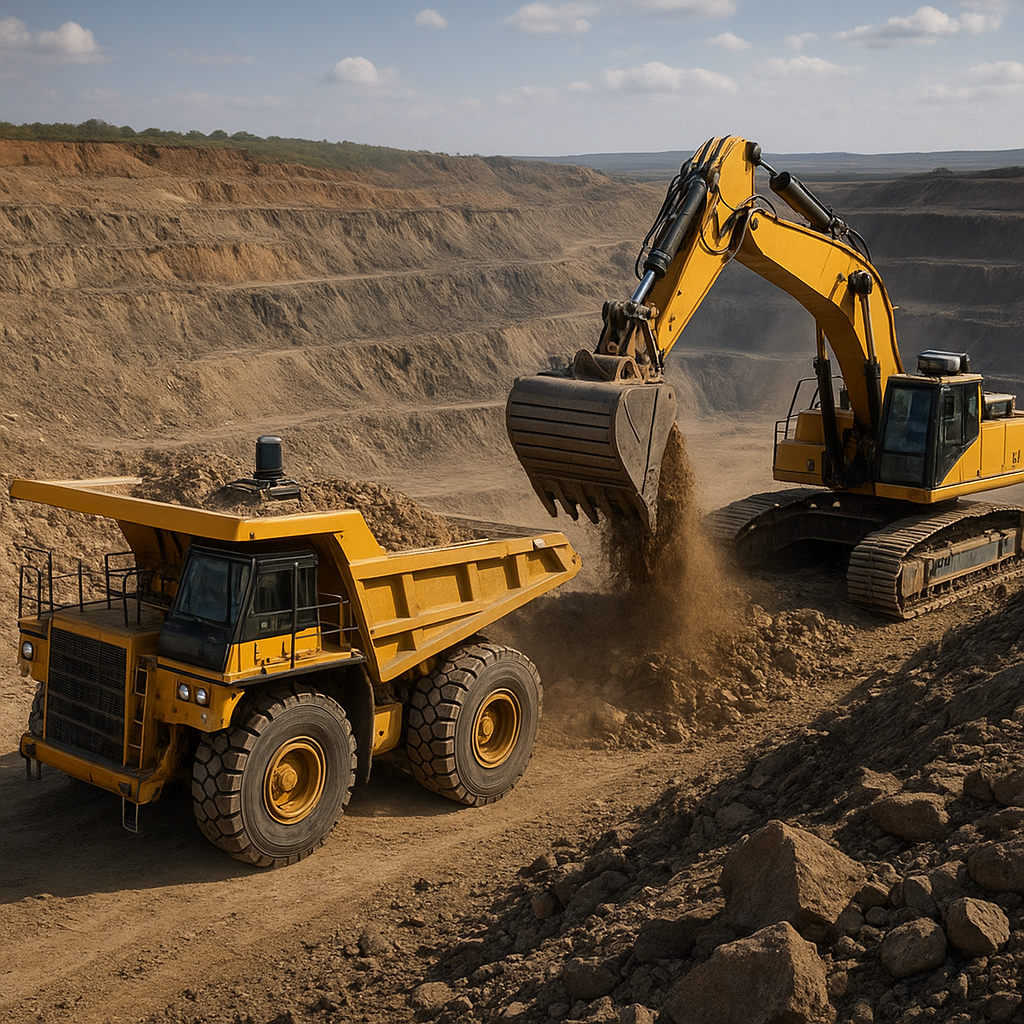
The global mining sector is undergoing a profound transformation as firms integrate advanced technologies to extract and process mineral resources more effectively. This article examines the relationship between mining automation and mineral productivity, exploring the technological drivers, operational impacts, economic trade-offs, and broader environmental and social implications. By focusing on practical examples and evidence-based considerations, the discussion highlights how automation reshapes the way deposits are developed, ore is handled, and value is realized across the mining value chain.
Historical context and drivers of automation
Mechanization in mining has a long lineage, from steam-powered hoists to diesel shovels and conveyor systems. Today’s wave of automation builds on that legacy but is distinguished by the integration of real-time data, advanced control systems, and autonomy. Several forces propel this shift. Fluctuating commodity prices and thin margins create pressure to boost productivity and lower per-unit operating costs. Increasing ore complexity and deeper deposits demand precision and consistency that manual operations struggle to sustain. Meanwhile, a global emphasis on worker safety and regulatory compliance encourages remote and automated solutions that reduce human exposure to hazardous environments. The cumulative effect is a strategic drive toward systems that can operate longer, adapt faster, and extract more value from a given deposit.
Key technologies enabling automated mining
Automation in mining is not a single technology but an ecosystem of tools and methods that together enhance operational performance. Core components include:
- Sensors and Instrumentation: High-fidelity sensors capture data on equipment condition, ore properties, and environmental parameters. Sensor networks enable continuous monitoring of drilling, blasting outcomes, conveyor performance, and stockpile behavior.
- AI and Machine Learning: Algorithms analyze historical and streaming data to optimize processes such as blast design, grade control, and mill throughput. Predictive analytics support maintenance decisions and adaptive process control.
- Robotics and Autonomous Equipment: Autonomous haul trucks, loaders, and drills reduce reliance on on-site labor, allow operation in restricted conditions, and improve cycle consistency. Robotics also enables tasks in confined or hazardous zones.
- Connectivity and Edge Computing: Low-latency networks (including private LTE/5G) and edge computing keep control systems responsive and reduce dependence on remote data centers, which is vital in remote mine sites.
- Digital Twins and Simulation: Detailed virtual representations of mines allow scenario testing, process optimization, and training without interrupting live operations.
- Process Control Systems: Advanced distributed control systems coordinate crushers, mills, flotation circuits, and tailings management to maintain stable production at optimal efficiency.
How automation affects mineral productivity
Automation influences mineral productivity through multiple, often reinforcing mechanisms. Productivity in mining can be measured by tonnes per effective operating hour, ore recovery rates, throughput at processing plants, and ultimately revenue per unit of resource extracted. Automation contributes in the following ways.
1. Increased throughput and utilization
Automated fleets and process controls enable equipment to operate for longer periods with fewer unscheduled stops. Autonomous haulage systems reduce human-related delays and optimize routing and loading cycles, increasing the effective utilization of trucks and shovels. In processing plants, automated control loops stabilize feed rates and grinding conditions, allowing mills to run closer to design capacity with reduced variability. The cumulative effect is higher daily and annual throughput, directly improving productivity.
2. Improved ore recovery and grade control
Precision drilling, automated sampling, and real-time sensor feedback enable more accurate delineation of ore and waste, improving grade control. Blending strategies can be automated to maintain consistent feed quality to concentrators, enhancing recovery rates and the proportion of saleable concentrate. AI-driven models can predict ore hardness and metallurgical response, guiding operational decisions that maximize metal recovery.
3. Reduced downtime through predictive maintenance
When equipment is monitored continuously, anomalies can be detected before they cause failures. Predictive maintenance powered by machine learning reduces unplanned downtime and extends component life. The result is fewer production interruptions and more consistent output — both key contributors to higher mineral productivity.
4. Optimization of energy and material use
Automated control systems adjust energy-intensive processes like grinding and flotation to operate at optimal setpoints, reducing energy per tonne of ore treated. Sensors that monitor reagent consumption and process performance allow dynamic dosing, cutting waste and lowering operating expenses per unit of product.
5. Enhanced safety and access to challenging ore bodies
Automation enables operations in environments that would be risky or impractical for human workers, such as high-heat zones, narrow underground drives, or deepwater tailings works. By expanding the range of safely exploitable ore, automation can indirectly increase total producible reserves and thus long-term productivity.
Economic and operational considerations
Despite clear productivity benefits, automation entails significant capital investment and operational change. The economic case depends on several factors:
- Scale and complexity of the mine: Larger operations with repetitive tasks often achieve faster payback from autonomous fleets and process automation.
- Commodity price cycles: Investments require a multi-year horizon; low prices can delay or reverse ROI expectations.
- Cost of integration and legacy systems: Retrofitting older equipment or harmonizing disparate systems adds expense and project risk.
- Availability of skilled personnel: Mining companies need personnel who can manage automation platforms, data analytics, and cybersecurity — roles that differ from traditional mining skill sets.
- Regulatory and contractual constraints: Local rules about remote operations, labor contracts, and safety reporting can influence deployment choices.
When well-executed, automation reduces unit operating costs, raises throughput, and improves recovery, often delivering a strong internal rate of return. However, the transition requires careful change management, workforce reskilling, and phased implementation to avoid production disruption.
Broader environmental and social implications
Automation intersects with sustainability goals in complex ways. On one hand, automated systems can reduce fuel consumption, lower greenhouse gas emissions per tonne of mineral produced, and enable more precise waste handling and water recycling. Automated monitoring improves compliance with environmental permits and early detection of potential incidents.
On the other hand, increased automation has social consequences for local employment and community expectations. Some positions are eliminated or transformed into roles requiring higher technical proficiency. Responsible operators invest in retraining programs, community engagement, and transparent transition plans to mitigate negative social impacts. In many jurisdictions, stakeholders expect companies to demonstrate not only improved efficiency but also commitment to equitable workforce development and regional economic resilience.
Implementation challenges and risk management
Successful automation projects confront several technical and organizational risks:
- Data quality and interoperability: The value of automation hinges on reliable data. Inconsistent or poor-quality inputs degrade the performance of AI models and control systems.
- Cybersecurity: Connected operations expand the attack surface. Strong governance, encrypted networks, and incident response plans are essential to protect production and safety systems.
- Change resistance: Workforce concerns about job security can generate opposition. Transparent communication and upskilling programs reduce friction.
- Vendor lock-in and platform governance: Choosing proprietary systems without interoperability can limit future flexibility. Open standards and modular architectures mitigate this risk.
- Geotechnical and process variability: Mines are inherently variable. Automation must be robust to changing orebody conditions and unexpected events in ways that human operators have traditionally managed through experience.
Case studies and measurable outcomes
Empirical evidence from early adopters demonstrates tangible productivity gains. Autonomous haulage projects frequently report increased truck utilization, lower operating costs per tonne, and reductions in cycle time variability. Automated drill rigs achieve consistent hole patterns and reduced non-productive time. In processing plants, closed-loop control and AI optimization contribute to higher recoveries and energy savings. These operational improvements translate into improved cash flow and longer life-of-mine when combined with better resource conversion rates.
Future directions and strategic priorities
Looking ahead, a few trends will shape the next phase of automation’s effect on mineral productivity:
- Edge AI and federated learning will allow models to learn from multiple sites while preserving data governance, improving performance in diverse geological contexts.
- Integration of remote sensing (satellite, UAVs) with ground-based data will enhance exploration success rates and inform real-time operational adjustments.
- Advances in battery technology and electrification will enable cleaner autonomous fleets, lowering operational emissions while potentially increasing productivity through improved energy efficiency.
- Human-machine collaboration will become more nuanced: augmented-reality interfaces and exoskeletons will enhance human capability rather than simply replace labor.
- Regulatory frameworks and industry standards will evolve to address safety, data sharing, and cross-vendor interoperability, reducing barriers to wider adoption.
To realize the productivity potential, mining companies should adopt a phased approach: pilot critical automation components, validate expected gains with rigorous metrics, scale successful elements, and invest in people and governance. A balanced focus on technology, workforce development, and environmental stewardship will determine whether automation results in durable productivity improvements and sustainable value creation.
Concluding remarks on strategic adoption
Automation reshapes mineral productivity by tightening the link between geological potential and economic output. When implemented thoughtfully, systems that combine high-fidelity sensors, robust control, and advanced analytics unlock greater throughput, higher recoveries, and lower unit costs. Achieving these outcomes requires managing reliability and cybersecurity, addressing social impacts, and making pragmatic investments in people and infrastructure. For the mining sector, the strategic question is not whether to automate, but how to integrate automation into an operating model that maximizes value while meeting environmental and social expectations.
