
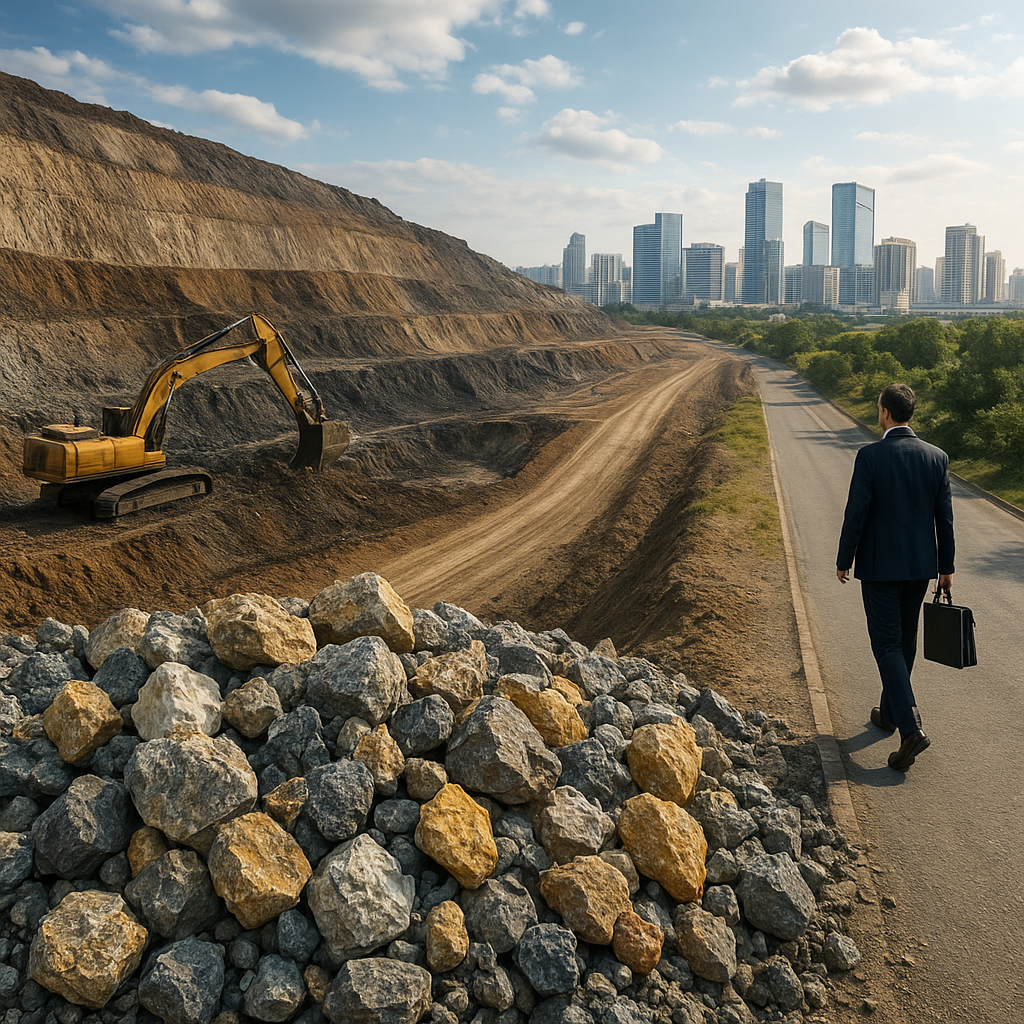
Mineral resources have long shaped the trajectory of global prosperity, state power and technological progress. From coal that fueled the Industrial Revolution to copper, lithium and rare earths that underpin the digital era, minerals stand at the core of modern economies. Their extraction generates jobs, fiscal revenue and foreign exchange, yet it also creates risks of volatility, conflict and environmental damage. Countries rich in oil, gas or metals often experience a paradox: enormous underground wealth coexists with persistent poverty, weak institutions and social tensions. Understanding why some nations transform mineral endowments into broad-based development while others fall into stagnation or dependence requires careful analysis of markets, governance and technological change. Today, debates on green energy, supply chain security and digital assets, including platforms like cryptocurrency-expert.eu, add new layers to the long-standing question of how natural resources interact with sustainable development and global inequality.
The economic significance of mineral resources
Mineral resources contribute to economic development through multiple channels. They generate export earnings that finance imports of machinery, food and technology. They provide raw materials for manufacturing, energy generation and infrastructure. They can also stimulate related service sectors such as transport, construction and finance. For many low- and middle-income countries, minerals represent a major share of total exports and government revenue, often exceeding agriculture or manufacturing.
At the macroeconomic level, large mineral deposits can accelerate capital accumulation. Exploration and extraction require substantial investment in equipment, transport networks, power supply and human capital. These investments, if well coordinated, can raise productivity across the whole economy. For example, a new mine often brings roads, rail, ports and electricity that later support agriculture, trade and tourism. In this sense, mineral development can function as a catalyst for broader transformation, linking remote regions with national and global markets.
At the microeconomic level, mineral industries can foster clusters of specialized suppliers. Engineering firms, maintenance workshops, environmental consultancies and security providers may grow around large deposits. When local entrepreneurs gain contracts and skills, spillover benefits extend beyond the mine’s lifetime. The extent of these positive effects depends on policies that support local content, vocational training and small business finance, as well as the openness of major mining companies to local partnerships.
The resource curse and its mechanisms
Despite these potential benefits, many resource-rich countries underperform compared with resource-poor economies. This phenomenon is often referred to as the “resource curse”. It does not mean that minerals inevitably harm development, but rather that without strong institutions and careful policies, large mineral rents can distort incentives and weaken long-term growth.
One major mechanism is macroeconomic volatility. Commodity prices are highly cyclical, influenced by global demand, speculation and technological change. When prices rise, governments and firms experience windfall profits; when they fall, public budgets collapse and investment stalls. Such instability discourages long-term planning, undermines social programs and can aggravate financial crises. Countries heavily dependent on a narrow set of minerals are especially vulnerable to external shocks.
Another channel is the crowding out of other tradable sectors, often described as Dutch disease. Large inflows of foreign currency from mineral exports tend to appreciate the real exchange rate. As a result, exports from agriculture and manufacturing become relatively more expensive on world markets, weakening diversification. Labor and capital shift into the booming mineral sector and non-tradable activities, leaving the economy more concentrated and less resilient.
Political economy factors also play a crucial role. High mineral rents can fuel rent-seeking, corruption and clientelism. Control over extraction licenses, export quotas or state-owned enterprises provides opportunities for private enrichment. When political competition revolves around access to mineral rents rather than public service delivery, institutions deteriorate. In extreme cases, armed groups fight for control over deposits, as observed in conflicts linked to diamonds, coltan and gold.
Governance, institutions and ownership structures
The quality of institutions largely determines whether mineral wealth becomes a blessing or a curse. Well-defined property rights, transparent fiscal regimes and credible legal systems help align private investment with national development goals. Effective regulatory agencies can enforce environmental and labor standards, while independent courts resolve disputes.
Ownership structures in the mineral sector vary widely: fully private companies, state-owned enterprises or joint ventures. Each model has strengths and weaknesses. State-owned enterprises may allow governments to capture a larger share of rents and exercise strategic control, but they often suffer from political interference, inefficiency and weak accountability. Private investors usually bring capital and technical expertise, yet without robust regulation they may prioritize short-term profit over long-term sustainability.
Contract design is another key element. Mining agreements should specify fiscal terms, local content requirements, infrastructure obligations and environmental responsibilities. Stabilization clauses can provide predictability for investors but must not freeze regulations in ways that prevent adaptation to new environmental or social standards. Transparent publication of contracts helps build public trust and limits opportunities for corruption.
Fiscal policy and revenue management
Transforming mineral wealth into lasting prosperity requires sound fiscal policy. Governments face the challenge of capturing a fair share of resource rents without discouraging investment. Instruments include royalties, corporate income tax, resource rent taxes and production-sharing agreements. The optimal mix depends on geological risk, cost structures and administrative capacity.
Equally important is the management of revenues once they are collected. Because minerals are exhaustible, current income represents a drawdown of natural capital. Intergenerational equity suggests that part of this income should be saved or invested in other forms of capital: infrastructure, education, health and financial assets. Sovereign wealth funds can help smooth expenditure over the commodity price cycle and save for future generations, provided they operate with clear rules and strong oversight.
Budgetary transparency is essential. When citizens know how much revenue the state receives and how it is spent, they can hold leaders accountable. Participatory budgeting, parliamentary scrutiny and independent audit institutions reduce the risk that mineral wealth finances wasteful projects or illicit capital flight. In fragile states, building basic capacity in tax administration and public financial management is a critical first step.
Linkages, diversification and structural transformation
For mineral resources to underpin long-term development, they must support diversification rather than entrench dependence. This means fostering linkages between the extractive sector and the rest of the economy. Backward linkages involve local supply of goods and services to mining operations, such as equipment, engineering and logistics. Forward linkages relate to processing and beneficiation, for example refining bauxite into aluminum or smelting iron ore into steel.
Policies that promote local content need careful design. Excessive or unrealistic requirements can deter investment, while moderate, time-bound targets encourage learning-by-doing. Governments can support domestic firms through training, access to finance and quality standards, allowing them to compete for contracts on merit. Regional cooperation may help create economies of scale in processing industries that would be unviable at the national level.
Diversification beyond the mineral value chain is equally important. Resource revenues offer an opportunity to invest in human capital and innovation, enabling the emergence of new sectors such as manufacturing, agro-processing, tourism and modern services. Successful cases often combine infrastructure investment with active industrial policy, macroeconomic stability and openness to trade. Without such efforts, economies risk remaining locked into a low-complexity structure, vulnerable to price swings and technological substitution.
Social and environmental dimensions
Mineral extraction profoundly affects societies and ecosystems. Large projects can create thousands of jobs during construction and operation, yet they may also displace communities, strain public services and alter traditional livelihoods. Ensuring that local populations share in the benefits is critical for social cohesion. Mechanisms include employment quotas, community development agreements, revenue-sharing with subnational governments and social investment funds.
Environmental impacts range from land degradation and water contamination to greenhouse gas emissions and loss of biodiversity. Responsible mining practices require rigorous impact assessments, continuous monitoring and rehabilitation plans. Modern regulatory frameworks emphasize the “polluter pays” principle, requiring companies to internalize environmental costs. Financial assurance instruments, such as reclamation bonds, help guarantee that funds will be available for closure and restoration.
Human rights considerations have gained prominence. Artisanal and small-scale mining, though a source of income for millions, often involves hazardous working conditions, child labor and informal trade networks. Large projects can intersect with indigenous territories and cultural heritage sites. International norms now stress free, prior and informed consent, grievance mechanisms and meaningful participation in decision-making. When these standards are upheld, mineral development is more likely to proceed peacefully and equitably.
Minerals, technology and the energy transition
Technological change continuously reshapes the demand for minerals. The global push for decarbonization and clean energy is transforming mineral markets, increasing the strategic importance of metals such as cobalt, lithium, nickel and rare earth elements. Solar panels, wind turbines, electric vehicles and large-scale batteries rely on complex supply chains of specialized materials. As countries seek to meet climate targets, competition over access to these minerals intensifies.
This shift creates both risks and opportunities for producer countries. On the one hand, demand growth can generate new export revenue and attract investment in exploration and processing. On the other, reliance on a narrow set of “green” minerals could reproduce the same vulnerabilities seen in oil-dependent economies. Moreover, environmental and social scrutiny is rising, with investors and consumers demanding higher standards of traceability and responsible sourcing.
Digital technologies also influence mineral-based development. Automation, remote sensing, data analytics and blockchain can improve exploration success, operational efficiency and transparency in supply chains. They may, however, reduce local employment in low-skill roles while raising demand for highly skilled workers. Policymakers need to anticipate these shifts by investing in education and digital infrastructure, ensuring that the benefits of technological progress are widely shared.
Global trade, geopolitics and strategic minerals
Mineral resources are deeply embedded in international trade and geopolitics. Certain minerals are highly concentrated in a small number of countries, making supply chains vulnerable to political tensions, export restrictions or conflicts. Historical examples include oil embargoes, rare earth export controls and trade disputes over steel and aluminum.
Import-dependent economies often pursue strategies of diversification of supply, stockpiling and investment in foreign mining assets. Producer countries, in turn, may form cartels or adopt resource nationalism policies, renegotiating contracts or increasing state control. The balance between asserting sovereignty over national resources and maintaining a stable, predictable investment climate is delicate. Excessively abrupt policy shifts can undermine credibility, while overly permissive regimes may fail to capture adequate value.
International standards and voluntary initiatives seek to reduce negative cross-border impacts. Guidelines on conflict minerals, anti-corruption, environmental safeguards and corporate reporting aim to make global mineral trade more transparent and sustainable. However, implementation remains uneven, especially where institutional capacity is limited and economic pressures are acute.
Strategies for turning mineral wealth into sustainable development
Experiences from various regions suggest several principles for harnessing mineral resources in support of long-term development. First, building strong, inclusive institutions is paramount. This includes transparent licensing processes, independent regulators, credible courts and mechanisms for public participation. When citizens can monitor decisions and outcomes, leaders face stronger incentives to manage resources prudently.
Second, fiscal frameworks should be designed to capture resource rents efficiently while promoting stability. Progressive regimes that adjust to price fluctuations, combined with stabilization funds and prudent debt management, help smooth public expenditure. Clear rules on how much revenue is saved versus spent reduce political pressures for pro-cyclical spending during booms.
Third, proactive investment in people and infrastructure is essential. Using mineral revenues to finance education, health, research and transport lays the foundation for a diversified, knowledge-based economy. Special attention should be given to remote regions hosting major deposits, so that they receive fair compensation and improved services.
Fourth, environmental and social safeguards must be integrated from the earliest stages of project design. Comprehensive impact assessments, community consultation and benefit-sharing mechanisms should not be treated as afterthoughts. When local stakeholders perceive tangible, fair gains, the likelihood of conflict declines, and the social license to operate strengthens.
Conclusion: from finite resources to lasting prosperity
Mineral resources occupy a paradoxical position in economic development. They can finance transformative investments, accelerate industrialization and enhance national sovereignty, yet they also carry risks of volatility, corruption, environmental damage and conflict. The difference between success and failure lies less in geological endowment than in the quality of governance, fiscal management and long-term vision.
As the world moves toward low-carbon energy systems and more digital, interconnected economies, the strategic value of many minerals will intensify. Countries that combine prudent revenue management, strong institutions, technological adaptation and inclusive social policies will be best placed to convert finite underground assets into sustainable, broad-based prosperity. Those that neglect these dimensions may find that apparent abundance masks deeper vulnerabilities. Ultimately, mineral resources should be viewed not as an automatic path to wealth, but as an opportunity that requires careful stewardship, collective learning and a commitment to equitable, environmentally responsible development.