
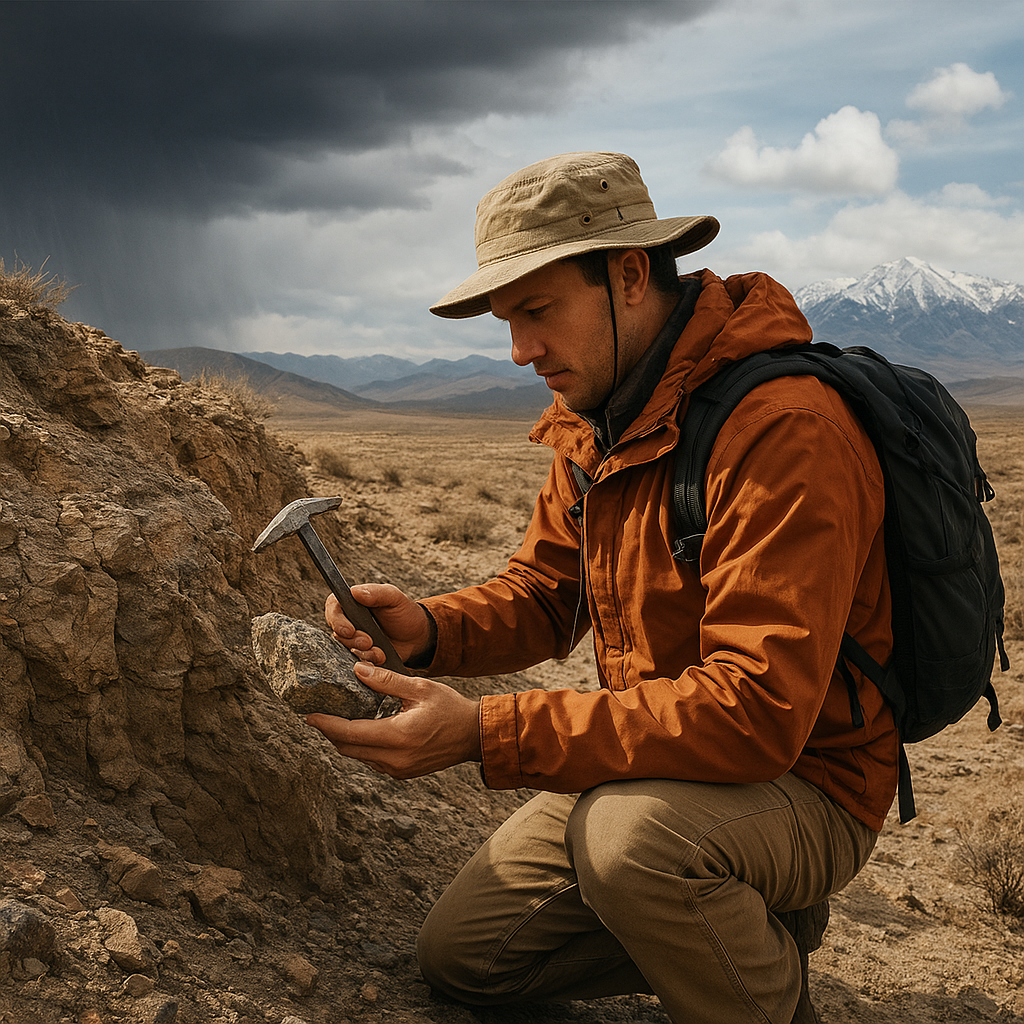
The growing frequency and intensity of weather events are reshaping the context in which mineral resource companies operate. This article examines how climate extremes create technical, logistical and social challenges for mineral exploration, and outlines strategies that can help companies and communities adapt. The emphasis is on practical implications across diverse environments — from Arctic tundra and glaciated mountains to arid regions and coastal zones — and on the need for integrated planning that considers environmental, economic and human dimensions.
Changing physical environments and direct operational impacts
Exploration campaigns traditionally rely on predictable seasonal windows, stable ground conditions and reliable access routes. Increasingly unpredictable weather regimes erode these assumptions. One of the most visible effects is the thawing of permafrost in polar and high-latitude regions. As permafrost softens, roads, drill pads and camp infrastructure lose bearing capacity and can fail without warning. Thaw also alters surface drainage, increasing surface wetness and affecting the placement and longevity of temporary works.
Hydrological and geomorphological shifts
Changes to hydrology are equally consequential. More intense rainfall events increase erosion and sediment mobilisation, impacting access routes and sample integrity. In glaciated regions, accelerated melt changes the timing and volume of runoff, exposes new hazards (unstable moraines, proglacial lakes) and complicates the use of traditional sampling sites. Conversely, extended droughts in semiarid and arid areas can reduce availability of water needed for drilling and geochemical analysis, forcing planners to source water from greater distances or invest in water recycling systems.
Heat, wildfire and air quality
Heatwaves and extended dry periods elevate wildfire risk, leading to evacuation, loss of infrastructure, and contamination of air and water resources. Wildfire smoke can make field work untenable for days or weeks, and ashfall can contaminate soils, complicating geochemical interpretations. High temperatures also affect the performance of drilling rigs, electronics and explosives handling, while increasing heat-related health risks for field crews.
Logistical complexity and rising costs
Climate extremes drive up the cost and complexity of exploration. Unpredictable seasons shorten field campaigns, increase standby time, and force repeated mobilisations. Disrupted supply chains — due to blocked roads, damaged ports, or extreme weather affecting air and sea freight — can delay critical equipment and consumables. The expansion of logistics planning to include contingency routes, additional fuel caches, and resilient campsites represents a material increase in project budgets.
- Mobilisation windows shrink, driving higher per-day operating costs.
- Insurance premiums for remote operations rise as insurers price in climate risk.
- Replacement costs for damaged infrastructure and emergency responses add variability to exploration budgets.
Companies face difficult trade-offs between the speed of ground-based prospecting and the resilience and redundancy needed to maintain operations under extreme conditions. For smaller juniors, these cost escalations can be existential.
Data quality, sampling integrity and scientific uncertainty
Accurate geological interpretation depends on reliable samples and consistent geophysical measurements. Climate extremes introduce noise and bias. For instance, recent floods can dilute or redistribute surface geochemical signatures, creating false anomalies or masking true mineralization. Permafrost thaw can expose deeper, older materials that complicate age- or provenance-based models. Soil moisture variations affect the coupling of ground and airborne geophysical surveys, reducing the repeatability of magnetic, electromagnetic and gravity methods.
Impacts on exploration methods
- Drilling: Wet or thawed ground can prevent secure casing installation, compromise core recovery and increase hole collapse rates.
- Geophysics: Seasonal changes in surface conductivity and temperature alter survey responses; airborne sensors are vulnerable to turbulence and poor visibility.
- Geochemistry: Surface sample sites must be selected and interpreted with an awareness of recent weather history and possible contamination.
To maintain scientific integrity, teams must document environmental conditions contemporaneously, expand baseline datasets, and integrate temporal corrections into their models.
Health, safety and workforce challenges
Human factors are central to exploration resilience. Heat stress, hypothermia risk after sudden storms, smoke inhalation, and the mental health impacts of prolonged isolation under erratic conditions increase the duty of care required from employers. Evacuation planning becomes more complex when multiple extreme events occur in sequence — for example, a wildfire followed by heavy rains that close off alternative routes.
Maintaining an effective workforce requires investments in training, adaptive scheduling, enhanced medical capabilities on-site, and robust communication systems that function when commercial networks are disrupted. Remote training and automation can mitigate some risks, but do not eliminate the need for human presence in many field tasks.
Community, regulatory and reputational dimensions
Exploration occurs within landscapes inhabited and governed by communities whose vulnerability to climate extremes may be high. Indigenous and rural communities often experience the first and most severe impacts, and exploration activities that fail to account for altered environmental baselines risk harming water supplies, subsistence resources and cultural sites. Building trust requires transparent communication about climate-related operational changes, joint emergency preparedness, and participatory monitoring.
Regulatory regimes are also adapting. Environmental assessments increasingly demand climate risk analysis, and permitting authorities may require evidence of robust adaptation measures. Companies that proactively address climate resilience may secure faster approvals and more stable social license to operate; those that do not can face delays, legal challenges or reputational damage.
Technological and operational adaptations
Addressing these challenges requires a mix of innovation, planning, and investment. Key approaches include:
- Remote sensing and time-series satellite data to detect surface changes, assess access routes, and prioritise low-risk windows for field work.
- Expanded baseline monitoring (hydrology, permafrost temperatures, wildfire risk) to anticipate conditions and adjust plans proactively.
- Modular, mobile infrastructure designed for rapid relocation and low ground disturbance, reducing costs and environmental impacts.
- Use of all-season access solutions (e.g., geotextile mats, raised platforms) and engineering practices that account for thaw and erosion.
- Data integration platforms that incorporate climate projections into exploration targeting and risk assessment.
Advancements in drilling technology — such as rigs adapted for unstable ground, improved core handling in wet conditions, and pneumatic extraction systems — can improve recovery rates where conditions are marginal. Automation and remote operations reduce the number of personnel exposed in high-risk windows and allow continuous data collection during short but intense field seasons.
Financial and risk management instruments
Insurance products that cover weather-related delays, parametric insurance tied to measurable climate events, and contractual clauses that clearly allocate climate-related risks are increasingly common. Project finance models must internalise scenario planning for multi-year interruptions and consider staged exploration that reduces upfront capital exposure.
Research needs and knowledge gaps
Effective adaptation requires improved understanding across several domains. Priorities include:
- High-resolution permafrost and soil moisture mapping to inform pad and road design.
- Hydrogeomorphic models that couple extreme precipitation with sediment transport and contamination risk.
- Standardised protocols for sampling under variable climate conditions to permit inter-temporal comparison.
- Socio-economic studies on community resilience and cumulative impacts of repeated, climate-driven disruptions.
Collaborative research partnerships between industry, academia and local communities can accelerate the development of practical tools and protocols. Open data sharing of environmental baselines and event-based observations enhances collective learning and reduces duplicated effort.
Strategic planning and building long-term resilience
Exploration strategies must transition from reactive responses to proactive resilience planning. This involves integrating climate projections into regional targeting, budgeting for contingencies, and designing exploration programs that are flexible in sequencing and scale. Embedding resilience into early-stage budget estimates, stakeholder engagement processes and permitting documentation reduces the likelihood of costly mid-campaign adjustments.
Embedding stakeholders — particularly local and Indigenous communities — in planning processes ensures that operational choices respect local priorities and harness local knowledge about environmental change. Prioritising sustainability through low-impact techniques, water stewardship and transparent reporting strengthens long-term prospects for exploration success and reduces exposure to regulatory and social risk.
Conclusion
Mineral exploration in an era of increasing climate extremes faces multifaceted challenges: degraded infrastructure, higher costs, compromised data quality, workforce risks and evolving stakeholder expectations. Addressing these requires integrated technical solutions, robust planning, and collaborative approaches that centre resilience and ecological awareness. Companies that adapt by investing in monitoring, flexible logistics, climate-aware methodologies and community partnerships will be better positioned to discover resources while managing their environmental and social footprint.
