
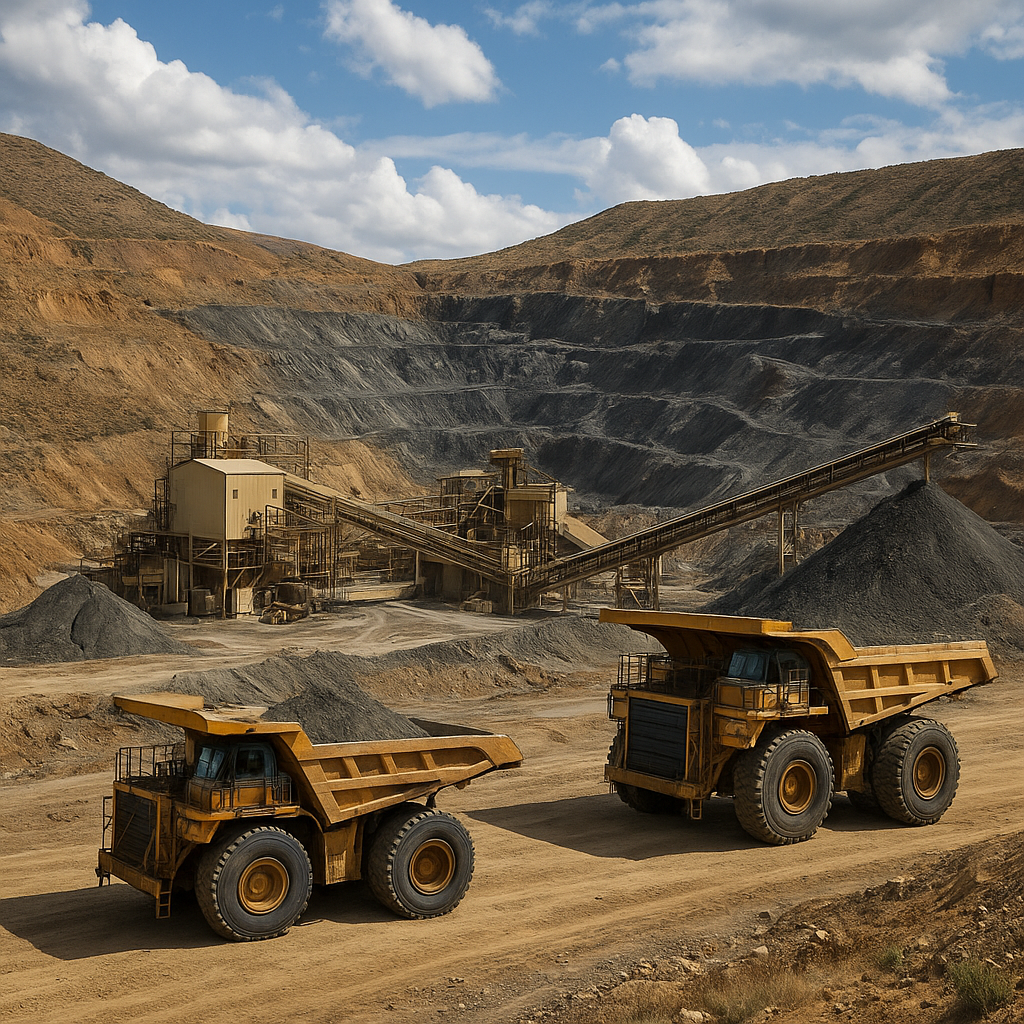
The Midas Mine is one of the historic and still-notable mineral occurrences in the western United States. Located in the mineral-rich landscapes of the Great Basin, it has produced both gold and silver from veining and replacement-style deposits, and its story ties together geology, frontier history, modern mining techniques and local economic development. This article outlines where the Midas Mine sits on the map, what minerals are extracted there, how the operation affects the regional economy, and several intriguing technical and historical points that make Midas a noteworthy site in American mining.
Location and geological setting
The Midas Mine lies in the interior western United States, within the broad continental province known as the Great Basin. While many readers associate Nevada with prolific hardrock gold production, the Midas property is specifically situated near a small historic mining settlement that carries the same name. This region is a patchwork of mountain ranges, alluvial valleys and fault-controlled mineral belts. The area hosting Midas occupies the same tectono-stratigraphic environment that has produced numerous other precious-metal districts in the western U.S.
Geologically, the deposit at Midas is hosted in structures typical for the region: veins and breccia zones developed along faults and permeable horizons in volcanic and sedimentary rocks. The mineralization style is most commonly described by geologists as epithermal and structurally-controlled, with sulfide-bearing quartz veins, banded chalcedonic textures and associated alteration halos. Such deposits form from relatively low-temperature hydrothermal fluids that rise along conduits, precipitating precious metals and gangue minerals when conditions change.
Local geological mapping shows complex relationships between volcanic units, intrusive bodies and fault zones. These structural intersections create spaces where hydrothermal fluids could deposit concentrations of gold and silver. The result has been a mineable system that, in parts, yields higher-grade ore compared with many disseminated deposits in the region.
What is mined: ore types and metallurgical characteristics
The primary commodities at Midas are gold and silver, typically occurring together in variable ratios. Mineralization is expressed as native gold, electrum (a gold–silver alloy), and silver-bearing sulfides such as acanthite and argentite, plus associated sulfides like arsenopyrite and pyrite. Gangue minerals commonly include quartz, calcite and various silica phases associated with the hydrothermal system. Because mineralization spans a range of textures—from coarse native gold in open-space veins to fine-grained sulfide-hosted material—processing circuits must be flexible.
Historically and in modern practice, operators have used a combination of underground mining methods where high-grade shoots occur and open pit excavation where ore zones are nearer surface and more extensive. Milling methods to recover metals typically include crushing and grinding followed by gravity separation for coarse gold, flotation to produce a sulfide-rich concentrate, and/or leach circuits (often cyanide-based) to extract gold and silver from oxide and low-grade material. The choice of technique depends on ore mineralogy; sulfide-rich zones may require roasting, pressure oxidation or bio-oxidation prior to cyanidation, whereas oxide and free-milling ore can be economically recovered through gravity and leaching.
Operations and infrastructure
The physical footprint of the Midas Mine includes access roads, processing facilities, tailings storage, and support infrastructure—typical elements for an active precious-metal operation in a remote setting. Power may be supplied by a mix of grid connection and on-site generation; regional water management is a key planning factor because processing and dust control require consistent water supplies in an arid environment.
Mining at Midas has historically been episodic: early prospecting and mining in the late 19th and early 20th centuries were followed by periods of closure and renewed exploration as metal prices and extraction technologies changed. Modern exploration campaigns commonly use detailed geophysics, systematic drilling and updated metallurgical testing to delineate resources that are economically extractable under current conditions.
Economic significance
At the local and regional level, the Midas Mine contributes to the economy through direct employment, contracting, royalties and taxes. Mines in rural western communities often represent some of the largest single employers in their counties, providing skilled and semi-skilled jobs in underground and surface operations, mill maintenance, environmental monitoring, and administration. In addition, service industries—transport, hospitality, equipment rental and parts suppliers—benefit from the presence of an active mine.
Beyond employment, Midas has generated value through mineral production sold into global markets. Because gold is priced in international markets and silver is both an industrial metal and a tradable precious metal, production from Midas flows into global supply chains. Revenues are then partly reinvested locally through procurement of goods and services, and through state and local government collections such as severance taxes, property taxes and royalty arrangements with landowners or public agencies.
The mine’s economic footprint is not only direct: exploration activity attracts geologists, engineers and contractors, stimulating investment and sometimes encouraging broader infrastructure improvements—road upgrades, improved telecommunications and emergency services—that have long-term value for residents. In many rural mining districts, cyclical investment tied to mineral prices causes booms and busts, but sustained and responsibly managed operations can support multi-decade economic contributions.
Environmental management and community relations
Operating in an arid, ecologically sensitive region demands careful environmental planning. Key topics for the Midas Mine include water management, tailings and waste rock handling, dust control, wildlife and habitat protection, and progressive reclamation. Modern operators are typically required to prepare comprehensive environmental impact assessments and mine closure plans that address reclamation of disturbed land, long-term monitoring of groundwater and surface water and strategies to minimize acid rock drainage or metal leaching from waste materials.
Community relations are also central. The mine’s workforce often includes local residents, but mining companies generally engage with nearby towns, tribal groups, recreation users and conservation organizations to address concerns about noise, traffic, and visual impacts. Many operations implement community benefit programs—scholarships, infrastructure grants, and local hiring initiatives—to strengthen social license to operate.
Regulatory context and best practices
Permitting for projects like Midas involves federal, state and local agencies. Compliance with environmental regulations ensures monitoring and mitigation measures are in place. Best practices include progressive reclamation—recontouring and replanting disturbed areas as mining advances—use of modern tailings technologies (e.g., filtered tailings or dry-stack methods where feasible), and continuous monitoring of hydrology and air quality.
Historical and cultural significance
The Midas district inherits a classic western mining narrative: discovery by prospectors, rapid development of small communities, the rise of shafts and adits, and phases of both prosperity and decline as ore was depleted or metal prices fluctuated. The mine’s name itself evokes myth and aspiration—the tale of King Midas, who turned everything to gold—making it a memorable feature in regional lore.
Historically, miners used hand drilling, black powder and later compressed-air drills. Early ore processing employed stamp mills and rudimentary smelting, while later decades saw the introduction of cyanide leaching and flotation circuits that transformed the economics of previously marginal ore bodies. You can still find remnants of old workings, wooden headframes and collapsed mine buildings that testify to the area’s layered mining past.
Interesting technical and human stories
Several aspects of the Midas Mine make it particularly interesting:
- Geological complexity: The interplay of fault structures and volcanic stratigraphy creates rich, sometimes erratic mineralization that challenged early miners and still puzzles geologists mapping the system.
- High-grade shoots: Within broader lower-grade envelopes, narrow high-grade shoots have historically yielded concentrated pockets of value, rewarding careful underground follow-up and selective mining.
- Adaptive processing: The need to treat both oxide and sulfide ore types fostered metallurgical innovation on site—initially simple milling upgraded to combined gravity, flotation and leach systems as understanding of the ore improved.
- Human stories: Like many mining towns, Midas saw an influx of diverse people—prospectors, immigrant laborers, engineers—whose lives and hardships shaped local culture. Oral histories and archival photographs preserve these narratives.
- Resurgence and exploration: Many historic mines undergo cycles of renewed interest when exploration techniques such as geophysics and modern geochemistry reveal previously overlooked targets; Midas has experienced such cycles.
Wider significance in the U.S. precious metal sector
The Midas Mine exemplifies how small-to-medium scale operations contribute to national precious metal production. In aggregate, mines of this type provide a meaningful share of domestic gold and silver output, influence local employment patterns and preserve mining skills and know-how. The operation also serves as a case study in balancing economic benefits with environmental stewardship—a central theme for modern mining across the United States.
Technically, Midas helps illustrate the diversity of deposit types in the western U.S. and why exploration remains active: even well-traveled districts can host blind or deep mineralized zones that only modern techniques can reveal. Economically, the persistence of such mines supports regional supply chains and provides tax base diversification for rural counties often dependent on a handful of industries.
Future prospects and challenges
The future of a mine like Midas depends on several interlinked factors: metal prices, ongoing exploration success, permitting and community acceptance, and the ability to operate within increasingly strict environmental and social expectations. Advances in mineral processing or a new discovery nearby can extend the life of a mine significantly. Conversely, closure without thorough reclamation can leave long-term liabilities and community resentment.
Key challenges include water stewardship in an arid landscape, managing legacy contamination risks from earlier, less-regulated operations, and ensuring that economic benefits are shared with local communities over the long term. Innovations in tailings management, precision mining to minimize waste, and engagement with stakeholders offer pathways to reconcile economic extraction with environmental and social goals.
Final observations
The Midas Mine is more than a physical site of metal extraction: it is a microcosm of western mining history and modern resource development. Its production of gold and silver has supported local economies, driven technological adaptation and left a lasting imprint on the landscape and communities around it. Whether viewed through the lens of geology, metallurgy, economics, or social history, Midas offers a rich, multifaceted story that continues to evolve with each exploration campaign and each operational decision.

