The following article explores the mineral and cultural phenomenon known as Meerschaum. It covers its geological origin, its most famous uses, and the specialized crafts and industries that have grown up around it. The text will examine practical aspects such as carving, conservation, and identification, and will touch on related scientific and industrial applications. Throughout, attention is paid to the unique combination of material properties and human ingenuity that has given this substance a lasting place in history.
What Meerschaum Is: Mineralogy and Physical Properties
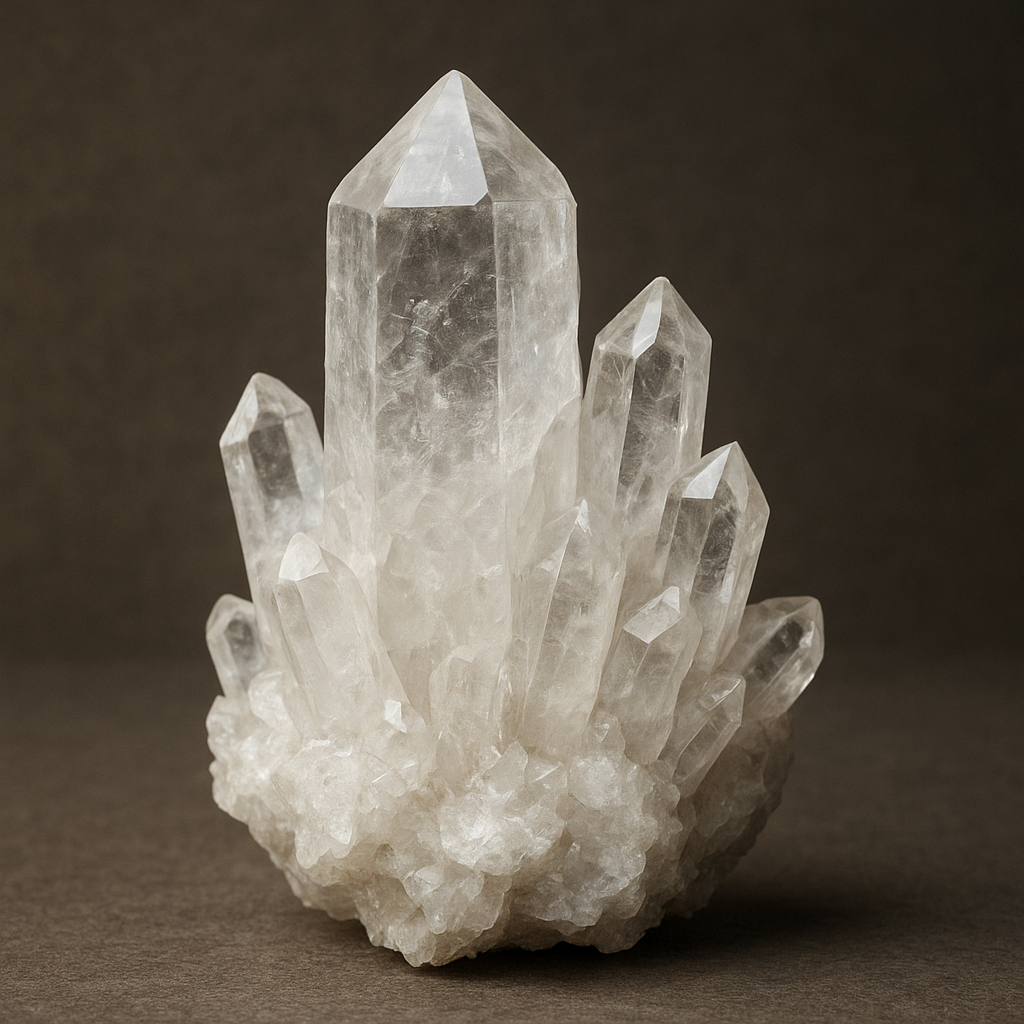
Meerschaum is the common name for a soft, white to grayish mineral known scientifically as sepiolite. It belongs to a family of fibrous clay minerals that also includes palygorskite; both are magnesium silicates with complex layered and fibrous crystal structures. These minerals form in specific sedimentary environments where magnesium-rich waters interact with siliceous sediments, often in semi-arid lacustrine basins or evaporative settings.
The most characteristic physical properties of sepiolite include a low density, a high degree of porosity, and a lightweight, chalky feel when fresh. The fibers in the mineral lend it a somewhat silky luster and a capacity to absorb liquids and oils—a trait that proved essential to many of its historical and modern applications. Meerschaum is soft enough to be cut with basic metal tools but dense enough to hold fine detail, which is why it became prized for elaborate carving.
Under the microscope, you can see the fibrous, needle-like crystals that interlock to form the bulk material. Chemically, sepiolite contains magnesium, silicon, oxygen, and water molecules bound in its structure; these internal water molecules contribute to its warmth and handling characteristics. When heated or dried, the mineral can change subtly in color and hardness, a fact exploited by craftsmen who prepare meerschaum blanks before carving.
Where Meerschaum Occurs: Geography and Major Deposits
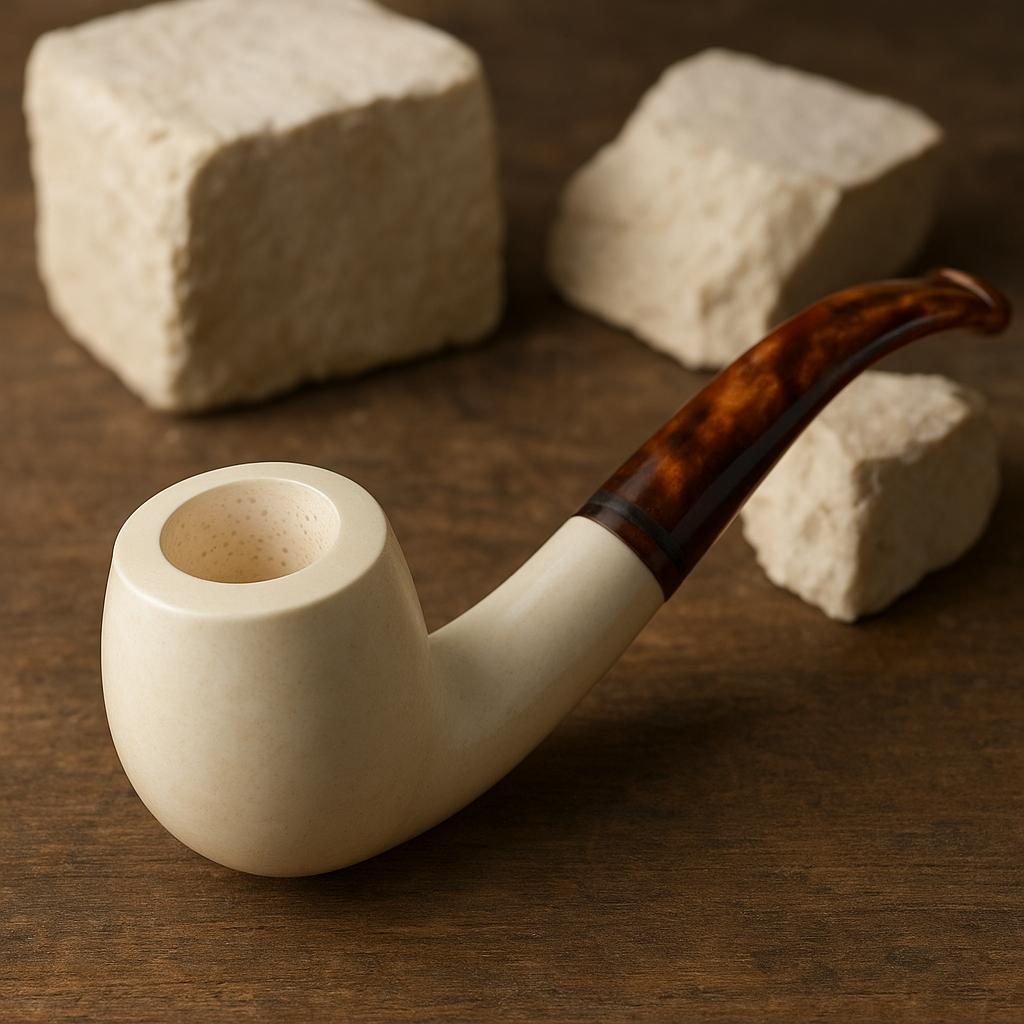
The most famous and historically significant deposits of meerschaum are found in central Anatolia, in modern-day Turkey. Provinces such as Eskişehir and the surrounding districts have produced the highest-quality sepiolite for centuries; for many collectors and artisans, Turkish meerschaum is the gold standard. The Turkish deposits are often compact, relatively pure, and occur in nodular masses that can be detached and shaped into blanks suitable for carving.
Beyond Turkey, sepiolite deposits are known from several regions around the world. Notable occurrences include parts of Spain, Greece, Italy, Germany, the United States (particularly in Nevada and California), and China. The scale and purity of these deposits vary; some are exploited for industrial uses rather than for carving. In many cases, local traditions and infrastructure determine whether a deposit yields artistic objects or raw material for industrial applications.
- Turkey (Anatolia): primary historic and artisanal source
- Spain and Greece: smaller deposits, sometimes used locally
- Italy and Germany: historical finds, often exploited in the 18th–19th centuries
- United States and China: modern industrial deposits
Geologists studying sepiolite deposits look for indicators such as associated evaporite minerals, lacustrine mudstones, and past volcanic ash layers. Mining methods range from gentle extraction of nodules by hand to larger-scale mining for industrial-grade sepiolite that will be milled and processed.
Traditional and Decorative Uses: Pipes and Carving
Meerschaum’s most celebrated application is in the making of smoking pipes. Beginning in the 18th century and gaining immense popularity through the 19th century, meerschaum pipes were prized for their aesthetic possibilities and the way they interact with smoke. Because of its fine porosity, meerschaum absorbs nicotine and tars without burning, allowing for a cool, dry smoke and gradual coloration of the pipe bowl from white to rich honey, amber, or chestnut tones. This natural aging process is part of the appeal: each pipe acquires a unique patina reflecting its history of use.
Carving meerschaum requires both artistic skill and technical understanding. Blocks or “clay” of meerschaum are first carefully dried and stabilized; inexperienced handling can cause cracking. Carvers use gouges, chisels, and files—sometimes micro-tools for details—to create ornate bowls depicting faces, animals, historical scenes, and allegorical motifs. Many of the most elaborate pipes produced in the 19th century display high relief sculpture and delicate undercutting that would be impossible in harder materials. Mountings in silver, gold, or horn are commonly added to support the delicate rim and provide a durable shank and stem interface.
Collectors prize certain carving schools and master carvers. The Anatolian tradition developed specialized motifs and techniques, including the use of inlay and polychrome finishes. The Victorian era in Europe created a huge market for intricately carved meerschaum pipes, and many museum collections preserve examples that are both technical masterpieces and documents of social history.
Why Meerschaum Pipes Are Different from Briar
Briar became the dominant pipe material in the late 19th and early 20th centuries because of its durability and ease of mass production. Compared with briar, meerschaum offers:
- Superior initial whiteness that allows intricate carving.
- A cooling, dry smoke because of the material’s porosity.
- A characteristic, evolving coloration that tells a story of use.
However, briar is tougher and less fragile, meaning meerschaum is often reserved for pipes intended for display, ceremonial use, or the careful smoker who values the tactile and visual transformation of the material.
Carving Techniques and Workshop Practices
Preparation starts with carefully selecting a block that is free of major fractures and has uniform texture. Blocks are typically kiln-dried to remove excess moisture and sometimes stabilized with natural or synthetic resins to reduce the risk of cracking. Carvers often draw their design directly onto the blank and proceed from rough shaping to fine detailing.
Tools have evolved: while traditional hand tools remain essential for subtleties and finish, modern workshops sometimes employ small rotary tools, air-powered chisels, and precision drills for repetitive elements. Surface finishing can include polishing with fine abrasives and applying thin, inconspicuous sealers to stabilize particularly porous areas. For pipes, the inner bowl surface is usually left untreated to maintain the material’s absorption and cooling qualities.
Because meerschaum can abrade easily, workers wear masks and dust collectors are used in well-equipped shops. The dust can be irritating, and prolonged exposure should be minimized with proper ventilation and protective equipment.
Identification, Imitations, and Synthetic Alternatives
High demand and limited supply have encouraged the production of imitations and synthetic alternatives. Common substitutes include carved chalk, plaster composites, and various ceramics. Modern synthetic “meerschaum” may incorporate polymers or resins to mimic the lightweight feel and carving behavior of the natural mineral, but these materials lack the same porosity and aging patina.
To identify genuine meerschaum, experts look for:
- True low density and a slightly fibrous texture on fresh breaks.
- Uniform, gradual coloration when smoked rather than surface staining.
- Absence of a glazed ceramic surface—meerschaum remains matte unless polished.
- Specific historical or geographical markers, such as provenance documentation from Anatolia.
Laboratory tests such as X-ray diffraction or infrared spectroscopy can confirm the mineralogical identity of suspect pieces, distinguishing sepiolite from carbonate or gypsum-based imitations.
Care, Use, and Conservation of Meerschaum Objects
Caring for meerschaum objects, especially antique pipes and carvings, balances protecting the material with allowing its natural evolution. For pipes, regular gentle cleaning of the stem and occasional brushing of the bowl interior are standard; aggressive scraping of the bowl is ill-advised because it removes the valuable surface that develops over time.
Conservators working with meerschaum in museums apply specialized protocols: environmental control to avoid extreme humidity swings, padded supports to prevent mechanical stress, and reversible consolidants when stabilization is necessary. Any restoration or repair should be documented in detail; inappropriate use of adhesives, varnishes, or invasive fillers can irreparably alter the object’s appearance and value.
For large carved sculptures made of sepiolite, supports and mounts must accommodate the mineral’s brittleness. Transport is particularly risky; crating with shock-absorbing materials and careful packaging is essential. Light exposure can affect some surface treatments but the raw mineral color tends to be stable under normal lighting conditions.
Industrial and Scientific Applications of Sepiolite
Beyond decorative uses, sepiolite has important industrial applications because of its absorptive and rheological properties. It is used as:
- Cat litter and absorbent material due to its ability to trap liquids and odors.
- A rheology modifier in paints, coatings, and drilling fluids where it helps control viscosity.
- An adsorbent for cleaning up spills and treating wastewater.
- A support material in catalysis and as a carrier for fertilizers or pesticides.
Researchers also investigate sepiolite’s potential in modern technologies: as a component in lightweight composites, as a host for phase-change materials for thermal storage, or as an adsorbent for removing organic pollutants. These applications exploit the same porous fibrous nature that makes meerschaum attractive to carvers, albeit processed and graded differently.
Cultural History and Social Context
The social role of meerschaum pipes reached a zenith in the 19th century. They were favored by statesmen, artists, and literati, who appreciated both their elegance and the way a carved pipe could serve as a personal emblem. Meerschaum pipes appear in many portraits and period photographs as markers of taste and status. In some cultures, particular pipe forms—such as the calabash or certain figure-head designs—came to signify membership in social groups or clubs.
In regions where meerschaum is mined and carved, the craft became an important part of local economies. Workshops and families passed carving techniques down through generations, and certain towns became synonymous with particular stylistic traits. Contemporary artisans blend tradition with innovation, producing both classic forms and avant-garde sculptures that reinterpret the material for modern audiences.
Ethics, Conservation of Resources, and Legal Aspects
Because the highest-quality sepiolite deposits are finite and concentrated geographically, ethical questions arise around mining practices, export, and local benefit. Responsible mining seeks to minimize environmental impact, rehabilitate sites, and ensure that local artisans and communities share in the economic value. International collectors and museums increasingly expect documentation of provenance and legal export permits for high-value objects.
Some countries regulate the export of meerschaum blanks or finished works to protect cultural heritage and ensure sustainable use. Buyers and collectors should seek reputable dealers and request documentation for high-value purchases. In recent decades, concerns about over-extraction in some areas have prompted calls for better resource management and support for local carving traditions so that both material and craft persist.
Collecting, Markets, and Notable Examples
The market for meerschaum objects ranges from modest contemporary pipes to museum-quality sculptures that command high prices. Rare, signed pieces by master carvers or historically significant pipes with distinguished provenance are especially prized. Auction houses occasionally present meerschaum lots that attract competitive bidding from enthusiasts and institutions alike.
Collectors generally value:
- Quality of carving and artistic originality.
- Purity and condition of the material—absence of major cracks or previous botched repairs.
- Provenance and documentation.
- Historical or cultural significance.
Museums with strong decorative arts or social history collections often display meerschaum pipes alongside other tobacco-related objects, using them to illustrate patterns of consumption, trade, and artistic taste across centuries.
Contemporary Trends and Innovations
Today’s carvers experiment with hybrid objects that combine sepiolite with metals, acrylics, and other materials. Some artists use high-precision tools and digital design techniques to push the limits of what can be carved or to produce series of identical parts. Meanwhile, industrial interest in sepiolite for environmental and technological uses continues to grow, opening markets that do not intersect directly with the artisans’ trade but nonetheless affect the overall demand for the mineral.
Educational programs in regions with carving traditions aim to keep techniques alive by teaching young artisans tool handling, safety practices, and business skills. Cross-disciplinary collaborations between sculptors, conservators, and material scientists are also producing new knowledge about how to preserve old pieces and how to exploit sepiolite’s properties in sustainable ways.
Interesting Details and Lesser-Known Facts
One unexpected feature of meerschaum pipes is their role as a kind of organic archive: because the mineral absorbs and retains certain compounds from tobacco smoke, chemical analysis of old pipe bowls can yield information about historical smoking substances and practices. Similarly, the way a pipe changes color over decades offers a tangible record of use patterns and preferences.
Another curiosity is the etymology of the word “meerschaum” itself. Derived from German, meerschaum literally means “sea foam,” a reference to the light color and foam-like appearance of raw pieces when they wash up or are first dug from deposits. Although the mineral has no connection to the sea, the name stuck and became standard in many languages.
Finally, while celebrity ownership and cameo appearances in period art elevated meerschaum’s prestige, practical smokers often preferred sturdier materials for daily use. As a result, many meerschaum pieces were crafted for special occasions, gifts, or display rather than constant use—helping to preserve many fine examples to the present day.
Meerschaum, sepiolite, Anatolia, pipes, carving, porosity, tobacco, collectors, conservation, whiteness