
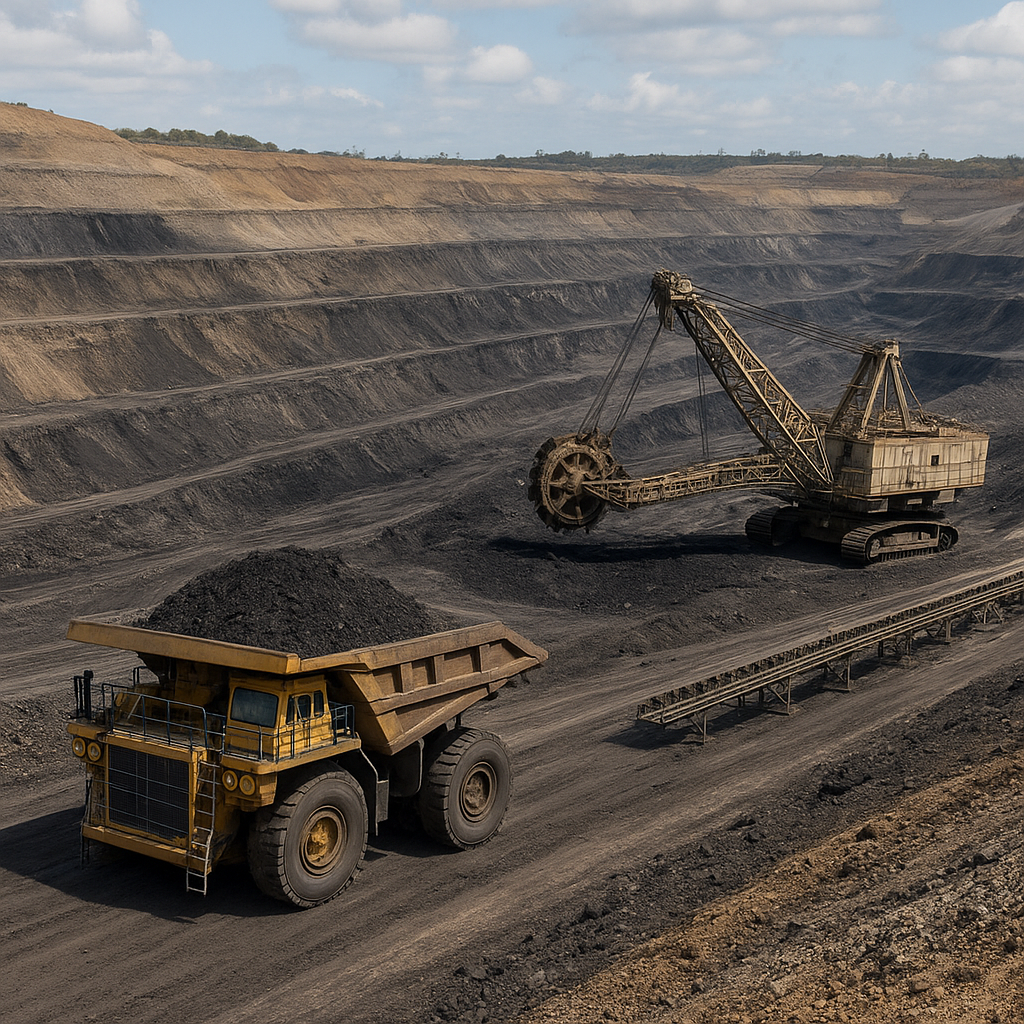
The Maules Creek Mine is one of the most discussed coal projects in Australia, combining industrial scale, contentious politics and significant regional economic impact. Located in the north-western part of New South Wales, the operation extracts thermal coal from the geological formations of the region and supplies both domestic and international markets. This article examines where the mine sits geographically and geologically, what it produces and how it operates, its role in the economy, and several notable or surprising aspects of the project.
Location and geological setting
The mine is situated within the Leard State Forest area near the small township of Boggabri in the Narrabri Shire of New South Wales. This part of inland NSW lies within the broader Gunnedah Basin, a sedimentary basin known for extensive coal seams and a history of mining activity. The geological sequence in the region includes multiple coal-bearing units. Maules Creek exploits seams that formed hundreds of millions of years ago during the Permian period, when vegetation and organic matter accumulated in swampy lowlands and were later buried and transformed into coal under heat and pressure.
Geologically, the deposit at Maules Creek is typical of the basin’s open-cut operations: relatively shallow coal seams amenable to surface mining rather than deep underground methods. The coal is generally classified as thermal coal, used primarily to generate electricity rather than for metallurgical (steel-making) purposes. The composition and calorific value of the coal determine its market niche, and Maules Creek’s product has been priced and marketed with export customers in mind.
Landscape and access
The mine footprint required clearing sections of native forest and farmland. Transport connections include an internal road and rail corridor that link the mine’s coal handling and loading facilities to the main freight lines serving the east coast ports. Coal typically moves from the mine’s train-loading infrastructure to export terminals via the national rail network. Infrastructure investments for access, water management and processing are substantial components of the operation’s capital layout.
Mining operations, products and logistics
Maules Creek is operated as an open-cut operation. Open-cut mining involves removing overburden (soil and rock above the coal seams), extracting the coal, and then processing, stockpiling and loading it for transport. The mine includes a coal handling and preparation plant, rail loading facilities and extensive earthworks. During construction and operation the project required a sizable mobile and fixed-plant fleet: excavators, haul trucks, dozers and conveyors.
- Product: The mine produces thermal coal intended mainly for export—used in power generation. The specific product grades are sold according to calorific value, moisture and ash content.
- Capacity: Approvals for the project allowed annual production at multi-million tonne levels. While operational output has varied year to year according to market demand and operational constraints, the mine is a large-scale coal producer by Australian standards.
- Logistics: Coal is transported from the site by rail. The mine ties into regional freight networks that serve export terminals on the New South Wales coast; exports traditionally target markets in Asia.
Supply chains around Maules Creek include local contractors and national service providers. The mine’s schedule must align production, on-site processing, rail timetables and port bookings to maintain efficient export flows. Downstream customers—utilities and traders—value regularity and consistent coal quality, so mining and processing practices emphasize reliability.
Markets and sales
Maules Creek’s coal has been sold to international buyers, with a focus on countries that import thermal coal for power generation. The export markets have historically included various Asian economies where coal plays a significant part in electricity generation portfolios. Market prices, shipping costs and environmental policy shifts in importing countries influence the mine’s revenues and planning horizons.
Economic significance and local impact
The mine became an important economic actor in its region. During construction, operations and through ongoing procurement, the project generated direct and indirect employment, stimulated service industries and contributed to public revenues via taxes and royalties.
- Employment: The project created jobs both during its construction phase and for ongoing operations. Hundreds of workers—employees and contractors—have been associated with the site at different times, with broader supply chains supporting additional roles in transport, maintenance and services.
- Regional economy: Local businesses benefit from the presence of a major industrial project through increased demand for accommodation, fuel, food services, mechanical services, and other inputs. Municipal budgets can gain from increased economic activity and rates paid by related businesses.
- Government revenue: The operation contributes to state government coffers by way of royalties and taxes that are allocated to broader state services and infrastructure.
- Corporate profile: For its owner and operator, the mine contributed a meaningful portion of annual production and revenue, impacting investor returns and corporate strategy in the coal sector.
Beyond direct economic measures, proponents argue mines like Maules Creek can underpin regional infrastructure upgrades—roads, water projects and rail improvements—that persist after construction and benefit local communities. The presence of large industrial employers can also encourage complementary businesses to remain or relocate to the region.
Environmental, social and political considerations
Maules Creek has been a focal point for debate about the balance between economic development and environmental protection. The project attracted sustained attention from environmental NGOs, local landholders and community groups. Concerns raised during consultation and after startup included the potential effects on biodiversity, groundwater and surface water systems, air quality (dust), noise, cultural heritage and the loss of native forest areas.
Protests and community reaction
Civil society responses included public campaigns, legal challenges and direct-action protests. Groups opposing the mine highlighted risks to endangered species habitat and the broader implications of expanding coal production while the world faces rising awareness of climate change. Activists organized blockades and demonstrations that at times delayed operations and drew national media attention. Supporters of the mine emphasized job creation, contractual commitments to land rehabilitation and compliance with regulatory conditions.
Environmental management
To operate, the project had to meet regulatory conditions set by state authorities. These conditions generally required comprehensive water management plans, biodiversity offset arrangements, dust and noise monitoring, progressive rehabilitation of disturbed land and cultural heritage surveys. Operators reported on performance metrics and engaged consultants to design mine-water systems, sediment controls and revegetation programs. Offsets often involved protecting or enhancing vegetation and fauna habitat in other locations to compensate for unavoidable impacts at the mine site.
Key environmental issues discussed in relation to Maules Creek include:
- Groundwater: Potential impacts to aquifers and nearby farming water supplies were a major concern, leading to detailed hydrological studies and monitoring programs.
- Biodiversity: Clearing of native vegetation and fragmentation of habitat provoked scrutiny; offsets and management strategies aimed to reduce net biodiversity loss.
- Air quality and dust: Preventing coal dust dispersal requires wet suppression, covered conveyors and careful handling at loading points.
- Cultural heritage: Aboriginal groups sought assessment and protection of known and potential heritage sites within the project area.
Interesting aspects and notable events
Several facts and occurrences around Maules Creek make it noteworthy beyond its raw production figures.
- Controversy as a national touchstone: Maules Creek became more than a regional project—it became symbolic of broader national debates over coal, climate policy and regional development. The mine’s history highlights how single projects can catalyze larger social movements and media coverage.
- Large-scale civil action: The scale and persistence of protests, including extensive road and rail blockades, were relatively unusual for a regional mining project and demonstrated evolving tactics used by environmental movements in Australia.
- Regulatory scrutiny and litigation: The project’s approvals, modifications and environmental compliance were the subject of multiple legal and administrative reviews, reflecting the increasing complexity of permitting major resource projects.
- Technology and environment: The mine incorporated modern earthmoving and processing equipment and relied on environmental monitoring networks. These systems were central to meeting regulatory commitments and to efforts at rehabilitation.
- Community funding and partnerships: As with many large projects, the operator invested in community programs, scholarships, local infrastructure sponsorships and business development to build relationships with regional stakeholders.
Rehabilitation and legacy planning
Mine closure planning and progressive rehabilitation are mandated by regulators. Operators prepare plans to re-contour land, manage soil quality, revegetate with native species and monitor ecosystems as the mine transitions through different operational phases. The long-term success of rehabilitation affects how the local landscape is used post-mining and influences public perceptions about mining legacies.
Broader context and future considerations
Maules Creek exists in a sector undergoing rapid change. Global shifts in energy policy, market demand for different coal grades, and investor focus on environmental, social and governance criteria shape the mine’s outlook. While thermal coal remains an export commodity in demand across parts of Asia, long-term trends toward decarbonization challenge the sector to adapt. For Maules Creek specifically, continued operation depends on maintaining compliant environmental performance, market competitiveness and community relations.
From a regional perspective, the mine’s presence has accelerated conversations about economic diversification. Local planners and stakeholders consider how to leverage the immediate benefits of resource projects into enduring opportunities—such as skills development for workers, infrastructure that serves broader needs and initiatives to support alternate industries.
Key words to remember
- Whitehaven Coal — the miner historically associated with the project and its operations.
- Export — the primary market orientation for the mine’s product, linking inland operations to coastal ports.
- Jobs — a central rationale for supporters who emphasize employment and regional investment.
- Biodiversity and groundwater — two environmental dimensions drawing the most scrutiny in assessments and community debate.
- Royalties — the mechanism through which the state captures financial benefits of mineral extraction.
Maules Creek Mine illustrates the complexities of modern resource projects: large-scale industrial engineering set inside sensitive environmental and social landscapes, generating both tangible economic gains and significant public contention. How such projects are managed and how their legacies are shaped will continue to inform debates about the role of coal and similar industries in regional economies and in the broader transition toward lower-carbon futures.

