
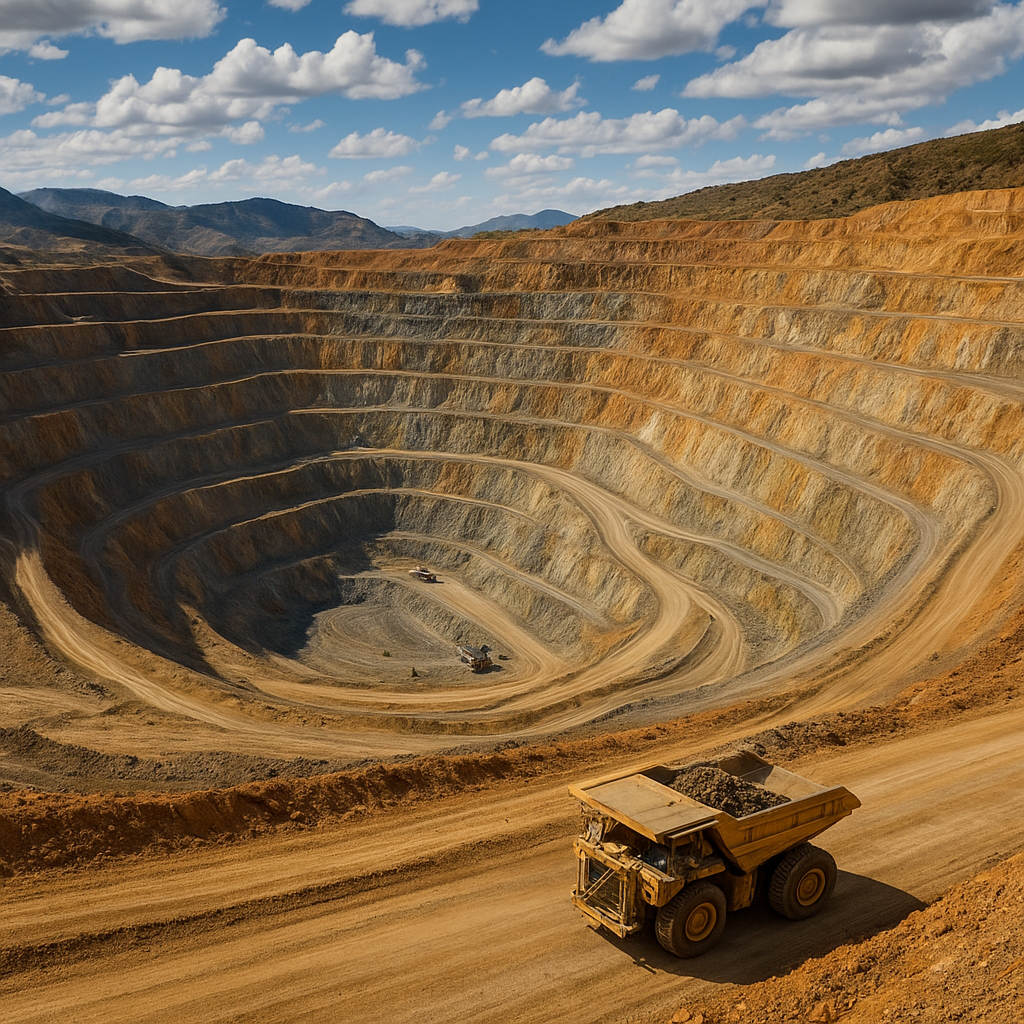
The Marigold Mine is one of Nevada’s notable gold-producing operations, combining large-scale open-pit mining with modern processing methods to recover gold from low-grade ores. Located in the semi-arid landscape of northwestern Nevada, the mine has played a steady role in regional employment, state revenue, and the broader U.S. gold supply chain. This article reviews where Marigold is located, what is extracted there, its economic significance, and several compelling technical and social aspects that make the operation interesting.
Location and ownership
The Marigold Mine sits in Humboldt County in northwestern Nevada, adjacent to the small community of Valmy and reasonably accessible from Interstate 80. Its geographic setting places it within one of the most prolific gold-producing regions in the United States, a state that consistently supplies the majority of domestic gold output. The mine has been developed as a large-scale, industrial mining complex designed to extract and process disseminated gold mineralization that is amenable to bulk-mining techniques.
Over the years the property has passed through several ownership and operator structures. Today it is operated by a company that specializes in gold and precious metals production and has invested in maintaining and extending the site’s productive life through both operational improvements and ongoing exploration. The mine’s ownership history reflects broader consolidation trends in the mining industry, where mid-sized projects are often developed by focused precious metals companies that can integrate operations, management and capital for exploration and expansion.
Geology and what is mined
Marigold is characterized by a low-grade, bulk-tonnage gold deposit that is best mined using open-pit methods. The gold mineralization is broadly disseminated through host rocks, which allows for large volumes of rock to be extracted and economically processed. Because the ore is typically oxidized near the surface, it is suitable for heap leach recovery techniques that are common for such deposits: ore is crushed, stacked on impermeable pads, and irrigated with cyanide solution to dissolve and recover gold.
The deposit style supports a mining and processing model centered on sustainably handling large tonnages of material for modest grades—contrasting with high-grade underground mines that produce smaller volumes of richer ore. The ore type and metallurgy at Marigold lend themselves to a relatively straightforward processing flow sheet: crushing and agglomeration, heap leaching, and adsorption of gold onto activated carbon or other recovery routes, followed by elution and refining to produce doré or bullion. Because the ore is often oxidized, recoveries via heap leach technologies can be efficient when designed and managed correctly.
Production profile and economic significance
Marigold contributes to both local and national economic activity through its gold production, operational expenditures, and employment. Annual production at the mine has varied with operational changes, market conditions and mine life extensions, but it has typically represented a meaningful single-mine contribution to the output of Nevada—a state that produces more gold than any other in the United States.
Economic impacts tied to Marigold include:
- Direct employment of skilled and semi-skilled workers in mining, processing, maintenance, and administration;
- Indirect job creation through contractors, local suppliers, transport and service industries;
- Payments to local and state governments in the form of taxes, fees, and royalties that support public services and infrastructure;
- Capital investment in equipment and facilities that bolster the regional industrial base;
- Ongoing exploration expenditures that can extend the life of the mine and provide opportunities for new discoveries and future employment.
At a national level, a functioning mine like Marigold supports the domestic supply chain for the gold industry—supplying gold that enters bullion markets, jewelry manufacturing, electronics and increasingly, technology and financial reserves. Because Nevada produces the majority of the United States’ gold, each operating mine contributes to national resource security and to a sector that can be counter-cyclical in economic downturns.
Operational practices, environmental management, and reclamation
Modern mining operations in arid western states must balance extraction with careful stewardship of scarce environmental resources. Marigold incorporates a range of practices designed to mitigate environmental impacts, comply with regulatory frameworks, and rehabilitate land as mining progresses or concludes.
Key environmental and operational practices include water management (critical in a semi-arid landscape), dust control, cyanide management during heap leach operations, and progressive reclamation where disturbed areas are returned to stable landforms and revegetated. Tailings management and liner systems under heap leach pads are designed to prevent seepage and protect groundwater. Regular monitoring programs measure groundwater quality, air quality, and ecological indicators to ensure compliance and to guide adaptive management.
Reclamation planning is integrated with mine life planning so that landforms, drainage, and topsoil handling support post-mining land uses—whether for wildlife habitat, grazing, or other uses compatible with local priorities. The mine typically maintains relationships with state regulators, local stakeholders, and tribes to coordinate reclamation objectives and to meet long-term closure bonds and performance standards.
Social license, community relations, and local benefits
For a rural area, a mine like Marigold becomes a significant local employer and economic anchor. The operator’s approach to community relations can affect workforce stability and social license to operate. Common initiatives include local hiring practices, workforce training programs, procurement from local suppliers, and investments in community infrastructure or public services.
Additionally, communication about operational schedules, traffic, and environmental monitoring results helps build trust with neighboring communities. Community benefit extends to indirect economic multipliers: local contractors, hotels, restaurants and service providers often depend on the business generated by mine personnel and contractors. These linkages underline why mines are typically considered important economic assets for counties with limited industrial diversity.
Interesting technical and strategic aspects
Several features make Marigold technically and strategically interesting beyond its immediate production numbers:
- Scale and bulk tonnage model — The mine exemplifies efficient extraction of low-grade gold on a large scale, which differs technically and economically from small, high-grade underground operations.
- Heap leach optimization — Continuous improvements in stacking, irrigation, and solution recovery can materially increase gold recoveries and lower operating costs.
- Exploration upside — Large deposits like Marigold often host satellite zones and peripheral mineralization that can be added to reserves through exploration drilling, extending mine life.
- Life-of-mine strategy — Balancing near-term production with long-term resource definition and phased reclamation requires integrated mine planning that optimizes value while meeting environmental objectives.
- Role in domestic supply — As part of Nevada’s gold complex, mines like Marigold contribute to the resilience of the national precious metals industry and reduce dependence on imported primary gold sources.
Challenges and future considerations
No mine operates without challenges. At Marigold, typical issues include commodity price volatility, the need to manage input costs (fuel, reagents, labor), and ongoing regulatory compliance. In an arid environment, water stewardship can be a limiting factor—necessitating careful water balance planning and, in some cases, water augmentation or reuse technologies.
Technological change and capital allocation decisions will influence how the mine evolves: investments in automation, more efficient processing, or additional exploration can deliver significant returns. Likewise, closure and reclamation funding must remain robust to ensure that environmental obligations are met at the end of the mine’s productive life.
Why Marigold matters
Marigold represents a type of mining that is central to Nevada’s gold industry: steady, large-scale, and technically disciplined extraction of gold from widely distributed mineralization. Its role in employment, regional procurement, and contribution to the state and national economies is tangible. From a technical standpoint, its use of heap leach processing for oxide ore and ongoing exploration illustrate how modern mines combine operational efficiency with a long-term view on resource development. Environmental practices and reclamation planning further underscore how contemporary operations try to reconcile economic benefits with responsible land management.
For anyone interested in the intersection of geology, engineering and regional economics, Marigold provides a clear case study: a mine that fits its geological endowment, adapts processes to ore characteristics, and interacts dynamically with the communities and ecosystems in which it operates. For the most up-to-date operational metrics, reserves, production figures and corporate governance details, company reports and regulatory filings remain the authoritative sources.

