
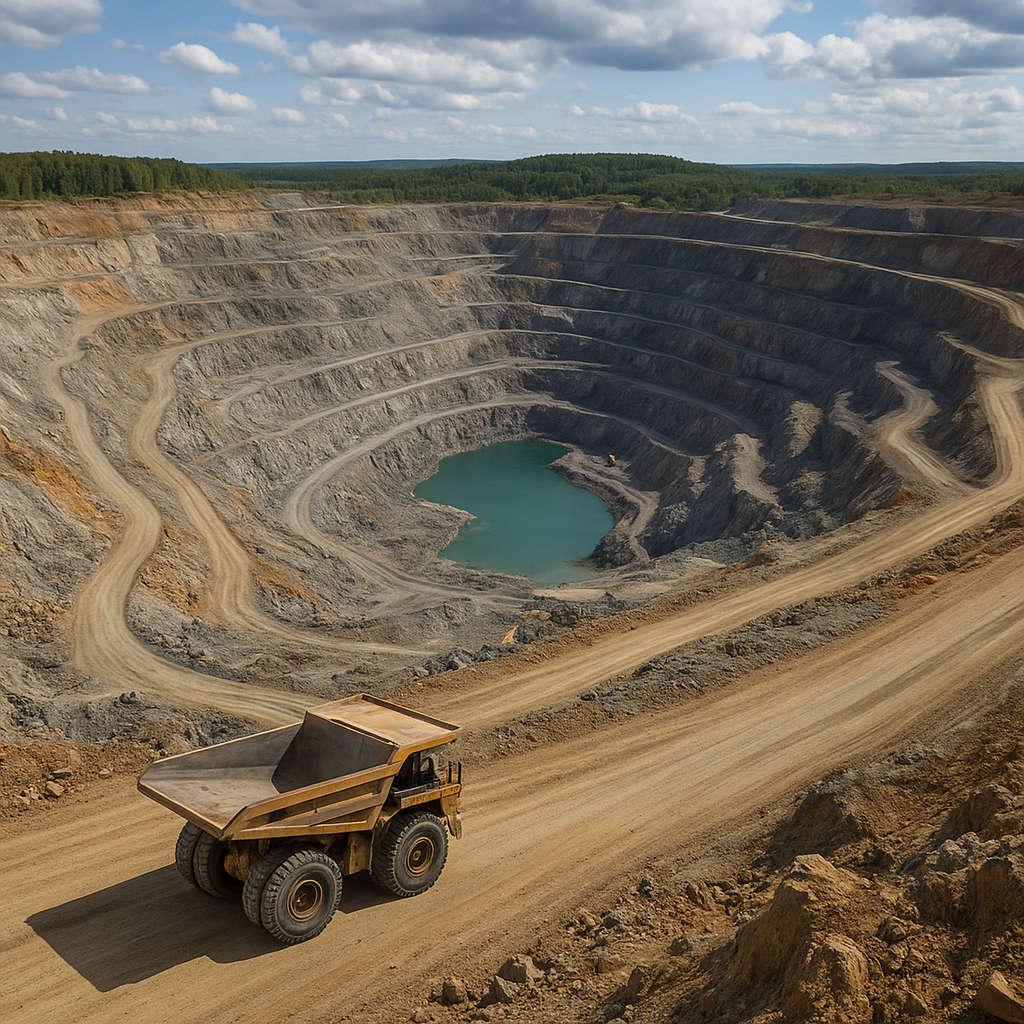
The Macassa Mine is one of Canada’s most storied and productive gold operations, located in the heart of northeastern Ontario. Known for its exceptionally high-grade veins and long operational history, the mine has played a central role in the development of the regional mining industry and the fortunes of the nearby town of Kirkland Lake. This article explores where Macassa is found, what is extracted there, how it is mined, its broader economic importance, and a number of compelling facts that make the operation unique.
Location, setting and historical background
Situated within the prolific Abitibi Greenstone Belt in northeastern Ontario, the Macassa Mine occupies a position in one of North America’s most important gold regions. The mine lies just outside the town limits of Kirkland Lake, a community that rose to prominence during the early 20th-century gold rushes. The local geology—characterized by deformed volcanic and sedimentary rocks with extensive shear zones—created favorable conditions for concentrated gold mineralization.
Macassa’s history stretches back more than a century. Initial discoveries of mineralized structures in the area led to intermittent small-scale mining early on, followed by more systematic exploration and development in the mid-1900s. Over time the deposit has been explored, developed and redeveloped multiple times, reflecting the episodic nature of mining investment, changing gold prices, and advances in mining technology that have made deeper or more complex zones economical to mine.
What is mined: the nature of the ore and associated minerals
The primary commodity extracted at Macassa is gold, hosted in a series of narrow, steeply dipping quartz-carbonate veins and associated structures. These vein systems can concentrate gold into extremely rich shoots that are often high grade relative to many bulk-tonnage deposits. In addition to native gold, mineralization may include trace amounts of silver and other common accessory minerals typical of mesothermal vein systems, such as pyrite and arsenopyrite.
- Gold: The principal economic metal recovered from the mine. Grades in the most productive shoots are commonly well above regional averages, which is a defining characteristic of Macassa.
- Silver: Present in smaller quantities and typically recovered as a by-product when economically viable.
- Associated sulphides: Minerals such as pyrite and arsenopyrite occur in the host veins and are useful indicators during exploration and processing.
The combination of narrow, high-grade veins and significant vertical continuity is what has allowed Macassa to remain viable over long periods, with modern underground mining methods focused on selective extraction of those rich zones.
Mining methods, infrastructure and technology
Because the deposit is composed primarily of discrete vein structures rather than large near-surface disseminations, Macassa operates as a deep underground mine. Mining at depth requires robust infrastructure, including multiple shafts and decline ramps, extensive internal development, and sophisticated ground support and ventilation systems. Over the decades the operation has evolved to adopt advanced techniques designed to maximize safety and recovery while minimizing dilution.
Common methods and technologies employed
- Longhole stoping and cut-and-fill mining in narrow-vein contexts, where selectivity is crucial to target high-grade shoots.
- Mechanized raise and development equipment for faster lateral access and safer movement of crews and materials.
- Modern ground support systems (e.g., rock bolts, shotcrete) to manage stress at depth and stabilize drifts.
- Ventilation and dewatering systems tailored to deep mining operations, ensuring air quality and managing groundwater inflows.
- Underground infrastructure for ore handling, crushing and primary hoisting to surface facilities.
Processing of ore typically involves milling, gravity concentration for coarse free gold, and gravity-assisted leaching or flotation as appropriate to the ore mineralogy. Advances in metallurgical testing and process optimization have enhanced recoveries from complex, sulphide-bearing ore packages.
Production, reserves and exploration
Macassa’s longevity is underpinned by a steady record of production and continual exploration that has identified new high-grade shoots and expanded vetted mineralized zones. Unlike open-pit mines that target vast, low-grade resources, Macassa’s economic model is driven by grade—finding and extracting pockets where gold concentrations are sufficiently rich to justify the costs of deep mining.
Ongoing exploration and the application of modern geological interpretation continue to reveal additional targets at depth and along strike. Exploration methods include detailed underground mapping, chip and channel sampling, geophysics, and targeted drilling programs designed to chase known structures and test parallel faults and splays.
- Reserves: The mine maintains mineral reserves and resources updated periodically following drilling, sampling and economic assessment, a process essential for mine planning and life-of-mine forecasting.
- Exploration: Continuous exploration is a fundamental part of Macassa’s strategy, aimed at extending mine life by delineating new high-grade shoots.
Economic significance: local, regional and national impact
The economic footprint of the Macassa Mine extends well beyond its facilities. As a major employer in the Kirkland Lake area, the operation supports direct mining jobs, contractors, and numerous service industries such as equipment supply, maintenance, transportation and hospitality. The mine’s payroll, procurement and corporate taxation contribute materially to local and provincial revenues.
At a regional level, Macassa helps sustain the supply chain that supports other mining and exploration projects in the Abitibi region. Skilled labour trained in the mine’s environment is also a valuable resource for the broader Canadian mining sector where depth, ground conditions and narrow-vein expertise can be transferred to other operations.
Nationally and internationally, gold produced at Macassa contributes to Canada’s export earnings and the global gold market. Beyond direct bullion value, the mine supports downstream industries including refining, investment services and the technology sectors that use gold for electronics and medical devices.
Community engagement and social responsibilities
Mining operations such as Macassa typically adopt programs to engage with local communities, Indigenous groups and municipal governments. Community investment often includes:
- Support for local services and infrastructure (healthcare, education, recreational facilities).
- Workforce development and apprenticeship programs that build local skills in mining, trades and technical disciplines.
- Environmental stewardship initiatives and regular consultations to address concerns about land use, water management and reclamation planning.
These partnerships are key to sustaining a social license to operate and ensuring that the benefits of resource extraction are shared more broadly in the region.
Environmental management and worker safety
Modern mining operations place strong emphasis on minimizing environmental footprint and maintaining high safety standards. At deep, narrow-vein mines like Macassa, concerns include groundwater management, tailings handling, energy use and the impact of waste rock. Operators mitigate these through engineered tailings and water treatment systems, careful waste management plans, progressive reclamation of disturbed areas, and energy-efficiency programs.
Worker safety is paramount in underground settings. Measures include rigorous training, real-time monitoring of ground conditions, communication systems, emergency response planning and continual investment in safer, more reliable mining equipment. A culture of safety combined with regulatory oversight helps reduce incidents and protect the workforce.
Technical and geological points of interest
The geology of Macassa offers insights that are fascinating to geologists and explorationists. Key points include:
- Structural controls: The gold is typically hosted by steeply dipping shear zones and quartz-carbonate veins; understanding the structural history is crucial for predicting the location of high-grade shoots.
- Vertical continuity: Some vein shoots at Macassa display impressive vertical continuity, allowing operators to follow ore for hundreds of metres down-dip, which is unusual for many narrow-vein systems.
- High grade variability: The deposit illustrates extreme grade variability—small changes in geology can result in very large differences in gold content over short distances, making careful sampling and selective mining strategies essential.
These geological attributes make Macassa both a challenge and an opportunity: a challenge because narrow, variable veins complicate mine planning, and an opportunity because the high grades can deliver exceptional returns when targeted effectively.
What makes Macassa interesting: notable records and anecdotes
Several aspects of Macassa capture the interest of miners, historians and the general public alike:
- High-grade shoots: The mine is famous for very rich pockets of gold, sometimes yielding grades that outstrip typical commercial deposits, which makes it a subject of curiosity and study.
- Long operational timeline: The repeated cycles of discovery, closure and re-opening demonstrate how evolving technology and market conditions can renew the life of a mine.
- Engineering at depth: The challenges of operating safely and profitably at depth have driven notable engineering solutions in ground control, ventilation and materials handling.
- Community legacy: Macassa’s contribution to the development of Kirkland Lake and surrounding towns, including the creation of families, services and local institutions, is a reminder of how resource projects shape communities across generations.
Future prospects: exploration, technology and market influences
Looking ahead, the future of Macassa will depend on a combination of continued exploration success, technological improvements and prevailing gold market conditions. Key drivers include:
- Exploration breakthroughs that extend known mineralized zones or identify new parallel structures.
- Advances in mining and processing technology that lower costs or improve recoveries for sulphide-rich or complex ores.
- Gold price dynamics that influence the economic cut-offs for selective, high-grade mining.
- Regulatory and environmental frameworks that shape how deeper and more complex operations are permitted and managed.
Because Macassa’s economic model hinges on grade more than sheer tonnage, even modest exploration successes can materially affect mine life. Likewise, technological innovations—such as improved underground automation or metallurgy—can turn previously sub-economic material into viable ore.
Broader lessons and significance for Canadian mining
The story of Macassa encapsulates several broader themes important to Canadian mining: the value of detailed geological understanding, the importance of continuous exploration, the socioeconomic role of mines in northern communities, and the need for responsible environmental stewardship. The mine exemplifies how a focused, technically adept approach to narrow-vein, high-grade deposits can produce long-term value well beyond what appears at the surface.
Whether viewed from the perspective of geology, engineering, economics or community history, the Macassa Mine stands out as a remarkable example of how mineral wealth has been discovered, developed and sustained in Canada’s mineral-rich landscapes.

