
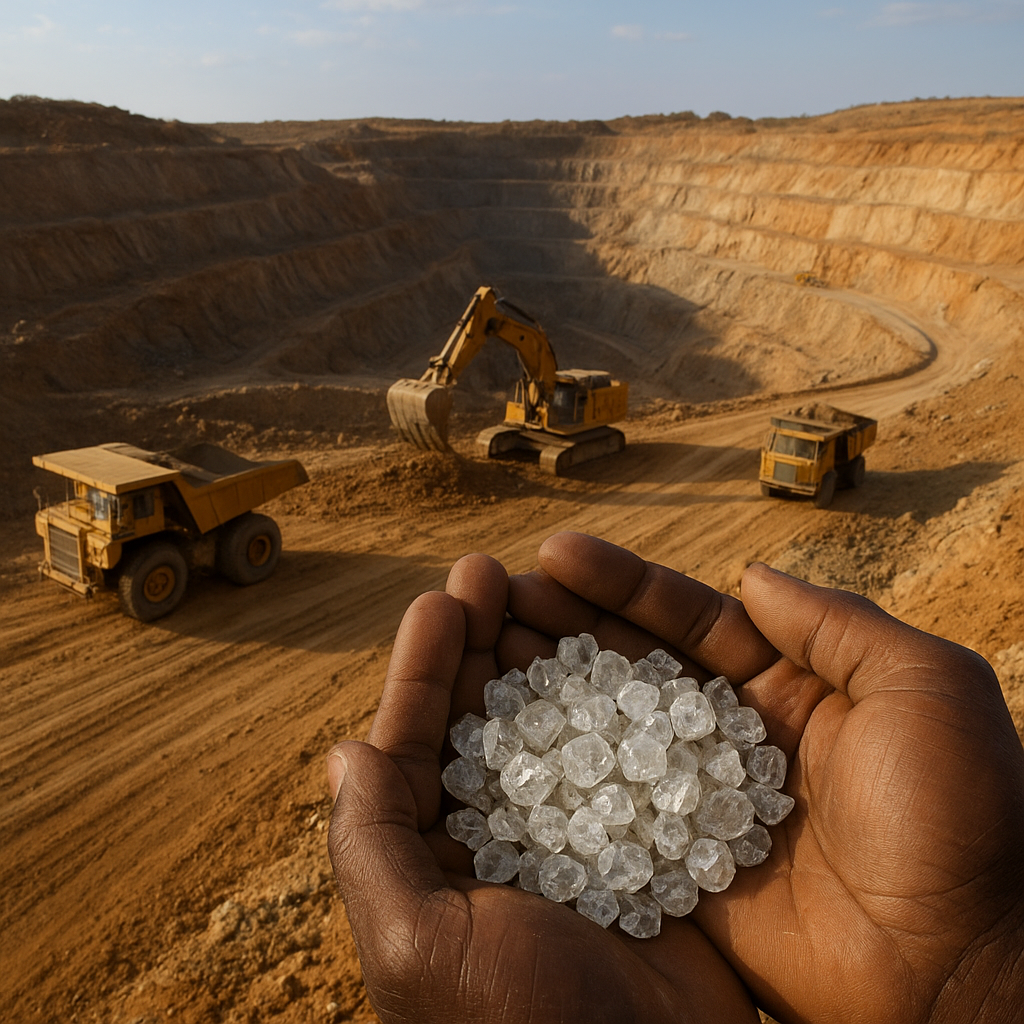
The Lulo mining project in northeastern Angola has become one of the most talked-about diamond ventures in recent decades. Located in a region with a long history of gem recovery, Lulo has stood out for its rich, near-surface deposits and for discoveries of unusually large and high-quality stones. This article explores where Lulo is located, what is extracted there, its broader economic importance, and a number of intriguing aspects that make this mine a subject of interest for geologists, investors, and communities alike.
Location and geological setting
The Lulo project lies in the interior of Angola, in the northeastern provinces that form part of the historic diamond-producing corridor of southern Africa. Geologically, the area is dominated by old Proterozoic to Archean basement rocks overlain in many places by weathered sediments and alluvial gravels, which are the principal hosts for the gem-grade material recovered at Lulo. The deposit type is primarily alluvial and eluvial, meaning stones have been transported and concentrated by rivers and ancient drainage systems, rather than being predominantly mined from primary kimberlite pipes at the surface.
Alluvial deposits like those at Lulo form when diamonds, liberated from primary kimberlites or other source rocks, are carried by water and sediment over long distances. Because they tend to concentrate in natural traps—river bends, terrace gravels, and paleo-channels—these deposits can be highly profitable to mine when the gravel layers are thick and the diamond grade is high. The Lulo concessions incorporate several such channels and terraces, giving miners a mosaic of targets to work and a higher probability of recovering stones across a range of sizes and qualities.
Beyond the sedimentary context, the region’s broader geological history—characterized by repeated cycles of erosion, tectonic stability, and sediment reworking—created favorable conditions for concentrating diamonds in accessible near-surface deposits. This contrasts with other diamond regions where primary kimberlite exploration and deep open pits or underground mines are required, making Lulo attractive for both mechanized and semi-artisanal recovery methods.
Mining operations, techniques and production
The Lulo project has been developed through a partnership model involving international and Angolan entities, combining local knowledge and regulatory relationships with technical expertise and market access. One of the best-known partners involved in Lulo is Lucapa Diamond Company, which has worked together with Angola’s state diamond company Endiama and local operating partners to develop the mines. This joint operating structure has enabled the use of modern recovery techniques while aligning operations with national policy and local engagement.
Operationally, Lulo combines a range of mining approaches adapted to its deposit types. Mechanized excavation of gravels and processing through wash plants and dense media separation is common, allowing efficient recovery of both smaller goods and larger gem-quality diamonds. In addition to mechanized units, smaller-scale local and artisanal activities have often taken place in outlying terraces, which requires careful coordination to control safety, environmental impact, and equitable benefit sharing.
Production from Lulo has included a mix of commercial and exceptional stones. While many diamonds recovered are suitable for industrial use or small gem markets, the mine has also produced numerous gem-quality stones that command premium prices on international markets. The occurrence of large stones in particular batches has generated headline-grabbing sales and has contributed disproportionately to the project’s revenue streams — a common feature of diamond mining, where a handful of large or exceptional diamonds can represent a significant share of total value.
- Processing steps at Lulo typically include excavation, screening, dense media separation, X-ray sorting and hand sorting to maximize recovery of gem-quality material.
- Use of water-based processing and careful sediment management is necessary in the alluvial setting to reduce environmental footprint and maintain downstream water quality.
- Methods are adjusted seasonally; dry-season access permits deeper gravel recovery, while wet-season operations shift emphasis toward stockpile processing and facility maintenance.
Logistics and market pathways
Once recovered and sorted, diamonds from Lulo enter established sales channels. Many stones go to international auctions or are sold through diamantaires who bring them to cutting centers in Europe, India, or other global hubs. The state retains oversight of exports through regulatory frameworks designed to ensure legality and to capture national revenue. The economics of transport, quality grading, and market timing are critical: diamonds sold at auction when rare large stones are present can significantly boost revenue compared to routine tender sales.
Economic and social significance
Diamonds are a cornerstone commodity for Angola, and projects such as Lulo play a central role in sustaining and diversifying export earnings. The mine contributes at several levels:
- Exports: Diamonds recovered at Lulo are part of Angola’s broader gem export portfolio and contribute to foreign exchange earnings that support national development budgets and import needs.
- Jobs: Both direct employment at the mine and indirect jobs in logistics, security, processing, and local services are generated. In regions with limited alternative employment, such operations can be a major livelihood source.
- Technology transfer: International partnerships bring in technical skills, equipment, and managerial practices that can uplift local capacity in mining engineering, geology, and environmental management.
- Local development: Responsible operators typically invest in community projects, from water supply and health clinics to training programs, while working with local authorities to manage social impacts.
Beyond direct impacts, Lulo and similar projects have broader macroeconomic significance. Revenue from diamond sales can finance infrastructure, education, and healthcare when properly allocated, although transparency and governance remain critical to ensure that resource wealth benefits a wide portion of the population. The Angolan experience over decades underlines how mineral wealth can accelerate reconstruction and development when integrated with prudent policy, or can fuel mismanagement if oversight is weak.
At the regional level, improvements in roads, communications and power required by mining operations can generate spillover benefits for agriculture and small business. However, the benefits are uneven without deliberate planning: influxes of transient workers, changes in land use, and environmental impacts can strain social services and create tensions if expectations are unmet. This dynamic places a premium on company-community engagement, clear compensation frameworks, and investment in durable local capacity.
Interesting aspects, challenges and future potential
Lulo is notable for several reasons beyond pure production figures. Its discovery and development illustrate modern pathways for extracting value from alluvial systems that had been overlooked or under-exploited during earlier historical periods. Following decades of civil conflict in Angola, renewed exploration and investment uncovered fertile alluvial traps that were accessible to relatively low-capital operations, producing high returns in some years.
Several fascinating features and challenges stand out:
- Unpredictable high-value finds: The nature of diamond deposits means that single stones can dramatically affect project economics. Lulo’s reputation grew in part because batches occasionally included very large stones that attracted international attention and high sale prices.
- Integration of artisanal miners: In many alluvial diamond provinces, artisanal miners operate alongside larger companies. At Lulo, aligning these activities through licensing, training and benefit-sharing arrangements has been an ongoing policy and operational challenge, but also an opportunity to uplift small-scale miners and reduce conflict.
- Environmental management: Alluvial mining disturbs riverine and terrace ecosystems. Best practices at Lulo have included rehabilitation of worked areas, controlled water usage, and sediment management to protect downstream communities and biodiversity.
- Governance and transparency: Ensuring that a significant share of diamond-derived profits supports national development requires robust governance. Joint ventures that include state partners can facilitate this, but they also require clear reporting standards and anti-corruption safeguards to realize public benefit.
- Exploration potential: Alluvial deposits point back to potential primary sources. Exploring upstream and in the surrounding geology for kimberlite pipes or other primary hosts can open future growth avenues if economically and environmentally feasible.
Market and investment interest
Diamonds from projects like Lulo attract international investor interest because of the chance of outsized returns when high-value stones are found. This speculative element draws both institutional and retail investors to companies involved in exploration and production. However, investors must weigh commodity price cycles, operational risk, and political/regulatory dynamics. Angola’s improvements in governance and mining law reform in recent years have helped, but mining remains a long-term capital-intensive business with sector-specific risks.
Technological and scientific value
From a scientific perspective, Lulo and similar alluvial deposits offer valuable lessons about sediment transport, paleo-drainage reconstruction, and diamond provenance analysis. Geochemists and gemologists study the characteristics of recovered stones—such as inclusion patterns, isotopic signatures, and trace element content—to better understand where diamonds originated and how they were transported. Such research can inform targeted exploration and improve the efficiency and environmental footprint of future operations.
Furthermore, improvements in ore-sorting technologies, like advanced X-ray and sensor-based sorting, enable higher recovery rates with lower throughput, reducing energy and water use per carat recovered. Adoption of such technologies at Lulo and comparable operations points toward a more sustainable future for alluvial diamond mining worldwide.
Community stories and cultural links
Diamonds have long been woven into the social and cultural fabric of many Angolan communities. At Lulo, interaction between modern mining companies and traditional communities has produced a range of local stories: entrepreneurs who shifted from subsistence agriculture into services supporting the mine, families whose members have worked intermittently as artisanal miners, and local leaders negotiating benefit agreements with operators. These human dimensions remind observers that mineral projects are not just geological or commercial entities but are embedded in complex social landscapes.
Local crafts, music, and communal life have often adapted in places where mining introduces new incomes and new migrants. For some communities, the arrival of mining has catalyzed improved local services; for others, it has strained traditional governance systems. Documenting and responding to these social dynamics is an essential part of responsible mining practice and is often a focal point for NGOs, government agencies, and mining companies seeking to realize sustainable development outcomes.
In concluding this exploration of the Lulo mining project, it is clear that the site symbolizes many of the broader themes of modern natural resource development: geological opportunity, the potential for substantial economic benefit, the need for thoughtful management of environmental and social impacts, and the enduring fascination that large, beautiful diamonds evoke around the world. Lulo’s story is ongoing, shaped by discoveries and decisions that will determine how its wealth is shared locally and how it contributes to Angola’s place in the global gem market.

