
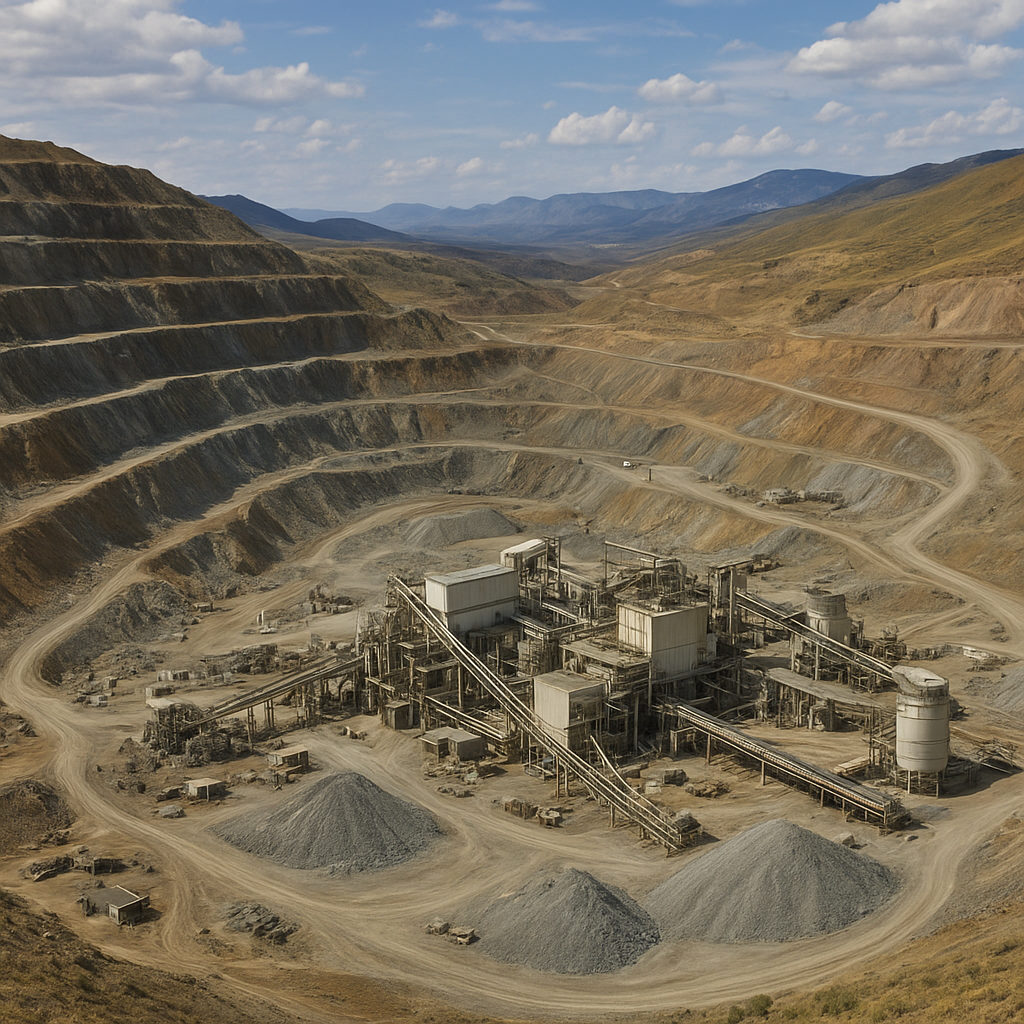
The Lucky Friday Mine occupies a prominent place in the mining history and present-day economy of northern Idaho. Located within the renowned Silver Valley of the Coeur d’Alene district, this long-lived underground operation has produced millions of ounces of silver together with significant quantities of base metals. The mine’s story reflects the region’s geology, evolving mining technologies, and shifting economic priorities. In the following sections I describe where the mine is found, what minerals come from it, its broader economic importance, and a number of noteworthy technical and historical details that make Lucky Friday a compelling subject for anyone interested in mining and regional development.
Where the mine is located and the geological setting
The Lucky Friday Mine is situated near the town of Mullan in northern Idaho, within the Silver Valley that runs along the Coeur d’Alene River and its tributaries. This corridor, often referred to simply as the Coeur d’Alene mining district, is one of the most productive silver-lead-zinc provinces in North America. Mining activity here dates back to the late 19th century, and the valley is dotted with historic shafts, headframes, and mining towns that grew up around rich ore discoveries.
Geologically, the mineralization at Lucky Friday is intimately associated with a system of steeply dipping, vein-hosted sulfide zones. These ore bodies commonly contain combinations of Silver, galena (which yields Lead), and sphalerite (a source of Zinc), along with variable amounts of other sulfide minerals. The veins occur within a larger package of metamorphosed sedimentary rocks and are the product of hydrothermal fluids that deposited sulfide minerals in fissures and fracture zones. The result is a polymetallic deposit that is both high-grade and spatially concentrated — a combination that favors underground mining over open-pit approaches.
History and production
The Lucky Friday deposit was explored and developed during the first half of the 20th century as prospecting and regional exploration identified multiple productive veins in the Silver Valley. Over many decades the mine has gone through periods of intense activity and quieter intervals tied to metal price cycles, ownership changes, and technical challenges. Throughout its operational life it has been an important silver producer in the United States.
- Production profile: Lucky Friday’s output has been dominated by Silver, with Lead and Zinc recovered as valuable byproducts. Concentrate produced underground is typically processed to recover these metals and then shipped to smelters or refining facilities.
- Mining depth: The mine is renowned for being one of the deeper underground silver operations in the country. Its workings extend for many levels below surface, accessed by shafts and declines and serviced by extensive ventilation, pumping, and hoisting systems. The depth has allowed access to high-grade ore that made the operation economically attractive for decades.
- Ownership and operators: Over time the mine has been controlled by different companies. In recent history the operation was associated with Hecla and related corporate structures that have played central roles in the Coeur d’Alene district’s modern mining economy.
Because the ore is high-grade and localized in vein systems, Lucky Friday’s life-of-mine economics have relied on careful underground development and selective extraction. Rather than huge tonnages of low-grade rock, the mine’s value comes from concentrated zones of rich mineralization that, when accessed, return significant metal per tonne mined.
Mining methods and technological features
Extracting ore from a steeply dipping vein system like Lucky Friday’s requires a suite of underground mining methods adapted to narrow, high-grade ore. Typical techniques used historically and in modern phases include systematic development of levels and drifts to expose ore shoots, followed by selective stoping. Longhole stoping, cut-and-fill, and shrinkage stoping are among the methods that can be used depending on ore geometry and rock mechanics. Ventilation, ground support, and water control are critical to safe and efficient operations.
Several notable technological characteristics are associated with the mine:
- Extensive shaft infrastructure for hoisting ore and personnel between surface and deep levels.
- Robust ventilation networks designed to maintain air quality at depth and support diesel or electric equipment.
- Pumping systems to manage groundwater inflows and prevent flooding of active workings.
- Mechanized drilling and loading equipment to speed up face advance and improve safety.
- Continuous improvements in monitoring and control—employing geotechnical instrumentation and remote-control systems in some areas to enhance worker safety and productivity.
The operational complexity of deep underground mining also brings a strong emphasis on safety and contingency planning. Emergency response, rock burst management, and controlled blasting are integral parts of maintaining a productive operation at significant depth.
Economic importance and regional impact
Lucky Friday’s significance extends beyond the ounces and tonnes it produces. Mines in the Silver Valley have historically been anchor employers for local communities, and Lucky Friday is no exception. The economic impact can be considered in several dimensions:
- Employment: The mine directly employs miners, engineers, and support staff, and indirectly supports jobs in trucking, equipment supply, maintenance, and professional services. In sparsely populated mountain regions, these jobs can be an essential part of the local labor market.
- Local government revenue: Taxes, royalties, and fees tied to mining activity provide funds for municipal services, road maintenance, and schools in the region. When mining is healthy, local governments often see tangible fiscal benefits.
- Regional supply chain: Processing concentrates, shipping to smelters, and sourcing mine supplies create business for companies beyond the immediate town, linking the mine to broader regional and national economic networks.
- Historical and cultural tourism: The Silver Valley’s mining legacy attracts visitors interested in industrial history. Museums and interpretive sites in nearby towns celebrate the mining heritage and supplement local economies with tourism dollars.
At the same time, the mine’s fortunes are tied to global metal markets. Fluctuations in silver and base metal prices can affect operational decisions, investment in exploration and development, and the long-term viability of deeper or lower-grade zones. That sensitivity to prices is a typical feature of resource-dependent communities.
Environmental management and community relations
Operating in a region with a long mining legacy means that environmental stewardship is both a legal requirement and a community expectation. Modern mining operations at Lucky Friday and elsewhere in the Coeur d’Alene district must contend with issues such as water quality, waste rock and tailings management, and land reclamation. Steps commonly taken include:
- Treatment of mine water before discharge, using settling ponds, neutralization systems, or active water treatment plants as required by permits.
- Careful design and monitoring of surface facilities to limit the spread of sulfide-rich wastes and to minimize acid rock drainage risks.
- Progressive reclamation of disturbed areas and collaboration with regulators to restore landscapes when operations cease.
- Community engagement programs that include transparent reporting, local hiring priorities, and participation in local economic initiatives.
The Coeur d’Alene basin has had documented environmental challenges related to historic mining, especially elevated heavy metal concentrations in soils and waterways in some areas. Contemporary operators typically work with state and federal agencies, environmental groups, and local stakeholders to manage legacy impacts while ensuring responsible current practices.
Social history and workforce culture
The human story of the Lucky Friday Mine mirrors the broader mining culture of the American West. Small mountain towns like Mullan and nearby Wallace grew around veins of ore and became tight-knit communities where generations of families worked in the same industry. Labor relations, union activity, and a strong identity linked to mining are part of the local social fabric.
In such settings, miners and their families develop shared traditions—annual community events, memorials for those lost in past accidents, and a network of local skills and trades passed down over decades. This intangible heritage contributes to the area’s resilience when markets slump and to its identity when exploration or renewed investment brings fresh activity.
Interesting and lesser-known aspects
There are several intriguing points about Lucky Friday and the Silver Valley that go beyond the basic production story:
- High-grade nature: Unlike large open-pit mines that rely on sheer tonnage, Lucky Friday has been valuable because of concentrated, underground high-grade ore shoots. This means each tonne of rock mined delivered relatively high metal content, making selective underground methods economically sensible.
- Mining heritage: The Silver Valley is home to some of the most storied mining families and companies in the United States. The layered history—19th-century boomtowns, 20th-century consolidation, and modern technological upgrades—creates a living history that is still visible in local architecture and museums.
- Engineering challenges: Deep workings present unique engineering puzzles. Keeping shafts, raises, and levels safe and productive at depth requires constant attention to geotechnical conditions and evolution of mining technology.
- Contribution to national supply: Over the decades Lucky Friday contributed materially to domestic silver production, which has implications for industrial supply chains and, in times past, for regional economic security.
- Local storytelling: Regional folklore and anecdotes concerning rich veins, daring underground crews, and narrow escapes are part of the mine’s lore and are commonly recounted at local gatherings and historical exhibits.
Future prospects and exploration potential
Like many long-lived mines, Lucky Friday’s future depends on several interrelated factors: the extent of remaining ore at depth or along strike, the economics of extraction given current metal prices, the cost of necessary infrastructure and safety improvements, and regulatory and environmental constraints. Modern exploration techniques—geophysics, detailed structural mapping, and targeted drilling—can reveal extensions of known veins or previously unrecognized mineralized zones, offering pathways for mine life extension.
Additionally, advances in mining technology, such as improved ground support materials, more efficient ventilation, and electrification of underground fleets, can change the math for deeper or more complex orebodies, reducing operating costs and environmental footprint. For communities and companies in the Silver Valley, continued investment in both exploration and innovation is the key to converting potential mineral resources into sustainable economic benefits.
Where to learn more and visit
For those interested in a deeper dive into the Lucky Friday Mine and the regional mining story, local historical societies and mining museums in the Coeur d’Alene/Silver Valley area offer rich archives, photographs, and interpretive exhibits. Public records, geological surveys, and company technical reports provide detailed data on production, geology, and environmental programs. Visiting nearby towns offers a tangible sense of the landscape that shaped and was shaped by mining activity.
In short, the Lucky Friday Mine is a multifaceted enterprise: a source of Silver, Lead, and Zinc; a center of employment and regional economic activity; a site of engineering challenge and adaptation; and a repository of local history. Its story illustrates how geology, technology, and community intersect in one of North America’s classic mining districts, and why such sites continue to attract curiosity from geologists, historians, and the general public alike.

