
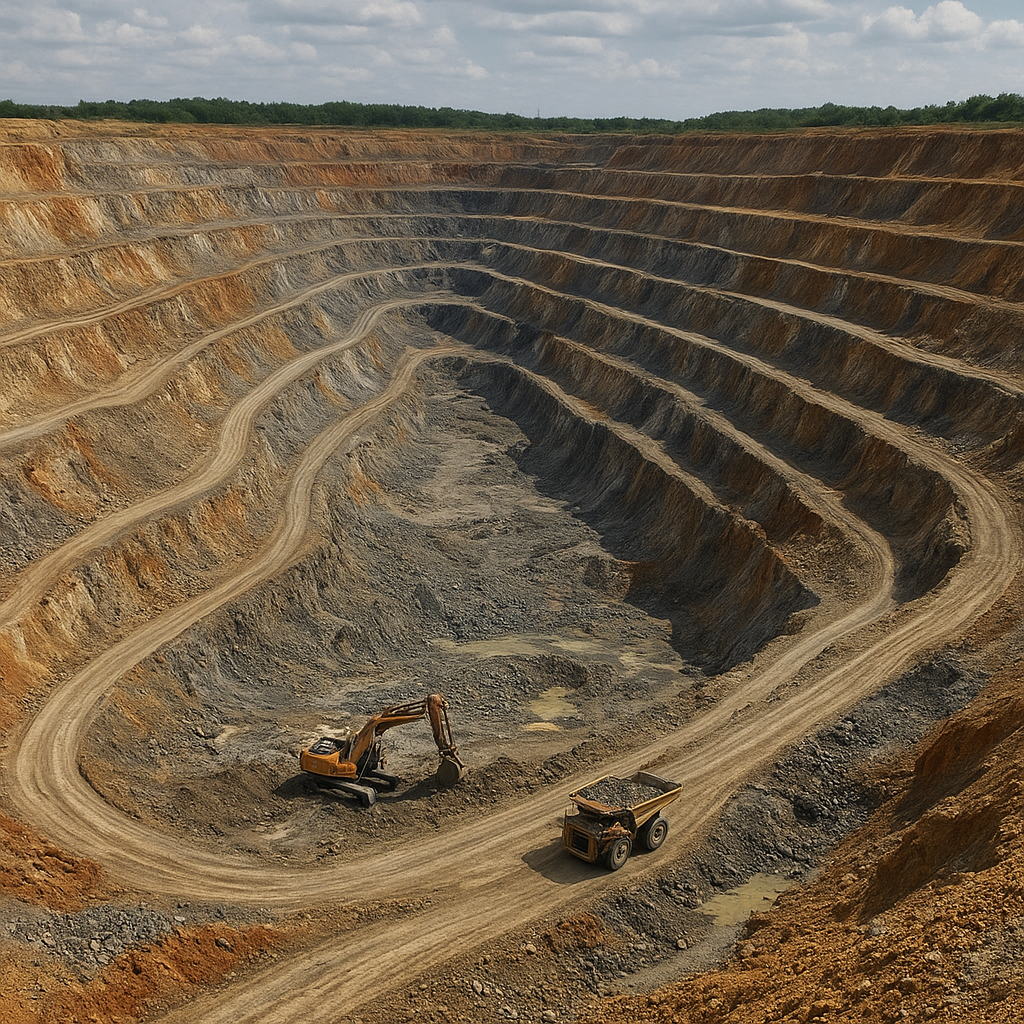
The Lubin mine stands as a cornerstone of Poland’s mineral industry, a large-scale underground operation that extracts valuable metals from one of Europe’s most productive geological formations. Located in the historic mining landscape of Lower Silesia, the site combines deep geological history with modern industrial technology. This article explores where the mine is situated, what minerals it produces, its economic role, and a selection of compelling facts that illuminate why Lubin matters not only regionally but also on the global metals market.
Location and Geological Setting
The Lubin mine is located in south-western Poland, in the Lower Silesian region close to the town of Lubin and within reach of larger centers such as Legnica and Głogów. The entire mining district is part of a broader cluster of deposits known to geologists and miners as the Kupferschiefer (copper shale) belt — a Permian‑age, stratiform sedimentary horizon that stretches across parts of Central Europe.
Geologically, the Kupferschiefer is exceptional: a relatively thin, but laterally extensive, sulphide-rich layer deposited some 250 million years ago. It hosts disseminated and stratabound deposits of copper and precious metals, primarily copper with significant silver credits. The ore is typically hosted in fine-grained, organic-rich shales and siltstones, forming tabular bodies that are amenable to underground extraction. The Lubin ore bodies lie at varying depths below surface, requiring shafts and declines to reach productive horizons, and they form part of one of the densest mining districts in Europe.
What Is Mined at Lubin
The principal commodities extracted at Lubin are copper and silver, with copper being the primary metal of economic value and silver appearing as a valuable by-product in concentrates. The mineralization occurs largely as complex copper sulphides, often accompanied by traces of other elements such as lead, zinc and precious metals.
- Copper: Extracted from sulphide-rich ore, processed into concentrates and then refined into cathode copper by smelting and electrorefining.
- Silver: Recovered during metallurgical processing; silver content adds significantly to revenue despite being a by-product of copper extraction.
- Minor coproducts and trace elements: Present in small quantities, they can be recovered depending on processing technologies and market conditions.
Ore is typically mined underground with engineering adapted to the horizontal and layered geometry of the beds. Mineral processing at the mine and in connected concentrators transforms run-of-mine material into a marketable concentrate, which is subsequently processed at smelters and refineries to produce high-purity metals ready for industrial use.
Operations, Technology and Infrastructure
Lubin mine is operated within a comprehensive industrial network that includes shafts, underground roadways, hoisting systems, concentrators and transport links to metallurgical plants. Modern operations rely on mechanisation, remote monitoring and an increasing share of automation in drilling, loading and transport.
Mining Methods
Given the stratiform nature of the deposit, mining at Lubin generally employs methods fine-tuned to thin but laterally extensive ore bodies. Extraction techniques focus on economic recovery while maintaining stability of the rock mass and safety for the workforce. Ventilation, water management and rock support systems are integral parts of the underground design.
Processing and Metallurgy
After mining, ore is crushed and ground before undergoing flotation to produce a copper-rich concentrate. This concentrate then moves to smelting and refining facilities, where copper is converted into blister and then refined to cathode copper. During smelting and refining, silver is separated and recovered, often as part of the anode slimes or via specialised recovery circuits.
Processing infrastructure is supported by surface facilities for material handling, reagent storage, tailings management, and analytical laboratories that ensure product quality and compliance with regulatory standards.
Economic Significance
The Lubin mine contributes substantially to both local and national economies. It is an essential asset in Poland’s industrial base and plays multiple economic roles:
- Direct employment: The mine provides thousands of jobs directly underground, in processing plants and in on-site services.
- Supply chain impact: Local suppliers, contractors, and service companies benefit from long-term contracts related to equipment, maintenance, logistics, and professional services.
- Export revenues: Copper and silver produced form part of Poland’s commodity exports, generating foreign exchange and strengthening the trade balance.
- Industrial feedstock: Refined copper is crucial for electrical equipment, construction, electronics and green technologies; securing domestic production supports national industry and reduces reliance on imports.
- Regional development: Mining revenues and corporate investment support infrastructure, education, and community projects across Lower Silesia.
At a national level, Lubin and neighboring mines operated by the same group represent a strategic resource for Poland. The combination of raw material supply and value-added refining supports national industrial policy and energy transition goals, since copper is a critical metal for electrification and renewable energy systems.
Environmental and Social Considerations
Like all large mining operations, Lubin faces responsibilities to manage environmental impacts and maintain social license to operate. Key issues include groundwater management, tailings storage, dust and emissions control, subsidence, and landscape rehabilitation.
Modern environmental management programs at the mine include comprehensive monitoring networks for water and air quality, progressive rehabilitation of disturbed land, and investments in cleaner technologies to reduce emissions. The use of closed-circuit water systems and improved tailings handling seeks to minimize the mine’s footprint and reduce long-term risks.
On the social front, the mine supports community initiatives, vocational training and local procurement programs. Workforce safety is a central concern — underground mining demands rigorous health and safety protocols, continuous training, and investments in automation that can reduce worker exposure to hazardous conditions.
Interesting Facts and Historical Notes
The Lubin mine—and the entire Kupferschiefer province—contains many features that make it noteworthy:
- Ancient deposit, modern industry: The metals extracted are the result of geological processes laid down in the Permian period. Mining here links deep geological time with contemporary technology.
- Silver-rich ore: The region is among the highest silver-producing copper provinces, making silver an important economic bonus to copper extraction.
- Urban and industrial heritage: Towns such as Lubin grew around mining activity, shaping local culture, architecture and community identity over many decades.
- Technological evolution: Over the 20th and 21st centuries the mine transitioned from labour-intensive methods to mechanised and increasingly automated systems, mirroring wider trends in global mining.
- Strategic material: Copper’s role in electrification and renewable energy systems elevates the mine’s global significance in the context of the energy transition.
In addition, the Lubin operation is part of a network of mines whose integrated approach to extraction and processing has allowed the operator to maintain competitiveness on international markets while investing in technological renewal and environmental performance.
Challenges and Future Prospects
Looking forward, Lubin faces several persistent and emerging challenges that will shape its trajectory:
- Resource depth and grade: As near-surface ore is exhausted, mining moves deeper, raising costs and complexity; maintaining profitable operations depends on efficient extraction and processing of lower-grade ores.
- Technological adaptation: Continued investment in automation, digitalisation, and more energy-efficient processing will be crucial for competitiveness and environmental performance.
- Market volatility: Metal prices fluctuate with global demand; diversification of products and flexible operations help buffer the mine against price cycles.
- Sustainability expectations: Stakeholders increasingly expect transparent reporting on environmental, social and governance (ESG) performance; meeting these expectations requires ongoing investment and community engagement.
Despite these challenges, the fundamental economics of the deposit and its strategic position within the national and European metals supply chain suggest continued importance for the foreseeable future. Innovations in extraction technology, improvements in ore recovery, and effective environmental management can prolong the productive life of the mine and enhance its contribution to regional prosperity.
Role in the Broader Mining Landscape
The Lubin mine does not operate in isolation. It is part of an integrated mining and metallurgical ecosystem that includes nearby mines, concentrators and refineries. This networked structure creates synergy in logistics, research and development, and workforce training, amplifying the benefits of individual operations across the region.
From a global perspective, the mine contributes to the supply of base and precious metals needed for electronics, transportation, renewable energy infrastructure and industrial applications. As countries seek secure and responsibly sourced materials, operations such as Lubin will remain strategically relevant.
Key takeaways
- The Lubin operation is a major mining asset in southwest Poland, tapping into the extensive Kupferschiefer deposit.
- Its primary outputs are copper and silver, which serve both domestic industry and export markets.
- Economic impact extends from direct employment to broader regional development and supply chain effects.
- Ongoing modernization, environmental stewardship and adaptation to market trends will determine Lubin’s long-term sustainability and success.

