
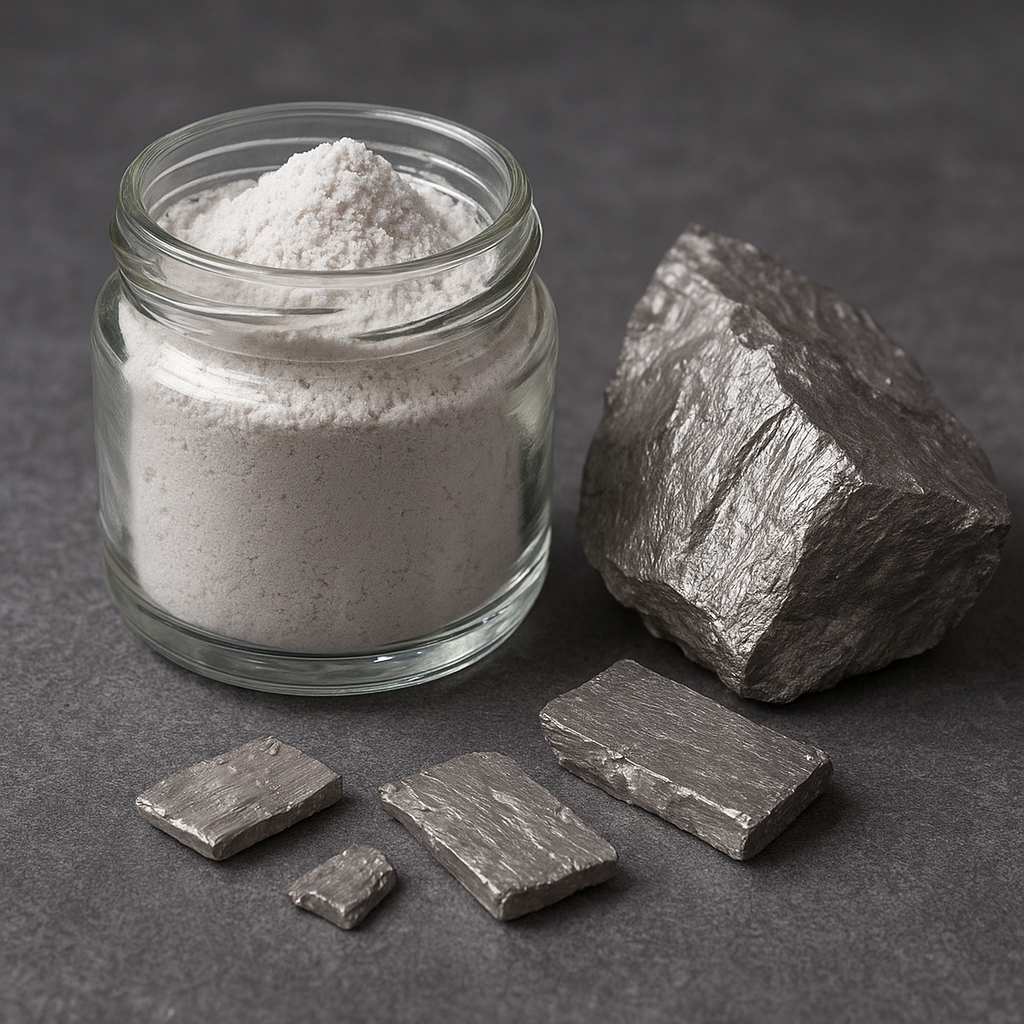
Lithium is a small, silvery metal with outsized influence on modern technology, healthcare, and geopolitics. Despite being one of the lightest elements on the periodic table, its chemical properties have made it indispensable in energy storage, pharmaceuticals, and advanced materials. This article explores where lithium is found, how it is extracted and processed, the many applications that drive global demand, and the scientific and social issues that make lithium a fascinating and sometimes controversial resource.
Where Lithium Occurs and How It Is Extracted
Lithium occurs in a variety of geological and chemical settings. It is never found free in nature because of its high reactivity; instead it appears in minerals, saline waters, and clays. The most common natural hosts for commercially important lithium are hard rock pegmatites, evaporative salt flats (salars), and geothermal or oilfield brines.
Geological sources
- Spodumene — a lithium aluminum silicate found in pegmatites. This mineral is the primary source for hard-rock mining operations. Spodumene concentrates are typically converted into lithium chemicals through high-temperature conversion and acid leaching.
- Spoils and clays — certain clays (e.g., hectorite or illitic clays) can contain extractable lithium and are attracting new technological interest for recovery.
- Salar brines — saline surface and subsurface waters that accumulate lithium through evaporation and concentration processes, especially in closed basins in arid regions.
Major geographic locations
- South America’s “Lithium Triangle” — northern Chile, western Bolivia (Salar de Uyuni), and northwestern Argentina — rich in brine deposits.
- Australia — dominated by hard-rock spodumene mining and large production of concentrates.
- China — significant both as a producer of lithium minerals and as a major processor and recycler, with many downstream refining and chemical plants.
- United States, Canada, and parts of Europe — emerging projects focused on brines, hard rock, and geothermal extraction methods.
Extraction methods
Different sources require distinct processing. Traditional brine extraction uses evaporation ponds to concentrate lithium salts, which are later processed into carbonate or hydroxide. Hard-rock ores like spodumene are mined, crushed, and converted in kilns before leaching. Newer techniques aim to improve efficiency and reduce environmental impact:
- Direct lithium extraction (DLE) — chemical sorbents, ion exchange resins, membranes, and selective adsorption technologies can recover lithium from brines faster and with a smaller land footprint than evaporation.
- Geothermal and oilfield brine recovery — leveraging existing fluid flows at geothermal plants or oil/gas operations to extract the metal as a co-product.
- Recovery from clays and low-grade ores — hydrometallurgical techniques, acid leaching, and thermal treatment are under development for previously uneconomical sources.
Applications and Technologies Driven by Lithium
Lithium’s unique electrochemical properties make it the cornerstone of many modern and emerging technologies. Its low atomic mass and high electrochemical potential translate into excellent energy density and light weight — critical parameters for portable and mobile applications.
Battery technologies
Arguably the most transformative application of lithium is in rechargeable batteries. Batteries using lithium-ion chemistry power everything from smartphones to grid storage. Key elements include:
- Cathode chemistry — common cathode types include nickel-manganese-cobalt (NMC), nickel-cobalt-aluminum (NCA), and lithium iron phosphate (LFP). Each trades off energy density, lifetime, cost, and safety.
- Anode materials — modern anodes are typically graphite, but silicon and lithium-metal anodes are being developed to increase energy density.
- Electrolytes and separators — organic electrolytes and porous separators influence performance, operating temperature, and safety.
A major area of innovation is solid-state batteries, which replace flammable liquid electrolytes with solid electrolytes to improve safety and potentially enable lithium-metal anodes for much higher energy density. Other long-term concepts include lithium-sulfur and lithium-air systems, which promise even higher theoretical energy but face practical challenges such as cycle life and stability.
Electric mobility and grid storage
Electric vehicles (EVs) are a primary driver of lithium demand. Large-format lithium-ion cells supply the traction batteries central to EV range and performance. Beyond passenger cars, electric buses, trucks, two-wheelers, and even electric aircraft concepts depend on improvements in lithium-based energy storage. Stationary grid storage — for smoothing renewable generation, providing frequency regulation, and enabling microgrids — also increasingly uses lithium-based systems due to their efficiency and declining cost.
Other industrial and technological uses
- Lightweight alloys — lithium added to aluminum creates alloys used in aerospace applications due to reduced weight and improved stiffness.
- Lubricating greases and glass/ceramics — lithium compounds modify melting points and mechanical properties.
- Air conditioning and heat transfer — some lithium bromide salts are used in absorption chillers.
- High-performance polymers and specialty chemicals — lithium reagents are essential in certain organic synthesis routes.
Medical applications
A part of lithium’s impact is less technological and more clinical. In psychiatry, lithium salts (such as lithium carbonate and lithium citrate) are effective mood stabilizers used to treat bipolar disorder and to reduce suicidal risk. The therapeutic window is narrow, so blood-level monitoring and careful dosing are essential. The exact mechanisms by which lithium exerts mood-regulating effects are complex and still under active research, touching on ion signaling, neuroplasticity, and intracellular pathways.
Environmental, Economic and Social Issues
Lithium’s rise exposes a web of environmental and social trade-offs. Extracting and processing lithium can be resource-intensive and has localized impacts, even as the metal supports decarbonization and renewable energy integration.
Water use and ecosystem impacts
Brine evaporation operations can require substantial water management in arid regions. In places like the Atacama, concerns about groundwater depletion, impacts on local wetlands and indigenous livelihoods, and the effect on endemic flora and fauna have led to protests and stricter permitting. Responsible water stewardship and careful baseline environmental assessment are critical whenever brines are developed.
Emissions, waste and tailings
Hard-rock processing and hydrometallurgy produce tailings and effluents that require management. Sulfate-rich waste streams, heavy metals, and acidic leachates can pose contamination risks if not properly contained. Transitioning to cleaner processing routes and enforcing robust waste management standards are key mitigation measures.
Social license and indigenous rights
Large-scale mining projects may conflict with local communities over land rights, cultural heritage, and economic benefit sharing. Many indigenous groups in lithium-rich regions have raised concerns about inadequate consultation, unequal distribution of benefits, and long-term impacts. Structured dialogue, benefit-sharing agreements, and community-led monitoring can improve outcomes.
Market dynamics and geopolitics
Demand for lithium has surged with EV adoption and energy storage deployment. That demand growth has driven price volatility and intense competition to secure supply chains. Processing and refining capacity is a strategic asset; a handful of countries dominate various segments of the value chain, from concentrate production to chemical refining. This concentration has prompted government strategies to foster domestic mining, processing, and recycling industries to reduce import dependence and increase resilience.
Recycling, Circular Economy, and Future Directions
As the volume of lithium-based batteries in use grows, recycling becomes essential to resource security and environmental performance. Recovering lithium and other critical elements from spent batteries reduces the need for virgin extraction and mitigates waste challenges.
Recycling approaches
- Pyrometallurgical routes — high-temperature processing recovers metals such as cobalt and nickel but may lose or dilute lithium, requiring further steps to recover it.
- Hydrometallurgical processes — acid leaching and selective precipitation can recover lithium, cobalt, nickel, and manganese with high yields, though they require careful handling of reagents and effluents.
- Direct recycling — aims to restore or repurpose cathode-active materials without fully breaking them down, potentially saving energy and preserving value.
Challenges in recycling
Battery chemistries are diverse, and disassembly can be labor-intensive and sometimes hazardous. Collection logistics, economic incentives, and standardized cell designs that facilitate disassembly would all ease recycling. Policy instruments — deposit-return schemes, mandated recycling quotas, and extended producer responsibility — are being adopted in different jurisdictions to create reliable feedstocks for recyclers.
Scientific frontiers
Researchers are tackling many challenges that will determine lithium’s future role:
- Improving battery lifespan and fast-charging characteristics while minimizing degradation.
- Suppressing lithium dendrite formation to enable safe lithium-metal anodes.
- Developing scalable and low-environmental-impact DLE technologies to unlock brines and low-grade sources.
- Designing cathodes that use less critical materials (lower cobalt content) while maintaining energy density.
- Exploring recyclable and modular battery designs that facilitate second-life applications and end-of-life recovery.
Alternatives and complements
While lithium currently dominates high-performance batteries, alternatives such as sodium-ion, magnesium, and flow batteries offer advantages in cost, raw material abundance, or long-duration storage characteristics. These are unlikely to fully replace lithium for high-energy-density applications in the near term, but they complement lithium-based systems in areas where resource abundance or cost is paramount.
Interesting Scientific and Cultural Notes
Lithium’s story is not only technological — it touches chemistry, physics, health, and culture. A few notable points:
- Atomic trivia — lithium is element number 3, with two stable isotopes, lithium-6 and lithium-7. The isotopic ratio matters in some nuclear and geochemical contexts. For example, lithium-6 plays a role in certain nuclear applications and fusion reactor concepts.
- Chemical behavior — lithium is the lightest metal and reacts vigorously with water to produce hydrogen; in practice, metallic lithium is stored under oil to prevent reaction with air and moisture.
- Historical use — compounds of lithium were once added to beverages (now prohibited) and other products before the psychiatric benefits were better understood and regulated.
- Role in climate transition — while mining and processing have localized environmental costs, lithium-enabled batteries are pivotal for electrifying transport and storing variable renewable energy, helping reduce greenhouse gas emissions when deployed alongside clean electricity.
Career and research opportunities
As demand grows, so do opportunities across fields: geology and mining engineering, chemical process engineering, materials science, battery design, environmental remediation, policy and supply chain management, and medical research. Interdisciplinary expertise that blends technical knowledge with social and environmental awareness is especially valuable.
Final reflections
Lithium is a compelling example of how a single element can shape industries, influence geopolitics, and intersect with everyday life. Balancing the rapid expansion of lithium use with environmental stewardship, social justice, and technological innovation will determine whether this metal remains a force for progress in the decades ahead.