Lepidolite is a visually striking, mica-group mineral valued both by collectors and industry. Recognized for its lavender to rose-violet hues and flaky, scaly habit, it is an important source of several alkali metals and is intimately tied to the geology of Li-bearing granitic systems. This article explores the mineral’s chemistry and physical characteristics, its geological occurrence, practical and industrial applications, and some cultural and scientific curiosities that make lepidolite a noteworthy mineral beyond its attractive appearance.
Identification, Structure and Physical Properties
Lepidolite belongs to the phyllosilicate class and the mica group. Its idealized chemical formula is lepidolite K(Li,Al)3(Si,Al)4O10(F,OH)2, although significant chemical substitution is common. Lithium and aluminum substitute within the crystal lattice, and fluorine or hydroxyl groups occupy structural sites. The result is a sheet-like crystal structure typical of micas: thin, flexible, micaceous plates that cleave easily along one perfect direction.
Key physical characteristics:
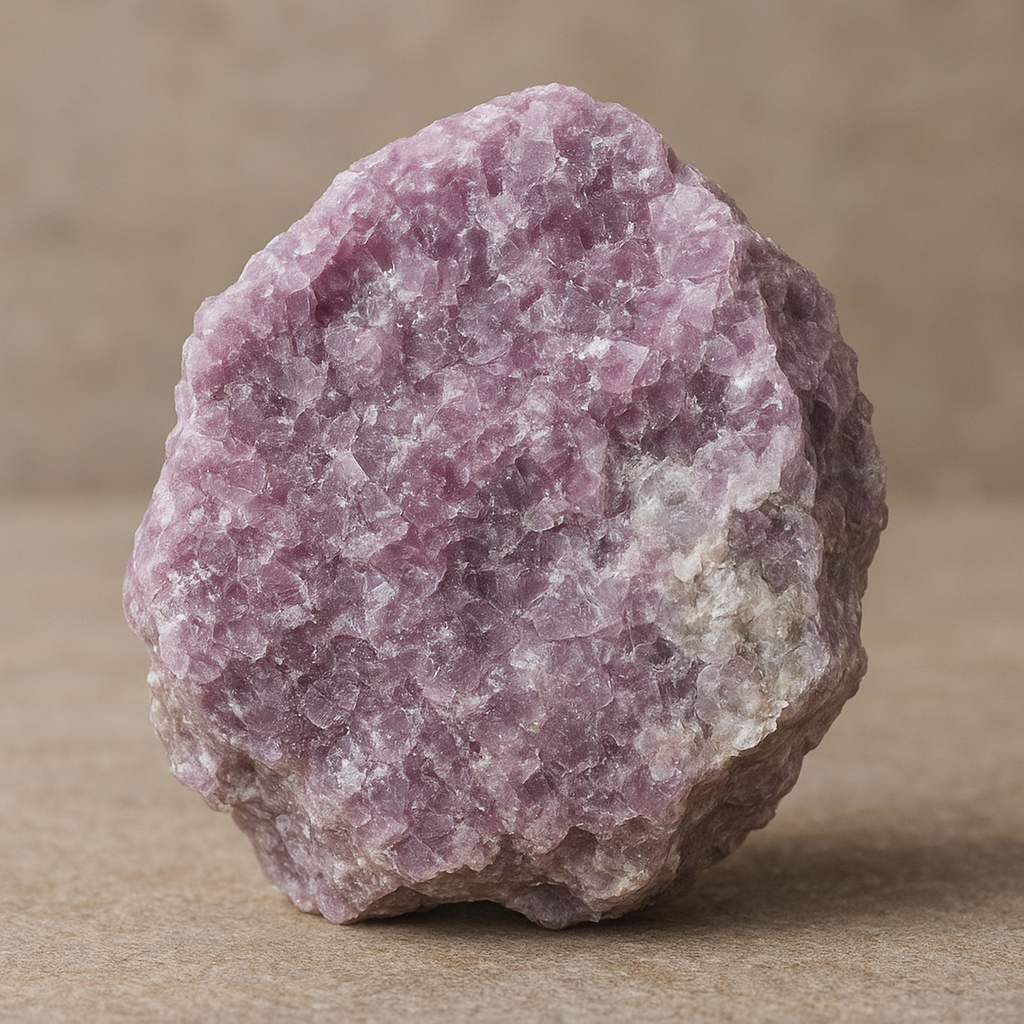
- Color: typically lilac, pink to lavender or rose; can also be gray, yellowish or colorless depending on impurities.
- Luster: pearly to vitreous on cleavage surfaces.
- Hardness: about 2.5–4 on the Mohs scale, making it relatively soft compared with many gem minerals.
- Cleavage: perfect basal cleavage producing thin, elastic sheets.
- Specific gravity: generally in the range 2.8–3.2, variable with composition.
- Streak: white.
Because of its mica-like habit and layered structure, lepidolite often occurs as aggregations of small plates and scales, rather than as large euhedral crystals. When well-formed, however, it can present attractive translucent plates suitable for small cabochons and display specimens.
Occurrence and Geological Settings
Lepidolite is typically found in the late-stage phases of magmatic differentiation, most commonly in alkali-rich pegmatites and greisens that are associated with granitic intrusions. These environments concentrate incompatible elements—such as lithium, cesium, rubidium and beryllium—into late-stage pockets and veins, allowing minerals like lepidolite to form.
Typical mineral associations
- Spodumene (another lithium ore)
- Tourmaline (commonly elbaite)
- Quartz and feldspars
- Petzite, pollucite or other alkali-bearing minerals in rare-element pegmatites
- Garnet, muscovite and beryl in certain localities
Notable localities
Lepidolite is globally distributed, with several classic localities well known for specimen quality and economic importance. Examples include:
- Brazil (Minas Gerais): large, colorful crystals and masses from late-stage pegmatites.
- United States: Maine (Gem-bearing pegmatites), California (Pala district and other lithium-bearing localities).
- Canada: Manitoba (Tanco area) and parts of Ontario with lithium-enriched pegmatites.
- Russia: pegmatite fields in the Urals and Kola Peninsula produce attractive specimens.
- Africa: Zimbabwe and Madagascar have produced collectible material.
- Portugal and Afghanistan: smaller but noted occurrences.
In many localities, lepidolite appears as pockets or layers within larger pegmatitic bodies. Its presence is often an important indicator of lithium enrichment and can point prospectors toward more concentrated lithium ores, such as spodumene or amblygonite, in the same system.
Industrial Uses and Economic Importance
Lithium has become one of the most strategically important elements of the 21st century, particularly because of its central role in rechargeable batteries used in portable electronics and electric vehicles. Lepidolite is one of the naturally occurring sources of lithium, and historically it was mined for this purpose. Today, extraction of lithium most commonly targets high-grade spodumene ores or evaporated brines, but lepidolite and other lithium-bearing micas still contribute to the global supply, especially where pegmatite mining is active.
Extraction and processing
Recovering lithium from lepidolite typically involves mineral processing followed by chemical extraction. Because lepidolite is a fine-grained mica, hydrometallurgical techniques are commonly used:
- Comminution and concentration to separate the mica-rich fraction from gangue.
- Roasting or acid leaching to break down the silicate lattice and reduce lithium to a soluble form.
- Further purification through ion-exchange, precipitation and conversion into commercially valuable salts such as lithium carbonate or lithium hydroxide.
Modern operations emphasize more efficient and lower-impact techniques—such as direct acid leaching combined with solvent extraction—though these still require careful environmental management. The term hydrometallurgy describes many of these aqueous processes used to extract lithium and associated metals from mica- and pegmatite-hosted ores.
Other industrial applications
- Glass and ceramics: lithium compounds improve thermal shock resistance and modify melting behavior in specialty glasses and ceramics; therefore, lepidolite-derived lithium can feed these industries.
- Heat-resistant glass-ceramics and glazes: small additions of lithium help control viscosity and reduce thermal expansion.
- Metal alloys and lubricants: lithium salts are used in greases and in some metallurgical applications.
- Source of other alkali metals: lepidolite can contain elevated amounts of rubidium and cesium in some deposits, making it a minor source of these elements for specialized uses.
Gemology, Lapidary Uses and Collecting
While not a mainstream gemstone due to its softness and perfect cleavage, lepidolite has found a niche in the lapidary and mineral collecting communities. Transparent or translucent thin sheets can be fashioned into cabochons, beads and small ornamental objects. In many cases, the appeal is primarily aesthetic: the gentle purple shades and pearly sheen are attractive for decorative inlays and collector cabinets.
Care and cutting considerations
- Because of its low hardness and perfect cleavage, lepidolite must be handled gently during cutting and setting.
- Avoid ultrasonic cleaners, heat treatments and harsh chemicals; a mild soap and water clean is recommended.
- Thin slices and stabilized material (impregnated with resins) are more durable for jewelry use, though such treatments should always be disclosed.
Collectible varieties and aesthetics
Specimens with well-formed plates, attractive color zoning, or intergrowths with tourmaline and quartz are especially prized. Some pegmatites yield lepidolite with unusual metallic reflections or with dramatic contrasts between pink lilac plates and dark accompanying minerals, making specimen collectors particularly keen on such pieces. In gemological contexts, lepidolite’s color is sometimes enhanced by trace elements; its color range and association with other colorful pegmatite minerals make it a favorite for display.
Environmental and Sustainability Considerations
The growing demand for lithium—driven largely by the batteries market—has elevated attention to the environmental footprint of lithium extraction. Mining lepidolite from pegmatites, like any hard-rock mining, can involve significant disturbance of surface areas, waste rock generation, and chemical use during processing.
Key environmental concerns
- Water use and contamination risk from processing fluids and tailings.
- Landscape disturbance and habitat loss from open pits and waste dumps.
- Energy consumption and greenhouse gas emissions associated with mining and chemical processing.
To address these issues, industry and regulators are emphasizing best practices: minimizing surface disturbance, implementing closed-loop water systems, improving tailings management, and investing in recycling of lithium-ion batteries to reduce pressure on primary ores. Brine extraction (from salt flats) and spodumene processing currently supply a large share of lithium, but hard-rock sources like lepidolite remain economically relevant in many regions. Sustainable approaches that combine responsible mining, efficient processing and recycling will determine how lepidolite contributes to future lithium supply chains.
Cultural, Historical and Metaphysical Notes
Beyond its industrial value, lepidolite carries a history of scientific and cultural interest. Early chemists recognized lithium in minerals from pegmatitic deposits, and while the element’s formal discovery is credited to work on petalite and other minerals, lithium-bearing micas like lepidolite were among the natural materials that drew attention to this new alkali element.
In gem and metaphysical circles, lepidolite is often valued as a calming or stabilizing stone. Practitioners attribute to it properties such as emotional balance, stress relief and sleep support. These claims are anecdotal and not scientifically validated, but they have contributed to the mineral’s popularity in jewelry, worry stones and decorative objects. The mineral’s gentle color and flaky texture reinforce its association with soothing aesthetics.
Interesting scientific facts
- Lepidolite can accommodate relatively large cations such as rubidium and cesium, making some deposits sources of these rarer elements.
- The presence of lepidolite in a pegmatite often signals a complex, highly fractionated magmatic history—valuable information for petrologists studying melt evolution and element partitioning.
- Specimens sometimes show dramatic intergrowths with tourmaline (often elbaite), producing striking multi-colored suites that illustrate zoning processes in pegmatites.
Practical Tips for Enthusiasts and Prospective Buyers
If you are interested in acquiring lepidolite—whether as a collector, lapidary, or investor in a specimen—consider these practical pointers:
- Inspect for cleavage and stability: look for specimens with intact plates rather than heavily broken or crumbling material.
- Ask about treatments: resin impregnation is common to stabilize thin sheets; disclosure is standard practice among reputable dealers.
- Learn locality labels: some localities are prized for deeper color or larger plates; provenance can affect desirability and price.
- For industrial perspectives, monitor lithium market trends: changes in demand for glass and ceramics, plus the electric vehicle market, influence exploration of lepidolite-bearing pegmatites.
Research Directions and Technological Links
Ongoing research connects lepidolite to several modern technological and scientific topics. Mineralogists and economic geologists continue to study how lithium and associated elements concentrate in pegmatites, which improves exploration models and ore-processing strategies. Materials scientists also examine lithium-bearing minerals for novel extraction methods that lower environmental impact and energy consumption.
Interest in the full life cycle of lithium use—mining, processing, application in batteries, and end-of-life recycling—has stimulated interdisciplinary research. Developing economically and ecologically viable pathways to recover lithium from lower-grade sources like mica-rich ores could diversify supply and reduce reliance on concentrated brine or hard-rock spodumene deposits.
Final Remarks on Value and Appeal
Though not always the first mineral that comes to mind when thinking of lithium resources, lepidolite occupies an important niche where aesthetics, mineralogy and economics intersect. As a collector’s mineral, its colors and mica-like shimmer are highly appealing; as an ore, it provides a route to valuable alkali elements in regions where pegmatite mining is active. Whether appreciated on a display shelf or considered as part of the complex supply chain feeding modern technologies, lepidolite remains a mineral of multifaceted interest.