Lazulite is a striking, deep- to sky-blue mineral that attracts attention for both its aesthetic appeal and its geological significance. Often forming in small, sharply defined crystal habits and occurring in association with high-grade metamorphic and hydrothermal rocks, lazulite sits at the intersection of mineralogy, gemology and field geology. This article explores its chemistry, physical properties, typical environments of formation, uses, collecting and identification tips, and a handful of intriguing facts that make lazulite more than just another pretty mineral specimen.
Mineralogy and Chemical Properties
Composition and crystal structure
Lazulite belongs to the family of phosphate minerals and is chemically characterized by a magnesium–aluminium phosphate hydroxide. The formula is often written in a simplified form showing its major components. Lazulite commonly forms a solid-solution series with an iron-rich analogue, which can shift its color and density. Its crystals are typically monoclinic and can develop well-formed prismatic habits or occur as granular masses.
Physical properties
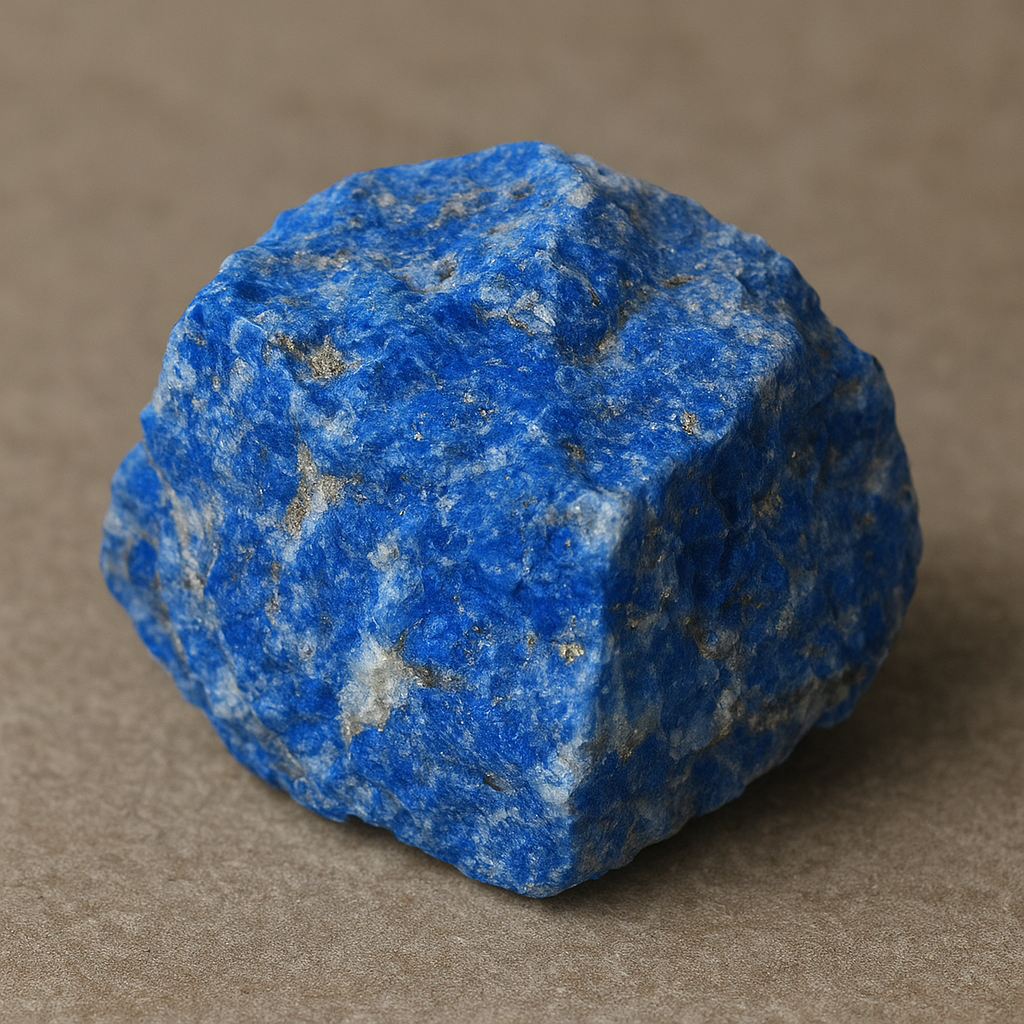
Key identification properties include its vivid blue colors ranging from intense azure to more muted tones, a vitreous to subvitreous luster, and a white streak. Lazulite has moderate hardness (sufficient for collection but usually below that desirable for routine jewelry wear) and a specific gravity that reflects the relative amount of magnesium versus iron in the structure. Optical properties include strong pleochroism in many crystals, meaning the color shifts when the crystal is viewed from different angles under polarized light; this feature is useful in thin-section petrography and gem identification.
Variability and related minerals
Lazulite is closely related to the mineral scorzalite, with which it forms a compositional series where magnesium and iron substitute for one another. This substitution affects color (iron tends to darken the blue) and density. Other phosphates and metamorphic minerals such as kyanite, garnet, rutile and quartz are commonly found alongside lazulite in the same rock units, reflecting the particular pressure–temperature conditions under which they formed.
Where Lazulite Occurs — Geological Environments and Localities
Metamorphic settings
A primary host for lazulite is medium- to high-grade metamorphic rocks, especially aluminous metasediments such as pelitic schists, where chemical components for phosphate minerals are concentrated. Lazulite is often an indicator of specific metamorphic conditions: it forms where phosphorus, aluminium and magnesium are available and can signal particular pathways of mineral reactions during prograde or retrograde metamorphism. Its presence can thus be useful for reconstructing metamorphic histories and P–T (pressure–temperature) conditions in regional metamorphic terrains.
Pegmatites, veins and hydrothermal sites
Besides regional metamorphism, lazulite may appear in pegmatite bodies and hydrothermal veins where late-stage fluids concentrate phosphorus and aluminium. In these settings crystals can be better developed and occasionally larger, though gem-quality lazulite remains rare relative to more common gem minerals. These occurrences often produce striking, gemmy crystals prized by collectors.
Notable localities
Well-known localities that have produced noteworthy lazulite specimens include a variety of classic mineral regions around the world. Some of these are:
- Parts of the European alpine and metamorphic belts — where lazulite is found in schists and contact-metamorphosed zones.
- Brazilian mining districts, particularly in mineral-rich areas of Minas Gerais — known for numerous colorful phosphate and gemstone specimens.
- Localities in the Himalayan realm (Nepal, Pakistan and adjacent regions) that yield small but beautiful crystals associated with high-grade metamorphic rocks.
- Several historical mining areas in central Europe and Scandinavia, such as classic Swedish and Austrian sites, which provided early described specimens.
- Selected North American occurrences, including localities in New England and parts of the Appalachian belt, where lazulite shows up in metamorphosed pelitic sequences.
Collectors and mineralogists prize specimens from these areas not only for color but for crystal form and associations with other diagnostic minerals.
Uses, Value and Gemstone Potential
Collector and educational value
The primary value of lazulite today lies in the realm of mineral collecting, education and scientific study. Specimens with sharp, deep-blue crystals are sought after for display collections and for teaching mineral identification and metamorphic petrology. Because lazulite can be diagnostic of certain metamorphic conditions, it also has value for geologists studying regional metamorphism and mineral paragenesis.
Gemmological aspects
Occasionally lazulite is faceted into a gem, but several practical drawbacks limit its widespread use in jewelry:
- Crystal sizes suitable for cutting are usually small, so gems are often modest in dimensions.
- Cleavage and brittleness make lazulite prone to chipping and abrasion in everyday wear.
- While attractive, its hardness is moderate compared with durable gemstones, so protective settings are necessary.
When faceted, lazulite can show attractive saturated blues and can display pleochroism, which when handled correctly by a skilled cutter can produce visually appealing results. Because of its relative rarity as a gem and the fragility of many crystals, gem-quality pieces are collector items more than mainstream jewelry staples.
Industrial and scientific applications
There are no large-scale industrial uses for lazulite. Its significance is chiefly academic and aesthetic: for mineralogists it can provide clues about phosphorus cycling in metamorphic terrains, and for historians of mineralogy it contributes to the story of how mineral classification evolved. In gemology it represents a niche, specialized material that occasionally appears in collections and small-scale jewelry design.
Associated Minerals and Paragenesis
Common mineral partners
Lazulite frequently occurs with a suite of minerals that tell a story about the rock’s evolution:
- Kyanite, staurolite and andalusite — aluminous metamorphic index minerals that reflect metamorphic grade.
- Garnet — often present in pelitic schists and useful for interpreting pressure–temperature conditions.
- Rutile and ilmenite — titanium oxides found in similar metamorphic settings and sometimes included within lazulite crystals.
- Scorzalite — the iron-rich member of the same mineral series, forming compositional gradients with lazulite.
- Various phosphate minerals in pegmatites — when lazulite forms from late magmatic or hydrothermal fluids.
Formation pathways
The paragenetic sequence for lazulite depends on the host environment. In regional metamorphism, it typically forms during reactions involving breakdown or transformation of phosphate-bearing precursor minerals under conditions that mobilize phosphorus and concentrate aluminium and magnesium. In pegmatitic and hydrothermal systems, crystallization from late-stage, phosphorus-rich fluids can produce well-formed crystals. Detailed microscopic and chemical analyses are often required to place lazulite precisely into a rock’s sequential history.
Identification, Care and Collecting Tips
Field and lab identification
When trying to identify lazulite, consider the following features:
- Color: a distinctive range of intense to soft blues; color may vary within a sample.
- Crystal habit: prismatic monoclinic crystals, often steeply terminated or tabular.
- Luster and streak: vitreous luster and typically a light-colored streak (often white).
- Optical traits: notable pleochroism and birefringence when observed under polarized light in thin section.
- Associated minerals and host rock type: presence in aluminous schists, gneisses, or pegmatites supports identification.
For definitive identification, X-ray diffraction (XRD), electron microprobe analyses or Raman spectroscopy provide clear, diagnostic confirmation of chemical composition and crystal structure.
Handling and care
To preserve lazulite specimens and any jewelry pieces:
- Store specimens away from harder minerals that can scratch the surfaces.
- Avoid ultrasonic cleaners for cut stones because of potential cleavage and inclusions.
- Use protective settings for any lazulite jewelry to reduce impact and abrasion.
- Keep specimens away from prolonged exposure to strong chemicals or acids that could alter surface luster.
Collecting ethics and documentation
Collect responsibly. Many of the best specimens come from limited or closed localities; collectors should respect access rules, local regulations and conservation guidelines. Proper labeling with locality data, geological context, and collection date adds scientific and monetary value to specimens and preserves provenance for future study.
Interesting Facts, History and Cultural Notes
Origin of the name and common confusions
The name lazulite is derived from the same linguistic root as lapis lazuli (the famous ornamental rock), both referencing the blue color in several languages. However, lazulite is chemically and structurally unrelated to lapis lazuli (which is a rock composed mostly of lazurite, among other minerals). Because of the shared blue appearance, newcomers to mineralogy sometimes confuse the two, but their formation environments, physical properties and chemical compositions are quite different.
Role in scientific studies
Lazulite’s presence in metamorphic rocks makes it a useful mineral for geologists seeking to understand the geochemical pathways of phosphorus during metamorphism. In metamorphic petrology, minerals that incorporate phosphorus are less common than silicates, so when lazulite appears it can highlight unusual bulk compositions or fluid histories. Studies of lazulite-bearing assemblages thus contribute to broader questions about crustal recycling, fluid–rock interaction and element mobility under varying pressure and temperature conditions.
Metaphysical and lapidary interest
While not grounded in science, lazulite is sometimes used in crystal-therapy circles and by lapidaries who appreciate its range of blues. In such contexts it is attributed with calming properties or used as a focus stone in collections. From a lapidary perspective, its color and rarity make it an attractive novelty gem when size and clarity permit cutting, though its practical limitations constrain broader commercial use.
Resources for Further Study and Reference
For those seeking to learn more about lazulite, recommended approaches are:
- Consult standard mineralogy textbooks and regional geological guides to understand context and paragenesis.
- Visit museum and university collections to view well-documented specimens and compare habits and associations.
- Read peer-reviewed articles that examine lazulite chemistry, isotopic studies and metamorphic implications for detailed, technical insight.
- Engage with mineral clubs and online collecting communities to learn about responsible collecting and recent notable finds.
Lazulite combines visual appeal with geological storytelling: each specimen carries information about the environment in which it formed, and for collectors, scientists and gem enthusiasts alike it remains a small but fascinating window into Earth’s mineral diversity.