Lapis lazuli is a gemstone and cultural symbol whose intense blue has inspired artists, rulers and craftsmen for millennia. This article explores the stone’s geological origins, its geographic distribution, historical and modern applications, methods of identification and care, and a selection of intriguing facts. Along the way you will encounter the science behind its color, the routes that carried it across ancient trade networks, and the reasons it retained extraordinary value until the arrival of synthetic substitutes.
Geology and Formation
Lapis lazuli is a metamorphic rock composed mainly of the mineral lazurite, together with calcite, pyrite and other accessory minerals. It forms under specific conditions when limestone or marble is subjected to contact metamorphism — heat and chemical interaction from an igneous intrusion. The result is a compact, deep-blue rock whose color depends on the abundance and quality of the blue mineral phase.
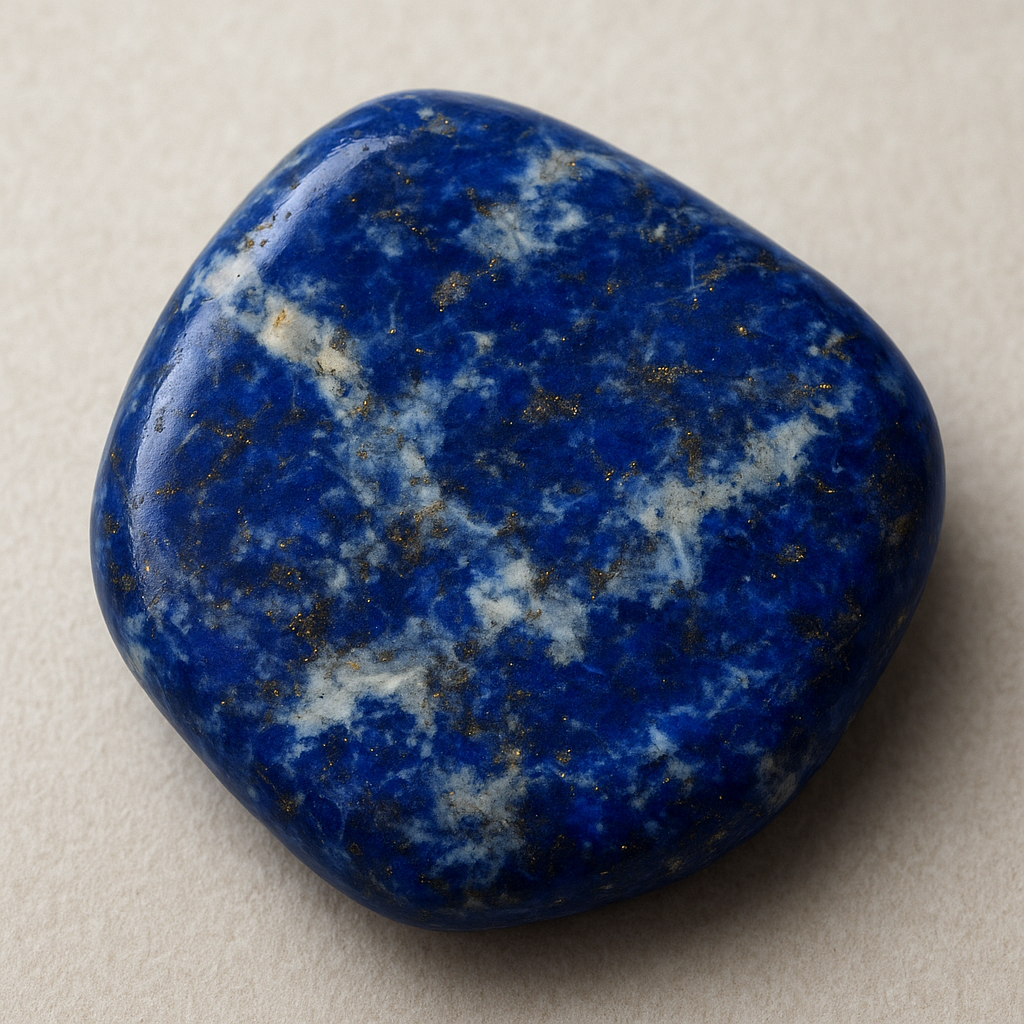
The blue hue is due to the complex sulfur-containing anionic group within lazurite. Tiny inclusions of metallic pyrite often appear as sparkling flecks, which can increase a stone’s visual appeal. White calcite veins or specks reduce value unless carefully controlled or absent; the purest lapis has a vivid, even blue with minimal calcite and attractive pyrite.
Where Lapis Lazuli Occurs
While truly gem-quality deposits are relatively rare, lapis has been found on several continents. Historically and economically the most important sources are:
- Afghanistan: The Sar-e-Sang mines in Badakhshan province are the oldest and most famous. They supplied lapis to Mesopotamia, Egypt and the Indus Valley for thousands of years.
- Chile: Deposits in the Andes yield attractive lapis with slightly different mineralogy and often less pyrite.
- Russia: The Lake Baikal region produces large volumes of lapis lazuli from metamorphosed limestones.
- Pakistan and Myanmar: Smaller occurrences and artisanal mining are known in parts of South and Southeast Asia.
- United States: Minor occurrences in California and Colorado exist but are not major commercial sources.
Each locality yields material with characteristic textures and impurities; connoisseurs can sometimes distinguish origin by subtle color tones, pyrite patterns, and matrix presence.
Historical Uses and Cultural Significance
Lapis lazuli has a long and illustrious history. In ancient Egypt it was prized as a gemstone and ground into powder for cosmetics and inlays—famous artifacts like the funerary mask of Tutankhamun feature lapis accents. Mesopotamian cylinder seals, Sumerian jewelry and the Indus Valley arrays show the stone’s early prominence. The people of the Mediterranean and Near East equated its deep blue with the heavens and royalty.
In medieval and Renaissance Europe the stone’s ground pigment, ultramarine, was considered the finest blue available. Artists used it for the most significant elements of paintings—most famously the robes of the Virgin Mary—because of its brilliance and permanence. The pigment was so costly that patrons and guilds frequently controlled its usage and distribution; in certain periods it cost more than gold by weight.
Beyond aesthetics, lapis has figured in literature, religious symbolism and royal regalia across cultures. Persian poets described it as a link to celestial truth; Islamic art used its color in tiles and manuscripts; and several indigenous traditions attributed protective and visionary properties to the stone.
Modern Applications
Today lapis lazuli remains a favored material for ornamental and artistic use. Its principal modern applications include:
- Jewelry: Cabochons, beads, inlays and intaglios. Lapis is shaped into necklaces, rings and brooches, prized for its saturated color and affordability relative to sapphires.
- Marquetry and decorative objects: Boxes, bowls, ornamental slabs and small sculptures take advantage of lapis’ cameo-like appearance when paired with metals and other stones.
- Pigment: Natural ultramarine is still produced on a small scale for restoration of historic paintings and for artists who prefer the original mineral source. Synthetic ultramarine largely replaced the mineral form for mass-market paints and dyes.
- Collecting and museum pieces: High-grade lapis specimens with minimal calcite and attractive pyrite are sought by collectors and museums.
In technology and industry lapis has no major role; synthetic substitutes and industrial pigments fulfill many of the functions once supplied by the stone. However, its cultural and artistic importance continues to sustain a market for quality lapis.
Identification, Imitations and Treatments
Because lapis lazuli is valuable, a number of imitations and treatments exist. Recognizing genuine material is important for buyers, conservators and enthusiasts.
Key identification points
- Color: Deep royal to ultramarine blue with potential mottling.
- Inclusions: Visible pyrite (metallic golden specks) and occasional white calcite veins.
- Hardness: Generally 5–5.5 on the Mohs scale—softer than sapphire or many other gems.
- Specific gravity: Around 2.7–2.9, variable by composition.
- Streak: Powdered lapis leaves a blue streak; tests should be done with caution.
Common imitations and treatments
- Dyed howlite or magnesite: White minerals dyed intense blue are often sold as lapis. They typically show dye concentration in pores and fracture lines under magnification.
- Sodalite and azurite: These blue minerals can resemble lapis but usually lack pyrite and have different physical and optical properties.
- Glass and plastic simulants: Cheap imitations exist, detectable by hardness and thermal tests.
- Stabilization and dyeing: Lower-grade lapis may be impregnated with wax or polymers to improve polish, or dyed to deepen hue. Such treatments should be disclosed by reputable dealers.
Value Factors and Grading
Several criteria determine the value of lapis lazuli:
- Color: The most valuable stones exhibit an intense, uniform deep blue without greenish or overly dark tones.
- Clarity and matrix: Minimal calcite and a pleasing distribution of pyrite increase desirability; large white veins lower value.
- Cut and polish: Well-shaped cabochons that maximize color and minimize visible matrix command higher prices.
- Origin: Afghan lapis, especially from classic Sar-e-Sang material, often fetches a premium due to historical reputation and distinctive color.
Collectors prize rare specimens that show vivid color with delicate pyrite sparkle but no visible calcite. In mass-market jewelry, lapis’s accessibility makes it a popular and cost-effective blue choice.
Care, Conservation and Ethical Considerations
Lapis is a relatively soft and porous material compared with many gemstones. Proper care preserves its color and surface:
- Avoid ultrasonic cleaners and harsh chemical detergents. Basic warm-soapy water and a soft cloth are safest.
- Keep away from acids and prolonged exposure to sunlight or heat that could alter organic dyes or surface treatments.
- If used in rings, bezels or frequently worn pieces, choose protective settings to reduce abrasion and chipping.
Mining ethics and provenance are increasingly important. Artisanal mines in regions like Afghanistan may operate under difficult social conditions; buyers and institutions often seek responsibly sourced lapis and support transparency in the supply chain.
Art and Science: Ultramarine and the Mineral-to-Pigment Journey
The story of ultramarine is a rare intersection of mineralogy, artistry and economics. To make the pigment, artisans historically pulverized lapis lazuli into a fine powder, then separated the blue particles from the heavier and lighter impurities through laborious washing, levigation and hand methods that could take days. The concentrated blue powder—known as ultramarine—was mixed with binders for paints.
The invention of synthetic ultramarine in the early 19th century democratized the pigment. The synthetic process, developed by chemists such as Jean-Baptiste Guimet and others, produced a chemically similar blue at a fraction of the cost, preserving the visual qualities while dramatically reducing price and ecological pressure on lapis sources. Despite this, natural ultramarine remains prized in restoration and specialist art circles for authenticity.
Metaphysical Beliefs and Folklore
Across cultures lapis lazuli has been associated with wisdom, truth and spiritual insight. In many traditions it was believed to enhance inner vision and support communication. Healing practitioners attribute to lapis calming effects on the mind and use it in meditation and ritual. While these uses belong to the realm of belief and personal practice rather than science, they form an important part of the stone’s cultural meaning.
Fascinating Facts and Notable Objects
- In ancient Egypt, powdered lapis was used as eyeshadow—archaeologists found lapis residue in tombs and cosmetic containers.
- During the Renaissance, ultramarine was sometimes reserved on artists’ budgets for patron-approved parts of paintings due to cost; receipts and contracts occasionally specify its use.
- Decorative lapis panels and inlays appear in major architectural works, palaces and mosques, where artisans combined stone with precious metals.
- Scientifically, the vibrant color of lazurite continues to interest mineralogists studying sulfur-based chromophores and their stability under different environmental conditions.
- Collectors prize museum-quality specimens and historic objects, such as the lapis details in ancient Near Eastern seals and medieval illuminated manuscripts.
Practical Buying Tips
If you plan to purchase lapis lazuli:
- Buy from reputable dealers who provide provenance and disclose treatments.
- Examine the stone under magnification: look for natural pyrite flecks, even color and absence of concentrated dye.
- Consider origin, but prioritize visible quality—color, matrix and workmanship—over claims of geographic prestige alone.
- Ask about return policies and certifications for high-value pieces, especially when provenance or historical significance is claimed.
Conclusion
Lapis lazuli remains one of the most evocative materials in human culture: a rock that became royal color, sacred pigment and a durable emblem of luxury. From the high mountain mines of Afghanistan to Renaissance studios, the stone’s journey intersects science, art and myth. Modern markets, synthetic chemistry and ethical sourcing challenges have reshaped how lapis is used and valued, but the deep blue that captivated antiquity still holds a special place in jewelry, art and cultural memory.