
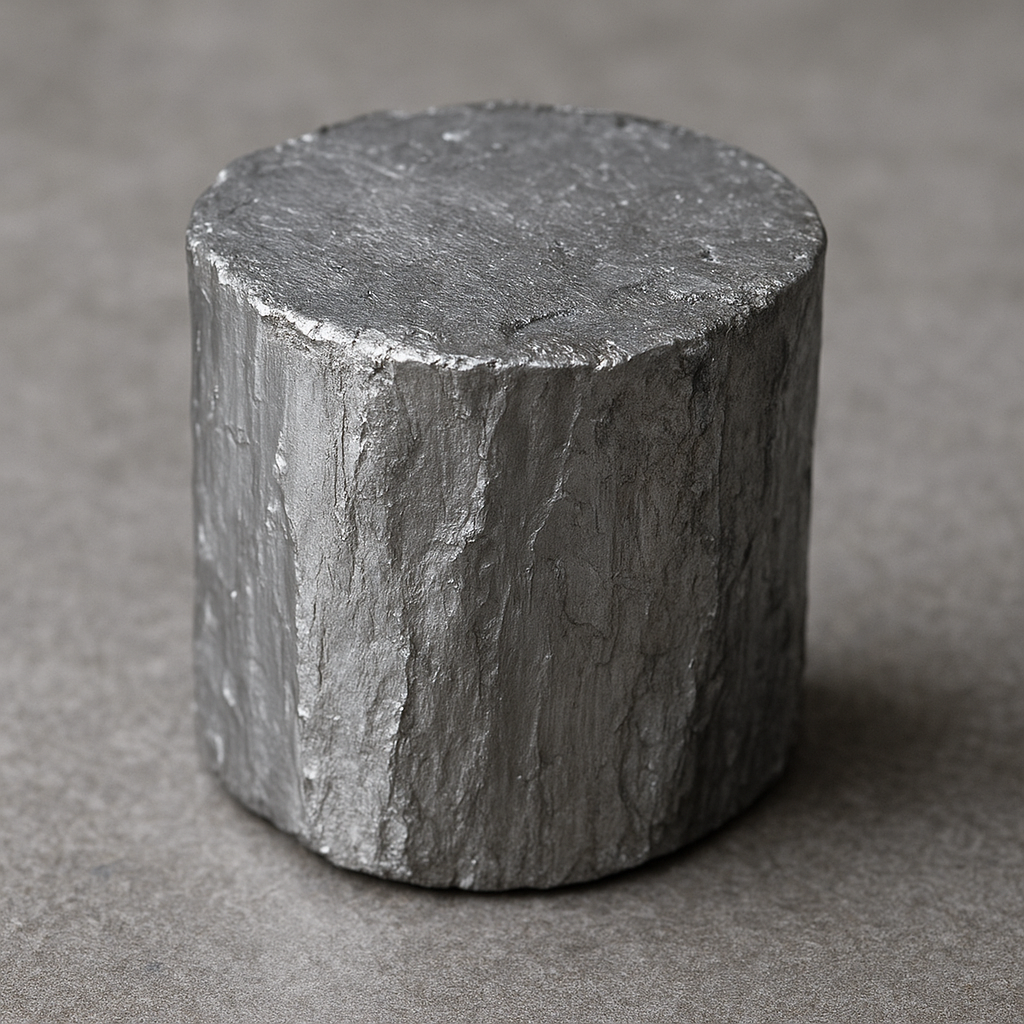
Lanthanum is a silvery-white metal that opens the row of the lanthanide series and plays a disproportionately large role in modern technologies, medicine and research. Although it is commonly grouped with the so-called rare-earth elements, lanthanum’s name, chemistry and uses are distinct and worth exploring. This article examines where lanthanum is found, how it is extracted and processed, its physical and chemical properties, the principal applications that make it economically important, environmental and health aspects, and a selection of intriguing scientific and industrial developments connected to this element.
Occurrence and geological context
Lanthanum rarely occurs as a free element in nature; instead it is found in a variety of mineral ores that host mixtures of lanthanides and other elements. Two of the most important minerals that contain lanthanum are monazite and bastnäsite. These minerals are typically found in igneous and metamorphic rocks, as well as in placer deposits formed by the erosion and concentration of resistant mineral grains.
Geologically, lanthanum is classified among the light lanthanides (or light rare-earth elements). The distribution of lanthanide elements in a deposit depends on the geochemistry of the host rock and the processes that concentrated them. Monazite (a phosphate) often contains appreciable quantities of thorium, which makes its processing more complex due to associated radioactivity. Bastnäsite (a carbonate-fluoride) tends to be processed more cleanly but is less widely distributed.
Major producing countries for lanthanide-bearing ores have varied over time, but in recent decades refining and separation capacity has been concentrated geographically. This concentration affects industrial supply chains because refining rare-earth minerals into pure lanthanum compounds or metal requires specific chemical processing facilities and experience dealing with associated elements and contaminants.
Chemical and physical properties
Lanthanum sits at atomic number 57 and has the electron configuration [Xe] 5d1 6s2. It commonly adopts a +3 oxidation state in compounds, forming stable trivalent ions (La3+) that dominate its coordination chemistry. The elemental metal is soft, malleable and ductile; it oxidizes slowly in air and more rapidly when finely divided. The metal’s melting point is relatively high for a light metal, and its density and mechanical properties make it workable for certain alloying applications.
Chemically, lanthanum’s behavior illustrates the so-called lanthanide contraction: as atomic number increases across the lanthanide series, ionic radii decrease slightly. Lanthanum, being the first in the series, has a larger ionic radius than the heavier lanthanides, which affects coordination numbers and the structures of its compounds. Lanthanum forms a range of oxides (La2O3), hydroxides, chlorides (LaCl3), carbonates and phosphates that are useful precursors for material synthesis.
Extraction, separation and refining
Recovering lanthanum from ores is a multi-step chemical process. After mining and initial physical concentration (gravity separation, flotation), the ore is subjected to chemical treatment to separate lanthanides from accompanying minerals and to remove thorium and uranium when present. Common processing steps include:
- Crushing and milling to liberate mineral grains.
- Acid or alkaline digestion to dissolve rare-earth-bearing phases.
- Soluvent extraction and ion-exchange techniques to separate individual lanthanides from the complex mixture. Because lanthanide ions have similar chemistry, their separation relies on small differences in ionic size and complexation behavior.
- Precipitation and calcination to produce oxide, carbonate or other salts for subsequent reduction to metal if desired.
Electrolytic or metallothermic reduction routes convert lanthanum compounds to the metal. Hydrogen reduction of oxides, calcium reduction of halides, and electrolysis of molten salts are established methods. The purity required depends on the intended application: high-performance optical glass or electronic applications demand very high purity whereas alloying for bulk use tolerates more residual impurities.
Primary industrial and technological applications
Lanthanum’s unique combination of chemical and physical characteristics enables a broad set of applications. Below are several major application areas where lanthanum or its compounds are critical:
Catalysis
Lanthanum compounds are widely used as promoters and active components in heterogeneous catalysts. In petroleum refining, lanthanum-containing materials enhance the activity and stability of catalysts used in fluid catalytic cracking (FCC) and hydroprocessing. Its basic oxides also serve as supports or modifiers that improve resistance to sintering and poisoning. The role of catalysts containing lanthanum extends into automotive emission control and various fine-chemical syntheses where Lewis-acidic lanthanum salts facilitate transformations in organic chemistry.
Alloys and batteries
Lanthanum plays an essential role in certain metallurgical applications. It is a component of mischmetal, an alloy of light rare-earth metals used historically in lighter flints and in specialized metallurgical applications. A prominent energy application has been in nickel-metal hydride (NiMH) batteries: alloys based on lanthanum-nickel (such as LaNi5 and related phases) can reversibly store hydrogen and form the active anode materials in these batteries. Although lithium-ion batteries dominate many electric vehicle and portable electronics markets, NiMH batteries—especially for hybrid vehicles—still rely on lanthanum-bearing materials, and the metal’s role in hydrogen absorption alloys continues to interest researchers focused on stationary or reversible hydrogen storage systems.
The hydrogen storage capability of lanthanide-nickel intermetallics is a concrete example of lanthanum’s contribution to emergent energy systems: LaNi5 hydridizes to form LaNi5H6 under suitable conditions, demonstrating the ability to absorb large quantities of hydrogen by weight and release it on demand. This property is attractive for energy storage and fuel cell technologies.
Optics and glass
High-refractive-index glasses, often marketed to photographers and optical engineers, frequently incorporate lanthanum oxide as an additive. Glass containing lanthanum has improved dispersion control and higher refractive index, allowing lens designers to reduce aberrations and fabricate more compact, higher-performance optical systems for cameras, microscopes and telescopes. Lanthanum oxide is also used as a polishing agent for precision glass surfaces and for producing glass with specialized infrared transmission properties.
Phosphors and lighting
Lanthanum compounds serve as hosts or components in phosphor materials used in lighting and display technologies. Phosphors doped with lanthanides can convert energy into visible light with desirable spectral properties for fluorescent lamps, LED phosphor converters and specialized display applications. The use of lanthanum in these materials is often linked to its ability to provide stable crystal structures and suitable coordination sites for activator ions.
Ceramics, electronics and advanced materials
Lanthanum finds use in advanced ceramic formulations. One notable technological ceramic is lead lanthanum zirconate titanate (PLZT), a ferroelectric material with electro-optic properties used in modulators and special displays. Lanthanum also participates in perovskite and oxide materials studied for superconductivity and electronic applications. For example, lanthanum cuprate compounds were central to early studies of high-temperature superconductivity, and lanthanum-based oxides continue to be relevant to solid oxide fuel cells, sensors and catalytic membranes.
Medicine
Lanthanum carbonate is an important pharmaceutical agent used to control phosphate levels in patients with chronic kidney disease. As an oral phosphate binder, it reduces phosphate absorption in the gut. The compound is valued for its efficacy and relative tolerability, though long-term use and monitoring require medical supervision. Medical imaging and diagnostic fields also explore lanthanide complexes as contrast agents or scintillators in certain instruments.
Environmental, health and safety considerations
Lanthanum and its compounds are generally considered to present low to moderate toxicity to humans and wildlife compared with heavy metals like lead or mercury, but exposure risks exist, especially for fine particulate forms and some soluble salts. Potential hazards include respiratory irritation from dust, accumulation in organisms at high concentrations, and impacts on soil and freshwater ecosystems if released in significant quantities.
Mining and processing of lanthanide ores pose distinctive environmental challenges. Monazite sands sometimes contain thorium and uranium, creating radioactive waste streams that must be managed carefully. Chemical processing often generates acidic or alkaline effluents and requires solvent management, so industrial-scale operations are subject to environmental regulation and community scrutiny. Recycling of lanthanum from spent materials (batteries, catalysts, optical glass) is technically feasible but not yet implemented at the scale needed to close supply loops globally.
Supply chain, geopolitics and recycling
Because production of rare-earth concentrates and most refining capacity have been concentrated in a few countries in recent decades, supply security for lanthanum and other rare-earth elements is an ongoing geopolitical concern. Short-term price volatility can arise from export restrictions, changes in environmental policy, or disruptions to refining infrastructure. These factors motivate investment in diversified sources, secondary recycling streams and more efficient use of lanthanides in products.
Recycling lanthanum is technically possible but economically and logistically challenging. Recovery from NiMH battery scrap, optical glass waste and spent catalysts requires separation and purification steps. Improved collection systems, standardization of products for easier disassembly, and advances in solvent extraction and electrochemical recovery techniques will be key to boosting secondary supplies.
Research frontiers and interesting facets
Researchers continue to uncover intriguing aspects of lanthanum chemistry and to develop new uses. A few noteworthy directions include:
- Hydride-based hydrogen storage materials: compounds such as LaNi5 and related alloys remain benchmarks for reversible solid-state hydrogen storage. Optimizing kinetics, cycle life and storage capacity is an active field.
- Quantum and superconducting materials: lanthanum-containing oxides and intermetallics have been central to breakthroughs in superconductivity and correlated-electron physics. Subtle changes in composition lead to dramatic changes in electronic behavior.
- Catalysts for environmental remediation and CO2 utilization: lanthanum-doped oxide catalysts show promise in oxidation reactions, water splitting, and selective catalytic reduction of pollutants.
- High-performance optics and photonics: lanthanum-rich glasses and ceramics enable compact lens systems and components with tailored dispersion and transmission characteristics.
Some historical and linguistic tidbits are also engaging. The element’s name derives from the Greek lanthanein, meaning “to lie hidden,” a reference to its discovery as an oxide concealed in cerium minerals. Carl Gustaf Mosander first separated lanthanum oxide from ceria in the 19th century, and early chemists wrestled with the close similarities among rare-earth elements before modern instrumental methods made separation and analysis routine.
Practical considerations for industry and research
Professionals working with lanthanum must balance material performance, cost and environmental footprint. When specifying lanthanum-containing materials, engineers consider:
- The required chemical purity and the tolerance for trace impurities that can affect optical, catalytic or electronic performance.
- Processing temperatures and atmospheres to prevent oxidation or unwanted phase changes.
- End-of-life strategies, including potential for recycling and the environmental management of spent materials.
- Regulatory constraints related to radioactive contaminants if the source mineral contains thorium or uranium.
From a research perspective, lanthanum’s combination of accessible redox chemistry (primarily +3), large ionic radius and structural versatility makes it a useful testbed for probing coordination environments, designing new functional oxides and developing mixed-metal catalysts. Its role in hydrogen storage materials links fundamental science to potential solutions for renewable energy systems.
Concluding observations and future outlook
Lanthanum occupies an interesting middle ground between being a specialist material and an enabling industrial commodity. Its importance arises less from extreme rarity than from the specific properties it imparts when incorporated into alloys, oxides and glasses. As global technology trends evolve—particularly in energy storage, optics and catalysis—lanthanum’s roles may shift but are unlikely to disappear. Efforts to diversify supply, reduce environmental impacts of extraction, and improve recycling will shape how this element contributes to sustainable technologies in coming decades.