
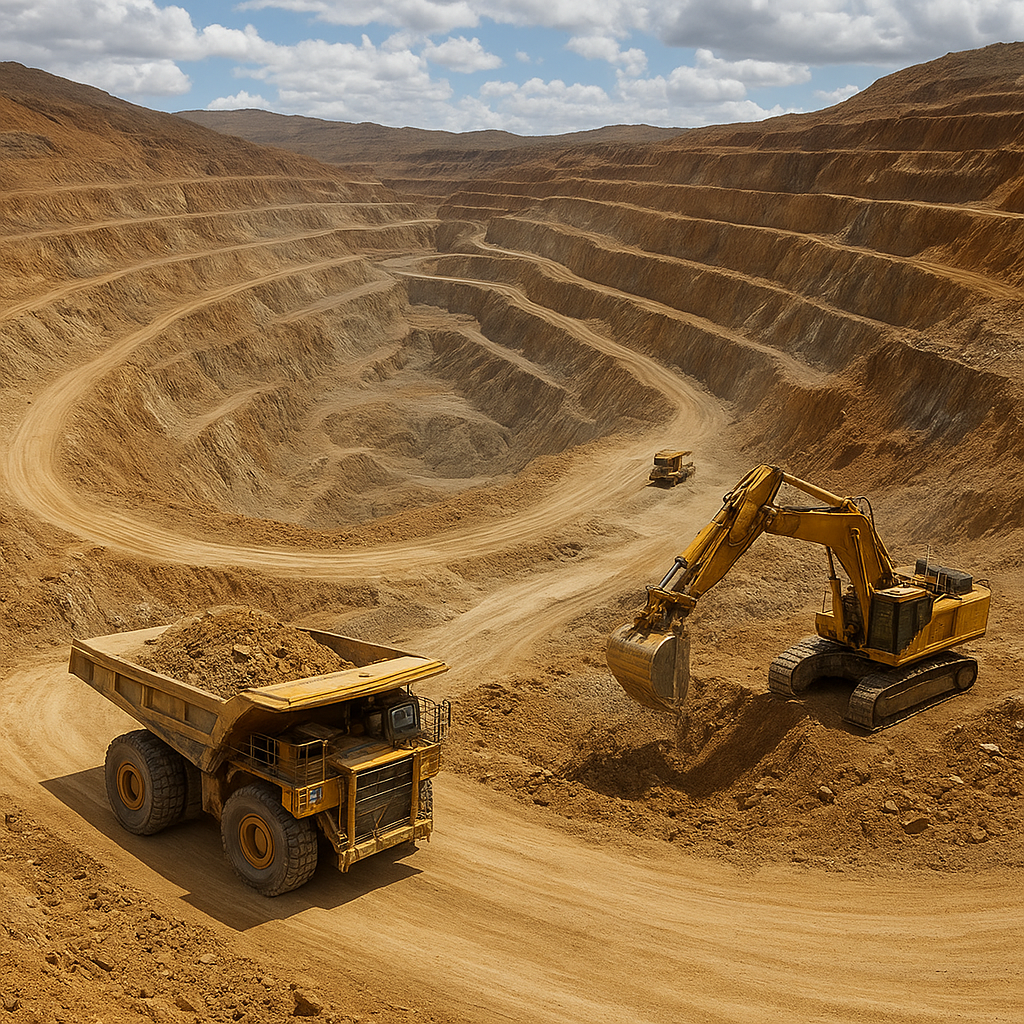
Lagunas Norte is a prominent mining complex in northern Peru that has played a significant role in the country’s modern gold industry. Located in a region shaped by Andean geology and centuries of mineral exploitation, the operation combines large-scale excavation with sophisticated processing to extract one of the world’s most sought-after metals. This article explores where Lagunas Norte is, what is produced there, its economic importance, and several notable or surprising aspects of the project.
Where Lagunas Norte Is Located and Its Geological Setting
Lagunas Norte sits in the northern coastal-Andean transition of Peru, within the administrative region of La Libertad. The mine is named for a series of small high-altitude ponds and shallow lakes (lagunas) that dot the local landscape, and its location reflects the classic Andean interplay between uplift, volcanism and hydrothermal activity that forms many of the region’s mineral deposits.
Geologically, Lagunas Norte is hosted in volcanic and intrusive sequences where hydrothermal fluids deposited gold along with associated sulfides. The deposit type is typical of many large Peruvian gold operations: a combination of disseminated gold and higher-grade structures that can be mined by open-pit methods. The mineralization extends laterally and vertically enough to support multi-year, large-scale operations.
Accessibility and Local Geography
- Altitude and climate: The site lies at an elevation that subjects it to highland temperature swings and a distinct wet-dry seasonality, factors important for planning construction, water management and year-round operations.
- Infrastructure: Proximity to regional roads, ports and service centers has been a factor in the mine’s economic feasibility. Logistics for fuel, supplies and concentrate transport rely on a mix of local road networks and access to larger coastal transport hubs.
- Name and landscape: The “Lagunas” part of the name reflects the presence of small alpine lakes in the area; these are culturally and hydrologically significant features that have influenced permitting and environmental planning.
What Is Mined and How It Is Processed
The primary commodity extracted at Lagunas Norte is gold, with lower but notable quantities of silver often recovered as a byproduct. The ore types processed there have been amenable to large-scale bulk mining followed by chemical extraction processes that recover gold from low- to medium-grade material efficiently.
Mining at Lagunas Norte has historically relied on large-scale excavation and material handling typical of major open-pit gold mines. Once ore is exposed and hauled from the pit, it is crushed and prepared for metallurgical treatment. Depending on the ore’s characteristics, a combination of techniques such as agglomeration, heap leaching or carbon-in-leach (CIL) processing can be used to recover gold. These methods allow operators to extract gold from material that would otherwise be uneconomical to process by concentration alone.
Processing Steps (typical for similar operations)
- Crushing and grinding to liberate gold particles.
- Leaching, often with cyanide solutions, to dissolve gold into solution.
- Carbon adsorption or other recovery technologies to remove gold from solution.
- Smelting and refining to produce doré bars or concentrate suitable for sale and refining.
Tailings and water treatment are critical parts of the process chain. Modern operations invest heavily in tailings storage facilities, water recycling and mitigation measures to reduce environmental risks and meet regulatory expectations.
Economic Significance
Lagunas Norte has been an important contributor to local and national economies. Gold production from the site has generated export earnings, created direct and indirect employment, and led to investments in regional infrastructure. The mine’s activities generate income through royalties, taxes and dividends that feed into public finances, while corporate and contractor spending stimulates local businesses.
At the local level, the mine provides jobs for technical staff, operators and service contractors, and it supports ancillary industries such as transport, catering, maintenance and construction. Many of these positions offer higher wages than the local average, which enhances household incomes and can improve social outcomes when managed responsibly.
National and Regional Contributions
- Export earnings: As gold is a highly traded commodity, production contributes to Peru’s balance of payments and foreign exchange reserves, helping stabilize the economy.
- Government revenue: Taxes, royalties and permit fees from the mine contribute to regional and national budgets, funding public services.
- Infrastructure: Investments related to the mine—roads, power and water management systems—can have spillover benefits for surrounding communities when integrated into regional planning.
The mine can also influence local land use, property values and economic diversification. While the boom associated with a large mine can boost economic opportunities, it can also create dependency on a single industry, which makes careful planning for closure and economic transition essential.
Social and Environmental Considerations
Mining at this scale inevitably raises important questions about sustainability, community relations and the environmental footprint. Operators at Lagunas Norte and similar projects must manage water resources, minimize dust and noise, and ensure that tailings and waste rock do not contaminate local water supplies or ecosystems.
Community engagement is an ongoing requirement. Mines operating in populated or semi-populated regions undertake programs for local hiring, training and procurement to maximize local benefits. They also invest in social programs—healthcare, education, and small-scale infrastructure—to address community priorities and reduce friction.
Key Environmental Management Areas
- Water stewardship: Protecting springs and downstream water users, recycling process water and ensuring adequate water treatment before discharge.
- Tailings management: Designing safe tailings storage facilities and planning progressive rehabilitation.
- Biodiversity and land restoration: Rehabilitating disturbed land and preserving ecological corridors where possible.
- Air quality and dust control: Implementing measures to reduce dust from haulage and crushing activities.
Regulatory scrutiny, civil society oversight and community expectations have pushed operators to adopt higher environmental standards, invest in monitoring and increase transparency about performance and impacts.
Interesting Aspects and Lesser-Known Facts
Several elements make Lagunas Norte noteworthy beyond its production statistics. The name itself is evocative: Lagunas Norte conjures images of scenic highland ponds, and though the site is industrial, the surrounding landscapes remain culturally significant and ecologically varied. The coexistence of traditional rural livelihoods and modern mining operations highlights a common Peruvian dynamic where history, culture and contemporary industry intersect.
- History of development: Large mines like Lagunas Norte usually require long lead times—from exploration, through feasibility and permitting, to full production. This timeline creates extended opportunities for local engagement and capacity-building in the workforce.
- Technological adaptation: The operation demonstrates how modern metallurgical techniques allow the profitable recovery of gold from low-grade bulk deposits, which were previously uneconomical. These technologies have expanded the global gold resource base.
- Economic ripple effects: Beyond direct employment, regional service companies, suppliers and transport firms often grow around a major mine, diversifying local economies in ways that can endure beyond the mine’s operational life.
- Closure planning: Contemporary mines increasingly prioritize mine closure and post-mining land use planning from the outset. Planning for rehabilitation, alternative livelihoods, and financial assurance for closure is a key legacy consideration.
- Cultural intersections: Mining in Andean Peru often encounters archaeological sites, traditional land uses and community governance structures that require careful negotiation and respect for local customs.
Lagunas Norte’s story is therefore about more than rock and metal. It is an example of how a major mineral deposit interacts with geology, engineering, economics and social dynamics to produce outcomes that extend far beyond the mine pit. Understanding such an operation requires combining technical detail with awareness of human and environmental context.
Final Observations on Value and Legacy
The significance of Lagunas Norte can be summarized by its contribution to national exports, its role as a local employer and its demonstration of how modern mining techniques unlock value from complex Andean geology. The project’s long-term legacy will depend on how well environmental impacts are managed, how effectively revenues and opportunities are shared with the surrounding community, and how prudently closure and rehabilitation are planned and funded.
As global demand for precious metals persists, operations like Lagunas Norte will continue to be focal points for conversations about resource governance, sustainable development and the balance between short-term economic gain and long-term regional resilience. For observers and stakeholders alike, the mine remains an instructive case of modern resource development in a country where minerals have enormous economic and cultural weight.

