
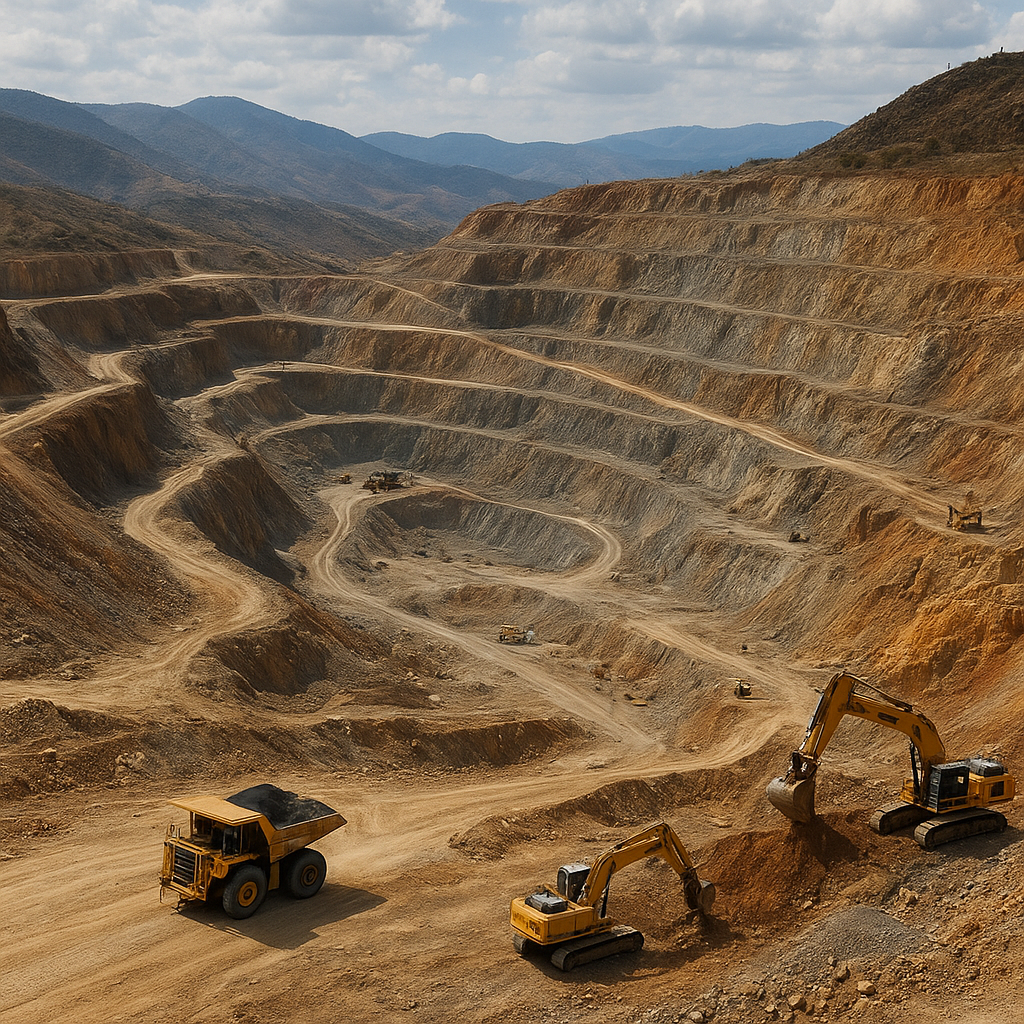
The La Preciosa Mine in Mexico is a notable example of a high-grade precious metals deposit that blends geological interest with clear economic implications for its region. Found within a mineral-rich Mexican province, La Preciosa has drawn attention from exploration companies, investors and local communities for its combination of abundant silver and significant gold values, often accompanied by base metals. This article examines where the mine is located, what is recovered from it, its broader economic importance, and a number of intriguing aspects that make La Preciosa a compelling case study for modern mining in Mexico.
Location and geological setting
La Preciosa sits in the western-to-northern highlands of Mexico, within a region that forms part of the larger mineralized belt associated with the Sierra Madre Occidental. The mine area lies in the Mexican state of Durango, an area historically and geologically favorable for epithermal and polymetallic vein systems. The landscape around La Preciosa typically consists of rugged hills, dissected plateaus and river valleys that have been shaped by both tectonic activity and long-term erosion.
Geological character
The deposit is best described as an epithermal vein-hosted system. These systems commonly form from hot, metal-bearing hydrothermal fluids that circulate through faults and fractures at relatively shallow crustal levels. At La Preciosa the dominant ore minerals are native silver, electrum and various silver sulfosalts, with gold occurring both in native form and associated with sulfide minerals. Typical gangue minerals include quartz, calcite and secondary sulfates and oxides. Many epithermal systems in this part of Mexico also carry appreciable lead and zinc, and La Preciosa is no exception: lead and zinc sulphides commonly appear in the higher-grade parts of the veins.
Structural controls and exploration footprint
The ore shoots at La Preciosa are controlled by faults and brittle-ductile shear zones that focused hydrothermal fluids into relatively narrow, high-grade corridors. These structural controls make the deposit attractive for targeted underground mining but also create exploration potential along strike and at depth. Past exploration programs have used a combination of surface mapping, trenching, drilling and geophysics to delineate veins and identify new targets within the concession area.
Mineralization and production
La Preciosa is predominantly a silver-dominant deposit with meaningful quantities of gold, and accessory amounts of lead and zinc. The grades in many of its explored shoots are considered high compared with world averages for epithermal silver deposits, which is a key reason for sustained interest from mining and investment communities.
Typical metal assemblage
- Primary metals: silver (Ag) and gold (Au).
- Base metals: lead (Pb) and zinc (Zn) often present as galena and sphalerite.
- Gangue: quartz, calcite and various secondary alteration minerals typical of epithermal systems.
Historical and modern production
Like many Mexican deposits, La Preciosa benefits from a long history of mining in the general region dating back to colonial times. Modern production parameters vary depending on the stage of development: when active, mining focuses on narrow, high-grade veins using selective underground methods to maximize metal recovery and reduce dilution. Milled concentrates typically contain both precious metals and base metals, after which they may be shipped to regional smelters or refineries. In many cases the project has alternated between exploration phases and operational phases under different operators, reflecting changing metal prices, regulatory environments and capital availability.
Mining methods and processing
Given the vein-style nature of the mineralization, La Preciosa is generally best exploited through underground mining techniques. Mining engineers and geologists design stopes that follow the high-grade veins, often employing cut-and-fill, shrinkage or long-hole stoping methods when conditions and vein geometry allow. Underground access is provided by declines or shafts, while lateral development follows veins to expose ore for extraction.
Processing and metallurgy
Material from La Preciosa is typically processed using conventional milling and flotation circuits to produce concentrates. Key steps include crushing and grinding to liberate ore minerals, followed by flotation to separate sulfide-rich concentrates that carry the silver, gold and base metals. In some cases gravity concentration is used to recover coarse native silver or free gold particles prior to flotation. The concentrates are then filtered, bagged and transported to smelters or refining facilities where metals are extracted and refined to marketable forms.
Logistics and infrastructure
Proximity to regional highways and the Mexican national transport network is a vital consideration for La Preciosa’s economics. Infrastructure requirements include mine access roads, power supply (often a combination of grid connection and on-site generation), water management systems and tailings storage facilities. In recent years, improvements in local roads and utilities have reduced transport-related costs and improved the viability of smaller high-grade projects across the region. Nonetheless, haulage to smelters and export points remains an important cost center for operations.
Economic and social impact
Mining projects such as La Preciosa generate multiple layers of economic activity and community effects. At the local level, the mine can be a major employer, providing both direct jobs in mining and processing and indirect employment in services, transport and supply chains. Revenues from taxes, royalties and service contracts also flow to state and municipal budgets.
Local development and employment
- Direct employment: skilled and unskilled labor for underground operations, plant operations, maintenance and administration.
- Indirect employment: local businesses supplying fuel, food, equipment, housing and transport.
- Skills development: training programs for miners, technicians and engineers improve local capabilities and future employability.
At the provincial and national levels, La Preciosa contributes to foreign exchange earnings through exports of silver and gold, adding to Mexico’s long-standing position as one of the world’s top silver producers. Royalty regimes and mining taxes provide fiscal revenues that can be invested in public services, infrastructure and social programs.
Environmental management and community relations
Operating responsibly is central to the long-term success of any modern mine. La Preciosa must address environmental risks typical of precious metal production: water usage, tailings disposal, acid rock drainage potential, dust and emissions, and impacts on local biodiversity. Environmental impact assessments and permitting processes in Mexico require operators to design mitigation strategies, monitor outcomes and engage with regulators and communities.
Key environmental measures
- Water management: minimizing consumption, recycling process water and protecting local watercourses.
- Tailings: constructing secure tailings storage facilities with liners, seepage controls and ongoing monitoring to reduce failure risk.
- Rehabilitation: progressive reclamation of disturbed areas and plans for post-mining land use.
- Monitoring programs: continuous sampling and reporting for air, water and soil quality to ensure compliance.
Community relations are equally important. Operators that succeed at La Preciosa tend to invest in local partnerships, support community projects, offer transparent communications and provide grievance mechanisms. Social investment can range from building or upgrading schools and clinics to supporting entrepreneurship and small farms impacted by mine activities.
Historical context and interesting facts
The La Preciosa deposit sits within a storied mining landscape. Mexico’s mining tradition stretches back centuries; silver mining underpinned much of New Spain’s economy and continues to be integral to Mexico’s export profile. La Preciosa’s geology evokes that heritage: narrow veins, high-grade pockets and episodic discovery that rewards persistence and careful exploration.
Notable and curious points
- High-grade pockets: Epithermal systems can host deceptively rich shoots where grades spike over short intervals — these pockets can dramatically change a project’s economics when properly delineated and mined.
- Polymetallic character: The coexistence of precious and base metals means that La Preciosa can benefit from multiple commodity streams, which can help cushion revenue volatility in the market.
- Artisanal mining legacy: Small-scale or artisanal miners have historically worked many parts of Mexico, and the presence of such activity around larger projects often requires careful coordination and formalization efforts.
- Exploration upside: The structural controls that concentrate ore also create repeatable targets. Discovering additional parallel veins or extensions at depth remains a realistic exploration goal.
Future prospects and challenges
The future for La Preciosa, as for many mid-sized precious metals projects, is shaped by a mix of geology, metallurgy, economics, regulation and community acceptance. If exploration continues to define additional resources and if metallurgical recovery remains robust, the mine could sustain production over a long life, creating value for investors and jobs for the region.
Opportunities
- Resource expansion: continued drilling along strike and to depth might add resources, improving project scale and longevity.
- Metallurgical gains: optimization of recovery circuits, including gravity and refined flotation methods, can increase payable metal and lower costs.
- Value-added processing: negotiating favourable concentrate terms, or local refining arrangements, could capture more value domestically.
- Community partnerships: well-structured benefit-sharing agreements can smooth permitting and operational risks.
Challenges
- Commodity price volatility: silver and gold prices influence project revenues and investment decisions.
- Regulatory environment: permitting timelines and compliance obligations can be demanding and sometimes unpredictable.
- Environmental and social risks: tailings management, water competition, and community concerns require proactive management and investment in sustainability.
- Operational complexity: narrow-vein underground mining requires skilled crews and can have higher per-ton operating costs compared with large open-pit mines.
La Preciosa’s profile as a high-grade silver-gold deposit within a proven Mexican mining province gives it a persistent appeal to explorers and developers. Its story combines the technical challenge of extracting narrow, high-value ore with the practical requirements of modern environmental stewardship and meaningful community engagement. For stakeholders — from local residents and employees to national regulators and global commodity markets — La Preciosa exemplifies how geology, economics and social factors intersect in contemporary mining.

