
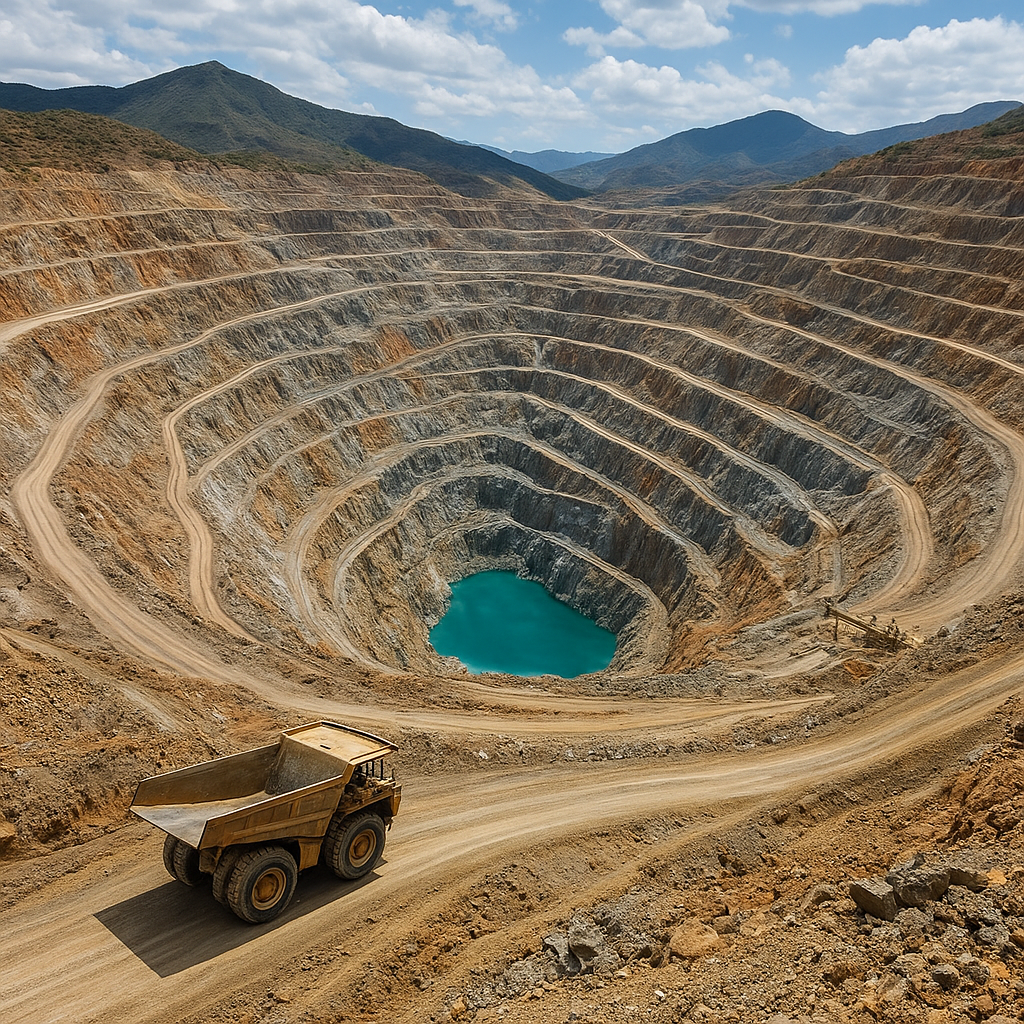
The name La Guitarra evokes both a cultural image and a geological feature: a silver-bearing deposit that has played a role in Mexico’s long mining tradition. This article explores the location, geology, resources and economic importance of the La Guitarra site, together with environmental, social and historical aspects that make it noteworthy. The aim is to provide a rounded picture of what a modern and historical silver project in Mexico can represent—technically, economically and culturally.
Location and geological setting
La Guitarra is situated within Mexico’s broad and productive mining provinces that together form the country’s renowned silver belt. Mexico’s orogenic and magmatic episodes created numerous epithermal and replacement-style deposits, and La Guitarra is typical of the sorts of deposits exploited in those districts. The site occupies a terrain characterized by folded volcanic and sedimentary sequences, often cut by hydrothermal veins and breccia bodies. Such geological environments are conducive to high-grade silver mineralization often associated with lead, zinc and sometimes gold.
Geologically, La Guitarra is best understood in the context of epithermal systems—shallow, hot-fluid deposits that form near the surface from mineral-rich hydrothermal solutions. These systems typically produce banded and vein-hosted mineralization, with silver occurring in mineral species such as acanthite (silver sulfide), native silver, and in solid solution with other sulfides like galena (lead sulfide) and sphalerite (zinc sulfide). The deposit geometry may include steeply dipping veins, stockworks and halo zones of disseminated sulfides that make selective underground mining viable.
Because Mexico is the world’s leading silver producer, sites like La Guitarra are part of a dense network of mines that run through the central-northern highlands. The proximity to established mine infrastructure—roads, processing facilities, smelters and skilled labor—often determines whether a deposit is developed fully, expanded, or exploited in smaller, artisanal phases.
Mineralization and extraction methods
The primary commodity at La Guitarra is silver, but it is common for such deposits to yield by-products like lead, zinc and sometimes gold. The ore types present usually dictate the processing route: massive sulfide and vein-hosted ores are typically crushed and concentrated via flotation to produce a lead–silver or zinc–silver concentrate, while oxidized ores near the surface may respond better to cyanide leaching for direct silver recovery.
Mining at La Guitarra has historically favored underground approaches because high-grade veins are often narrow and extend at depth. Methods such as cut-and-fill, long-hole stoping or shrinkage stoping are commonly used depending on vein width and rock strength. Where near-surface mineralization exists, small-scale open-pit operations may be feasible temporarily, especially for artisanal or initial development phases.
Processing usually begins with comminution (crushing and grinding) to liberate silver-bearing minerals, followed by flotation to separate sulfide minerals into high-grade concentrates. For oxidized ores, heap leaching or vat leaching with cyanide has been used to extract silver, sometimes after pre-treatment to remove interfering minerals. Metallurgical recovery of silver often requires a combination of physical separation and hydrometallurgical steps, and smelters or refineries then refine concentrates to marketable precious metals.
Economic significance and local impacts
At a local and regional level, a silver project like La Guitarra produces multiple economic effects. Direct employment in mining operations is the most visible: miners, engineers, metallurgists, technicians and administrative staff form the core workforce. Indirect employment—suppliers, transport services, catering, equipment maintenance and construction—expands the economic footprint. When well-managed, the operation can stimulate development of local businesses and public services.
Beyond jobs, mines contribute via taxes, royalties and community development agreements that fund infrastructure such as roads, schools and health centers. For Mexico overall, silver production is an important export earner that supports sovereignty over mineral resources and stabilizes mining communities. While La Guitarra itself may not determine national output, it is a component of the wider mining economy where small to medium-sized mines collectively sustain local economies and preserve technical mining skills.
The monetary value of extracted silver varies with global metal prices. In times of high silver prices the production from a modest deposit can generate substantial revenues, improve profitability and encourage exploration for extensions and satellite deposits. Conversely, lower prices can render marginal parts of the deposit uneconomic, tightening the link between market cycles and local livelihoods.
Environmental and social considerations
Mining inevitably raises environmental questions; La Guitarra is no exception. Key issues include water management, tailings containment, dust and emission control, and the handling of potentially acid-generating materials. Tailings dams must be engineered to rigorous standards to avoid failures. Modern operations increasingly apply progressive rehabilitation—recontouring disturbed land, re-vegetating with native species and progressively closing unused areas to reduce long-term environmental liabilities.
Socially, the relationship between mine operators and communities is critical. Respectful consultation, transparency over benefits and impacts, and equitable employment practices build trust. Artisanal and small-scale miners often coexist near larger operations; integrating informal miners into formal systems or arranging secure zones for artisanal activity can reduce conflict and improve safety. The term artisanal therefore appears frequently in local contexts—small-scale miners who work independently or in small groups and who have their own social and economic dynamics.
Environmental stewardship and responsible mining certifications are increasingly important for access to markets and investment. Investors and buyers look for operations demonstrating strong governance, traceability and adherence to environmental, social and governance (ESG) standards. In this respect, sustainability measures, such as water recycling, renewable energy integration and community development programs, enhance the long-term viability and social license to operate.
Historical and cultural dimensions
Silver mining in Mexico stretches back centuries; colonial-era mines shaped towns, architecture and social structures. La Guitarra may be part of this long lineage—many deposits were first exploited by indigenous peoples and later expanded under Spanish colonial rule. Historical mining techniques, such as water wheels, amalgamation with mercury, and simple drift mining, gradually gave way to industrial methods, but colonial-era shafts and adits often remain as archaeological features.
Silver’s cultural imprint in Mexico includes fine silversmithing traditions, especially in towns like Taxco and other artisanal centers where silver jewelry and religious art are made. The name La Guitarra itself conjures musical and artistic associations—an apt metaphor in places where silverwork is both an economic activity and a cultural expression. Local festivals, patron saint days and even museum exhibits sometimes reflect the mining heritage, preserving equipment, records and stories of miners’ lives.
Interesting technical and historical facts
- La Guitarra deposits often occur as vertically extensive vein systems; miners historically followed these veins deep into host rock, sometimes discovering richer shoots at depth.
- Silver in many Mexican mines is found in intimate association with lead and zinc minerals, which can improve the economics of a deposit because concentrates carry value from multiple metals.
- Artisanal techniques persist in many districts: hand-tramming, small blast holes and manual sorting are still used where mineralization is visible and high-grade.
- Historical processing used mercury amalgamation; modern operations have largely abandoned mercury for environmental and health reasons, switching to cleaner methods such as flotation and controlled cyanide leaching where appropriate and heavily regulated.
- Metallurgical challenges at silver sites include refractory ores—silver bound in sulfide matrices or locked in complex minerals—that require advanced pre-treatment or smelting to recover the metal effectively. Good metallurgy is therefore critical to realizing value from ore.
- Local museums or preserved mine sites sometimes display the technical evolution from pick-and-shovel mining to mechanized, safer and more productive methods, providing insight into the social history of mining communities.
- Because Mexico is the world’s largest silver producer, small deposits like La Guitarra contribute to an extensive national network of silver supply that feeds refineries and artisan workshops across the country.
Investment, exploration and future prospects
Exploration remains a central theme in the life cycle of any mine. At La Guitarra, sustained exploration programs—mapping, trenching, drilling and geophysical surveys—can delineate extensions to known veins and discover new bodies at depth or along strike. The discovery potential is an attractive aspect for investors: many Mexican districts host clusters of deposits formed by the same hydrothermal systems.
Investment decisions hinge on geological continuity, metallurgical recoveries, infrastructure and metal prices. Mines that implement continuous improvement in safety, efficiency and environmental performance are more likely to attract capital for expansion. Technological advances—automated drilling, remote sensing, improved ore-sorting and higher-efficiency processing—also change the economics and environmental footprint of operations, potentially extending mine life or enabling extraction of lower-grade material economically.
Jobs, local procurement and royalties provide tangible benefits while responsible operation minimizes negative impacts. As metal markets fluctuate, flexibility—both technical and managerial—is essential to keep operations viable. For La Guitarra, a credible plan for exploration, efficient processing and community engagement will shape its future contribution to the local and national economy.
Summary of why La Guitarra matters
La Guitarra exemplifies the multifaceted role of a silver project in Mexico: it is a geological feature with valuable mineralization; an economic actor providing employment and revenues; an environmental responsibility requiring careful management; and a cultural touchstone connected to Mexico’s long mining heritage. Its importance is not measured solely by ounces produced but by how effectively it integrates technical excellence, community benefit and environmental stewardship.
Well-managed silver sites like La Guitarra help preserve mining knowledge, support local livelihoods and contribute to national metal output. Through ongoing exploration, modern metallurgy and a focus on sustainable practices, such deposits can continue to provide value well into the future—both in tangible metals and in the intangible heritage they sustain.

