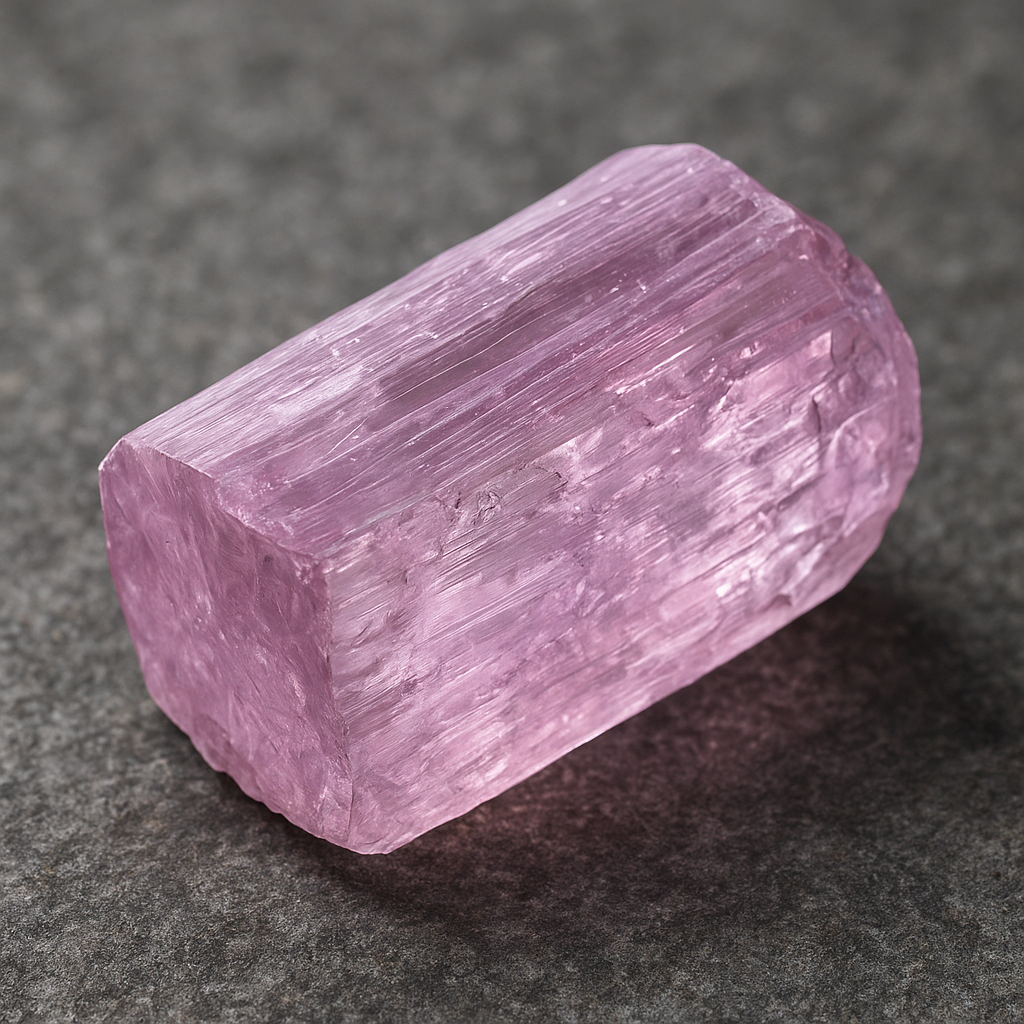
Kunzite is a captivating pink to lilac variety of the mineral spodumene, prized for its delicate color, large crystal forms and sometimes dramatic fluorescence. This article explores the mineral’s mineralogy, global occurrences, gemological uses, industrial connections, cutting and care considerations, and cultural meanings. Along the way, scientific facts meet historical anecdotes and practical guidance for collectors, jewelers and curious readers.
Mineralogy and Optical Properties
Kunzite belongs to the pyroxene group as a variety of spodumene, a lithium aluminium inosilicate. Its pink-to-violet coloration is primarily due to trace amounts of manganese ions substituting in the crystal structure. The same mineral family produces the green variety known as hiddenite; both hiddenite and kunzite are chemically spodumene but differ in the trace elements that determine their colors.
In thin sections and faceted stones, kunzite typically displays notable pleochroism, meaning color intensity and hue can change depending on the viewing angle and crystal orientation. This optical effect influences how cutters orient the rough to maximize color and minimize unwanted tones. Many specimens also show distinct color zoning and internal features that can be attractive or challenging for cutting.
Under ultraviolet light, many kunzite crystals produce a strong orange to salmon fluorescence, a characteristic often used by gemologists and collectors to help identify and appreciate these stones. Another hallmark of kunzite is its perfect cleavage in two directions, which demands care during cutting and setting.
Geological Formation and Typical Associations
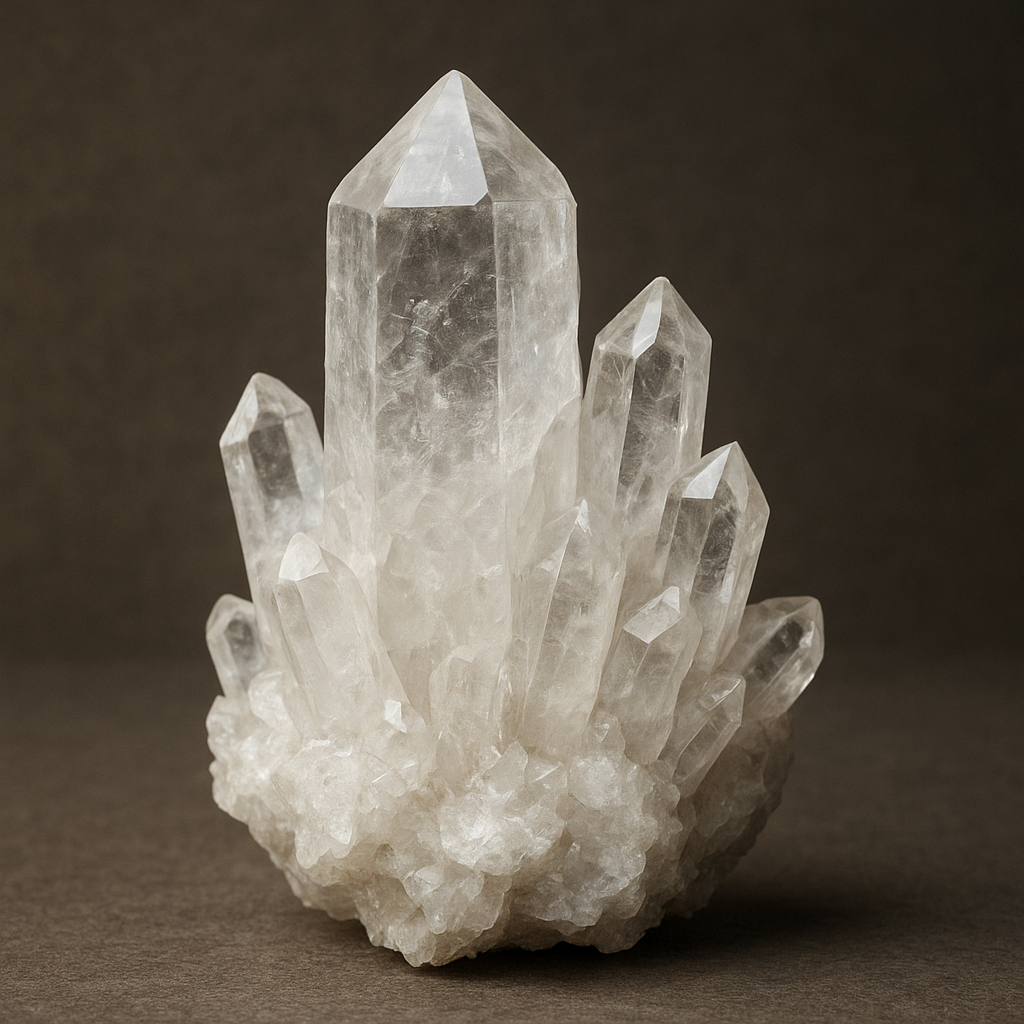
Kunzite forms in the late stages of crystallization of granite pegmatites. These pegmatites concentrate incompatible elements—including lithium, beryllium, tantalum, and niobium—into pockets where large crystals can grow. Such environments favor the formation of coarse-grained spodumene crystals often measured in tens of centimeters or more in exceptional cases.
Associated Minerals
- Quartz — commonly found in pegmatite veins hosting spodumene.
- Lepidolite — a lithium-mica frequently associated with spodumene and indicative of lithium-rich pegmatites.
- Beryl and tourmaline — other gem-bearing minerals that co-crystallize in the same late-stage fluids.
- Columbite-tantalite and other accessory minerals often mark the presence of rare elements in these pegmatites.
Because pegmatites often form as the last differentiating melt from granitic intrusions, they can be zones of exceptional crystallinity and gem-quality material. The slow cooling and enriched fluids allow large, clean crystals such as kunzite to develop—hence the spectacular crystal sizes sometimes seen in this species.
Where Kunzite Occurs: Notable Localities
Kunzite has been found in several countries around the world. Some localities are famed for producing gem-quality material with saturated color, while others yield large museum-quality crystals. The most notable occurrences include:
- Afghanistan — particularly the Nuristan region and neighboring districts, known for producing intensely colored specimens often sought by collectors and jewelers.
- Brazil — the state of Minas Gerais and surrounding pegmatite fields produce both gem and crystal specimens; Brazil is a historically important source of many gem spodumenes.
- Madagascar — an important modern source for gem-quality kunzite, with material ranging from soft pastels to stronger saturated colors.
- United States — notably California (Pala and San Diego County) and Maine historically, where classic crystal specimens were mined.
- Pakistan and Afghanistan border regions, and parts of Africa and Australia, have also yielded notable examples.
Large crystals suitable for museum exhibits or carving commonly come from pegmatite pockets that remained undisturbed during cooling. Commercial gem production tends to focus on those pockets that produce transparent, evenly colored material without excessive cleavage damage.
Uses and Applications
Kunzite’s principal role is as a gem material. Its soft, romantic pinks and lilacs are prized in jewelry, though the stone demands particular handling due to its cleavage and sensitivity to light. Beyond the gem world, the broader mineral group—spodumene—has industrial significance because it contains substantial quantities of lithium, a key element in batteries and other technologies. It is important to distinguish gem-quality kunzite from spodumene mined and processed as an ore: gem-grade crystals are simply not used for bulk lithium production because they are valuable for jewelry and collecting.
Gem and Jewelry
- Faceted kunzite is frequently fashioned into oval, emerald, and cushion cuts that showcase its color while minimizing the risk along cleavage planes.
- Cabochons and carvings are less common but can highlight crystal form and fluorescence in certain specimens.
- Kunzite is often set in protective settings—bezel or halo mounts—and used as central stones in pendants where they can be shielded from knocks and hard wear.
Industrial Context
While kunzite itself is sought after for its aesthetic value, its parent mineral group plays an essential role in the modern economy. Lithium-bearing spodumene ores have become critical as a source for lithium carbonate and lithium hydroxide, raw materials used in rechargeable batteries for electronics and electric vehicles. The extraction of lithium from spodumene is typically done on a commercial scale in deposits where the mineral occurs abundantly and is not gem-quality.
Cutting, Treatment and Care
Working with kunzite requires gemological skill and specific precautions because of its physical properties. Its perfect cleavage means that poorly executed cutting or the wrong setting can lead to cleavage planes splitting under stress. Additionally, kunzite is known to be light-sensitive: prolonged exposure to strong sunlight or intense incandescent light can gradually fade the pink color, sometimes irreversibly.
Cutting and Setting Considerations
- Cutters often orient the rough to maximize color and minimize the impact of cleavage by choosing shapes that avoid putting pressure along cleavage directions.
- Many faceted kunzite stones are impressively large because pegmatite crystals can yield big clean pieces; however, larger stones require more careful handling in mounting.
- Protective settings (bezels, lower-profile mounts) are preferable, and designers avoid prong settings where the stone is exposed to impact along cleavage planes.
Treatments and Stability
Treatments used in the gem trade for kunzite include irradiation and heat in some instances to modify or enhance color. Because fading can occur, some dealers use treatments to restore or deepen color, and such treatments should be disclosed. When purchasing, inquire about any treatments and prefer reputable sellers who provide disclosure and, where appropriate, laboratory reports.
Care Advice for Owners
- Avoid prolonged exposure to direct sunlight or intense lighting to limit color fading.
- Store kunzite jewelry in dark, padded boxes and avoid mixing with harder gemstones that could scratch it.
- Remove kunzite rings and bracelets during activities with a risk of impact; pendants and earrings (especially in protected settings) are often safer choices for daily wear.
- Clean with warm, soapy water and a soft brush; avoid ultrasonic cleaners and harsh chemicals that could affect clarity or cause stress along cleavage.
Valuation and Market Considerations
The value of kunzite is influenced by several standard gem factors: color, clarity, cut, and carat weight. However, these factors play out slightly differently than for other gems.
- Color: The most marketable kunzite colors range from soft pastel pink to more saturated violet-pink. Deep, evenly distributed color without zoning commands higher prices. Keep in mind that perceived color intensity can vary with light source.
- Clarity: Large, eye-clean kunzite crystals are prized; however, small inclusions and internal features are common and can add character without significantly reducing value unless they affect durability.
- Size: Because large crystals occur naturally in pegmatites, sizeable faceted kunzites are not uncommon. Size increases value, particularly for well-colored and well-cut stones.
- Treatments and stability: Untreated stones with stable color under light will generally fetch a premium over treated or unstable material.
Market interest in kunzite often fluctuates with fashion trends. Its romantic hues periodically see surges in popularity, particularly when designers incorporate pastel palettes. Collectors, gem enthusiasts and museums prize the very large and well-crystallized specimens for display and study.
Historical and Cultural Notes
The name kunzite honors the American mineralogist and gem dealer George Frederick Kunz, who was influential in the late 19th and early 20th centuries and helped popularize many exotic gems through his work. Early discovery and popularization in the gem market coincided with an interest in rare pegmatite minerals, and kunzite quickly became fashionable for fine jewelry because of its large crystal sizes and elegant colors.
Beyond its scientific and decorative appeal, kunzite has entered the realm of cultural and metaphysical lore. In many contemporary metaphysical communities, kunzite is associated with emotional healing, the heart chakra and calming energies. These attributions are modern and subjective, varying among practitioners; they do not reflect scientifically verified properties but are part of how many people relate to the stone.
Interesting Facts and Research Uses
A few curiosities and scientific notes about kunzite and its parent mineral are worth highlighting:
- Large kunzite crystals have been fashioned into impressive carvings and specimens displayed in museums, sometimes weighing several kilograms. Such sizes are a reminder of the unique environment of pegmatites that allows huge crystals to grow.
- Fluorescence in kunzite—often a strong orange under shortwave UV—can be striking and is used by collectors to quickly identify or appreciate specimens in the field or at shows.
- Research into spodumene as a lithium ore has intensified in recent decades because demand for rechargeable batteries has grown. While gem-quality kunzite is not mined for lithium, the broader economic importance of spodumene ties this beautiful gemstone indirectly to the global energy transition.
- Scientific study of pegmatites that produce kunzite continues to yield information about the late-stage evolution of granitic magmas, fluid compositions and the concentration mechanisms for rare elements.
Comparisons with Other Pink Gemstones
From a consumer perspective, kunzite often competes visually with other pink gems such as pink sapphire, morganite (pink beryl), rose quartz and spinel. Several practical differences guide buyers and jewelers:
- Hardness and wearability: kunzite (around mid 6s to 7 on the Mohs scale) is softer than sapphire and spinel, so it requires more protection in everyday jewelry.
- Color stability: unlike sapphire, kunzite may fade with prolonged light exposure, which affects its suitability for certain kinds of daily-wear pieces.
- Price dynamics: gem-quality kunzite can offer large sizes at relatively moderate prices compared with rare pink sapphires and spinels, making it popular for statement pieces where size and soft color are desired.
How to Buy and What to Ask For
If you are considering acquiring kunzite, whether as jewelry or a collector’s specimen, keep these practical tips in mind:
- Buy from reputable dealers who disclose treatments, provide grading or gemological reports for high-value pieces, and offer clear return policies.
- Ask about light stability and whether the stone has been irradiated or heat-treated to modify color.
- For jewelry, prefer protective settings and consider the intended use: occasional-wear pendants and earrings usually preserve kunzite better than daily-worn rings.
- Request magnified images or in-person inspection to evaluate clarity, color zoning, and potential cleavage planes that might affect durability.
Further Reading and Resources
For deeper technical knowledge, consult mineralogical texts on pegmatite geology, gemological lab reports detailing treatments and identification methods, and publications about the economics of lithium-bearing minerals. Museums with gem and mineral collections often provide accessible displays and interpretative material that showcase large kunzite crystals and contextualize their geological origin.
Collectors, jewelers and scientists all find aspects of kunzite compelling: its aesthetic appeal, its geological story tied to pegmatite formation, and its indirect link to modern technologies through the broader spodumene family. Approached with care and curiosity, kunzite offers both beauty and a window into Earth’s complex mineral-forming processes.