
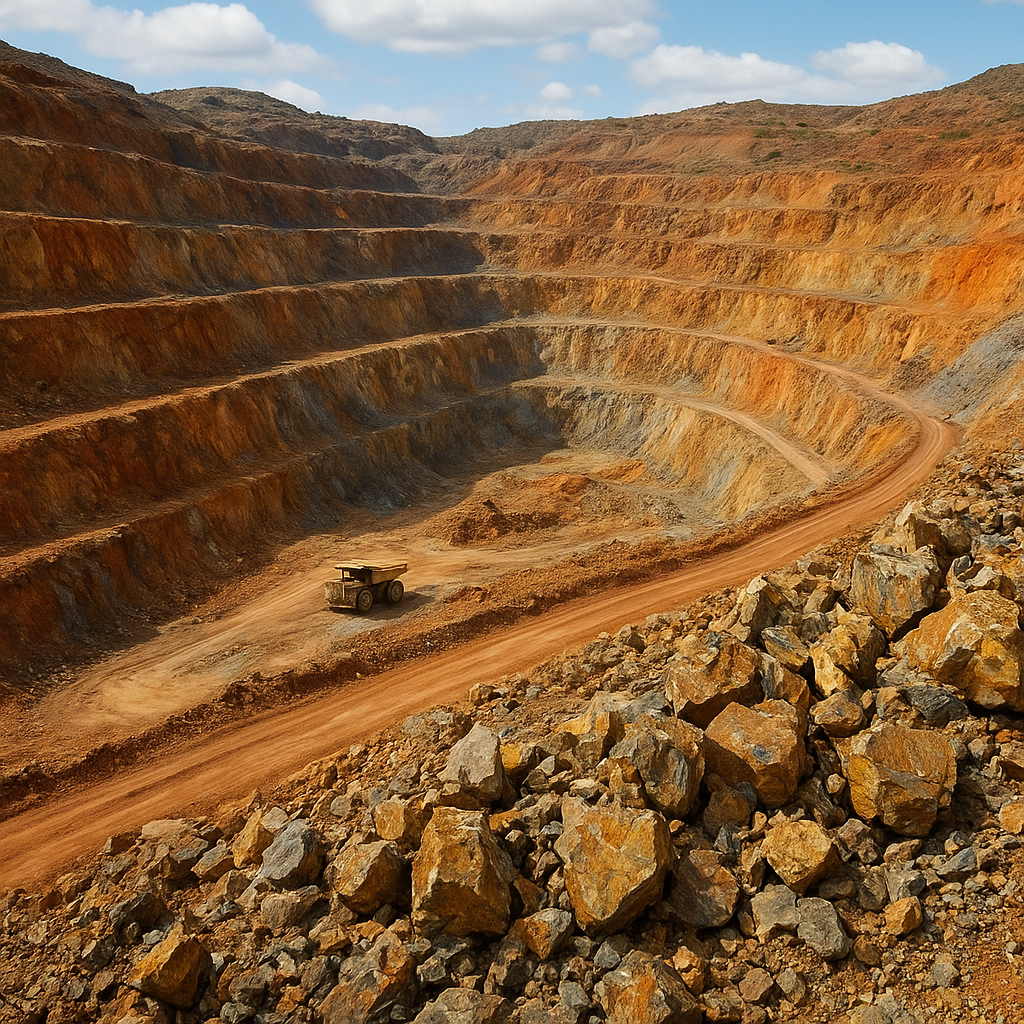
The Kettara Mine, a modest yet scientifically significant site in central Morocco, is best known for its concentrations of iron sulfide minerals, most notably pyrrhotite. Although it is not among the large, world-famous mines of the country, Kettara has attracted attention because of the chemical behavior of its ores, the environmental challenges posed by historic workings and tailings, and innovative local efforts to turn an environmental liability into an opportunity for sustainable use. This article explores the mine’s location and geology, what was and is present in the deposits, its economic footprint, and several aspects that make Kettara interesting to geologists, environmental engineers and the public.
Location and geological setting
The Kettara Mine lies in the western margin of the High Atlas mountain region, in the Marrakech-Safi administrative area, roughly south of the city of Marrakech. The mine is situated within a complex geological mosaic where older metamorphic basement rocks and younger sedimentary and volcanic units have interacted through multiple tectonic and hydrothermal events. In this setting, sulfur-bearing hydrothermal fluids precipitated iron and other metal sulfides, creating localized concentrations of minerals that were later discovered and exploited on a small scale.
Geologically, deposits such as Kettara are typically associated with hydrothermal alteration zones and sometimes with skarn-type mineralization or other contact-metasomatic environments where fluids have reacted with host rocks. The result at Kettara is a sulfide-rich assemblage dominated by pyrrhotite, with accessory minerals including pyrite and minor chalcopyrite or other sulfides. The mineralization is typically found in shallow underground workings and in surface spoil and tailings that remained after historical extraction.
Mineralogy: pyrrhotite and associated minerals
Pyrrhotite (Fe1−xS) is an iron sulfide mineral notable for its non-stoichiometric composition and its magnetic properties in many varieties. Unlike the more common pyrite, pyrrhotite can carry a variable iron-to-sulfur ratio, and this variability affects its magnetic behavior and weathering characteristics. At Kettara, pyrrhotite dominates the sulfide mineralogy and typically appears together with sulfide minerals such as pyrite (FeS2) and lesser quantities of chalcopyrite (CuFeS2) or other metal-bearing sulfides depending on the local geochemistry.
Because pyrrhotite oxidizes readily when exposed to air and water, it plays a central role in the chemistry of the mine environment. The oxidation of iron sulfides generates acidity and releases dissolved metals into water — a process known as acid mine drainage (AMD). The specific assemblage and grain size of pyrrhotite, together with the local climate and hydrology, determine how quickly sulfides oxidize and how severe the AMD can be in a given setting.
History of mining at Kettara
Records of small-scale extraction around the Kettara site go back several decades, with most activity concentrated on shallow underground workings and open pits where accessible sulfides could be collected. Kettara was never a major industrial mine by the standards of global iron, copper or phosphate operations; rather, it operated as a local, small-to-medium scale sulfide prospect exploited intermittently over the 20th century. Because the ore consisted largely of iron sulfides rather than high-grade, easily marketable iron ore or base-metal concentrates, large-scale, long-term exploitation did not develop.
Like many such deposits, Kettara left behind heaps of waste rock and tailings. These materials, containing finely divided sulfide minerals and sulfide-rich rock, have been sources of persistent environmental effects. The legacy of past extraction — abandoned adits, spoil piles and acid-producing tailings — has shaped much of the contemporary interest in the site, particularly from environmental remediation and research perspectives.
Environmental challenges and remediation efforts
The chief environmental issue at Kettara stems from the oxidation of sulfide minerals and the production of acid mine drainage. When sulfides in the exposed rock and tailings encounter oxygen and water, they produce sulfuric acid and mobilize iron and other metals. This acidic, metal-rich water can pollute local streams, groundwater and soils, harming aquatic life and posing risks for agricultural uses and human water supplies.
Over the last two decades, Kettara has become better known as a test case for remediation approaches that combine environmental protection with resource recovery or beneficial reuse. One particularly notable idea that attracted attention was the potential to use warm, metal-bearing mine water as a low-grade geothermal resource. Instead of merely pumping contaminated water into treatment systems and disposing of it, engineers and planners explored using heat exchangers to extract thermal energy from the water for district heating or greenhouse warming — a way to offset the costs of remediation while providing local social and economic benefits.
Remediation approaches at Kettara have been multifaceted and adaptive. They include covering or recontouring tailings to limit oxygen and water ingress, passive treatment systems (such as constructed wetlands or settling ponds) to promote neutralization and metal precipitation, and active interventions where necessary to neutralize acidity and remove contaminants. The integration of a thermal reuse component — the capture of heat from mine water — represents an innovative attempt to link environmental cleanup with sustainable development goals.
Economic significance and local impacts
Although Kettara never became a major mining center in the classical sense, its economic significance today can be evaluated across several dimensions. Direct mineral revenue from the site has historically been modest. Unlike Morocco’s dominant mining pillar — the phosphate industry — or large-scale polymetallic operations elsewhere, Kettara’s ore did not sustain large industrial extraction. Nonetheless, the mine has economic relevance in other ways:
- Local employment and livelihoods: Past mining operations and current remediation or monitoring projects provide local jobs and technical training opportunities for communities near the mine.
- Environmental cost avoidance: Effective remediation reduces long-term environmental damage and the associated economic losses to agriculture, water resources and public health.
- Innovation and research: Kettara has served as a platform for research into acid mine drainage management, passive treatment technologies and the feasibility of mine-water geothermal recovery — activities with potential exportable expertise.
- Value from reused services: If mine water heat recovery or similar schemes are implemented at scale, they can supply low-cost heating or agricultural heat, adding direct economic benefits to the region.
Viewed through these lenses, the mine’s economic significance extends beyond the immediate value of extracted ore to include the social, environmental and technological dividends that arise from remediation and adaptive reuse.
Interesting aspects and scientific value
Kettara is interesting to a broad audience for reasons that go beyond raw mineral wealth. Some of the most notable points include:
- Case study for sulfide oxidation: The mine provides an accessible example of how sulfide minerals weather and how AMD evolves over time under Mediterranean climatic conditions.
- Geo-environmental innovation: The concept of using mine water heat is an appealing example of circular thinking: turning an environmental problem (warm, polluted mine water) into a resource (a low-temperature heat source).
- Multidisciplinary research: Geologists, hydrologists, environmental engineers and social scientists can all find meaningful work at Kettara, from mapping mineral zones to designing remediation systems and assessing community benefits.
- Mineralogical interest: Collectors and mineralogists value well-preserved sulfide specimens. Although Kettara’s minerals are not the era-defining treasures of some museums, the occurrence of pyrrhotite and its intergrowths can be educational and visually striking under proper preparation.
- Policy lessons: Small sites like Kettara illustrate the broader policy challenges facing many countries with legacy mines: how to finance cleanup, integrate stakeholder interests and create sustainable outcomes that prevent future liabilities.
Research, monitoring and technological trials
Because of the environmental issues and the relatively compact footprint of the site, Kettara has attracted focused research and monitoring efforts. Studies have targeted:
- Hydrochemical monitoring to understand the extent and variability of acid and metal release.
- Geochemical characterization of the tailings and soil profiles to determine sources of acidity and metal mobility.
- Testing of passive remediation systems such as reed beds, settling ponds and reactive barriers to reduce contaminant loads in a cost-effective way.
- Feasibility studies on mine-water heat extraction systems, including thermal modeling, economic appraisal and pilot installations for small-scale heating uses.
These efforts are important not only for Kettara but for building knowledge applicable to many small to medium-sized sulfide mines worldwide, where funding for cleanup is limited but environmental risks are real.
Current status and future prospects
As of the most recent publicly available information, Kettara remains a site of environmental concern but also of opportunity. The mine and its surrounding waste deposits continue to be monitored, and stakeholders — including local authorities, researchers and sometimes private partners — have discussed and in some cases piloted remediation and reuse projects. The future prospects for Kettara hinge on several factors:
- Availability of funding for remediation and pilot projects.
- Successful demonstration of sustainable reuse options (for instance, geothermal heat recovery) that can offset costs and deliver community benefits.
- Continued scientific interest and collaboration with universities and international partners to refine low-cost treatment technologies.
- Local and national policy priorities that place value on managing legacy mine impacts and promoting sustainable, circular uses of contaminated resources.
If remediation is coupled with beneficial reuse, Kettara could become a model for transforming an environmental liability into a multifaceted asset — serving environmental protection goals, local socio-economic needs and technical innovation.
Concluding observations
The Kettara Mine may not be among Morocco’s largest economic assets in terms of raw mineral tonnage, but it occupies an outsized place in conversations about mine legacies, environmental technology and creative reuse. The deposit’s dominance by pyrrhotite and related sulfide minerals has left a clear imprint on the local environment, catalyzing both remediation work and experimental projects that link cleanup with potential benefits such as low-grade heating. From geological interest and mineralogical study to practical policy lessons and engineering trials, Kettara illustrates how small mines can inform big ideas about sustainability, resource management and the interplay between industry and environment.

