
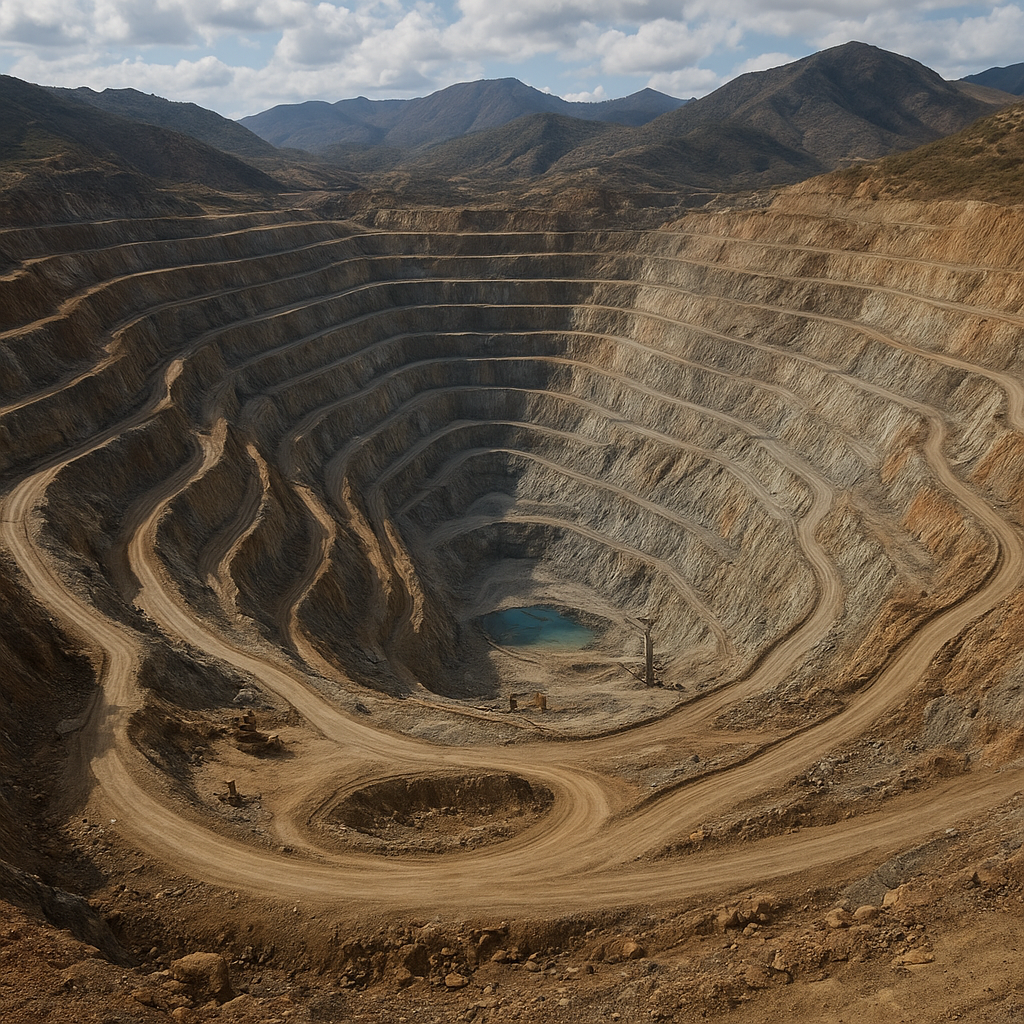
The Juanicipio project is an important modern mining development in central Mexico that has attracted international attention for its rich silver-bearing veins and its role in the regional mining economy. Situated in a historically productive mineral province, the operation represents a contemporary example of how exploration success, technical mining methods and strategic partnerships can convert a discovery into a producing asset. This article outlines the mine’s setting, geology, minerals produced, economic significance and a selection of notable technical and social aspects that make Juanicipio noteworthy within the global silver sector.
Location and geological setting
The Juanicipio deposit lies in the state of Zacatecas, one of Mexico’s most prolific mining regions. It is located within the broader Fresnillo silver district, an area with a long history of high-grade epithermal silver and polymetallic vein mining. The deposit sits close to existing mine infrastructure and established mining towns, which facilitated development and logistics when the project moved from exploration to production.
From a geological perspective, Juanicipio is hosted in classic epithermal vein systems typical of the Sierra Madre Occidental mineral belt. These systems formed from hydrothermal fluids that deposited metals in structurally-controlled, narrow to moderately wide veins and breccia zones. The deposit exhibits the characteristics of high-grade epithermal mineralization with silver occurring alongside common by-product metals such as lead, zinc and lesser amounts of gold. The structural controls and repeated zonation make the deposit attractive for underground mining methods that selectively extract the richest vein material.
History of discovery and development
Juanicipio was identified in the early years of the 21st century during targeted exploration campaigns that combined geological mapping, trenching and systematic drilling across the Fresnillo district. The project was advanced by a partnership between a Canadian exploration company and a major Mexican mining house; the current operating structure reflects a joint-venture model that paired international exploration expertise with established Mexican operational capacity.
After the initial discovery and extensive drilling that outlined commercial resources, the joint venture invested in underground development, construction of decline access, and eventually a mineral processing facility or tolling arrangement to treat concentrates. The transition from development to steady-state production involved ramping up underground workings, installing mechanized equipment and integrating environmental and community relations programs to meet regulatory and stakeholder expectations.
Ownership, governance and business model
Juanicipio is operated as a joint venture combining the strengths of a global silver miner and a junior exploration company. The partners bring complementary capabilities: the larger company contributes operational experience, local knowledge and access to established processing and marketing channels; the smaller partner supplies the discovery and exploration upside. This model is common in the modern mining industry because it spreads capital risk while aligning incentives for both exploration success and efficient mine operation.
Within this arrangement, revenue from mined concentrates is typically shared according to the equity split, after treatment charges and government royalties. Strong governance, transparent reporting and adherence to Mexican mining regulations underpin the joint venture’s relationship with investors, regulators and local communities.
Mineralization and what is mined
The core product of the Juanicipio operation is silver, recovered from vein-hosted mineralization. Because the veins are polymetallic, concentrates also carry appreciable amounts of lead and zinc, and there are often gold credits that add to the project’s economic value. Mineral recovery is achieved through conventional underground mining methods followed by crushing, grinding and flotation to produce metal-rich concentrates suitable for smelting.
Key features of the mineralization include high silver grades, continuity along certain vein segments and multiple mineralized shoots that allow selective extraction. The presence of base metal by-products is economically important: revenue from lead and zinc concentrates and gold content reduces the net cost of silver production and improves project economics, particularly when metal prices fluctuate.
Mining methods, processing and technology
Underground operations
Juanicipio functions primarily as an underground mine. Development focuses on accessing vein corridors through declines and ramps rather than relying on extensive surface disturbance. Mechanized cut-and-fill or longhole stoping methods are common choices for this style of deposit because they permit selective mining of narrow, high-grade zones while maintaining good ground control. The choice of method balances ore recovery, safety and cost.
Processing and metallurgy
Orebodies at Juanicipio are processed by conventional milling and flotation circuits, producing separate silver-lead and zinc concentrates where appropriate. Metallurgical testing during feasibility studies helped determine optimal grind size, reagent schemes and flowsheet design to maximize recovery of silver and valuable by-products. Concentrates are sold to smelters under off-take agreements, and quality of the concentrates—low levels of deleterious elements, consistent metallurgical performance—affects treatment charges and net smelter returns.
Innovation and automation
To improve safety and efficiency, modern underground operations like Juanicipio often incorporate remote monitoring, fleet management systems and selective automation for repetitive tasks. These technologies can reduce operating costs, improve productivity and enhance worker safety by minimizing exposure to hazardous conditions underground.
Economic significance and regional impact
Juanicipio contributes to both the local and national economy in several ways. First, it adds to Mexico’s position as the world’s leading silver producer by supplying significant annual silver output. Second, it generates direct employment in mining, processing and support services, and indirect employment through local supply chains, transportation, hospitality and other services that support the workforce.
Fiscal contributions come through royalties, taxes and infrastructure investments. Local governments benefit from wage income and procurement, while federal and state treasuries collect royalties and corporate taxes. Moreover, the presence of a modern mine attracts supporting industries—equipment suppliers, exploration services and contractors—strengthening the region’s economic base.
On a company level, Juanicipio is strategically important to the operating partners. For the major partner, it provides additional silver reserves and near-term production to complement other assets, while for the junior partner it represents a value-creating transition from exploration to cash-generating operations.
Environmental management and community relations
Operating in a region with long mining traditions, Juanicipio must manage environmental risks and maintain positive relationships with surrounding communities. Environmental management focuses on water stewardship, tailings and waste rock management, air quality and reclamation planning. Because water resources can be contested in arid to semi-arid regions, water recycling and efficient use are central to sustainable operation.
Tailings management follows contemporary best practices, with engineering controls designed to minimize surface footprint and mitigate failure risk. Progressive reclamation, where disturbed areas are rehabilitated as operations advance, is used to reduce long-term environmental liabilities and restore land for future use.
Community relations are handled through local hiring, investment in social infrastructure—such as schools, clinics and road improvements—and transparent communication channels. Support for local enterprises and programs that enhance education, health and livelihoods helps to build social license to operate, an essential factor for ongoing mine success.
Regulatory context and permitting
Mining in Mexico is governed by federal and state laws that cover environmental protection, labor standards, land use and taxation. Obtaining and maintaining permits for operation requires compliance with environmental impact assessments, community consultations and technical standards. The Juanicipio venture has had to navigate these regulatory processes while meeting international investor expectations for governance and disclosure.
Permitting can also affect timing and costs. Responsible operators engage early with authorities and stakeholders to reduce delays and design projects that meet or exceed regulatory requirements.
Challenges and opportunities
- Commodity price volatility: Silver prices fluctuate with global markets and investor sentiment. High-quality, low-cost production helps mitigate price risks, but revenue remains sensitive to metal prices.
- Operational risks: Underground mining carries inherent safety and geotechnical challenges. Continuous monitoring and adaptive management are necessary to maintain productivity and safety.
- Exploration upside: Many vein systems have untested extensions and deeper targets. Ongoing exploration can extend mine life and add value by identifying new mineralized shoots.
- Technological improvements: Automation, improved ore-sorting and more efficient metallurgical practices present opportunities to improve recoveries and lower unit costs.
- Sustainability expectations: Stakeholders increasingly expect mines to demonstrate strong environmental performance, social investment and transparent governance. Meeting these expectations can improve community acceptance and access to capital.
Interesting facts and broader context
Several aspects of Juanicipio are of particular interest beyond the immediate production metrics. First, the project exemplifies how modern joint ventures can accelerate the development of a discovery by combining exploration-driven companies with established operators. This partnership model reduces capital constraints for explorers while leveraging the operating company’s experience in permitting, construction and marketing.
Second, the mine’s location within the historic Fresnillo district ties it to centuries of silver production in Mexico. While large-scale surface mines and historic workings are common in the region, Juanicipio represents a modern, scientific approach to exploiting narrow, high-grade veins that older methods could not mine efficiently. In that sense, it marries traditional geology with contemporary mining engineering.
Third, the polymetallic nature of the deposit—where silver coexists with base metals and gold—illustrates the economic importance of by-products in mining. Revenues from lead, zinc and gold often materially improve project economics and help to smooth company earnings across cycles of fluctuating primary metal prices.
Finally, the successful development of Juanicipio demonstrates the continuing global relevance of silver as both an industrial metal and an investment asset. Silver is used in electronics, photovoltaics, medical devices and other industrial applications, while also retaining a role as a precious metal for investors. Mines like Juanicipio help supply these diverse markets and support industries that rely on a stable supply of silver and associated metals.
Looking ahead
Future prospects for Juanicipio will depend on continued operational optimization, responsible environmental stewardship and the potential to expand resources through targeted exploration. Advances in mining technologies and metallurgical optimization may further improve recoveries and lower costs, while successful exploration along strike and at depth could extend the mine life.
As global demand for silver and related metals evolves—driven by industrial, technological and investment factors—high-grade, well-managed operations in established mining jurisdictions will remain strategically important. Juanicipio’s combination of geological endowment, operational partnership and regional infrastructure positions it as a meaningful contributor to Mexico’s silver production and to the portfolios of the companies involved.

