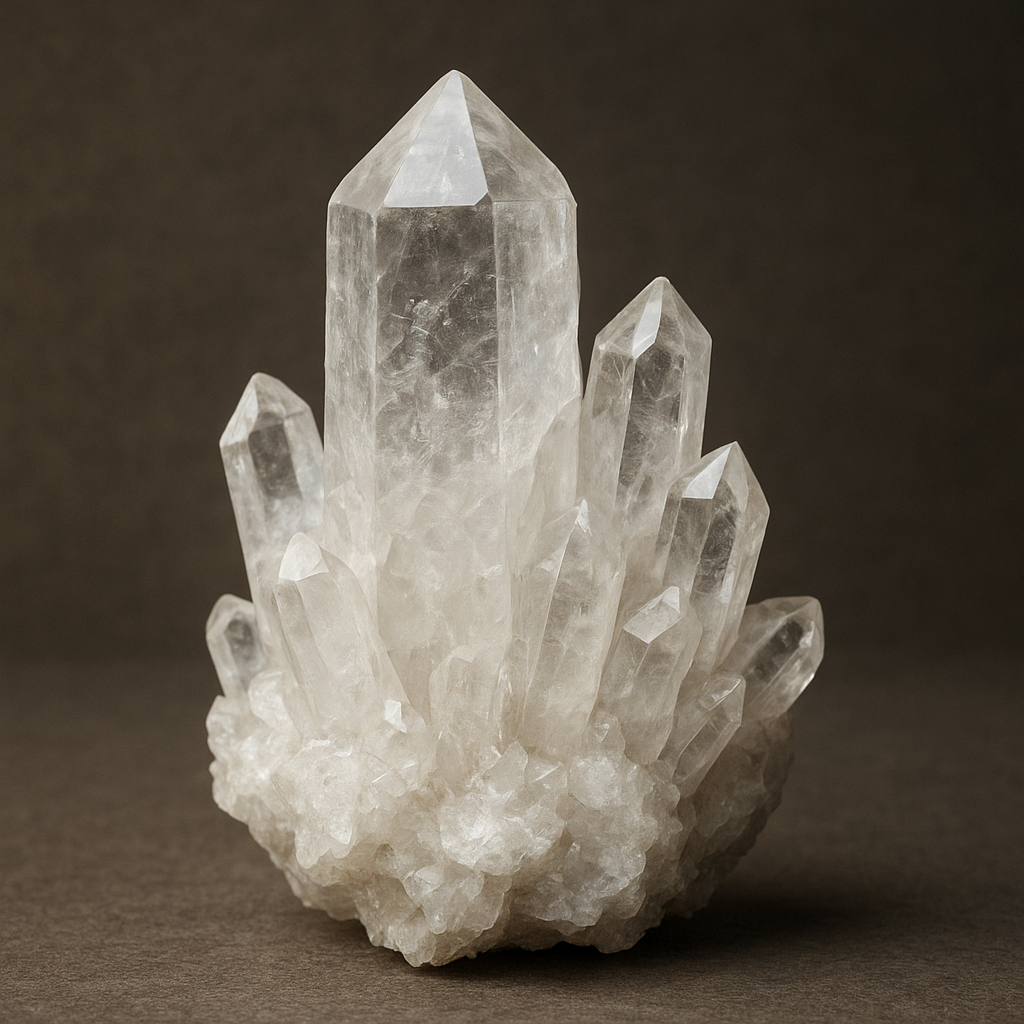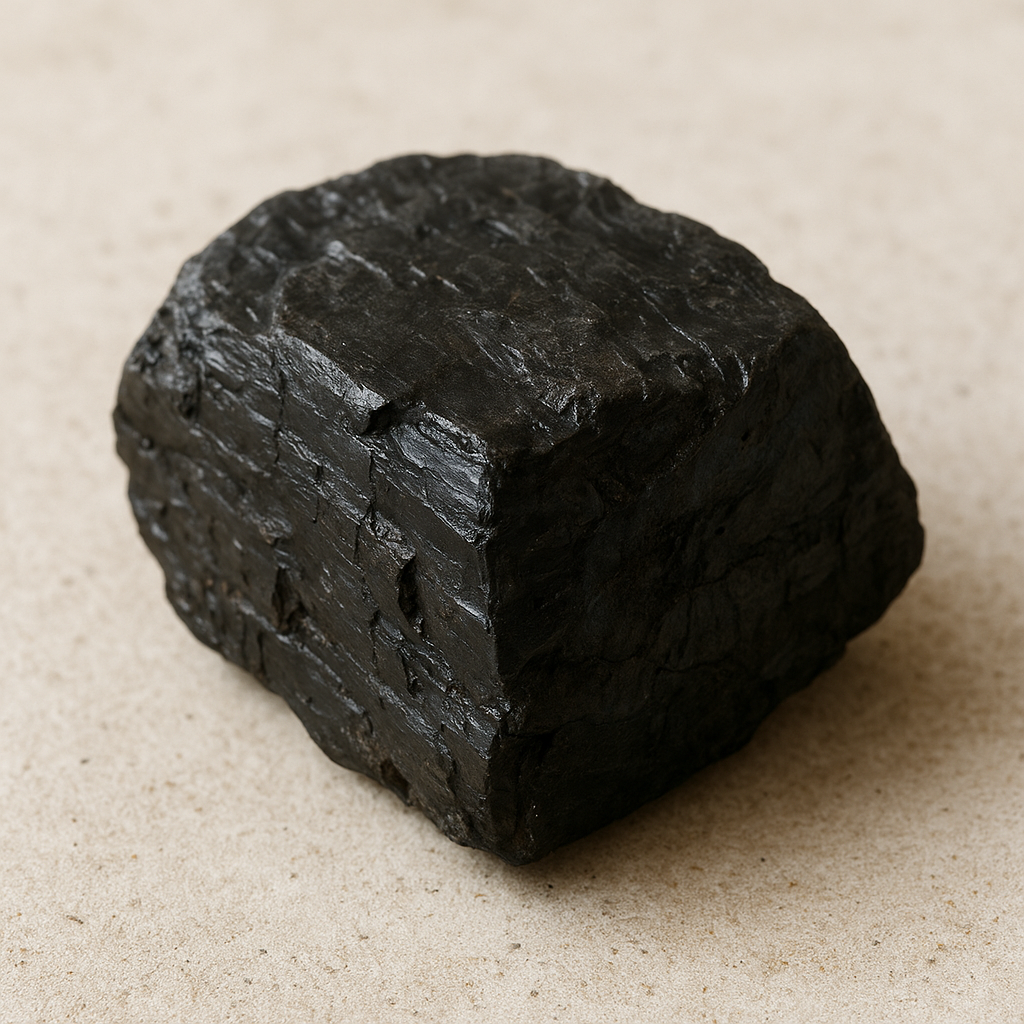
Jet Stone — a compact, deep black organic material often associated with lignite and ancient forests — occupies a curious place at the intersection of geology, craft and cultural history. Both a lightweight gemstone for wearable art and a scientific marker of prehistoric ecosystems, jet connects human creativity with the slow processes of fossilization. This article explores how jet forms, where it is found, how it is identified and worked, and why it has played such a distinctive role in jewelry, ritual and industry.
Formation and Geological Context
Jet is not a mineral in the strictest sense but a mineraloid: an organic, compacted carbonaceous material derived from ancient wood. The formation pathway typically begins in a swampy or coastal forest environment where plant debris accumulates in oxygen-poor conditions and becomes preserved. Over geological time, burial, compaction and chemical transformation drive peat to become lignite (commonly called brown coal). Under specific local conditions — limited heat and pressure so that the structure of the wood retains fine grain while organic constituents are transformed into a dense carbon material — the result is what lapidaries and archaeologists call jet.
Key steps in jet formation include:
- rapid burial of timber and vegetation in anoxic sediments, preventing microbial decay;
- slow diagenesis in low-grade coalification regimes, where cellulose and lignin are chemically altered but wood structure is retained;
- compression and removal of volatile elements, increasing carbon concentration without reaching the temperatures that form higher-grade coals;
- local geological changes — marine transgressions, tectonic burial or sediment compaction — that preserve and eventually expose jet seams.
These conditions explain why jet is relatively rare and often found in narrow seams or nodules rather than in the vast beds typical of thermal coal deposits.
Distribution and Notable Localities
Although small deposits occur in several regions, a handful of localities have dominated historic jet production and carved its cultural identity. The most famous source is Whitby in North Yorkshire, England, where Jurassic-era driftwood was preserved in coastal clays and later carved into the iconic black ornaments of the Victorian period. Whitby jet remains a hallmark of British lapidary tradition and is often referenced in both jewellery markets and historical studies.
Other important occurrences include:
- Spain (Asturias and Cantabria) — significant deposits yielding high-quality material used locally for ornamental carving;
- Germany — deposits associated with Tertiary lignite basins in regions such as Saxony and the Rhineland;
- Russia and the Baltic region — where lignite seams produce jet-like materials that have been used historically;
- United States — smaller sources in California, Utah and Ohio where lignified wood and lignite bodies yield jet or jet-like substances.
Most jet sources are associated with ancient coastal plains, estuaries and deltaic environments where wood was rapidly buried and anoxic conditions prevailed. Modern mining of jet is typically small-scale and artisanal rather than industrial given the material’s specialized uses.
Physical and Chemical Properties; How to Identify Jet
Understanding jet’s properties is crucial both for gemmologists distinguishing it from imitations and for conservators treating historic pieces. Jet is typically deep black, sometimes showing brownish streaks or a submetallic sheen. Its main distinguishing characteristics include low density, relative softness and a warm feel to the touch compared with stone or glass.
Notable properties:
- Carbon content: Jet is a carbonaceous organic material, often with a high proportion of fixed carbon relative to peat but lower than anthracite.
- Hardness: generally low (around 2.5 to 3 on the Mohs scale), which makes it easy to carve but also susceptible to surface wear.
- Specific gravity: typically about 1.2–1.4, significantly less than most gemstones or glass; this contributes to its lightweight feel.
- Fracture and luster: conchoidal fracture is common; polished jet shows a deep, almost oily black luster.
- Thermal and combustion behavior: when rubbed or struck, jet can develop a faint coal-like odor. Burning a tiny fragment (a destructive test, discouraged on museum objects) gives a coal-smell and a soot residue because it is organic.
Identification techniques (non-destructive preferred):
- visual inspection under magnification for fibrous wood grain or growth rings preserved within the piece;
- specific gravity measurements — jet’s low density helps to separate it from glass and stone imitations;
- UV inspection — jet generally does not fluoresce strongly under UV, a contrast to some plastics or amber;
- surface temperature and handling — jet feels warmer than glass and cooler than most metals; however this is subjective and not definitive;
- laboratory analysis — infrared spectroscopy and elemental analysis can definitively confirm organic coal-derived composition.
Collectors and dealers often rely on a combination of these tests to authenticate pieces without damaging them.
Uses: Jewelry, Ornament and Cultural Significance
Across centuries, jet’s dramatic black has made it a favored material for mourning jewelry, amulets and refined decorative objects. Its ease of carving allows detailed relief work and intricate cameos, which reached a peak in the 19th century.
Historical and contemporary uses include:
- Jewelry: beads, pendants, brooches, lockets and rings. Victorian mourning sets often paired jet pieces with onyx and seed pearls, becoming emblematic of a cultural response to bereavement.
- Religious and amuletic objects: jet has been turned into rosary beads, crosses and protective talismans across different cultures.
- Carved ornaments and statuettes: small figures, inlays and buttons made from jet have been found in archaeological contexts dating back to Roman times and earlier.
- Memory and commemorative items: medallions and hairwork inlaid into jet objects were popular ways to remember the deceased during the 18th and 19th centuries.
One striking cultural phenomenon is the Victorian mourning jewelry tradition: after the death of Prince Albert, Queen Victoria famously wore jet for the rest of her life, fueling a massive demand for black ornaments. Craftsmen developed specialized tools and techniques for fine jet carving and polishing to meet this demand.
Lapidary Techniques and Imitations
Working jet requires delicate handling because of its softness. Traditional lapidary approaches include:
- cutting and shaping with fine-tooth saws or knife blades;
- abrasive grinding using emery or iron oxides to refine form;
- polishing with leather, felt and fine abrasives to bring out the deep black luster;
- stabilization using subtle impregnation with oils or resins on fragile specimens (careful conservation practice is essential to avoid altering appearance).
Because genuine jet has been highly prized, many imitations exist. Common substitutes include glass, ebonite (vulcanite), modern plastics, and other dense black stones such as obsidian or onyx. Distinguishing them often relies on density, warmth-to-touch, microscopic structure, and lab-based analytical methods.
Environmental, Economic and Scientific Dimensions
Jet sits at an unusual crossroads: it is both a derivative of coal-producing environments and a collectible material whose extraction has limited direct industrial relevance. By contrast, lignite as a class of fuel remains economically significant in many countries. Lignite deposits fuel power plants, supply briquettes and, in a wider sense, record important past vegetation and climate conditions.
Environmental considerations:
- mining of lignite and related deposits can disrupt habitats, lower water tables and produce substantial CO2 emissions when burned;
- jet extraction is usually minor compared to coal mining, but quarrying and coastal erosion to access historic seams can have localized impacts;
- conservation of historic jet artifacts requires attention to humidity, handling and the compatibility of any consolidants used in restoration.
Scientific value:
- jet preserves anatomical detail of wood and sometimes cellular structure, making it valuable for paleoecological research;
- isotopic and chemical analyses of jet and associated deposits can reveal details about ancient climates, vegetation types and depositional settings;
- comparison of jet across regions helps reconstruct trade and cultural exchange — Roman jet beads, medieval European ornaments and Victorian trade networks all leave traceable signatures.
Collecting, Conservation and Market
The market for jet combines antiquities, antiques and contemporary handcrafted pieces. Authentic Whitby jet and historic Victorian items command a premium among collectors. Key considerations for buyers and conservators include provenance, restoration history and the presence of modern adhesives or coatings.
Best practices for collectors and museums:
- avoid aggressive cleaning or chemical treatments; gentle dusting and stable humidity are preferred;
- document and preserve provenance — historic jet items often carry social and familial histories of interest;
- use non-destructive testing for authentication and enlist specialists for any consolidation or repair projects;
- be aware of imitation techniques and obtain independent verification for high-value purchases.
Interesting Tidbits and Lesser-Known Facts
Some evocative facts about jet:
- Roman jet beads have been found across Europe, showing that the material was valued and traded long before the Victorian era.
- certain jet pieces retain microscopic wood anatomy, allowing botanists to identify the tree family or even genus that contributed material millions of years ago.
- in some languages and traditions, jet was attributed protective properties and used as a talisman against evil or envious spirits.
- jet’s deep black polish and ability to carry fine relief make it uniquely suited to cameo-like portraiture in miniature.
Concluding Observations on Value and Continuity
Jet combines geological intrigue, tactile appeal and a strong cultural legacy. As a product of organic carbon preserved through specialized fossilization pathways, it offers a sensory bridge to ancient ecosystems while continuing to inspire modern designers and historians. Whether found washed up on a beach near Whitby or uncovered in a lignite seam far from civilization, jet carries both the imprint of prehistory and the marks of human artistry.